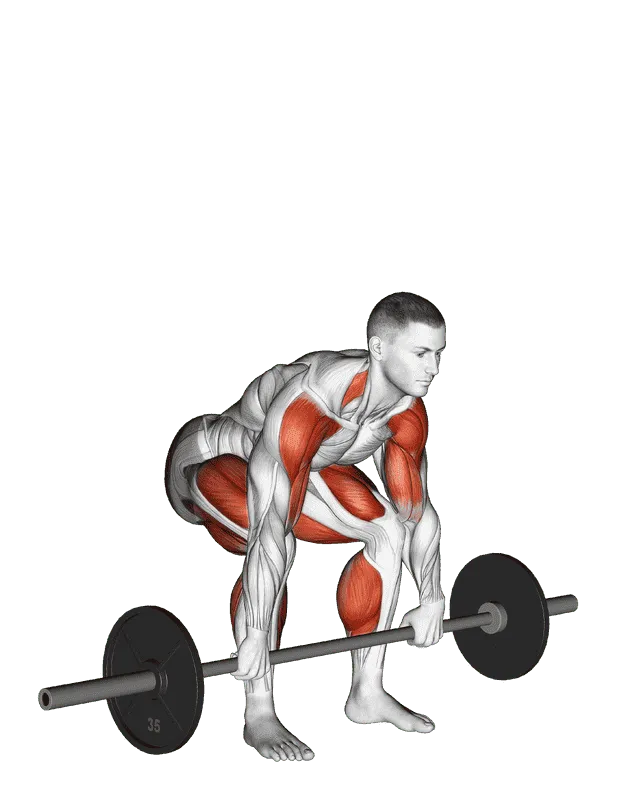
 Start
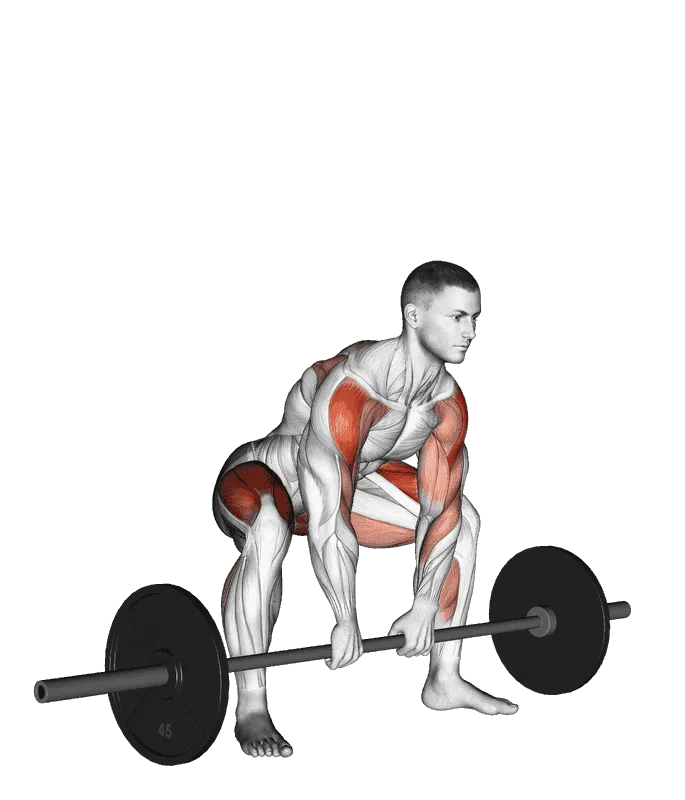
Start
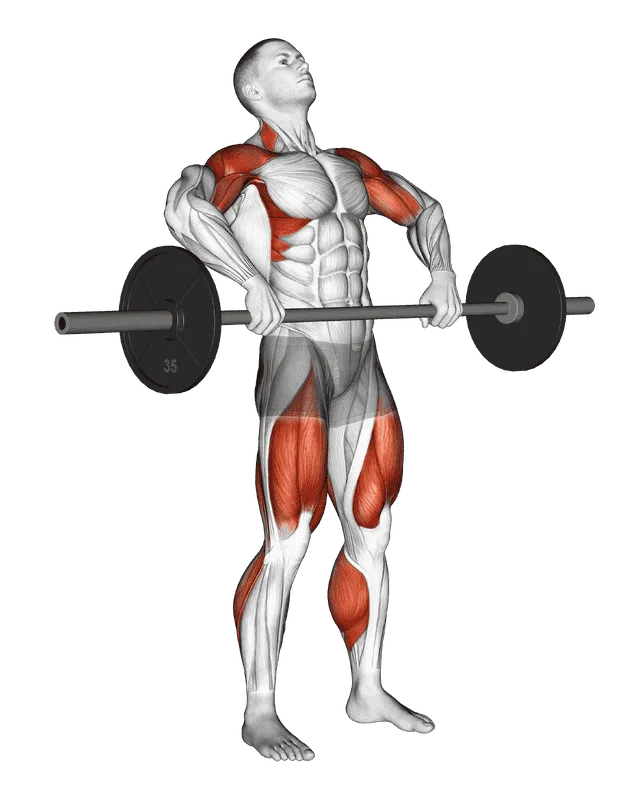 Finish
Barbell Clean Pull
Stand with feet shoulder-width apart and grip the barbell just wider than your shoulders, keeping your back straight and chest up. Drive through your heels to lift the bar, then explosively extend your hips and shrug your shoulders, pulling the barbell upward to chest height while keeping it close to your body. Lower the bar with control and repeat, focusing on maintaining a strong, straight back throughout the movement.
- Target muscles
- Upper legs, Back, Shoulders
- Also works
- Glutes, Abs, Forearms, Lower legs, Biceps
- Equipment
- Barbell plus plates
- Training style
- Gym-based, CrossFit
- Logged as
- Weight and reps
- Popularity
- 85 of 100
Barbell Clean Pull: how to do it
- Begin by standing with your feet shoulder-width apart and the barbell on the floor in front of you. Bend at your hips and knees to grip the barbell with an overhand grip, keeping your hands slightly wider than shoulder-width apart.
- Lower your hips so that your thighs are almost parallel to the floor, keeping your back straight and chest up. Your shoulders should be slightly in front of the barbell.
- Engage your core and begin the movement by driving through your heels to extend your hips and knees, pulling the barbell upward.
- As the barbell passes your knees, explosively extend your hips and shrug your shoulders while keeping your arms straight.
- Pull the barbell upward by bending your elbows, keeping it close to your body, and lifting it to chest height.
- Once the barbell reaches chest height, lower it back to the starting position in a controlled manner.
- Repeat for the desired number of repetitions.
Common mistakes
Avoid rounding your back, letting the bar drift too far from your body, and using only your arms to lift. Proper technique involves driving through the legs, extending the hips explosively, and keeping the bar close for maximum efficiency and safety.
Alternatives
More Upper legs exercises
Questions about Barbell Clean Pull
What muscles does the Barbell Clean Pull work?
The Barbell Clean Pull primarily targets your upper legs, back, and shoulders. It also engages secondary muscles including the glutes, abs, forearms, lower legs, and biceps, making it a powerful full-body strength movement.
What equipment do I need for a Barbell Clean Pull?
You will need a barbell for this exercise, ideally with bumper plates if lifting heavy in a gym or CrossFit setting. If you don’t have access to a barbell, you can use a trap bar or heavy dumbbells as a modified alternative.
Is the Barbell Clean Pull suitable for beginners?
While the Barbell Clean Pull is great for building strength and explosive power, beginners should first master basic deadlift and shrug techniques. Start with lighter weights to focus on form before progressing to heavier loads.
What are common mistakes to avoid during the Barbell Clean Pull?
Avoid rounding your back, letting the bar drift too far from your body, and using only your arms to lift. Proper technique involves driving through the legs, extending the hips explosively, and keeping the bar close for maximum efficiency and safety.
How many sets and reps should I do for the Barbell Clean Pull?
For strength and power, perform 3–5 sets of 3–6 reps with a challenging weight. If training for technique or conditioning, use lighter loads for 4–6 sets of 5–8 reps to maintain form and avoid fatigue-related errors.
What are the safety tips for performing the Barbell Clean Pull?
Always warm up thoroughly and maintain a neutral spine throughout the lift. Use proper footwear for stability, keep the bar path close to your body, and avoid jerking movements to reduce the risk of back or shoulder injury.
Are there variations or modifications for the Barbell Clean Pull?
Yes, you can try a high pull for more trap engagement, or a hang clean pull from mid-thigh to focus on explosive hip drive. Using lighter weights or starting from blocks can help beginners work on speed and technique without overloading the lower back.