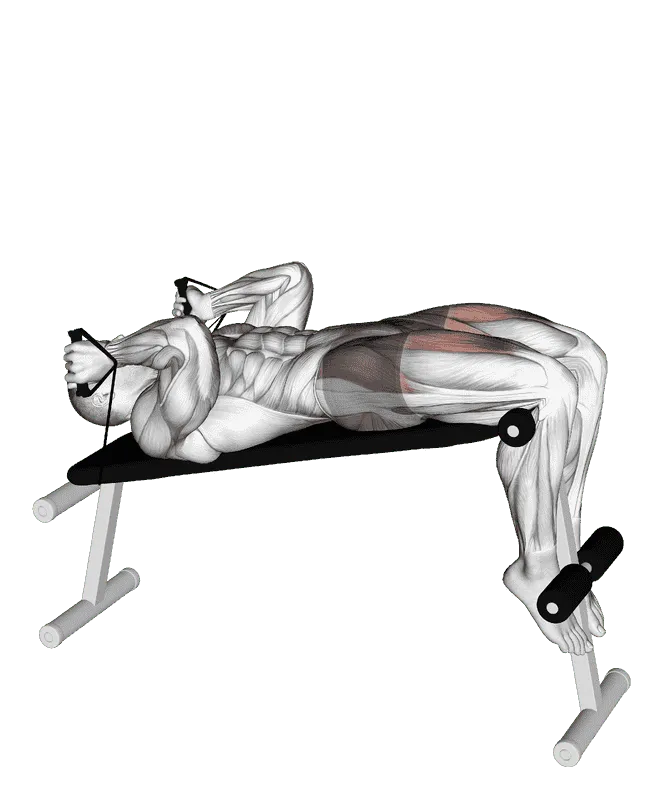
 Start
Start
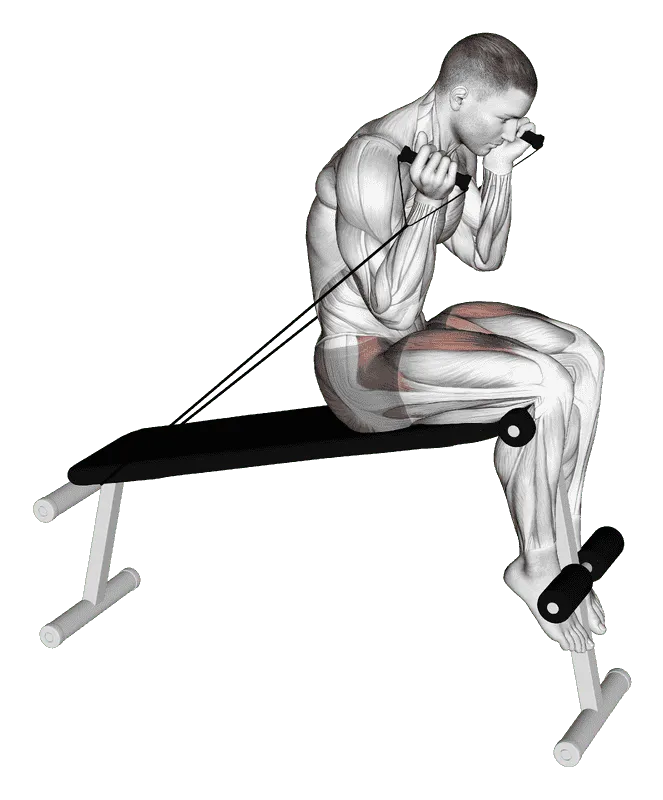 Finish
Band Decline Sit-Up
Lie on a decline bench with your feet secured and hold the resistance band handles close to your chest. Engage your core and curl your torso upward until nearly upright, keeping the band under tension. Lower back down slowly with control, resisting the pull of the band.
- Target muscles
- Abs
- Also works
- Obliques, Hip Flexors
- Equipment
- Bench, Resistance bands
- Training style
- Gym-based, Home
- Logged as
- Weight and reps
- Popularity
- 75 of 100
Band Decline Sit-Up: how to do it
- Secure a resistance band to a sturdy anchor point at floor level.
- Lie down on a decline bench with your feet secured under the foot pads for stability.
- Hold the resistance band handles with both hands, keeping them close to your chest.
- Engage your core and begin the movement by curling your torso upward, lifting your shoulders off the bench.
- Continue the upward motion until your torso is nearly upright, keeping the band under tension throughout.
- Slowly lower your torso back down to the starting position, maintaining control and resisting the pull of the band.
- Repeat for the desired number of repetitions.
Common mistakes
Avoid jerking your torso up or relying on momentum, as this reduces core engagement and can strain your lower back. Keep the bands under constant tension, maintain a controlled motion, and ensure your lower back stays aligned with the bench.
Alternatives
More Abs exercises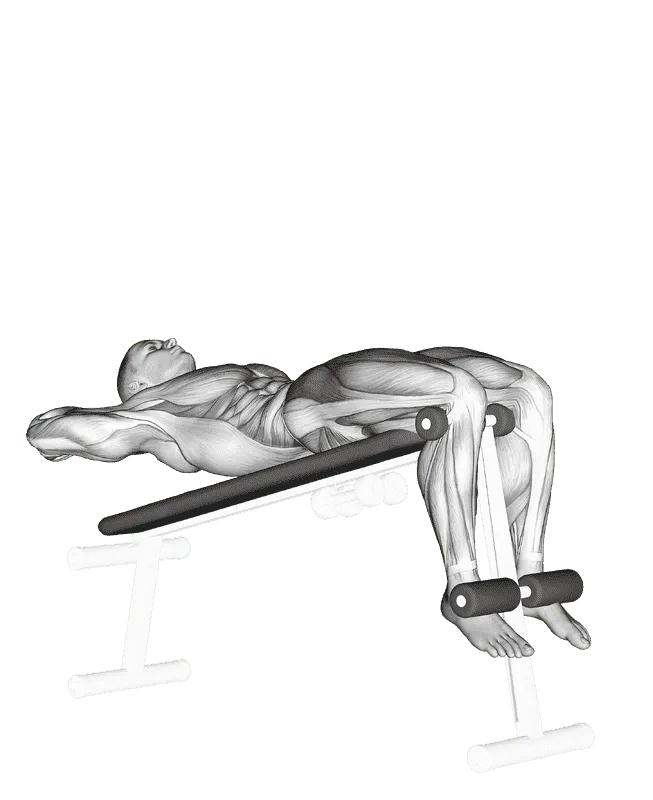
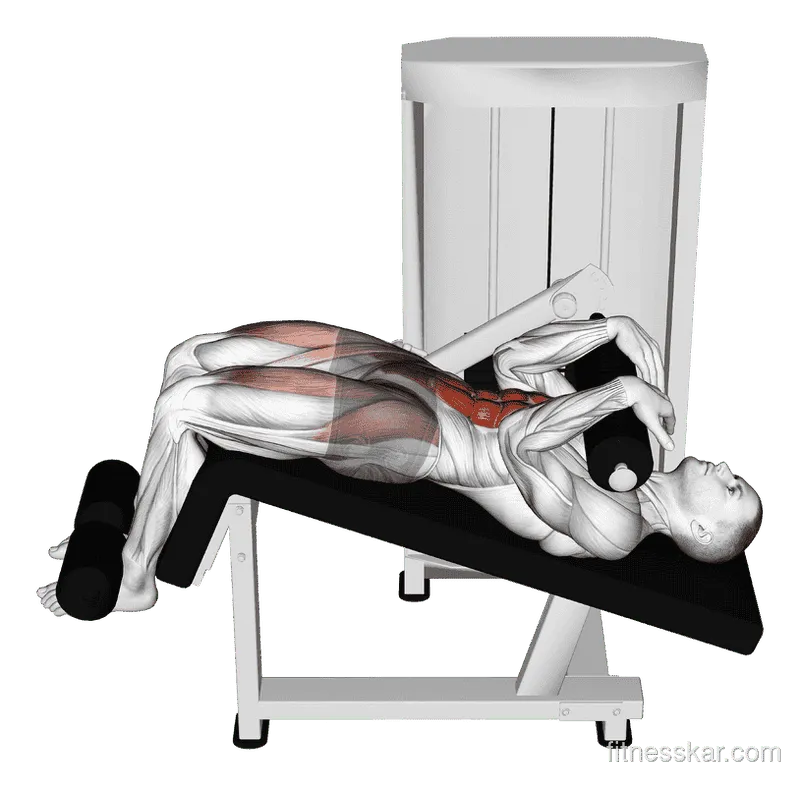

Questions about Band Decline Sit-Up
What muscles does the Band Decline Sit-Up work?
The Band Decline Sit-Up primarily targets your abdominal muscles, with a strong emphasis on the rectus abdominis. It also engages your obliques for rotational stability and your hip flexors to help raise your torso during the movement.
What equipment do I need for a Band Decline Sit-Up, and are there alternatives?
You will need a decline bench to secure your feet and resistance bands for added tension. If you don’t have a decline bench, you can use a flat bench with your feet anchored, or perform regular banded sit-ups on the floor for a similar core challenge.
Is the Band Decline Sit-Up suitable for beginners?
Beginners can try this exercise with lighter resistance bands or without bands to focus on mastering form first. The decline angle increases intensity, so starting with a slight decline and progressing gradually can help prevent strain.
What are common mistakes to avoid when doing Band Decline Sit-Ups?
Avoid jerking your torso up or relying on momentum, as this reduces core engagement and can strain your lower back. Keep the bands under constant tension, maintain a controlled motion, and ensure your lower back stays aligned with the bench.
How many sets and reps should I do for Band Decline Sit-Ups?
For general core strengthening, aim for 3–4 sets of 12–15 controlled repetitions. If your goal is endurance, you can increase the reps while maintaining proper form and band tension throughout.
Are there safety concerns with Band Decline Sit-Ups?
Yes, using too much resistance or swinging through the movement can strain your lower back or hips. Always secure the bench and bands properly, brace your core during each rep, and stop immediately if you feel sharp pain.
What variations can I try for Band Decline Sit-Ups?
You can add a rotational twist at the top to target the obliques more, or hold a medicine ball instead of bands for a different resistance profile. Adjusting the decline angle or band tension can also modify the difficulty to suit your fitness level.