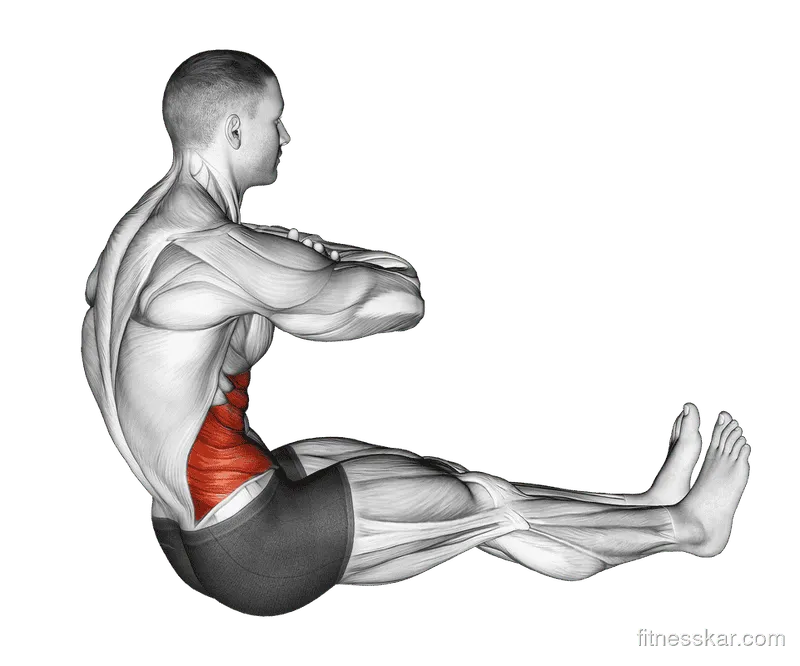
 Start
Start
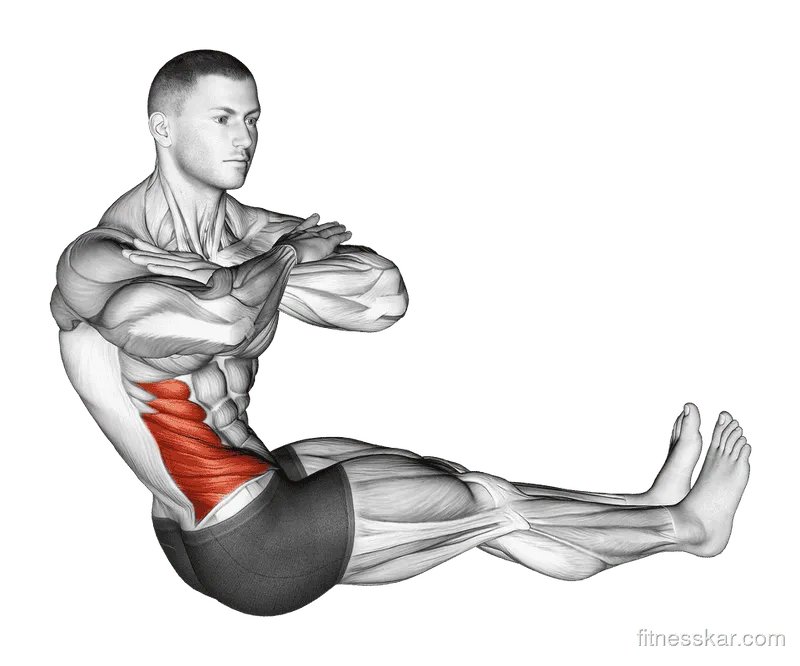 Finish
Seated Spine Twist
Sit on the floor with your legs extended and arms crossed over your chest, keeping your back straight and core engaged. Rotate your torso to one side from the waist while keeping your legs still, then return to center and twist to the other side. Maintain an upright posture throughout the movement.
- Target muscles
- Obliques
- Also works
- Abs, Lower back
- Equipment
- Bodyweight
- Training style
- Calisthenics, Home, Mobility and recovery
- Logged as
- Reps
- Popularity
- 75 of 100
Seated Spine Twist: how to do it
- Sit on the floor with your legs extended straight in front of you and your back upright.
- Cross your arms over your chest, keeping your shoulders relaxed and your core engaged.
- Slightly lean back to balance on your sit bones, ensuring your spine remains straight.
- Rotate your torso to one side, twisting from your waist while keeping your legs stationary.
- Return to the center position with control.
- Rotate your torso to the opposite side, again twisting from your waist.
- Repeat the movement, alternating sides for the desired number of repetitions.
Common mistakes
Common mistakes include rounding the back, moving the legs during the twist, and forcing the rotation beyond your comfort level. Keep your posture upright and rotate only from the waist to prevent strain.
Alternatives
More Obliques exercises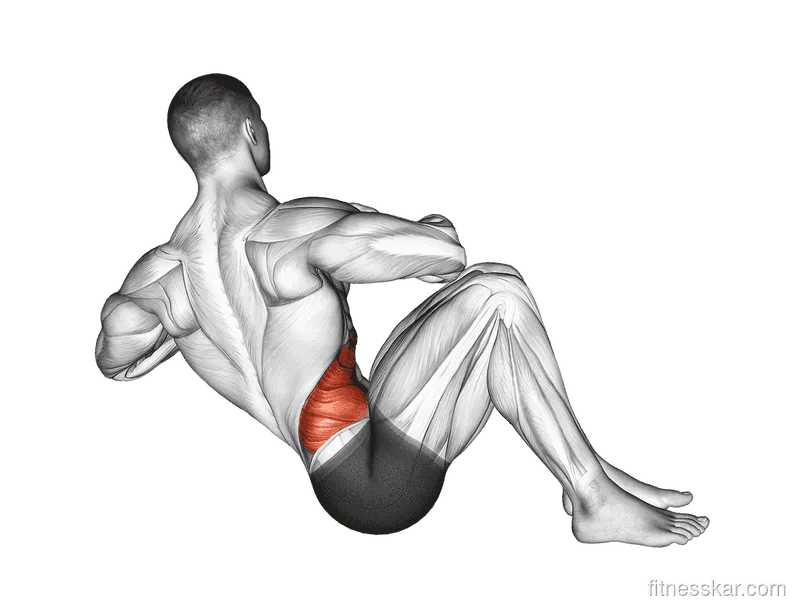
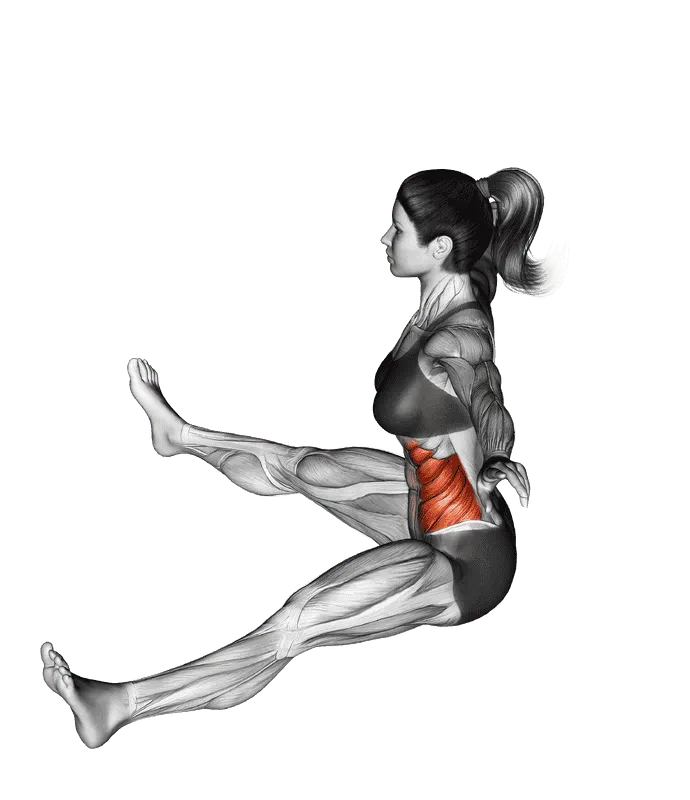

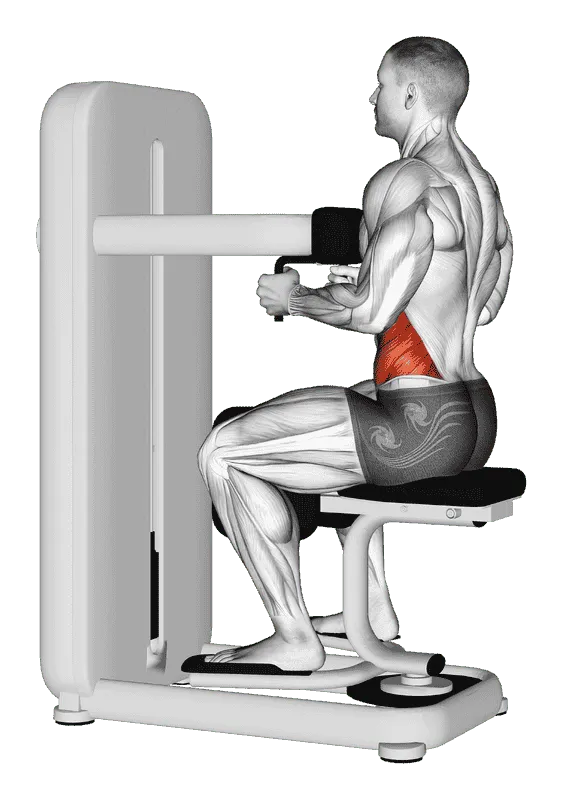
Questions about Seated Spine Twist
What muscles does the Seated Spine Twist work?
The Seated Spine Twist primarily targets the obliques, helping strengthen and define your waistline. It also engages your abs and lower back muscles, improving core stability and spinal mobility.
Do I need any equipment for the Seated Spine Twist?
No equipment is required for the Seated Spine Twist—it's a bodyweight exercise you can do anywhere. You only need a flat surface, such as a yoga mat, to sit comfortably and maintain proper posture.
Is the Seated Spine Twist suitable for beginners?
Yes, this exercise is beginner-friendly when performed slowly and with controlled movements. Beginners should focus on keeping the back straight and limiting rotation range until flexibility and core strength improve.
What are common mistakes to avoid when doing the Seated Spine Twist?
Common mistakes include rounding the back, moving the legs during the twist, and forcing the rotation beyond your comfort level. Keep your posture upright and rotate only from the waist to prevent strain.
How many sets and reps should I do for the Seated Spine Twist?
For general mobility and core activation, aim for 2–3 sets of 8–10 twists per side. Perform the movement slowly, pausing briefly at the end of each rotation to deepen the stretch.
Are there any safety tips for the Seated Spine Twist?
Avoid quick, jerky motions to protect your lower back and spine. If you have a history of back injuries or spinal issues, consult a healthcare professional before adding this exercise to your routine.
What variations can I try to make the Seated Spine Twist more challenging?
You can increase intensity by holding a light medicine ball or extending your arms straight in front of you during the twist. Another variation is performing the exercise on a stability ball to engage more core muscles.