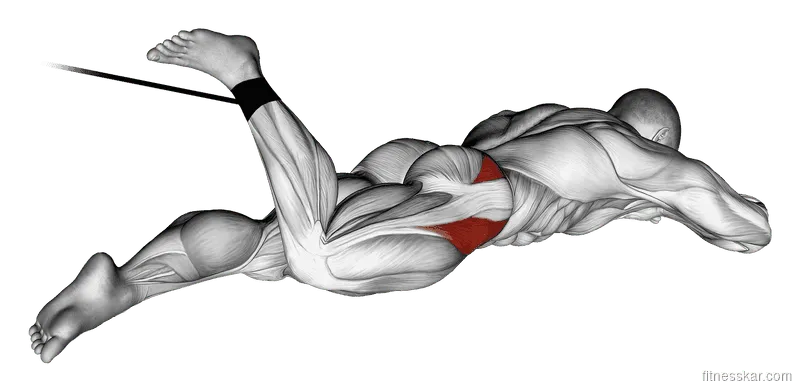
 Start
Start
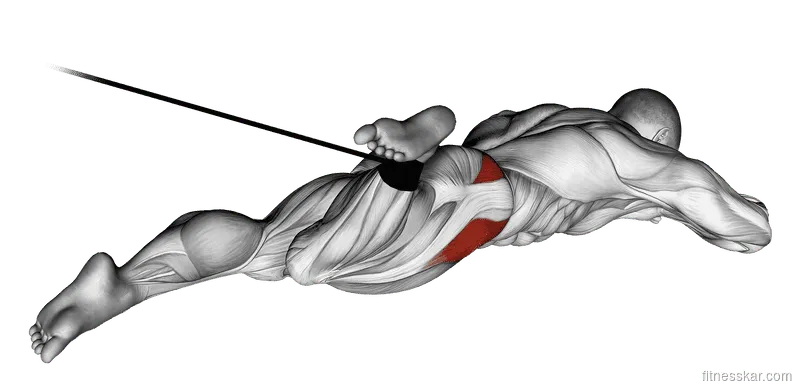 Finish
Band Lying Hip Internal Rotation
Lie on your stomach with your knees bent at 90 degrees and a resistance band looped around one ankle, anchored to a sturdy point. Keeping your thighs flat, slowly rotate your banded leg inward so your foot moves across your body, then return to the starting position. Focus on keeping your knee still and moving only from the hip.
- Target muscles
- Glutes
- Also works
- Upper legs
- Equipment
- Resistance bands
- Training style
- Mobility and recovery, Home
- Logged as
- Weight and reps
- Popularity
- 65 of 100
Band Lying Hip Internal Rotation: how to do it
- Begin by lying on your stomach on a flat surface, such as a mat or the floor.
- Attach a resistance band to a sturdy anchor point and loop the other end around one ankle.
- Bend your knees to form a 90-degree angle, keeping your thighs flat against the surface.
- Slowly rotate the banded leg inward, moving your foot across your body while keeping your knee stationary.
- Pause briefly at the end of the movement, ensuring you feel the contraction in your hip muscles.
- Return your leg to the starting position in a controlled manner.
- Repeat for the desired number of repetitions, then switch to the other leg if needed.
Common mistakes
A common error is moving the knee or lifting the thigh instead of isolating the hip rotation. Keep your knee bent at 90 degrees and thigh on the floor, moving only from the hip joint to ensure correct targeting and prevent strain.
Alternatives
More Glutes exercises

Questions about Band Lying Hip Internal Rotation
What muscles does the Band Lying Hip Internal Rotation work?
This exercise primarily targets the glute muscles, particularly the gluteus medius and minimus, which assist in hip stability and rotation. It also engages parts of the upper legs, including the inner thigh muscles, helping improve mobility and strength at the hip joint.
Do I need special equipment for Band Lying Hip Internal Rotation?
You’ll need a resistance band and a stable anchor point for this exercise. If you don’t have bands, you can use a cable machine with a low pulley, but bands are more convenient for home workouts and mobility training.
Is Band Lying Hip Internal Rotation good for beginners?
Yes, it’s beginner-friendly, as long as you choose a light resistance band and focus on controlled movement. Start slowly to build hip mobility and avoid straining your muscles, then gradually increase resistance as your strength improves.
What are common mistakes to avoid when doing Band Lying Hip Internal Rotation?
A common error is moving the knee or lifting the thigh instead of isolating the hip rotation. Keep your knee bent at 90 degrees and thigh on the floor, moving only from the hip joint to ensure correct targeting and prevent strain.
How many sets and reps should I do for Band Lying Hip Internal Rotation?
For mobility and activation work, aim for 2–3 sets of 12–15 slow, controlled reps on each leg. If you’re using it for strengthening, you can add extra resistance and perform 3–4 sets of 8–12 reps with proper form.
Is Band Lying Hip Internal Rotation safe for people with hip issues?
It can be safe for mild mobility restrictions if performed with low resistance and slow control, but those with hip injuries or pain should consult a physiotherapist first. Avoid overextending or forcing the movement to protect the joint.
Are there variations of Band Lying Hip Internal Rotation to try?
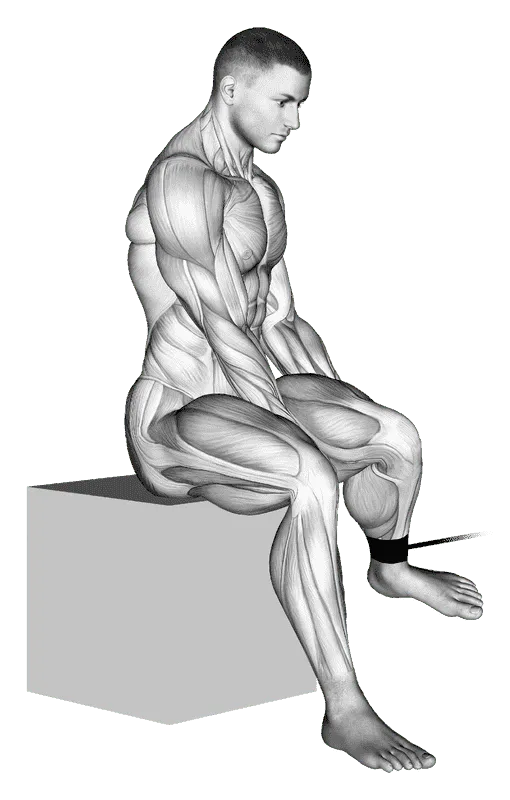
Yes, you can perform the exercise with a cable machine or in a seated position for a different angle of resistance. You can also adjust band tension or change the anchor height to increase difficulty and challenge your hip stability.