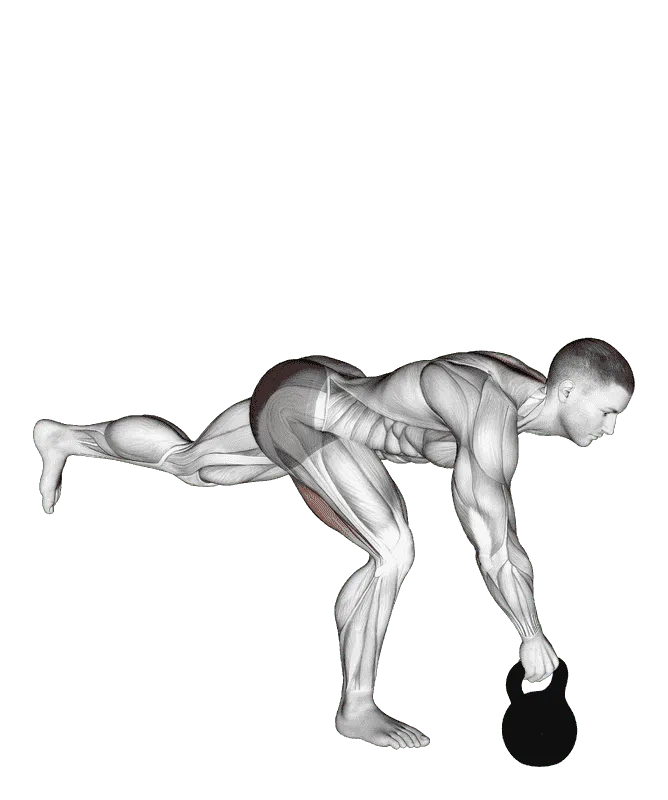
 Start
Start
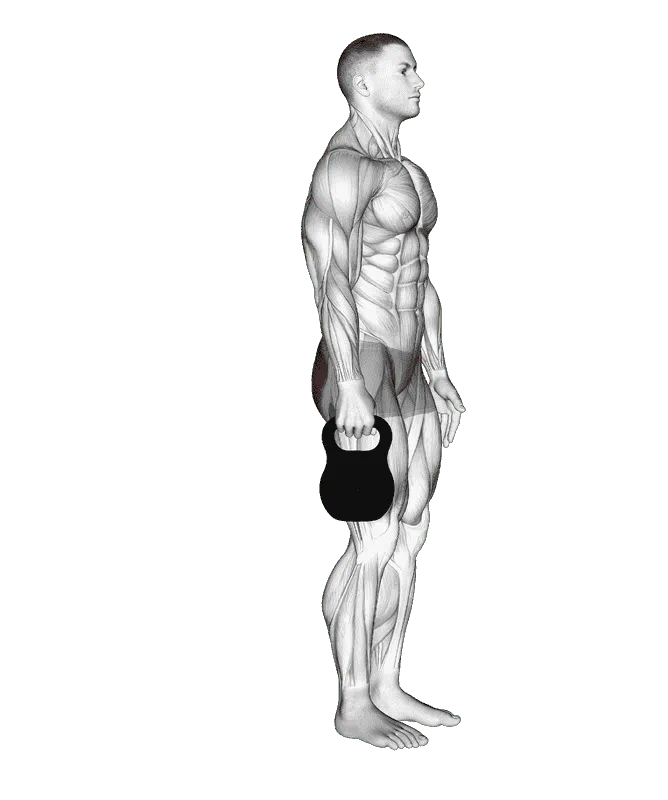 Finish
Kettlebell One-Legged Deadlift
Stand on one leg with a slight knee bend, holding a kettlebell at your side. Hinge forward at the hips, extending your free leg straight back while lowering the kettlebell toward the ground, keeping your back straight and core engaged. Return to standing by driving through your heel, maintaining balance and alignment throughout the movement.
- Target muscles
- Glutes, Upper legs
- Also works
- Lower back, Abs, Lower legs
- Equipment
- Kettlebell
- Training style
- Gym-based, Home, Mobility and recovery
- Logged as
- Weight and reps
- Popularity
- 85 of 100
Kettlebell One-Legged Deadlift: how to do it
- Begin by standing upright with your feet shoulder-width apart, holding a kettlebell in one hand at your side.
- Shift your weight onto one leg, keeping a slight bend in the knee of the supporting leg.
- Slowly hinge forward at the hips, extending the opposite leg straight back behind you for balance.
- Lower the kettlebell toward the ground while keeping your back straight and your core engaged.
- Continue lowering until your torso is nearly parallel to the ground or as far as your flexibility allows.
- Pause briefly at the bottom of the movement, ensuring your body remains stable and aligned.
- Slowly return to the starting position by driving through the heel of the supporting leg and bringing the extended leg back down.
- Repeat for the desired number of repetitions, then switch sides to work the opposite leg.
Common mistakes
Common mistakes include rounding the back, locking the knee of the supporting leg, and twisting the hips. To avoid these, maintain a neutral spine, keep a slight bend in the knee, and engage your core to control the movement.
Alternatives
More Glutes exercises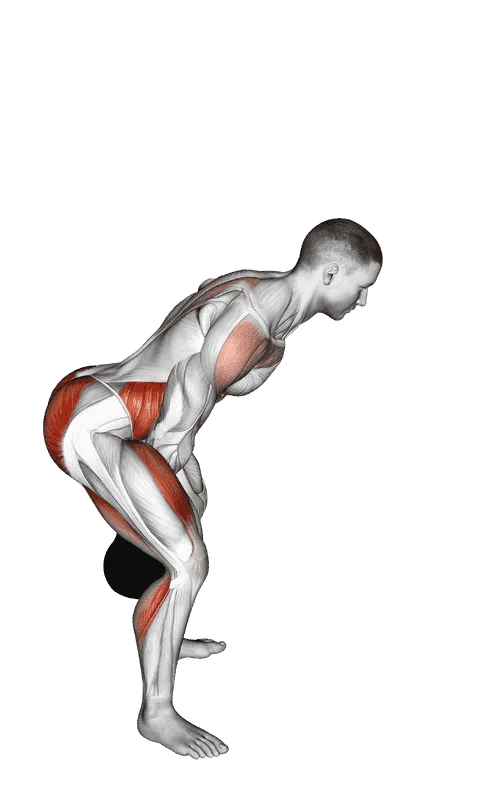
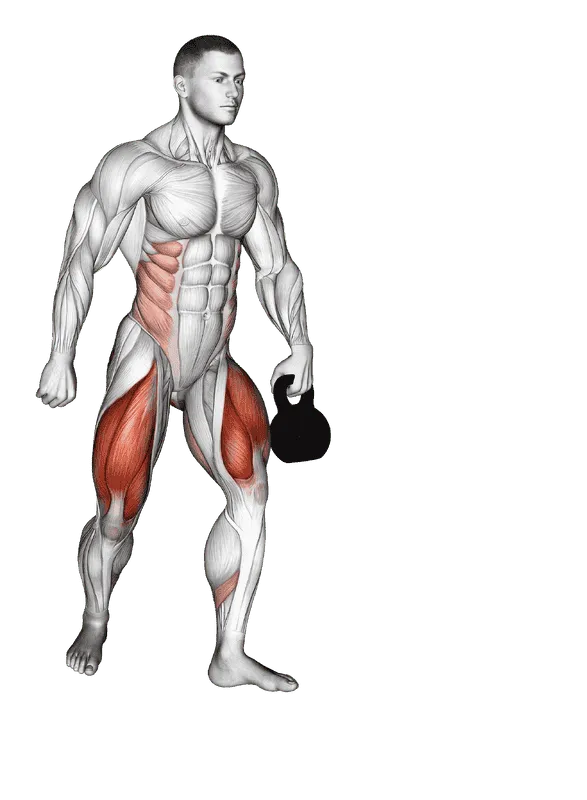
Questions about Kettlebell One-Legged Deadlift
What muscles does the kettlebell one-legged deadlift work?
The kettlebell one-legged deadlift primarily targets the glutes and upper legs, especially the hamstrings. Secondary muscles engaged include the lower back, core, and stabilizing muscles in the lower legs, making it an effective compound exercise for strength and balance.
Can beginners safely perform the kettlebell one-legged deadlift?
Yes, beginners can perform this exercise by starting with little to no weight to focus on proper form and balance. Once stability is developed, gradually increasing kettlebell weight will help build strength while reducing injury risk.
What equipment do I need for the kettlebell one-legged deadlift, and are there alternatives?
You need a kettlebell to perform the kettlebell one-legged deadlift. If you do not have a kettlebell, you can use a dumbbell or even a weighted backpack as a substitute, making it adaptable for home workouts.
What are common mistakes to avoid during the kettlebell one-legged deadlift?
Common mistakes include rounding the back, locking the knee of the supporting leg, and twisting the hips. To avoid these, maintain a neutral spine, keep a slight bend in the knee, and engage your core to control the movement.
How many sets and reps should I do for the kettlebell one-legged deadlift?
A good starting point is 3 sets of 8–12 reps per leg, focusing on controlled movements and balance. Adjust reps or weight depending on your fitness goals, such as strength, endurance, or rehabilitation work.
Is the kettlebell one-legged deadlift good for injury prevention?
Yes, this exercise improves balance, strengthens stabilizing muscles, and enhances posterior chain strength, which can help reduce the risk of lower back, hip, and knee injuries. Always prioritize proper form to maximize safety benefits.
Are there variations of the kettlebell one-legged deadlift I can try?
You can try variations such as holding the kettlebell in both hands, performing the movement with a slight knee bend for hamstring emphasis, or elevating your back foot on a bench for more stability. Advanced athletes may add tempo control or pause at the bottom for increased challenge.