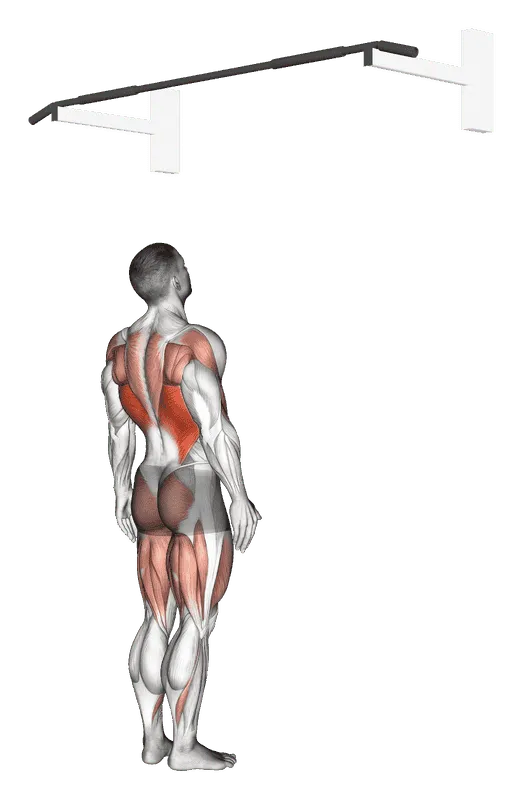
 Start
Start
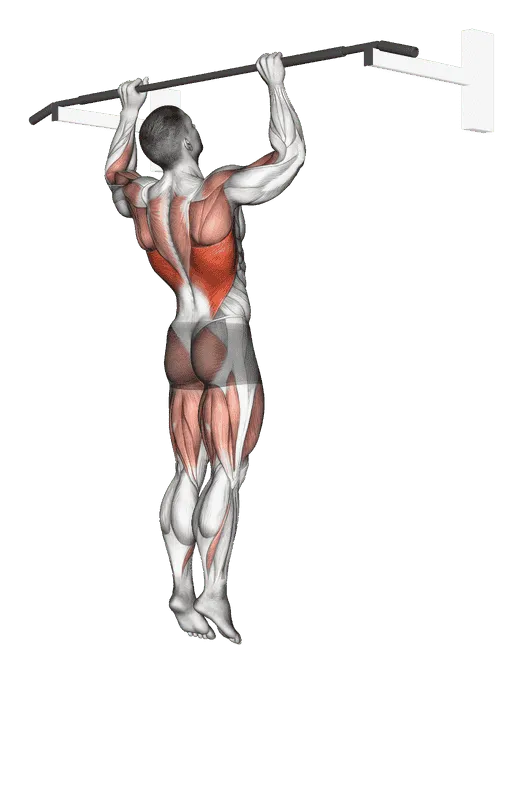 Finish
Jumping Pull-Up
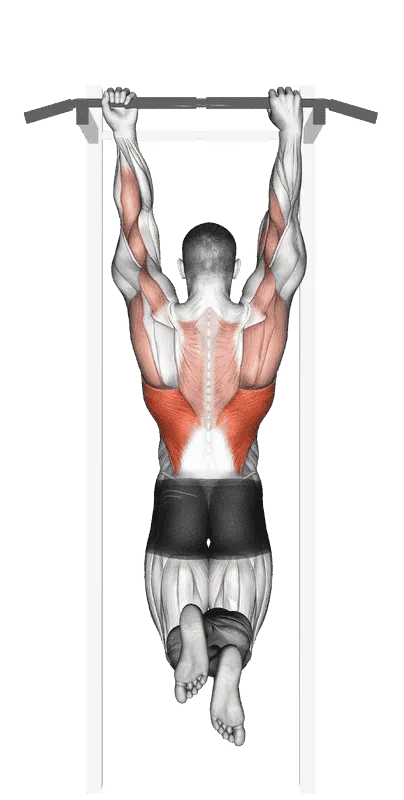
Stand under a pull-up bar and jump up to grab it with an overhand grip, slightly wider than shoulder-width. Use the momentum from your jump to pull your chin above the bar, then lower yourself down in a controlled manner until your arms are fully extended. Focus on engaging your back and biceps throughout the movement.
- Target muscles
- Back, Biceps
- Also works
- Shoulders, Glutes, Upper legs, Lower legs
- Equipment
- Pull-up bar
- Training style
- Gym-based, Calisthenics, CrossFit
- Logged as
- Reps
- Popularity
- 85 of 100
Jumping Pull-Up: how to do it
- Stand directly under a pull-up bar with your feet shoulder-width apart. Ensure the bar is high enough that you need to jump to reach it.
- Jump upward, grabbing the bar with an overhand grip (palms facing away from you) slightly wider than shoulder-width apart.
- Use the momentum from your jump to pull your chin above the bar, engaging your back and biceps as you pull.
- Lower yourself back down in a controlled manner until your arms are fully extended.
- Release the bar and return to the starting position on the ground.
- Repeat the movement for the desired number of repetitions.
Common mistakes
Avoid relying solely on the jump without engaging your back muscles, as this reduces the effectiveness of the exercise. Also, don’t let your body drop quickly—lower yourself in a controlled manner to prevent strain on your shoulders and elbows.
Alternatives
More Back exercises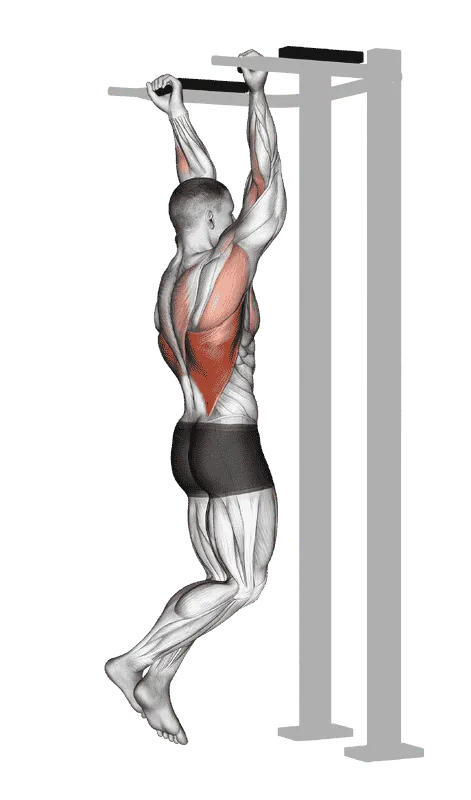
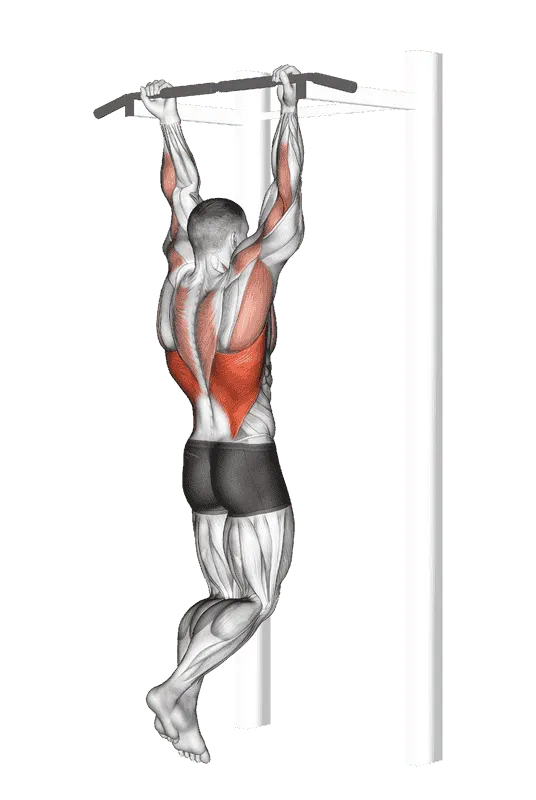
Questions about Jumping Pull-Up
What muscles do jumping pull-ups work?
Jumping pull-ups primarily target the back muscles, especially the latissimus dorsi, along with the biceps. They also engage the shoulders, glutes, quadriceps, and calves as secondary stabilizers due to the jumping motion.
Is a pull-up bar the only equipment needed for jumping pull-ups?
Yes, you just need a sturdy pull-up bar that can support your body weight. If you don’t have access to a fixed bar, a portable doorway pull-up bar or outdoor parallel bars can be suitable alternatives.
Are jumping pull-ups good for beginners?
Jumping pull-ups can be very beginner-friendly since the jump helps reduce the strength needed to get above the bar. They allow beginners to build pull-up strength gradually while still practicing proper form.
What are common mistakes to avoid when doing jumping pull-ups?
Avoid relying solely on the jump without engaging your back muscles, as this reduces the effectiveness of the exercise. Also, don’t let your body drop quickly—lower yourself in a controlled manner to prevent strain on your shoulders and elbows.
How many sets and reps should I do for jumping pull-ups?
For beginners, start with 3 sets of 8–10 reps, focusing on controlled movement and proper form. Intermediate athletes can increase to 4–5 sets of 10–12 reps or incorporate tempo variations for more challenge.
What safety tips should I follow when doing jumping pull-ups?
Use a stable and secure pull-up bar to avoid accidents. Wear supportive footwear, ensure proper landing mechanics, and warm up your shoulders and arms to reduce the risk of injury.
What variations of jumping pull-ups can I try?
You can perform weighted jumping pull-ups using a dip belt for added resistance, or slow down the lowering phase for more muscle engagement. Another variation is kipping pull-ups, which use a swinging motion to increase speed and volume.