 Start
Start
 Finish
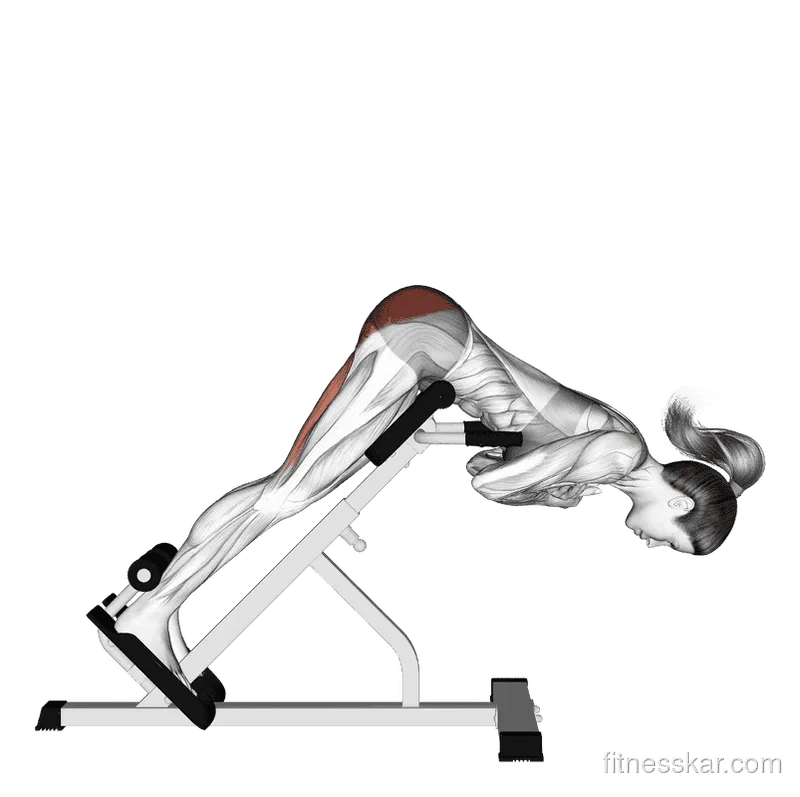
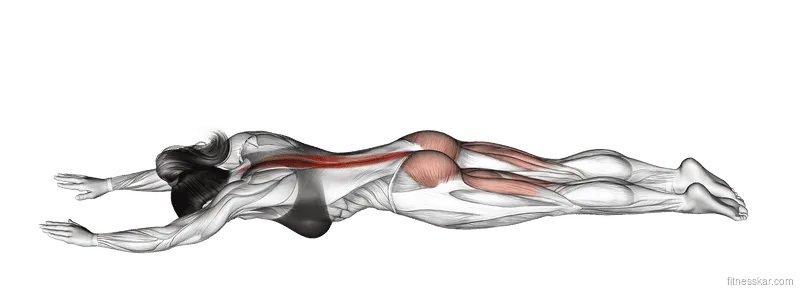
Exercise Ball Back Extension With Hands Behind Head
Lie face down on an exercise ball with your hips on the ball, feet firmly on the floor, and hands behind your head. From a bent position, engage your core and glutes to lift your upper body until your torso is in line with your legs, then lower back down with control. Keep your neck neutral and avoid overextending your back.
- Target muscles
- Lower back
- Also works
- Glutes, Upper back, Abs
- Equipment
- Exercise ball
- Training style
- Gym-based, Home, Mobility and recovery
- Logged as
- Reps
- Popularity
- 75 of 100
Exercise Ball Back Extension With Hands Behind Head: how to do it
- Begin by positioning yourself face down on an exercise ball, with your hips resting on the ball and your feet firmly planted on the ground for stability.
- Place your hands behind your head, keeping your elbows wide and your neck in a neutral position.
- Start in a bent position, allowing your upper body to curve naturally over the ball. This is your starting position.
- Engage your core and glutes as you slowly lift your upper body upward, extending your back until your torso is in line with your legs. Avoid overextending or arching your back excessively.
- Hold the top position briefly, ensuring your back muscles are fully engaged.
- Slowly lower your upper body back to the starting position, maintaining control throughout the movement.
- Repeat for the desired number of repetitions.
Common mistakes
Avoid overarching your back or jerking upward, as this can cause injury. Keep your neck neutral, engage your core, and move slowly to ensure you’re activating the right muscles.
Alternatives
More Lower back exercises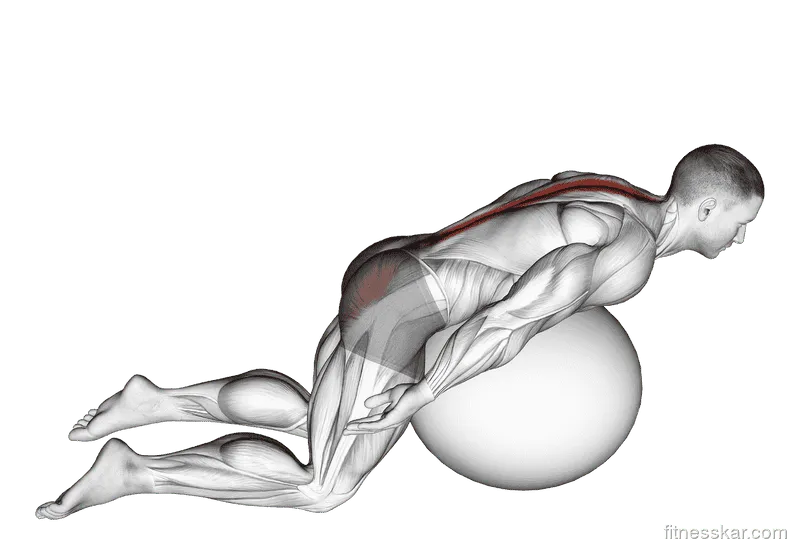

Questions about Exercise Ball Back Extension With Hands Behind Head
What muscles does the Exercise Ball Back Extension with Hands Behind Head work?
This back extension primarily targets the lower back muscles, particularly the erector spinae. It also engages the glutes, upper back, and abs for stability and control throughout the movement.
Do I need special equipment for this exercise?
Yes, you will need a stability or exercise ball to perform this move effectively. If you don’t have one, you can substitute with a Roman chair or perform floor-based back extensions for a similar muscle activation.
Is the Exercise Ball Back Extension suitable for beginners?
Beginners can safely perform this exercise by starting with a small range of motion and focusing on proper form. The ball provides support, but it’s important to maintain controlled movements to avoid strain on the lower back.
What are common mistakes to avoid when doing this exercise?
Avoid overarching your back or jerking upward, as this can cause injury. Keep your neck neutral, engage your core, and move slowly to ensure you’re activating the right muscles.
How many sets and reps should I do for optimal results?
For general strength and endurance, aim for 2–3 sets of 10–15 controlled repetitions. If building lower back endurance is your goal, you can increase reps while maintaining proper technique.
Are there variations of the Exercise Ball Back Extension with Hands Behind Head?
Yes, you can place your arms across your chest for an easier version or extend them overhead to increase difficulty. Adding light weights or resistance bands can also make the exercise more challenging.
What are the main benefits of doing this back extension exercise?
This movement strengthens the lower back, improves posture, and enhances core stability. It’s also effective for supporting spinal health and reducing the risk of lower back pain when done regularly with good form.