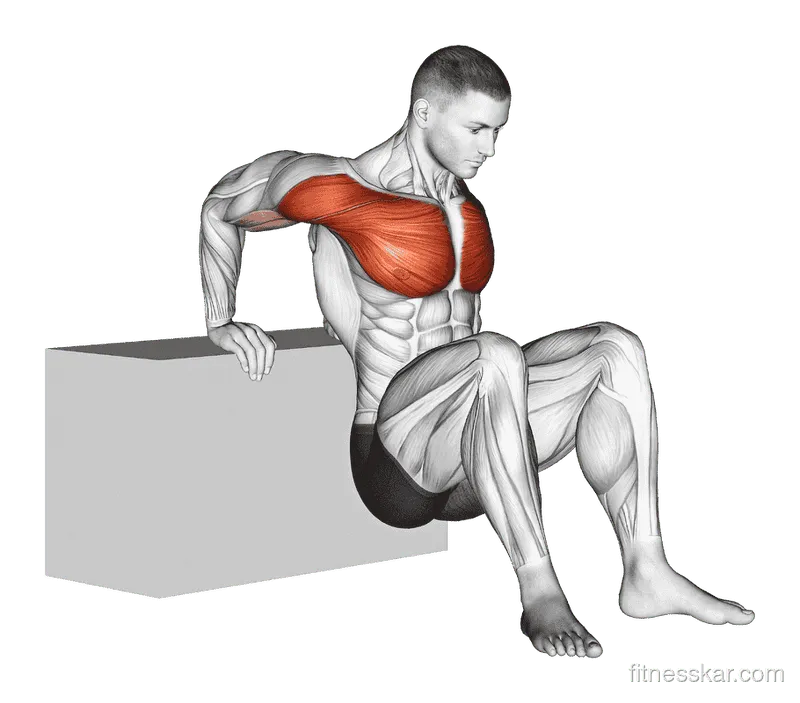
Reverse Chest Stretch
Sit on the ground with your back to a bench and place your hands on the edge behind you, fingers pointing forward. Keeping your arms straight and chest lifted, slowly slide your hips forward until you feel a stretch across your chest and shoulders. Maintain a straight posture and keep your shoulders down away from your ears.
- Target muscles
- Chest
- Also works
- Shoulders, Triceps
- Equipment
- Bench
- Training style
- Mobility and recovery, Home
- Logged as
- Seconds
- Popularity
- 65 of 100
Reverse Chest Stretch: how to do it
- Sit on the ground with your back facing a sturdy bench or elevated surface.
- Place your hands on the edge of the bench behind you, fingers pointing forward.
- Keep your arms straight and your chest lifted, ensuring your shoulders are down and away from your ears.
- Slowly slide your hips forward, away from the bench, while keeping your hands in place.
- Feel the stretch across your chest and shoulders as you hold this position.
- Maintain a straight posture and avoid rounding your back.
- Hold the stretch for the desired duration, then slowly return to the starting position.
Sets and reps (general guidance)
| Goal | Sets | Reps | Load |
|---|---|---|---|
| Strength | 3 to 5 | 3 to 6 | Heavy, full rest |
| Muscle and endurance | 3 to 4 | 8 to 12 | Moderate, perfect form |
Common mistakes
Avoid arching your lower back excessively or shrugging your shoulders up toward your ears, as this reduces the stretch's effectiveness and can cause strain. Keep your chest lifted, shoulders relaxed, and maintain a straight posture throughout the movement.
Alternatives
More Chest exercises
Questions about Reverse Chest Stretch
What muscles does the Reverse Chest Stretch target?
The Reverse Chest Stretch primarily targets the chest muscles, helping to open and lengthen the pectorals. It also engages the shoulders and triceps as secondary muscles, improving upper body mobility and posture.
Do I need a bench for the Reverse Chest Stretch, or can I use something else?
A bench is ideal because it provides stable support at the right height, but you can also use a sturdy chair, a low table, or even a countertop edge if done carefully. The key is to have a secure surface that allows you to keep your arms straight while stretching.
Is the Reverse Chest Stretch suitable for beginners?
Yes, this stretch is beginner-friendly and can easily be adjusted to individual flexibility levels. You can control the intensity by moving your hips less or more forward, ensuring you feel a gentle pull without pain.
What are common mistakes to avoid when doing the Reverse Chest Stretch?
Avoid arching your lower back excessively or shrugging your shoulders up toward your ears, as this reduces the stretch's effectiveness and can cause strain. Keep your chest lifted, shoulders relaxed, and maintain a straight posture throughout the movement.
How long should I hold the Reverse Chest Stretch for best results?
Aim to hold the stretch for 20–40 seconds, focusing on steady breathing and muscle relaxation. Perform 2–3 sets, especially after upper body workouts or when you’ve been sitting for long periods.
Are there any safety tips for performing the Reverse Chest Stretch?
Always warm up gently before stretching to reduce the risk of muscle strain. Move slowly into position, avoid bouncing, and stop immediately if you feel sharp pain or tingling in your arms or shoulders.
What are some variations of the Reverse Chest Stretch I can try?
You can perform the stretch standing with your hands behind you on a countertop, or try a single-arm version to focus on one shoulder at a time. Using yoga blocks instead of a bench can also adjust the height and change the intensity.