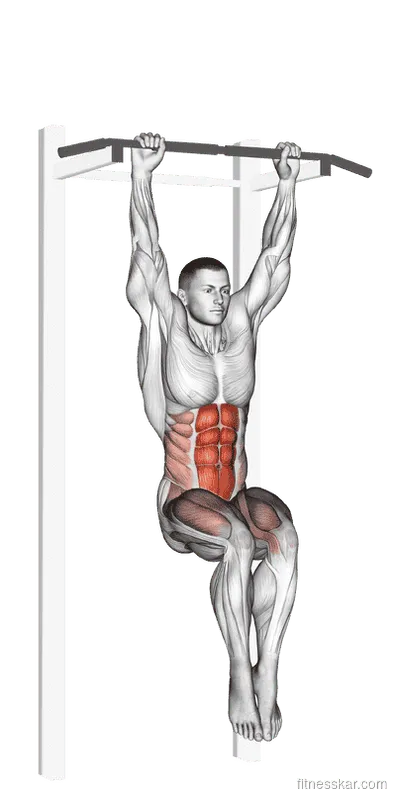
 Start
Start
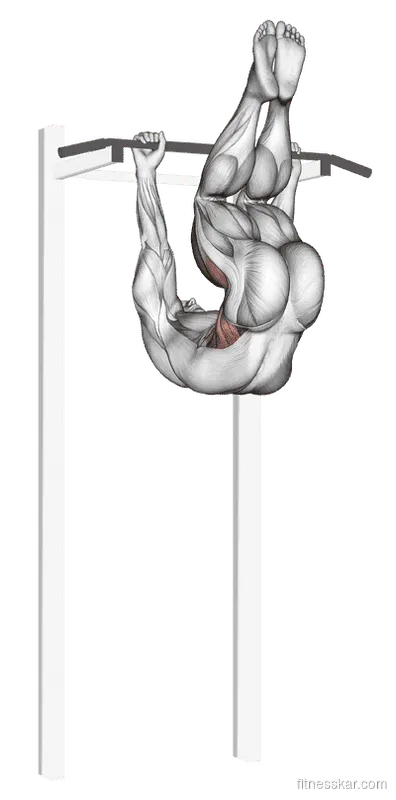 Finish
Hanging Pike
Hang from a pull-up bar with an overhand grip and your legs straight. Engage your core and lift your straight legs upward, aiming to bring your feet toward the bar while curling your pelvis slightly. Pause briefly at the top, then lower your legs back down slowly, avoiding any swinging.
- Target muscles
- Lower abs, Upper abs
- Also works
- Obliques, Upper legs, Shoulders
- Equipment
- Pull-up bar, Bodyweight
- Training style
- Gym-based, Calisthenics
- Logged as
- Reps
- Popularity
- 85 of 100
Hanging Pike: how to do it
- Begin by hanging from a pull-up bar with an overhand grip, keeping your arms fully extended and your legs straight.
- Engage your core muscles and lift your legs upward while keeping them straight, aiming to bring your feet as close to the bar as possible.
- As you lift your legs, curl your pelvis slightly to engage your lower abs more effectively.
- Pause briefly at the top of the movement when your legs are fully raised and your body forms a pike position.
- Slowly lower your legs back to the starting position in a controlled manner, avoiding any swinging or momentum.
- Repeat for the desired number of repetitions.
Common mistakes
Avoid swinging your legs or using momentum, as this reduces core engagement and increases injury risk. Another common error is arching your lower back—keep your pelvis tucked slightly and engage your core throughout the movement.
Alternatives
More Lower abs exercises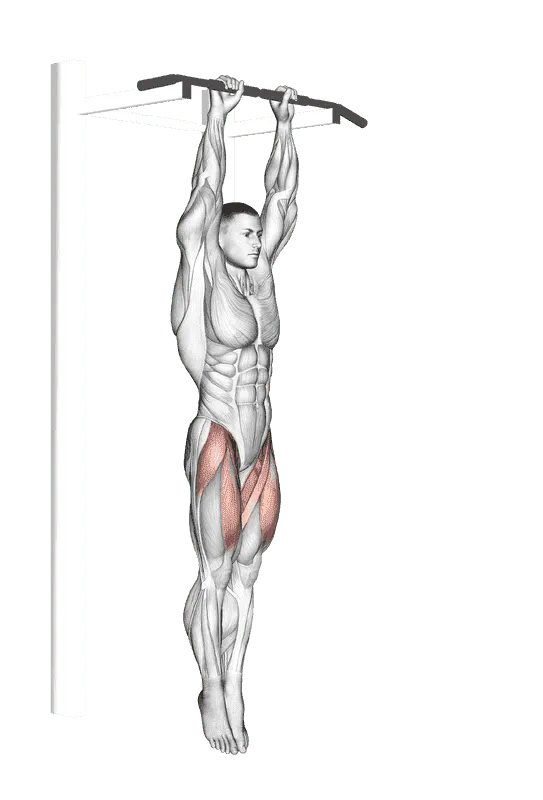

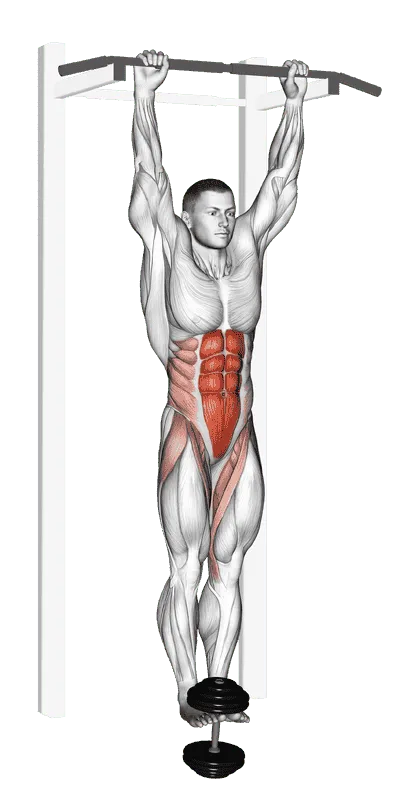
Questions about Hanging Pike
What muscles does the Hanging Pike target?
The Hanging Pike primarily works your lower and upper abdominal muscles, making it an excellent core isolation move. It also engages your obliques, hip flexors, and to a lesser extent your shoulders for stability.
Do I need special equipment for Hanging Pikes?
You’ll need a sturdy pull-up bar for proper execution, ideally one with enough clearance for a full leg lift. If a pull-up bar isn’t available, gymnastic rings or a suspension trainer can serve as alternatives, though stability may be more challenging.
Is the Hanging Pike suitable for beginners?
The Hanging Pike can be quite demanding for beginners due to the strength and control required. Beginners may start with knee raises or semi-bent leg lifts before progressing to the fully extended leg version.
What are common mistakes to avoid when doing Hanging Pikes?
Avoid swinging your legs or using momentum, as this reduces core engagement and increases injury risk. Another common error is arching your lower back—keep your pelvis tucked slightly and engage your core throughout the movement.
How many sets and reps should I do for Hanging Pikes?
Start with 3 sets of 8–12 controlled reps, focusing on quality over quantity. Rest 60–90 seconds between sets and adjust volume based on your core strength and training goals.
Are there safer modifications for the Hanging Pike?
Yes—modifications include hanging knee raises, bent-leg pikes, or performing the move on parallel bars to reduce strain on your shoulders. These options build strength while minimizing excessive lower back load.
What are the benefits of adding Hanging Pikes to my workout?
Hanging Pikes improve core strength, hip flexor mobility, and overall body control, making them ideal for athletes and calisthenics enthusiasts. They also enhance grip strength and shoulder stability by requiring a strong overhead hold.