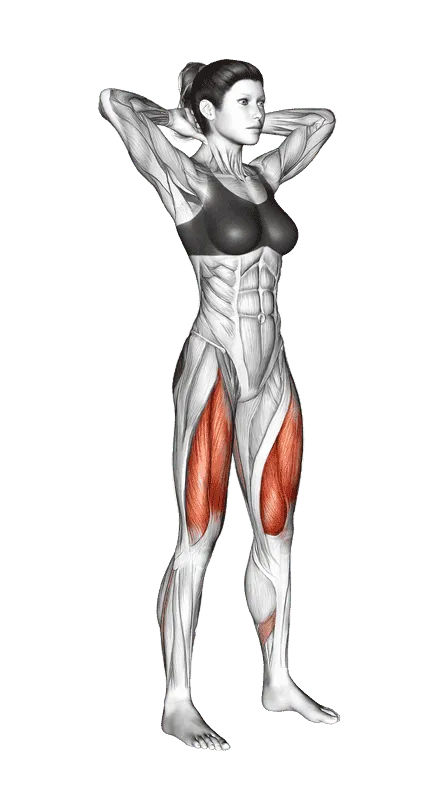
 Start
Start
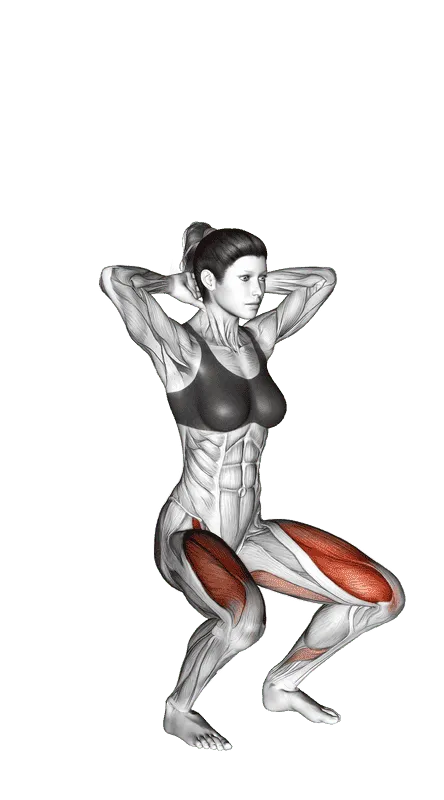 Finish
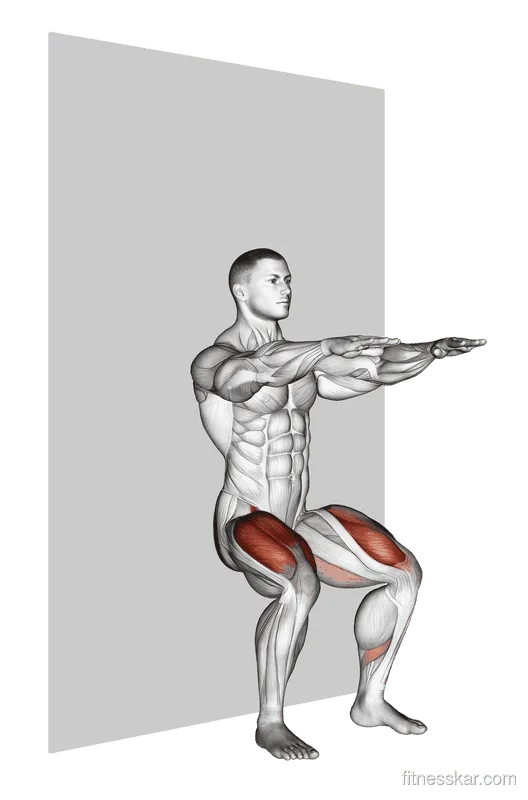
Overhead Squat
Stand with your feet shoulder-width apart and arms extended overhead, keeping your chest up and core engaged. Squat down by bending your knees and pushing your hips back until your thighs are parallel to the ground, ensuring your knees track over your toes. Maintain a straight back and avoid letting your arms drop forward throughout the movement.
- Target muscles
- Upper legs
- Also works
- Glutes, Lower back, Abs
- Equipment
- Bodyweight
- Training style
- Gym-based, Calisthenics, Home
- Logged as
- Reps
- Popularity
- 85 of 100
Overhead Squat: how to do it
- Stand upright with your feet shoulder-width apart, toes slightly pointed outward.
- Extend your arms overhead or place your hands behind your head, keeping your chest upright and core engaged.
- Begin the squat by bending your knees and pushing your hips back, as if sitting into a chair.
- Lower your body until your thighs are parallel to the ground or as low as your mobility allows, ensuring your knees stay aligned with your toes.
- Keep your back straight and avoid rounding your shoulders throughout the movement.
- Push through your heels to return to the starting position, fully extending your hips and knees.
- Repeat for the desired number of repetitions.
Common mistakes
Common mistakes include letting your arms drop forward, rounding your back, or allowing your knees to cave in. To avoid these, keep your core engaged, maintain a neutral spine, and ensure your knees track over your toes throughout the movement.
Alternatives
More Upper legs exercises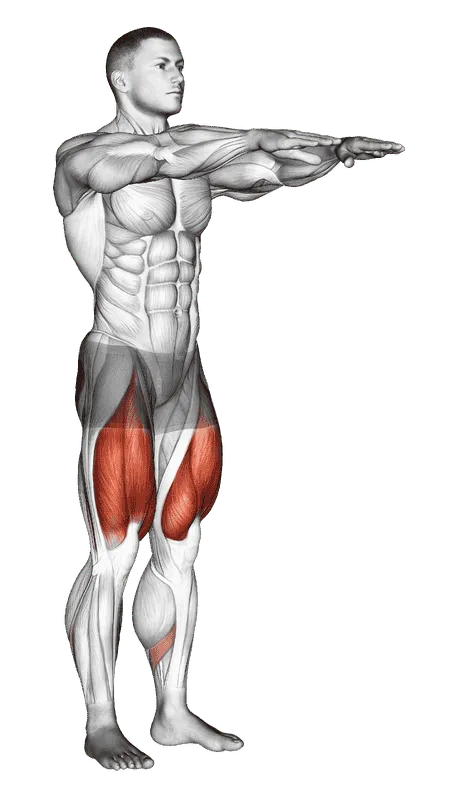
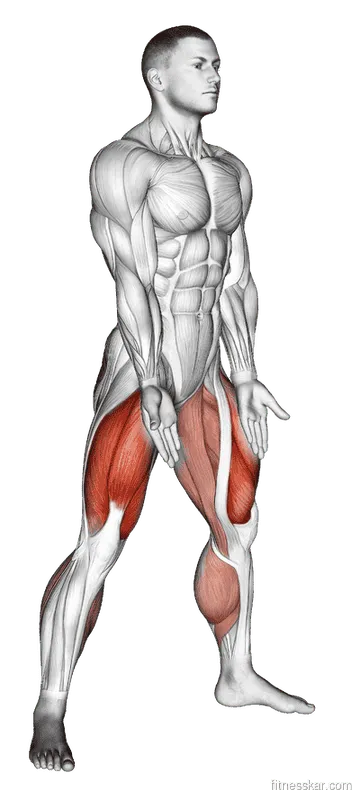
Questions about Overhead Squat
What muscles does the overhead squat work?
The overhead squat primarily targets your upper legs, especially the quadriceps, while also engaging the glutes, lower back, and abdominal muscles. Holding your arms overhead requires strong shoulder stability and core engagement, making it a full-body exercise.
Do I need equipment to perform overhead squats?
You can do overhead squats with just your body weight, but adding a barbell, dowel rod, or resistance band can increase difficulty and improve shoulder stability. Beginners often start with a lightweight stick or broom handle to practice form before using heavier equipment.
Is the overhead squat suitable for beginners?
The overhead squat can be challenging for beginners due to the mobility and balance required. It’s best to start with a lightweight object or no weight at all, focusing on proper posture and range of motion before gradually increasing load.
What are common mistakes to avoid in the overhead squat?
Common mistakes include letting your arms drop forward, rounding your back, or allowing your knees to cave in. To avoid these, keep your core engaged, maintain a neutral spine, and ensure your knees track over your toes throughout the movement.
How many sets and reps should I do for overhead squats?
For strength and mobility, most lifters perform 3–4 sets of 6–10 reps. Beginners may start with 2–3 sets of 8–12 reps using light weight, focusing on controlled movement and correct form.
Are there any safety tips for overhead squats?
Ensure you have good shoulder and hip mobility before attempting this lift, and always warm up with dynamic stretches. Use a spotter or lift inside a rack if working with heavier weights, and stop immediately if you feel pain in your shoulders or lower back.
What are some variations of the overhead squat?
You can try variations such as the single-arm overhead squat for unilateral strength, or the goblet overhead squat for beginners using a light dumbbell or kettlebell. Performing the movement with a PVC pipe or resistance band is excellent for technique practice and mobility work.