If you have ever reached the bottom of a bag of chips or finished an entire restaurant entree without truly tasting the food, you have experienced mindless eating. Most conventional weight loss programs fail not because people do not understand that vegetables contain fewer calories than pastries, but because modern eating occurs in an unconscious, rushed state completely divorced from human biology. When you eat while answering emails, scrolling through social media, or rushing between appointments, you sever the communication line between your digestive tract and your brain. The result is chronic overeating, persistent digestive distress, and the frustrating sensation that your appetite is completely out of control.
The sustainable solution is mindful eating for weight loss—an evidence-based behavioral and neurobiological methodology that reconnects your conscious mind with your internal physiological satiety systems. Rather than forcing yourself to endure severe caloric deprivation, mindful eating trains you to recognize authentic hunger cues, slow your ingestion rate, and stop eating precisely when your body is satisfied. When combined with strategic healthy food swaps and a moderate calorie deficit, mindful eating transforms weight management from an exhausting battle of willpower into an automated, intuitive lifestyle.
The Neurobiology of Fullness: Why Rushed Eating Triggers Weight Gain
To understand why mindful eating produces dramatic, lasting body composition changes, you must examine how your central nervous system regulates energy intake. Appetite is governed by two distinct neural circuits: homeostatic hunger and hedonic hunger. Homeostatic hunger is driven by biological energy requirements, controlled primarily by the hypothalamus and brainstem. Hedonic hunger, by contrast, is driven by the mesolimbic dopamine pathway—the reward center of the brain that craves hyper-palatable combinations of refined carbohydrates, industrial fats, and sodium regardless of whether your cells require fuel.
When you consume a meal, your digestive system deploys a complex cascade of mechanical and biochemical feedback loops to suppress homeostatic hunger and signal satiety:
1. Gastric Mechanoreceptors and Vagal Afferents
Your stomach wall contains specialized stretch receptors (mechanoreceptors) embedded within the muscularis externa. As solid food and liquids fill the gastric lumen, the physical stretch of the stomach wall activates these receptors. They transmit electrical impulses via the vagus nerve directly to the solitary tract in the brainstem, signaling that physical volume has arrived. However, volume alone is insufficient for sustained fullness; the brain requires hormonal confirmation of nutrient density.
2. The Gut-Brain Endocrine Cascade
As partially digested food enters the duodenum and small intestine, specialized enteroendocrine cells release a suite of powerful satiety peptides into the bloodstream:
- Cholecystokinin (CCK): Synthesized by mucosal I-cells in the duodenum and jejunum in response to dietary fats and amino acids. CCK slows gastric emptying, stimulates gallbladder contraction, and binds to vagal sensory nerves to induce early meal termination.
- Glucagon-Like Peptide-1 (GLP-1) and Peptide YY (PYY): Synthesized by endocrine L-cells in the ileum and colon. These potent peptides suppress gastric motility (the "ileal brake"), slow nutrient transit, and bind to receptors in the arcuate nucleus of the hypothalamus to extinguish appetite for several hours.
- Ghrelin Suppression: Ghrelin is the body's primary orexigenic (hunger-stimulating) peptide, produced predominantly by the gastric fundus. Following food ingestion, circulating ghrelin levels drop precipitously, quieting the urge to forage.
- Leptin Signaling: Secreted by adipose tissue, leptin circulates at concentrations proportional to total body fat mass, communicating long-term energy reserves to the central nervous system.
The 20-Minute Signaling Lag
Here lies the crux of why modern lifestyle habits sabotage weight management: this hormonal cascade requires roughly 15 to 20 minutes to reach peak signaling intensity.
When you consume a meal in 5 to 8 minutes—gulping down lunch at your office desk or standing over the kitchen counter—your stomach fills with calories long before CCK, GLP-1, and PYY can reach the hypothalamus. Your brain remains under the neurochemical impression that you are starving. Consequently, you consume a second portion or grab a sugary dessert. By the time the hormonal signals finally penetrate the blood-brain barrier 25 minutes later, you are painfully stuffed and have overshot your caloric requirements by 300 to 600 calories.
In a landmark systematic review and meta-analysis published in The American Journal of Clinical Nutrition, researchers analyzed 22 controlled laboratory and real-world trials investigating the direct relationship between eating speed, caloric intake, and subjective satiety.[1] The researchers discovered that eating at a deliberately slower pace significantly decreased immediate energy intake while markedly increasing postprandial feelings of fullness compared to fast eating conditions.[1] The clinical conclusion is undeniable: slowing down your chewing cadence and meal duration is a scientifically validated lever to reduce caloric consumption without feeling deprived.
Physical Hunger vs. Emotional Craving: How to Decode Your Signals
A central pillar of mindful eating is developing interoceptive awareness—the ability to accurately perceive and interpret internal bodily sensations. The majority of excess calories consumed in modern society are not driven by true physiological energy depletion, but by emotional triggers such as chronic occupational stress, social boredom, fatigue, loneliness, or habit loops.
When stress strikes, the adrenal glands release cortisol, which mobilizes glucose and increases neuropeptide Y (NPY) expression in the brain, driving intense cravings for high-sugar, high-fat comfort foods. Emotional eating uses food as an external pharmacological tool to temporarily elevate dopamine and soothe psychological discomfort.
To master mindful eating, you must learn to instantly distinguish between physical hunger and emotional craving:
| Characteristic | Physical (Biological) Hunger | Emotional (Psychological) Craving |
|---|---|---|
| Onset Speed | Develops gradually over several hours; escalates predictably as blood glucose and glycogen decline. | Strikes suddenly with urgent intensity; often triggered by an acute emotional stressor or environmental cue. |
| Location of Sensation | Felt below the neck: physical stomach rumbling, a hollow sensation in the abdomen, mild lightheadedness, or low energy. | Felt above the neck: an obsessive mental preoccupation with a specific flavor, texture, or mouthfeel. |
| Food Specificity | Open to diverse nutrient sources: a plate of lean chicken breast, steamed vegetables, or eggs sounds satisfying. | Exclusively fixated on hyper-palatable foods: ice cream, pizza, pastries, or salty fried snacks. |
| Urgency | Patient: you can comfortably wait 30 to 45 minutes to prepare a balanced meal without panic. | Demands instant gratification: feels impossible to delay; impulse to raid the pantry immediately. |
| Sensory Awareness | You remain conscious of flavors, portion sizes, and chewing mechanics while consuming the meal. | Mindless, trance-like consumption: you eat rapidly, often without noticing the taste or physical volume. |
| Satiety Response | Ceases naturally when gastric distension and nutrient feedback signal fullness. | Ignores physical fullness signals; you continue eating past stomach discomfort. |
| Post-Meal Aftermath | Feeling energized, nourished, and physically stable; zero psychological remorse. | Feeling bloated, lethargic, guilty, frustrated, and ashamed of having lost control. |
Whenever you feel the sudden urge to eat, pause for 60 seconds and run through this diagnostic checklist. If the craving is emotional, recognize that food will never satisfy an emotional void. Address the true underlying deficit—whether that requires a brisk walk outdoors, ten deep diaphragmatic breaths, a glass of water, or calling a friend.
The 10-Point Hunger and Satiety Scale: Finding Your 80% Full Threshold
To translate neurobiology into everyday habit, clinical nutritionists and behavioral psychologists utilize the 10-Point Hunger and Satiety Scale. This scale provides an objective numerical language to quantify internal sensations that were previously vague and reactive.
Rather than viewing eating as a binary state ("starving" versus "stuffed"), this scale allows you to calibrate your meal timing and portion control with pinpoint accuracy:
- Level 1 – Ravenous / Starving: Dizziness, nausea, extreme irritability, severe shakiness; prone to uncontrolled bingeing.
- Level 2 – Very Hungry: Loud stomach growling, severe energy drop, intense preoccupation with food.
- Level 3 – Gently Hungry (Ideal Start Zone): Stomach feels comfortably empty, ready to eat; mindset is calm and rational.
- Level 4 – Slightly Hungry: Initial awareness of appetite; can comfortably wait 30 to 45 minutes without discomfort.
- Level 5 – Neutral / Balanced: Neither hungry nor full; baseline physiological equilibrium.
- Level 6 – Satisfied / Lightly Nourished: Food is in the stomach, hunger is extinguished; feeling energetic and light.
- Level 7 – Comfortably Full / 80% Full (Ideal Stop Zone): Completely satiated, energized, content; no urge for additional food (Hara Hachi Bu).
- Level 8 – Full / Over-Satiated: Stomach is distended, waistband feels tight; onset of mild lethargy.
- Level 9 – Very Full / Stuffed: Bloated, uncomfortable, regretful; experiencing a noticeable "food coma."
- Level 10 – Painfully Stuffed / Ill: Extreme gastric distension, nausea, severe acid reflux, physical distress.
The Golden Rule: Start at Level 3, Stop at Level 7
- Never Let Yourself Drop to Level 1 or 2: When you allow extreme hunger to take hold—whether due to skipping meals or following an aggressive crash diet—your prefrontal cortex (the center of logic and impulse control) downregulates. Primitive survival centers in the amygdala and hypothalamus take over, driving urgent consumption of rapid-digesting sugars and fats. By planning your meals in advance using structured meal prep habits, you ensure you sit down to eat when you reach Level 3, while your rational decision-making remains fully intact.
- Embrace the Okinawan Wisdom of Hara Hachi Bu (Level 7): In Okinawa, Japan—one of the world's renowned Blue Zones celebrated for exceptional longevity and low rates of obesity—residents practice the ancient Confucian principle of Hara Hachi Bu: eating until you are only 80% full. At Level 7, hunger is completely eliminated, your stomach feels comfortably satisfied, and you feel refreshed and energized rather than weighed down. Because of the 20-minute hormonal delay, stopping at Level 7 means that within 15 minutes, you will naturally settle into a perfect Level 7.5 to 8 without having consumed hundreds of unneeded calories.
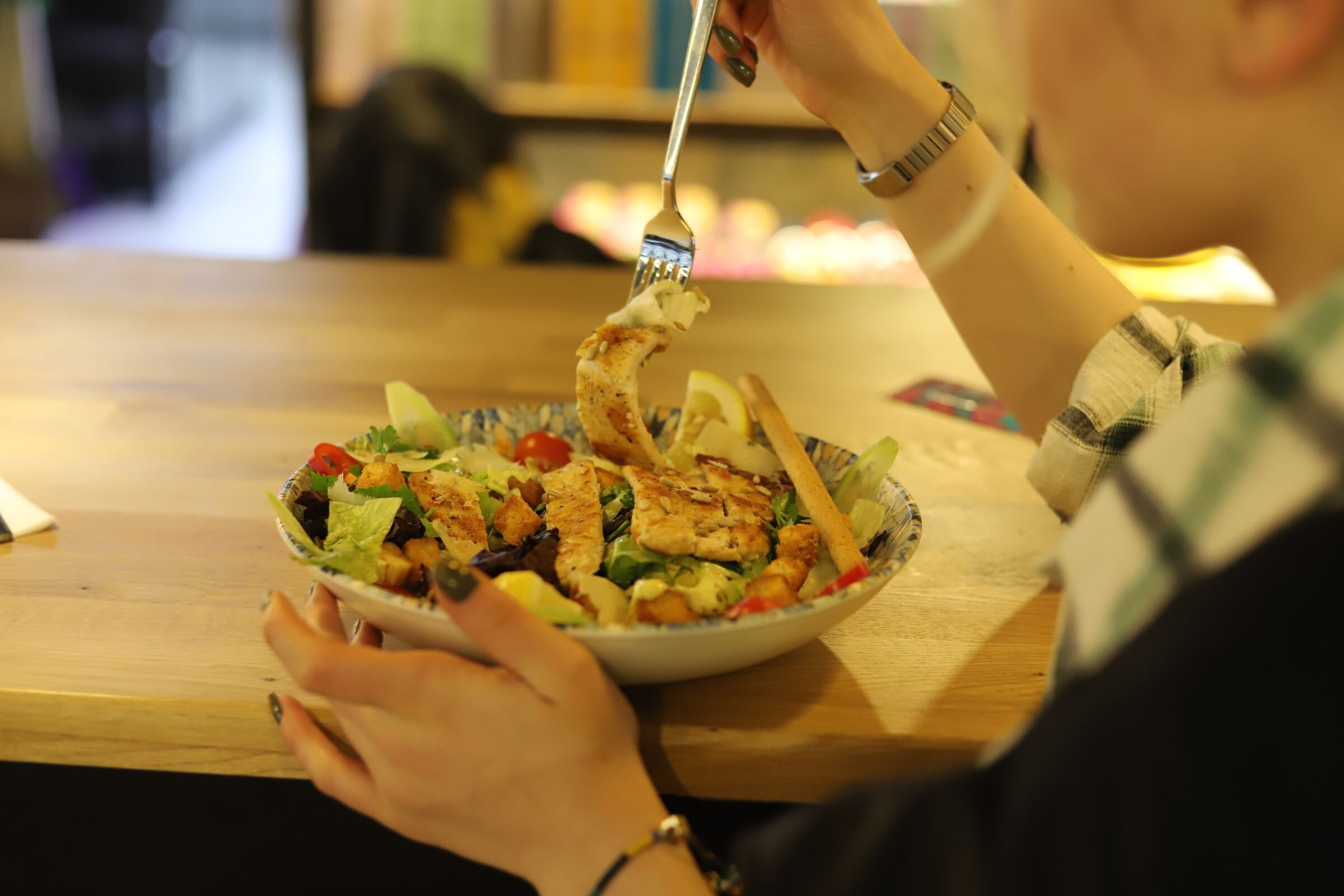
The 5 Core Mindful Eating Protocols for Daily Life
Mastering mindful eating does not require hours of meditation or complicated rituals. It requires installing five evidence-based behavioral micro-habits into your daily meal routine:
Protocol 1: The 20-Minute Meal Duration and Utensil-Drop Drill
To allow the gut-brain hormonal axis sufficient time to register fullness, set a gentle timer on your phone for 20 minutes when sitting down for main meals. Break your habit of continuous fork-to-mouth shoveling by adopting the Utensil-Drop Drill: after placing a bite of food into your mouth, place your fork, spoon, or sandwich down completely onto the plate or table. Do not pick your utensils back up until you have thoroughly chewed and swallowed that bite. Chewing each mouthful 20 to 30 times not only mechanically breaks down cell walls for superior enzymatic digestion and nutrient absorption, but it also doubles oral sensory exposure time, signaling satiety to the brain far earlier.
Protocol 2: Sensory Immersion and the Cephalic Phase Check-In
Before taking your very first bite, spend 10 to 15 seconds observing your plate using your five senses. Notice the vibrant colors of your vegetables, the sear on your protein, and the aromas wafting from the dish. This brief pause triggers the cephalic phase of digestion—a parasympathetic nervous system response that prompts your salivary glands to release amylase, stimulates the stomach to secrete gastric acid (pepsinogen and hydrochloric acid), and primes the pancreas to release digestive enzymes. By preparing your gastrointestinal tract physiologically for food, you optimize digestion, minimize bloating, and elevate meal satisfaction.
Protocol 3: The Distraction-Free Sanctuary
The single greatest saboteur of mindful eating is screen exposure. Research consistently proves that eating while watching television, scrolling through social media feeds, or working on spreadsheets induces "attentional blindness" toward food. When your visual and cognitive attention is captured by digital stimuli, your brain fails to encode the memory of having eaten. Consequently, you experience weaker post-meal satiety and experience aggressive hunger rebounds just 60 to 90 minutes later. Designate your dining table as an unplugged sanctuary: silence your smartphone, close your laptop, and commit your full awareness to the culinary experience.
Protocol 4: The Midpoint Plate Check-In
When you reach roughly half of your meal, take a deliberate 60-second intermission. Place your fork down, take a sip of water, and consult the 10-Point Hunger Scale. Ask yourself objectively: "Where am I right now on the scale? Am I at a Level 5, 6, or already approaching Level 7?" This mid-meal assessment breaks unconscious eating momentum and gives your gastric mechanoreceptors a moment to communicate with your hypothalamus. Often, you will discover that you are far fuller than you realized, allowing you to stop before finishing the plate.
Protocol 5: The "Leave Two Bites" Deconditioning Drill
Most people were raised under the strict rule of the "clean-plate club"—conditioned by parents to finish every scrap of food on their plate regardless of fullness. In adulthood, this childhood conditioning leads to habitual overconsumption, particularly given massive modern restaurant portion sizes. To break this psychological compulsion, practice leaving exactly two bites of food on your plate once or twice a week. Throwing away or storing those final two bites proves to your subconscious mind that your internal satiety cues take absolute precedence over the arbitrary volume of food served to you.
Combining Mindful Eating with Resistance Training to Protect Muscle
While mindful eating provides the ultimate psychological and behavioral foundation for managing caloric intake, achieving an aesthetic, lean physique requires combining mindful nutrition with structured resistance training.
When you create a caloric deficit solely through diet—even through gentle appetite regulation—your body is metabolically incentivized to catabolize both adipose tissue and metabolically expensive skeletal muscle mass. Losing muscle tissue suppresses your resting metabolic rate (RMR), degrades insulin sensitivity, and increases the likelihood of weight regain once fat loss concludes.
Progressive resistance training provides the mechanical tension and muscle recruitment necessary to signal to your body that muscle tissue is essential for survival. This directs fat loss almost exclusively toward subcutaneous and visceral adipose reserves while preserving lean mass, as outlined in our comprehensive guide on how to lose fat while keeping muscle.
Incorporate compound exercises that demand full-body motor control, somatic focus, and neuromuscular tension. Mindful movement in the gym directly reinforces mindful eating in the kitchen: both require presence, breath control, and tuning into internal physiological feedback.
Key Foundational Exercises for Body Awareness and Core Stability
Focus on multi-joint movements that demand deep somatic awareness, core stabilization, and structural tension:

- Sets
- 3–4
- Reps
- 30–45 sec
- Rest
- 60 s
The front plank cultivates anti-extension core stability and teaches you to maintain steady diaphragmatic breathing under intense physical tension—the exact same parasympathetic control needed to manage acute food cravings.
To stimulate major lower-body muscle groups and boost metabolic output, master the goblet squat:


- Sets
- 3–4
- Reps
- 10–12
- Rest
- 90 s
- Tempo
- 3–1–1
The dumbbell goblet squat reinforces ideal upright posture, deep hip flexion, and quadriceps activation without placing excessive compressive loads on the lumbar spine. Complement these lifts with the dynamic unilateral stability of the lunge and the posterior-chain power of the barbell deadlift.
To transition these movements into an organized weekly regimen that accelerates fat loss while building lean muscle, follow our proven training program:
By coupling mindful eating habits with adequate daily protein for muscle gain (roughly 1.6 to 2.2 grams per kilogram of body weight) and progressive lifting, you create an optimal metabolic environment for body recomposition. If your scale weight ever stalls despite consistent mindfulness, consult our diagnostic protocol on how to break a weight loss plateau to assess metabolic adaptation and non-exercise physical activity.
Frequently Asked Questions
Frequently asked questions
Can I really lose weight with mindful eating without counting calories or tracking macros?
Yes. For many individuals, adopting mindful eating habits naturally eliminates 300 to 500 excess calories per day by removing liquid calories, mindless snacking, and second helpings. By starting meals at Level 3 and stopping at Level 7 on the Hunger Scale, you create an effortless energy deficit. However, if you are an advanced physique athlete aiming for extremely low body fat levels, combining mindful eating habits with periodic macro tracking offers the highest degree of precision.
What should I do when intense emotional cravings strike late at night?
When late-night cravings hit, practice the "15-Minute Delay and Displace" rule. Acknowledge the craving without judgment, drink a large glass of water or hot herbal chamomile tea, and engage in a calming, non-food activity for 15 minutes (such as reading a physical book, foam rolling, or taking a warm shower). Because emotional cravings operate on acute dopamine spikes, they typically dissipate within 15 minutes once the stimulus is removed.
How long does it take for mindful eating habits to feel natural and automatic?
Behavioral psychology research suggests that neuroplastic habit formation requires approximately 3 to 6 weeks of consistent daily repetition. During the first two weeks, eating slowly and putting your fork down between bites will feel deliberate and occasionally tedious. By week four, the increased sensory satisfaction, absence of post-meal bloating, and natural appetite control will become your baseline operational mode.
Will eating my meals slowly affect my post-workout anabolic window?
No. The idea that you must chug a protein shake within 30 seconds of finishing your last set is an outdated fitness myth. The post-workout anabolic window extends for several hours following resistance exercise. Taking 20 to 30 minutes to calmly chew and savor a nutrient-dense whole-food meal containing lean protein and complex carbohydrates actually enhances digestive enzyme secretion, improving amino acid absorption into muscle tissue.
Sources
- Robinson E, Almiron-Roig E, Rutters F, et al. A systematic review and meta-analysis examining the effect of eating rate on energy intake and hunger. The American Journal of Clinical Nutrition. 2014. doi.org/10.3945/ajcn.113.081745 ↩