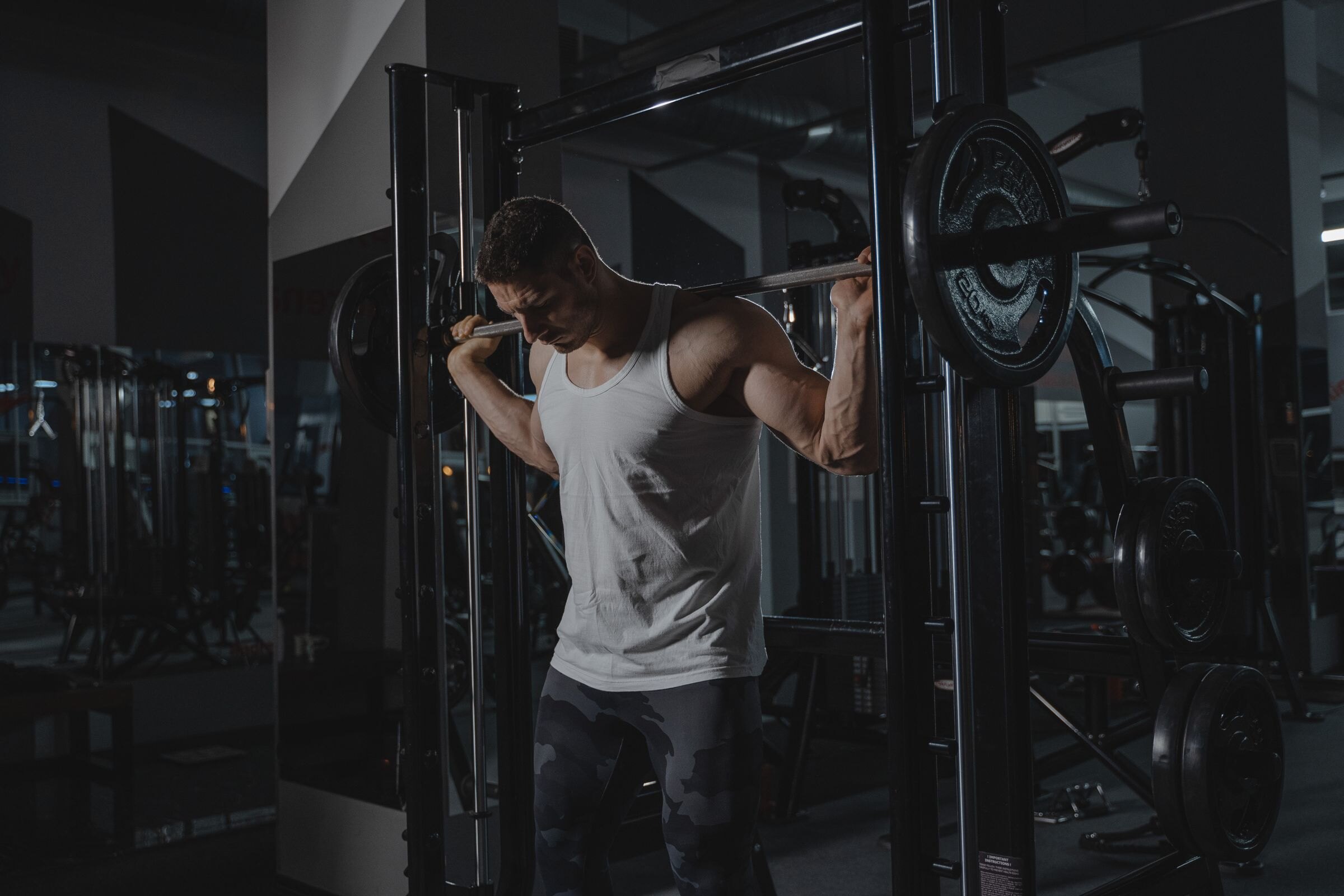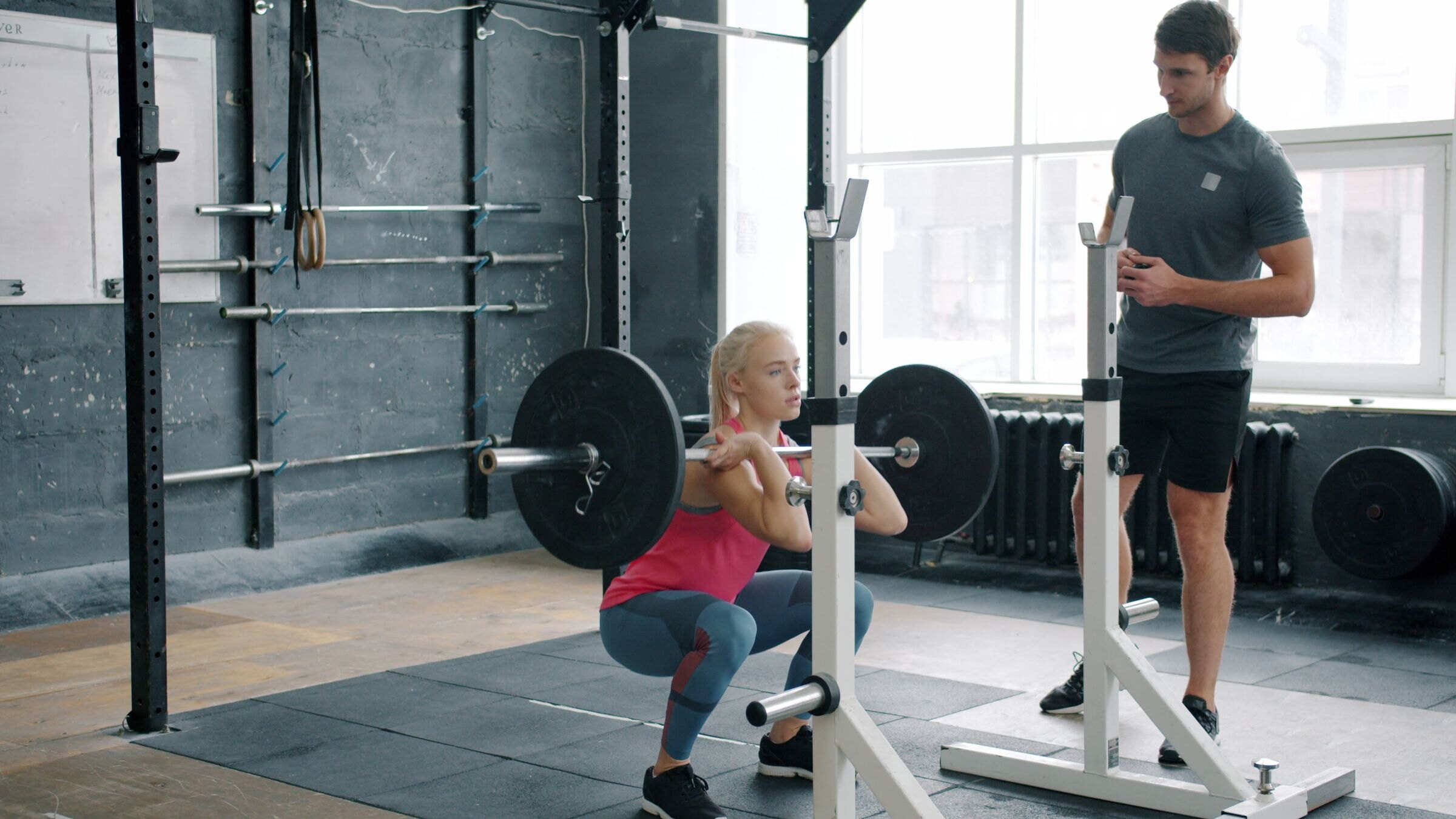
The squat is the foundation of lower-body strength. Few exercises let you load your quads, glutes and inner thighs this heavily through such a long range of motion, and the pattern carries over to everything from jumping to getting up off the floor.
It's also surrounded by myths: that deep squats wreck your knees, or that your knees must never pass your toes. The research says otherwise. This guide explains how to squat well, step by step, and why each cue matters.
- Sets
- 3–5
- Reps
- 3–8
- Rest
- 180 s
What the squat works
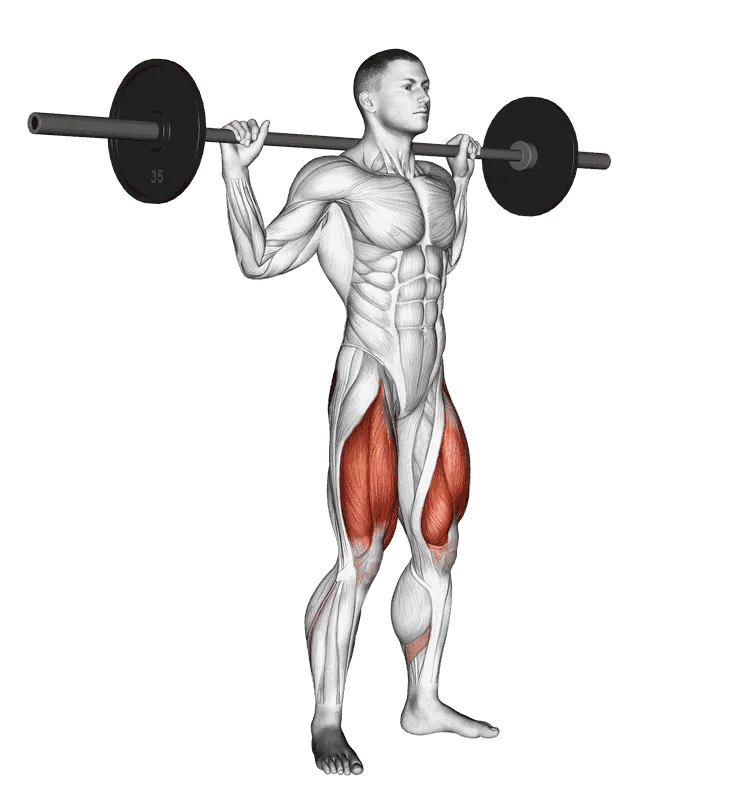
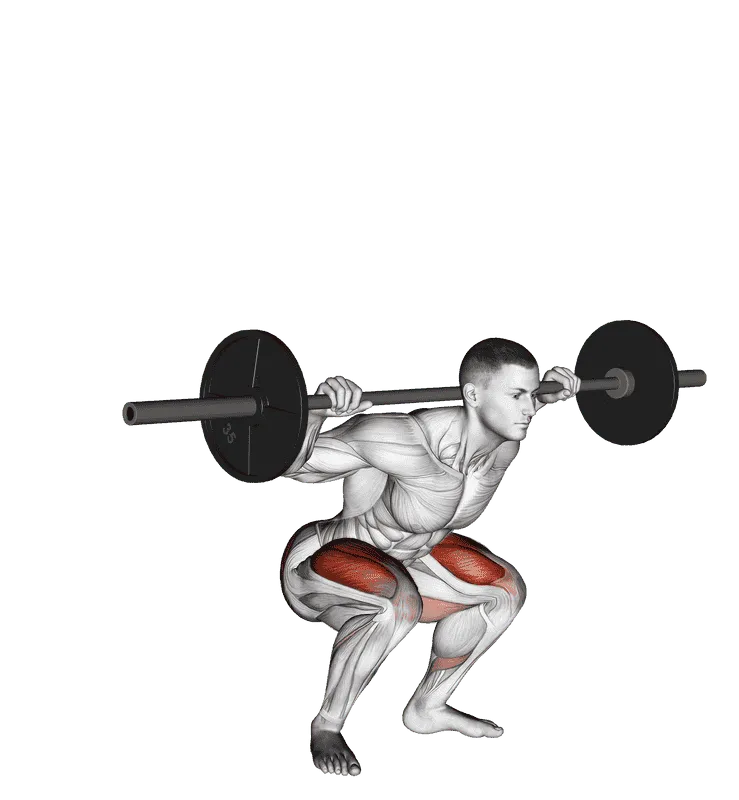
The back squat mainly trains your quadriceps, glutes and adductors (inner thighs). Your hamstrings, lower back and abs work hard to keep your trunk stable, and your calves and feet keep you balanced. Because you can load it heavily, the squat is one of the best ways to build overall lower-body strength.
Step 1: Set your stance
- Start with your heels about shoulder-width apart and your toes turned out slightly, roughly 15 to 30 degrees.
- Spread your weight over the whole foot, the big toe, little toe and heel, and keep that tripod planted for the whole rep.
- Your knees should track in line with your toes on the way down and on the way up.
There's no single perfect stance. A narrower stance usually means more knee bend; a wider one means more hip bend. Try a few and choose the one that lets you reach depth with your heels down and your back neutral.
Step 2: Unrack and brace
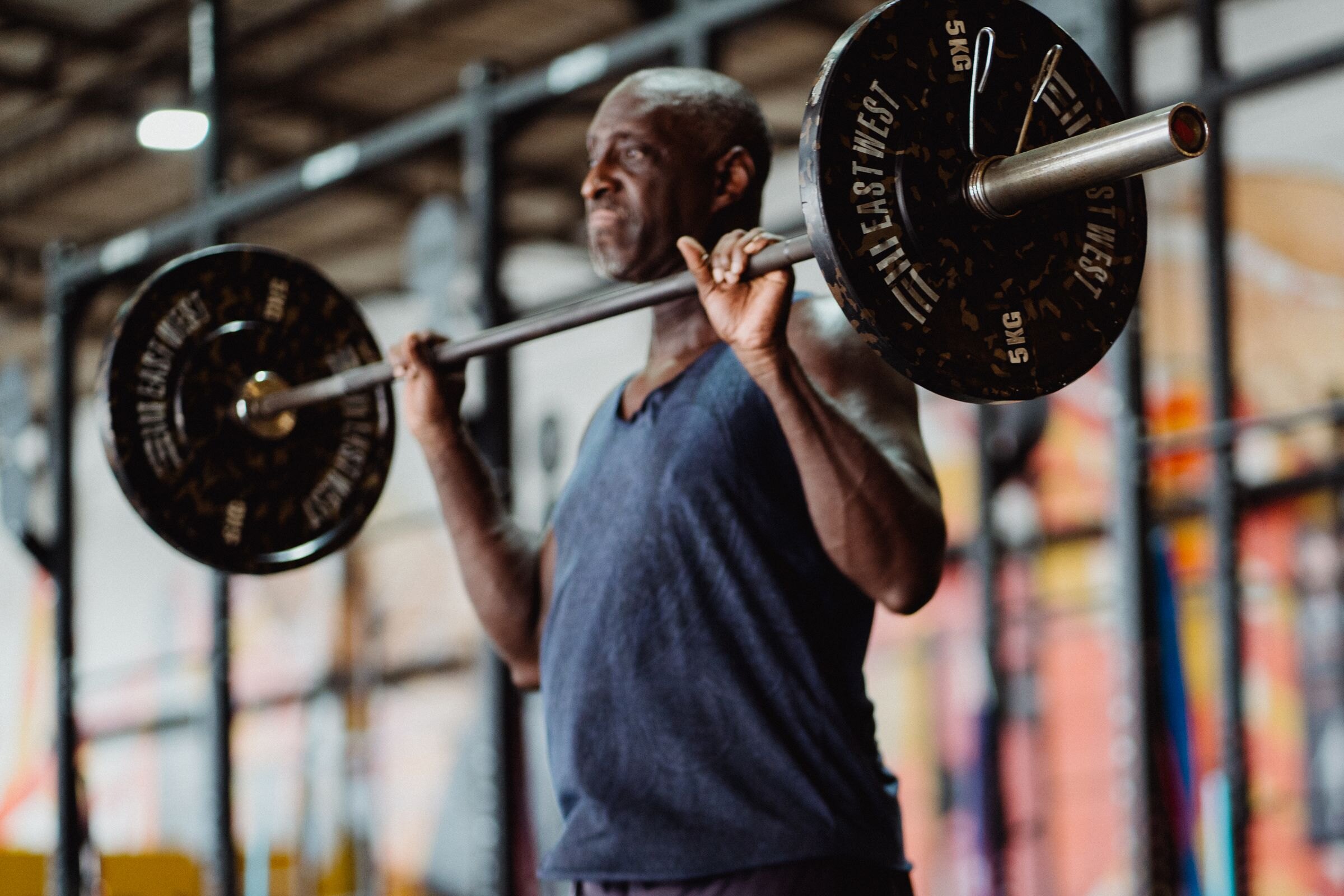
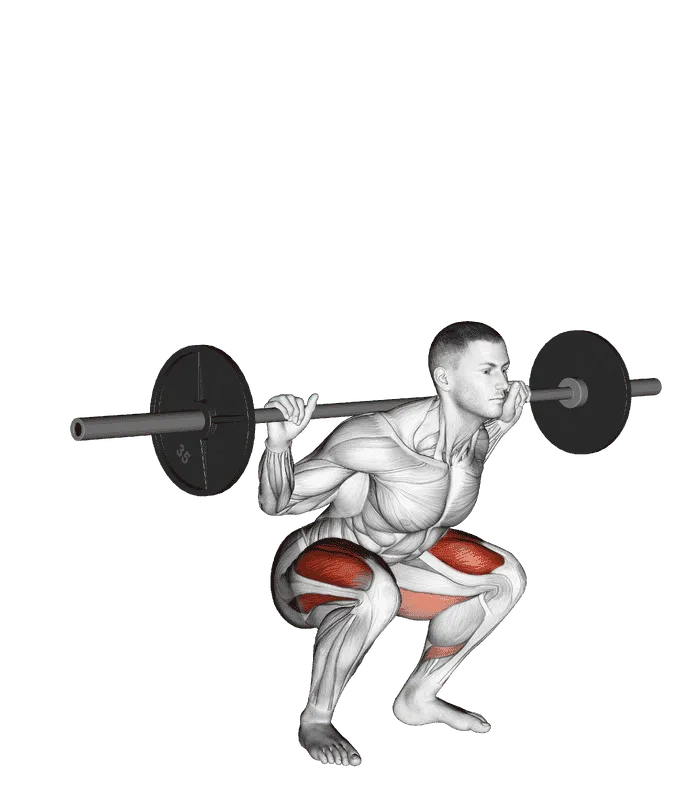
- Place the bar on your upper back, not your neck. In a high-bar squat it sits on top of your upper traps; in a low-bar squat it rests a few centimeters lower, across the back of your shoulders.
- Grip the bar as narrow as your shoulders comfortably allow, keep your wrists straight, and pull the bar into your back.
- Unrack and step back. With your feet under the bar, stand up to lift it off the hooks, then take two or three small steps back. A long walkout only wastes energy.
- Brace. Take a big breath into your belly, tighten your trunk as if you were about to take a punch, and hold it through the descent and the hardest part of the way up.
Step 3: The descent
Bend your hips and knees at the same time and sit down between your heels, rather than back onto an imaginary chair. Keep your chest facing forward and the bar over the middle of your feet. Take two to three seconds on the way down, and let your knees travel forward naturally while they point the same way as your toes.
How deep should you squat?
In a parallel squat, the crease of your hip reaches the height of the top of your knee; below that is a deep, or full, squat. For years people were told that deep squats damage the knees. A detailed review of the biomechanics research reached the opposite conclusion. The highest compressive forces behind the kneecap occur at around 90 degrees of knee bend, and as you go deeper the load is spread over a larger area. The reviewers concluded that deep squats do not increase the risk of injury to the knee's passive tissues, provided the technique is learned properly under expert supervision and loads increase progressively, and they warned that half and quarter squats with very heavy loads may be the riskier choice in the long run.[1]
Depth also changes your results. In a 10-week study, full squats and half squats grew the quadriceps by a similar amount (about 4.9% and 4.6%), but full squats produced much larger gains in the glutes (6.7% vs. 2.2%) and adductors (6.2% vs. 2.7%). Full-squat strength also rose more in the full-squat group (31.8% vs. 11.3%).[2]
The practical rule: squat as deep as you can while your heels stay down, your lower back stays neutral and you stay in control. For most people, that means at least parallel. A slight tuck of the pelvis at the very bottom is common; if it turns into obvious rounding or causes pain, stop a little higher and work on your mobility.
Should your knees go past your toes?
The old rule of keeping your knees behind your toes doesn't hold up. When researchers used a wooden barrier to stop lifters' knees from moving past their toes, torque at the knee fell by about 22% (from 150 to 117 N·m), but torque at the hip rose roughly tenfold (from 28 to 303 N·m), and the lifters' trunks leaned further forward.[3] Restricting your knees doesn't remove the stress; it moves it to your hips and lower back.
What matters is the direction your knees travel, not how far forward they go. Keep them tracking over your toes, and don't let them cave inward.
Step 4: Drive up
Push the floor away through your whole foot. Lead with your chest and upper back so your hips and shoulders rise together, instead of letting your hips shoot up first. Keep your knees in line with your toes, stay braced through the hardest part of the ascent, and breathe out near the top. Brace again before the next rep.
High-bar, low-bar or front squat?
Where you put the bar changes how you squat. A review of the biomechanics research found that the high-bar back squat involves more knee bend, less hip bend, a more upright torso and usually a deeper squat, with greater quadriceps activity. The low-bar squat uses more hip bend and a greater forward lean, with more activity in the lower-back muscles, adductors and glutes, while the forces against the floor differ little between the two.[4]
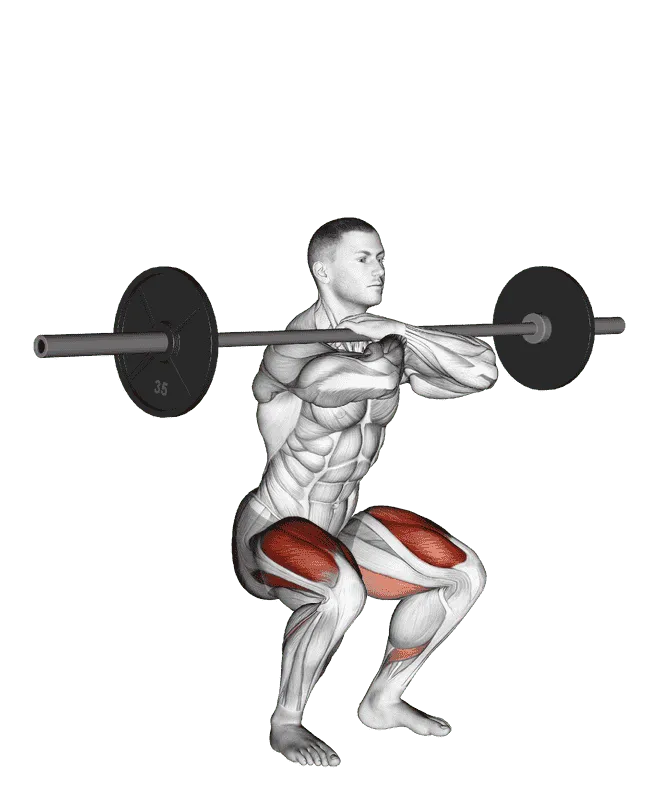
The front squat holds the bar across the front of your shoulders. Compared with the back squat, it produced similar overall muscle activity with lower compressive forces and extensor moments at the knee, which may make it a good option for people with knee problems.[5] If that's you, check with a doctor or physical therapist first.
| Variation | Bar position | Torso | Main emphasis | Choose it if |
|---|---|---|---|---|
| High-bar back squat | On top of the upper traps | Fairly upright | Quadriceps | You want a versatile default |
| Low-bar back squat | Across the back of the shoulders | More forward lean | Glutes, adductors and lower back | You want more hip involvement |
| Front squat | Across the front of the shoulders | Most upright | Quadriceps and upper back | You want less compressive load on your knees |
Mobility: when you can't get deep enough
In a study of 101 healthy adults, men's squat depth was linked mainly to ankle mobility with the knee bent and to hip flexion range of motion, while women's depth was linked to ankle mobility with the knee straight and to the strength of the muscles that lift the front of the foot.[6] In other words, stiff ankles and hips are common limits, and both respond to training.
- Raise your heels slightly with weightlifting shoes or a thin plate under each heel.
- Hold the bottom of a dumbbell goblet squat for 20 to 30 seconds, using your elbows to nudge your knees out.
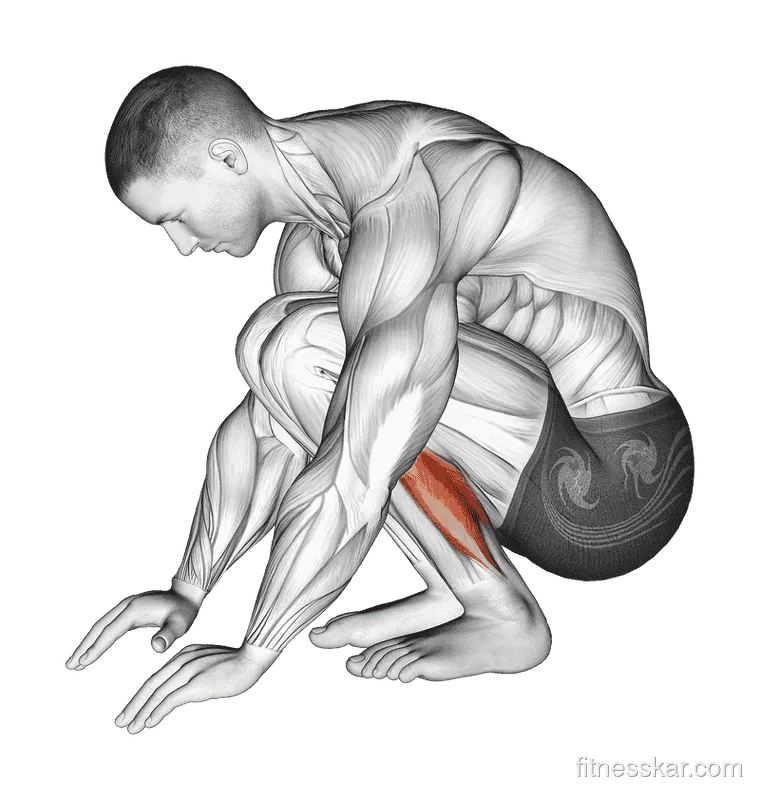
- Before you train, loosen your ankles with the squatting Achilles stretch and your hips with the World's Greatest Stretch.
- Try a slightly wider stance with your toes turned out a little more.
Squat safety
- Squat inside a power rack with the safety pins or straps set just below your lowest position. If you fail a rep, sit down onto the pins and slide out from under the bar.
- Use collars so the plates can't slide off.
- Build up to your work sets with progressively heavier warm-up sets.
- Stop if you feel sharp pain in your knees, hips or back. If it persists, see a doctor or physical therapist before you squat heavy again.
Common squat mistakes
| Mistake | What happens | Fix |
|---|---|---|
| Knees caving in | Your knees and hips fall out of alignment | Push your knees out over your toes and lighten the load |
| Heels lifting | Your balance shifts onto your toes | Keep the whole foot down; raise your heels or work on ankle mobility |
| Hips rising first on the way up | The squat turns into a good morning and loads your back | Lead with your chest and push the floor away |
| Cutting depth as the weight climbs | Less muscle work and a false sense of progress | Keep the same depth on every rep, and reduce the weight if needed |
| Bouncing out of the bottom | You lose tension and position | Control the descent and pause briefly on some sets |
| Looking straight up or down | Your neck and upper back lose position | Fix your eyes on a spot on the floor a few meters ahead |
| Squatting without safeties | A failed rep has nowhere to go | Set the pins just below your bottom position |
How to program the squat
Squatting two or three times per week works well for most people. Beginners progress nicely with three sets of five to eight reps, adding a little weight whenever every set looks good. Intermediate lifters often pair a heavier day (sets of three to five) with a lighter volume day (sets of eight to twelve). Rest two to three minutes between heavy sets. To see how the squat fits into a complete plan, follow our beginner strength program, and find more options in the best leg exercises.
Squat variations
Variations and when to use them
-
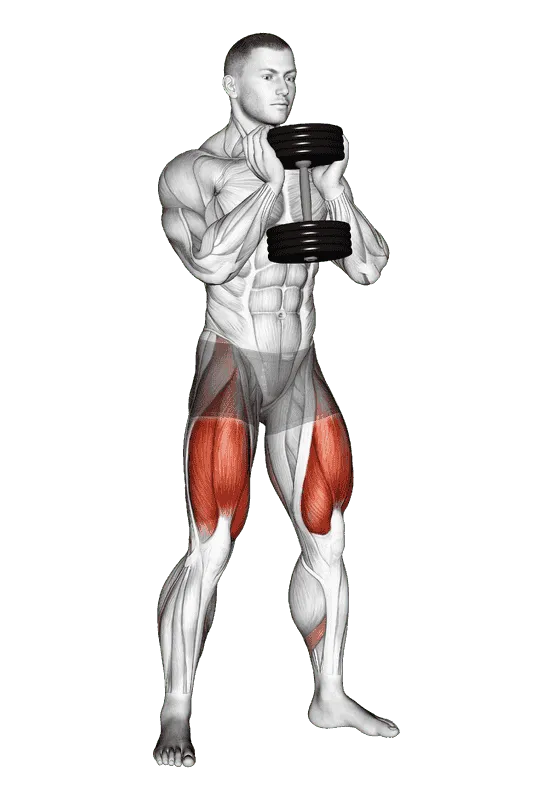
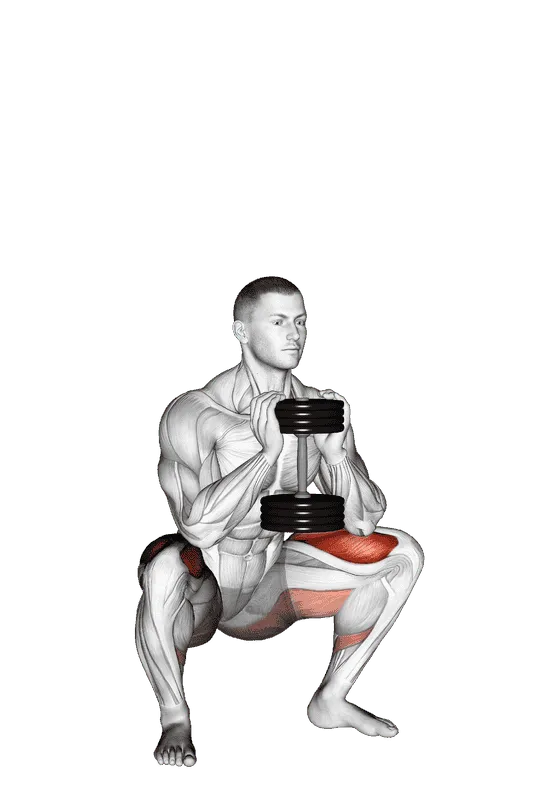
Dumbbell Goblet Squat - Sets
- 3
- Reps
- 8–12
- Rest
- 90 s
-
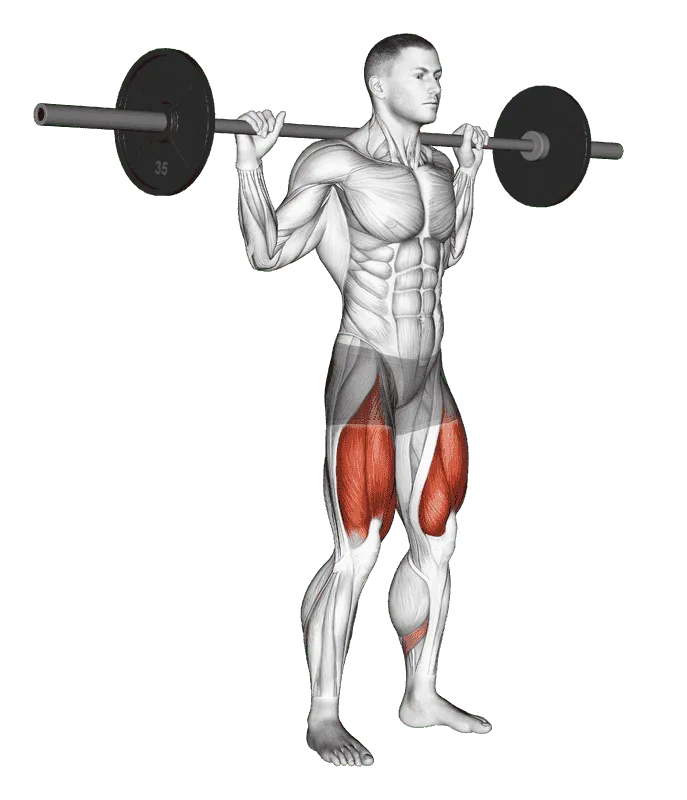
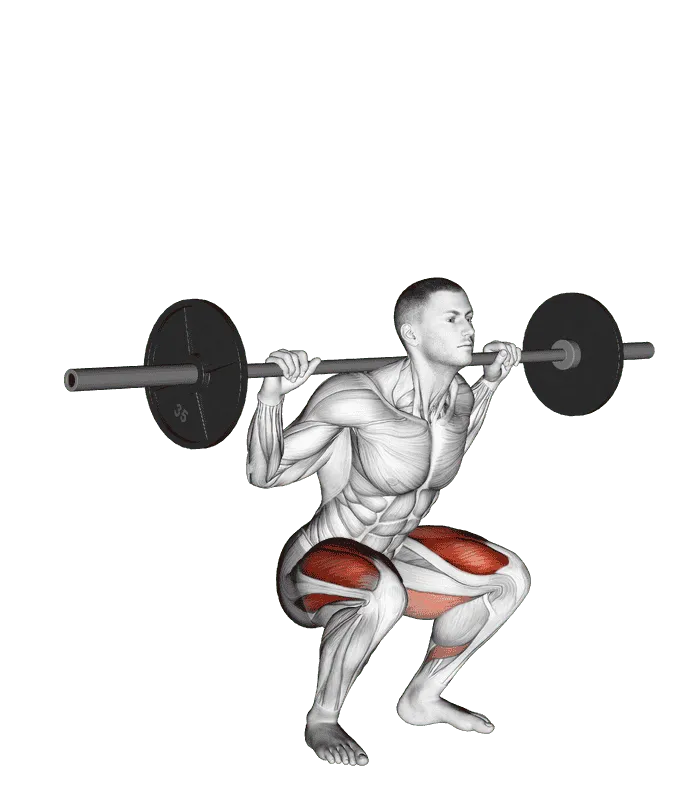
Barbell High-Bar Squat - Sets
- 3
- Reps
- 5–8
- Rest
- 180 s
-
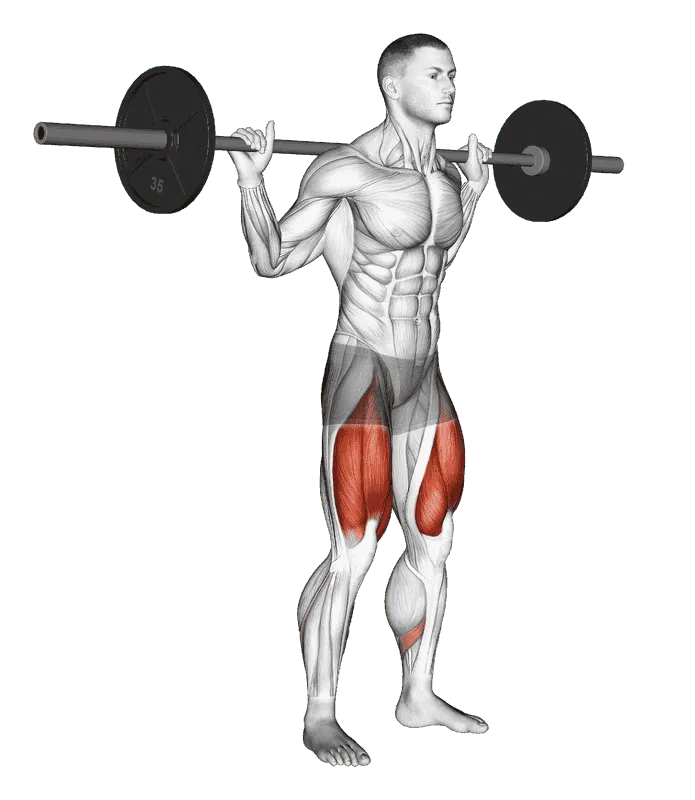
Barbell Low-Bar Squat - Sets
- 3
- Reps
- 3–6
- Rest
- 180 s
-
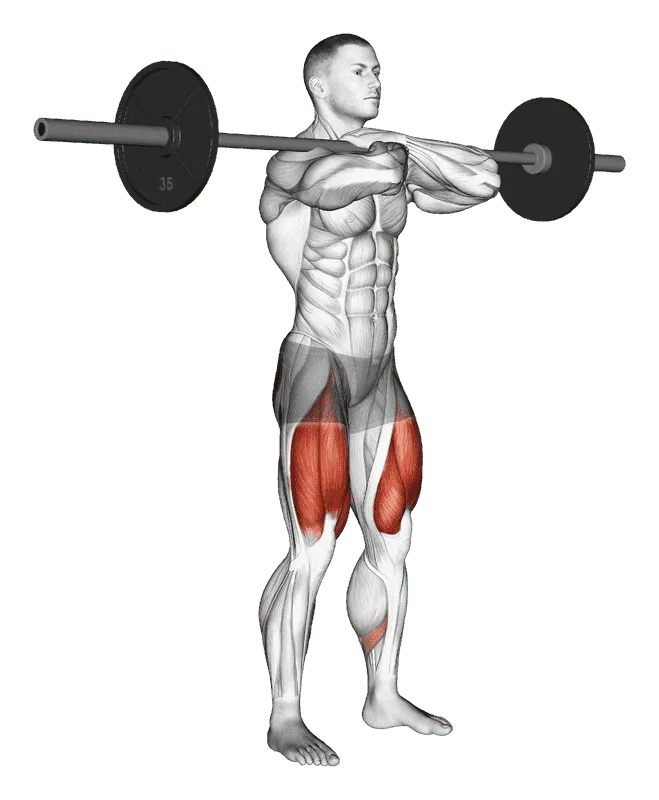
Barbell Front Squat - Sets
- 3
- Reps
- 4–8
- Rest
- 150 s
-
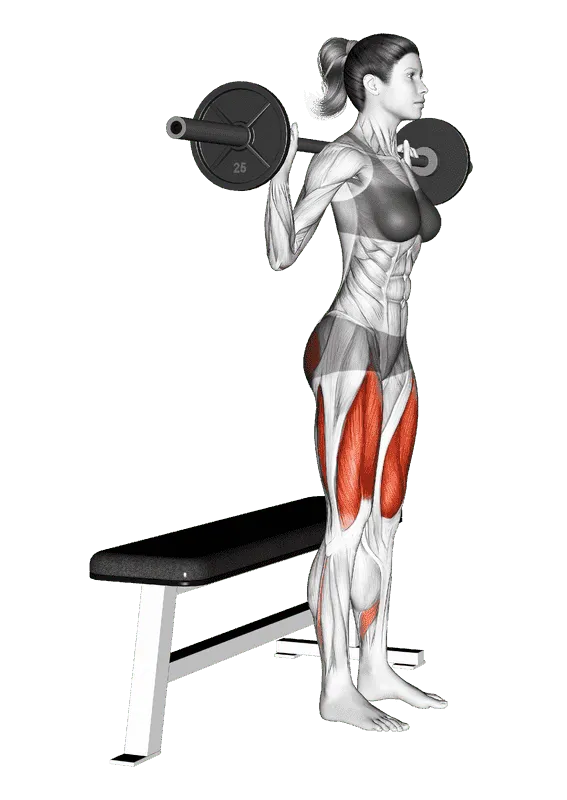
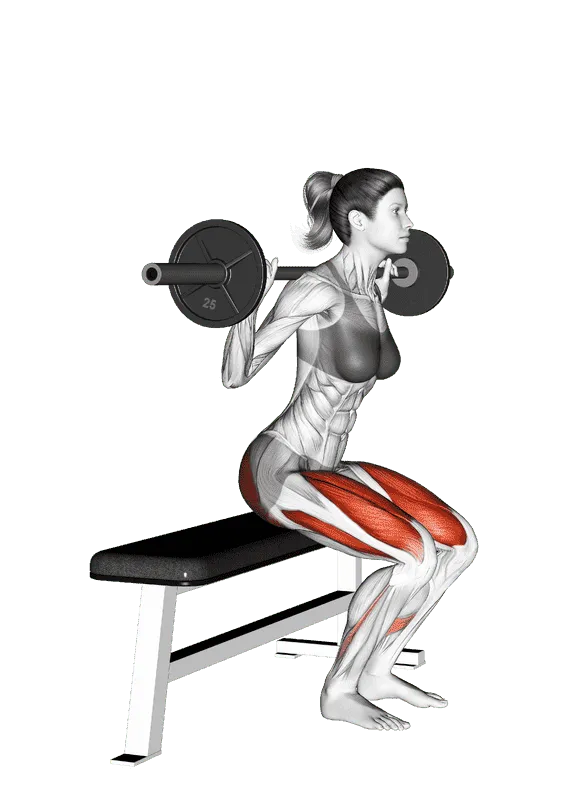
Barbell Bench Squat - Sets
- 3
- Reps
- 5–8
- Rest
- 150 s
-
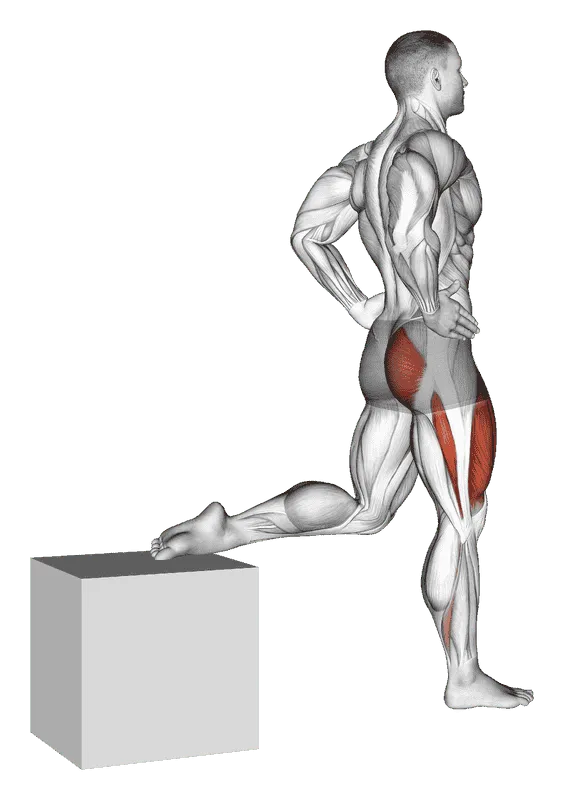
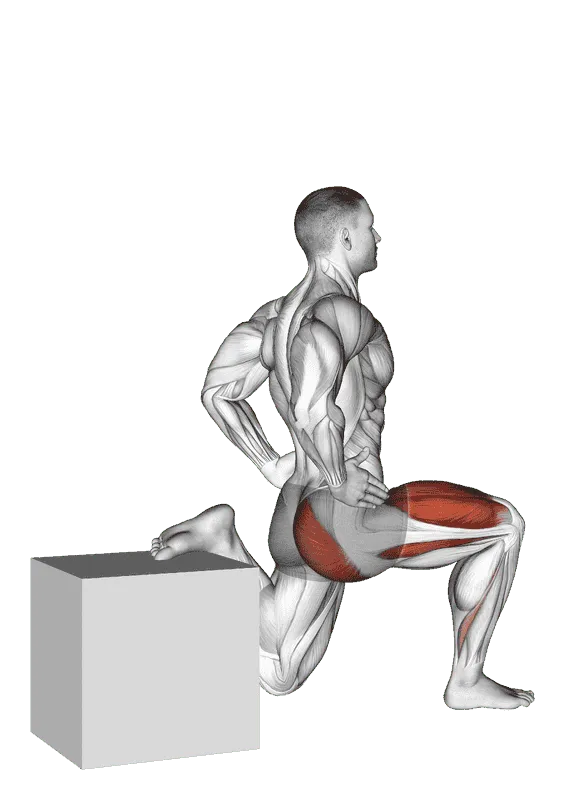
Bulgarian Split Squat - Sets
- 3
- Reps
- 8–12
- Rest
- 90 s
Frequently asked questions
Is it bad for my knees if they go past my toes?
No. Letting your knees travel forward is a normal part of a deep squat. Blocking it reduces stress at the knee a little but greatly increases it at your hips and lower back. Just keep your knees pointing the same way as your toes.
Do I need to squat below parallel?
Not necessarily, but reaching at least parallel is a good target. Deep squats are not harmful to healthy knees when you progress sensibly, and in one study full squats built the glutes and adductors more than half squats did.
Should I squat high-bar or low-bar?
Either works. High-bar keeps you more upright and emphasizes the quadriceps; low-bar involves more hip bend and forward lean. Choose the one you can perform with good depth and comfortable shoulders.
Why do my heels come up when I squat?
Usually because of stiff ankles, a stance that's too narrow, or shifting your weight forward. Try a slightly wider stance, raise your heels a little, and practice goblet squats and ankle mobility drills.
How many times a week should I squat?
Two or three sessions per week suits most lifters. Beginners can squat in every workout of a three-day full-body plan; more experienced lifters often use one heavier and one lighter squat day.
Sources
- Hartmann H, Wirth K, Klusemann M. Analysis of the load on the knee joint and vertebral column with changes in squatting depth and weight load. Sports Medicine. 2013. pubmed.ncbi.nlm.nih.gov/23821469/ ↩
- Kubo K, Ikebukuro T, Yata H. Effects of squat training with different depths on lower limb muscle volumes. European Journal of Applied Physiology. 2019. pubmed.ncbi.nlm.nih.gov/31230110/ ↩
- Fry AC, Smith JC, Schilling BK. Effect of knee position on hip and knee torques during the barbell squat. Journal of Strength and Conditioning Research. 2003. pubmed.ncbi.nlm.nih.gov/14636100/ ↩
- Glassbrook DJ, Helms ER, Brown SR, Storey AG. A Review of the Biomechanical Differences Between the High-Bar and Low-Bar Back-Squat. Journal of Strength and Conditioning Research. 2017. pubmed.ncbi.nlm.nih.gov/28570490/ ↩
- Gullett JC, Tillman MD, Gutierrez GM, Chow JW. A biomechanical comparison of back and front squats in healthy trained individuals. Journal of Strength and Conditioning Research. 2009. pubmed.ncbi.nlm.nih.gov/19002072/ ↩
- Kim SH, Kwon OY, Park KN, Jeon IC, Weon JH. Lower extremity strength and the range of motion in relation to squat depth. Journal of Human Kinetics. 2015. pubmed.ncbi.nlm.nih.gov/25964810/ ↩