
Body recomposition—the physiological process of building muscle while simultaneously losing body fat—is one of the most sought-after transformations in health and fitness. For decades, conventional gym wisdom insisted that achieving both goals at the same time was biologically impossible. You were told you must choose one of two polarized paths: a prolonged "bulking" phase characterized by a calorie surplus and inevitable fat gain, or an aggressive "cutting" phase characterized by energy restriction and potential muscle loss. Modern exercise physiology and metabolic science have soundly disproven this binary dogma.
With the right convergence of high mechanical tension, adequate dietary protein, and a calibrated energy deficit, your body can tap into stored adipose tissue to supply the energy demanded by muscle protein synthesis. Whether you are an untrained beginner experiencing rapid initial adaptations or a seasoned lifter looking to refine your physique without extreme weight swings, body recomposition provides a sustainable, research-backed strategy. When paired with structured progressive overload and a strategic calorie deficit, you can systematically alter your body composition and construct dense, lean mass while trimming body fat.
Here is the exhaustive scientific breakdown of how body recomposition works, who can achieve it, and the exact nutritional and training protocols required to execute it successfully.
The Metabolic Science of Simultaneous Muscle Gain and Fat Loss
To understand how body recomposition operates, we must dismantle the widespread misconception that muscle growth and fat loss cannot occur within the same 24-hour timeframe. The human body is not a static machine that operates solely in an "all-building" or "all-burning" state; rather, it is a dynamic biochemical engine that constantly shifts between periods of nutrient storage and energy mobilization throughout the day.

Energy Balance vs. Energy Partitioning
At its core, fat loss requires a negative net energy balance over time: your total daily energy expenditure (TDEE) must exceed your total energy intake. When this occurs, adipose tissue undergoes lipolysis, cleaving stored triglycerides into free fatty acids and glycerol to be oxidized for fuel.
Conversely, muscle hypertrophy is an energetically expensive process. Synthesizing new myofibrillar proteins—primarily actin and myosin—requires substantial adenosine triphosphate (ATP) to drive translation initiation, peptide elongation, and cellular repair. Many lifters incorrectly assume that this energy must come directly from the calories you swallow at the dinner table.
In reality, your body does not differentiate between calories entering your bloodstream from a post-workout meal and calories liberated from your subcutaneous fat stores. If you carry 15 kilograms of body fat, you hold roughly 115,000 calories of accessible stored chemical energy. As long as your resistance training generates adequate mechanical tension and your bloodstream contains a steady supply of essential amino acids, your muscle cells can draw upon mobilized fatty acids to finance the energy cost of building new tissue.
The Signaling Crosstalk: mTORC1 vs. AMPK
A common theoretical objection to body recomposition involves the cellular signaling pathways of muscle protein synthesis and energy sensing:
- mTORC1 (Mechanistic Target of Rapamycin Complex 1): The master regulator of cellular growth and anabolic signaling. When activated by mechanical tension and intracellular amino acids (specifically leucine), mTORC1 stimulates downstream effectors (such as p70S6K and 4E-BP1) to accelerate muscle protein synthesis.
- AMPK (5'-AMP-Activated Protein Kinase): The cellular energy sensor. Activated when the ratio of cellular AMP to ATP rises during acute energy deprivation or prolonged endurance exercise, AMPK promotes catabolic processes like fatty acid oxidation and autophagy while inhibiting energy-consuming processes like protein translation.
In severe starvation states, AMPK activation strongly suppresses mTORC1. However, resistance exercise induces profound local mechanical strain that activates mTORC1 within specific muscle fibers, independent of whole-body energy status. When you provide sufficient protein and maintain only a moderate, controlled deficit, intracellular amino acid availability and local tension override AMPK inhibition in the trained muscle beds. This biochemical crosstalk allows localized muscle protein synthesis (MPS) to outpace muscle protein breakdown (MPB), yielding a net positive protein balance even while systemic fat stores diminish.
Energy Partitioning and the P-Ratio
Whether excess calories are stored as muscle or fat—and whether calorie deficits burn fat or muscle—is dictated by your nutrient partitioning ratio, commonly known as the P-ratio. Formulated originally by metabolic researcher Gilbert Forbes, the P-ratio reflects the proportion of energy gained or lost as lean tissue relative to fat mass.
Several biological factors govern your P-ratio during a recomposition protocol:
- Baseline Body Fat Percentage: Individuals with higher adiposity have ample circulating fatty acids and experience lower baseline rates of muscle proteolysis during caloric restriction. Leaner lifters face greater competition between adipose mobilization and amino acid oxidation.
- Insulin Sensitivity: High insulin sensitivity in skeletal muscle encourages the preferential uptake of glucose and amino acids into muscle cells rather than adipocytes.
- Training Status and Novelty: Unaccustomed resistance exercise creates a robust stimulus for myofibrillar remodeling, shifting nutrient partitioning heavily in favor of muscle tissue.
Who Can Achieve Body Recomposition?
While the underlying physiology is universal, the speed and magnitude of body recomposition vary dramatically based on your training experience, genetics, and starting body composition. Scientific literature and coaching data identify four primary categories of individuals who achieve substantial recomposition.
1. Untrained Beginners ("Newbie Gains")
Individuals who have never engaged in structured resistance training represent the gold standard for body recomposition. Their neuromuscular system is completely unadapted to mechanical loading, meaning that even moderate lifting volumes generate immense intracellular tension, satellite cell activation, and an enormous spike in fractional synthetic rate (FSR).
Beginners can frequently build 3 to 6 kilograms of lean muscle mass over a 12-week period while simultaneously shedding 4 to 8 kilograms of body fat, even when consuming a modest deficit. For novices, the anabolic stimulus of new lifting completely overshadows minor energy deficits.
2. Returning Lifters (Muscle Memory and Myonuclear Domain)
Lifters who previously built significant muscular development but took an extended hiatus—due to injury, illness, or life circumstances—recompose with extraordinary velocity. This phenomenon is driven by the myonuclear domain hypothesis.
When muscle fibers hypertrophy during initial training, satellite cells donate their nuclei to the expanding fibers. Groundbreaking research demonstrates that when you stop training and experience muscle atrophy, these acquired myonuclei are retained for extended periods (often years). When you return to the gym, your muscle fibers do not need to generate new nuclei from scratch; the existing myonuclei rapidly ramp up protein transcription. Consequently, returning lifters can regain lost muscle tissue while stripping away accumulated body fat in record time.
3. Overweight or High Body Fat Individuals
Lifters carrying excess adiposity (above 22% body fat for men or 30% for women) possess an immense reservoir of endogenous energy. Because their fat cells readily release free fatty acids into the bloodstream, their bodies experience negligible metabolic stress from a moderate calorie deficit.
For this group, high protein intake combined with compound lifting preserves lean mass and drives rapid muscle growth while the body utilizes dozens of kilograms of stored adipose tissue to meet daily energy deficits.
4. Resistance-Trained Athletes: What the Landmark Evidence Proves
For years, fitness professionals believed that once an athlete surpassed the "intermediate" stage, body recomposition was no longer feasible. However, a landmark systematic review and meta-analysis published in the Strength & Conditioning Journal by Barakat and colleagues directly challenged this assumption.[1]
The researchers synthesized all available scientific evidence examining body recomposition across resistance-trained individuals. Their findings confirmed that trained athletes—including competitive powerlifters, collegiate gymnasts, and physique competitors—can and do gain significant muscle mass while losing body fat simultaneously, provided their training program incorporates strict progressive overload, their daily protein intake remains sufficiently elevated (typically above 2.0 g/kg), and their energy deficit remains conservative.
While advanced lifters gain muscle at a slower rate than novices (often measured in hundreds of grams rather than kilograms per month), the biological capacity for recomposition persists throughout a lifter's career.

Nutritional Architecture for Body Recomposition
Executing a successful recomposition requires precision. Because you are attempting to optimize two distinct physiological outcomes, your nutrition cannot be left to guesswork.
Macro calculator
- Protein
- g
- Fat
- g
- Carbohydrates
- g
Protein 1.6–2.2 g per kg of body weight, fat about 25% of calories, carbohydrates fill the rest.
Calorie Targets: The Modest Deficit vs. Energy Balance
The single most critical nutritional parameter is determining your caloric baseline. There are two primary approaches:
- The Conservative Deficit (Recommended for Body Fat > 15% Men / > 24% Women): Set your daily intake 10% to 15% below your maintenance calories (a deficit of roughly 300 to 500 kcal per day). This provides a reliable rate of fat loss (roughly 0.3 to 0.5 kg per week) while preserving adequate energy availability for intense gym performance and cellular repair.
- Maintenance Energy Balance (Recommended for Lean Lifters < 12% Men / < 20% Women): Eat at your estimated total daily energy expenditure (TDEE). On training days, you may consume a slight surplus (+100 to 200 kcal), while on non-training rest days, you introduce a slight deficit (-200 to 300 kcal). This "calorie cycling" strategy shuttles nutrients toward recovering muscles when protein synthesis peaks.
Avoid deficits exceeding 20% to 25%. Aggressive calorie cuts drastically suppress resting metabolic rate, drive up cortisol, lower circulating testosterone, and accelerate muscle protein breakdown, rendering muscle growth virtually impossible.
Protein Intake: The Anabolic Keystone
Dietary protein serves two indispensable functions during recomposition: it supplies the substrate (essential amino acids) for myofibrillar protein synthesis, and it exerts a profound sparing effect on existing muscle tissue.
- Recommended Daily Target: Aim for 2.0 to 2.4 grams of protein per kilogram of total body weight (0.9 to 1.1 g/lb). For individuals with higher body fat, calculating 2.2 to 2.6 g/kg of lean body mass ensures accurate targets without overestimating requirements.
- Why Higher Protein Matters: Multiple clinical trials comparing high-protein diets (2.4+ g/kg) to standard diets (1.2–1.6 g/kg) in resistance-trained athletes demonstrate that higher protein groups lose significantly more fat while gaining more lean mass, even at identical caloric intakes. Protein's high thermic effect of food (TEF) and superior satiety profile further enhance compliance. For detailed guidelines on sources, review our guide on how much protein you need.
Protein Distribution and the Leucine Threshold
Total daily protein is foundational, but distribution dictates efficiency. Muscle protein synthesis operates in a pulsatile manner known as the "muscle full effect." Once intracellular leucine reaches a critical saturation threshold (typically 2.5 to 3.5 grams), mTORC1 is maximally stimulated for roughly 2 to 3 hours before returning to baseline.
To capitalize on this mechanism:
- Distribute your daily protein across 3 to 4 meals, spaced roughly 3 to 5 hours apart.
- Each meal should provide roughly 0.4 to 0.5 g/kg of high-quality protein (e.g., 30 to 45 grams for an 80 kg individual).
- Emphasize leucine-rich sources such as skinless poultry, eggs, lean beef, fish, Greek yogurt, or whey protein isolate. Plant-based lifters should combine varied sources (lentils, soy, and pea protein) to ensure a complete essential amino acid profile.
Carbohydrates and Fats: Fueling Intensity and Endocrine Health
Do not eliminate carbohydrates in a misguided attempt to accelerate fat loss. Carbohydrates are the primary fuel for high-intensity anaerobic glycolysis—the exact metabolic pathway powering heavy resistance training.
- Carbohydrates: Allocate 2.5 to 4.5 g/kg of body weight daily. Maintaining filled intramuscular glycogen stores protects training intensity, prevents premature central nervous system fatigue, and exerts an anti-catabolic signaling effect on muscle tissue.
- Dietary Fats: Allocate 0.6 to 0.9 g/kg of body weight daily (roughly 20% to 25% of total caloric intake). Fats are essential for lipid-soluble vitamin absorption and steroidogenesis, supporting the production of endogenous testosterone and estrogen. Prioritize monounsaturated and polyunsaturated fats from extra virgin olive oil, avocados, nuts, seeds, and fatty fish.
| Training & Body Fat Status | Daily Calorie Strategy | Daily Protein Target | Daily Carbohydrate Target | Daily Fat Target |
|---|---|---|---|---|
| Novice Lifter (High Body Fat: >25% Men / >32% Women) | 15%–20% Calorie Deficit | 2.0–2.2 g/kg Lean Mass | 2.0–3.0 g/kg Body Weight | 0.6–0.8 g/kg Body Weight |
| Intermediate Lifter (Moderate Body Fat: 15%–22% Men / 24%–30% Women) | 10%–12% Calorie Deficit | 2.2–2.4 g/kg Body Weight | 3.0–4.0 g/kg Body Weight | 0.7–0.9 g/kg Body Weight |
| Advanced / Lean Lifter (<14% Men / <22% Women) | Maintenance or Calorie Cycling | 2.4–2.6 g/kg Body Weight | 3.5–5.0 g/kg Body Weight | 0.8–1.0 g/kg Body Weight |
| Returning Lifter (Regaining Muscle Memory) | Maintenance or 10% Deficit | 2.0–2.4 g/kg Body Weight | 3.0–4.5 g/kg Body Weight | 0.7–0.9 g/kg Body Weight |
Training Protocols: Signalling Muscle Growth in an Energy Deficit
Nutrition determines whether body recomposition is metabolically permissible; your resistance training determines whether it actually happens. Without a potent mechanical stimulus, the body has zero incentive to retain—let alone synthesize—energetically costly muscle tissue while operating in a calorie deficit.
The Non-Negotiable Rule of Progressive Overload
Many trainees mistakenly alter their lifting routines when trying to lose fat, switching from heavy compound movements to light weights with high repetitions and short rest intervals under the impression that this "tones" muscle and burns more calories. This is a critical error.
Lifting light weights for high reps while in an energy deficit signals to your body that high levels of maximal force production are no longer required. Under energetic stress, your physiology will readily break down redundant muscle tissue. To force your body to build new contractile fibers, you must subject them to high mechanical tension through progressive overload.
Every week, strive to:
- Add load to the bar while preserving strict form.
- Add repetitions with a fixed load within your target rep bracket.
- Improve movement control, lengthening the eccentric phase or pausing in the stretched position.
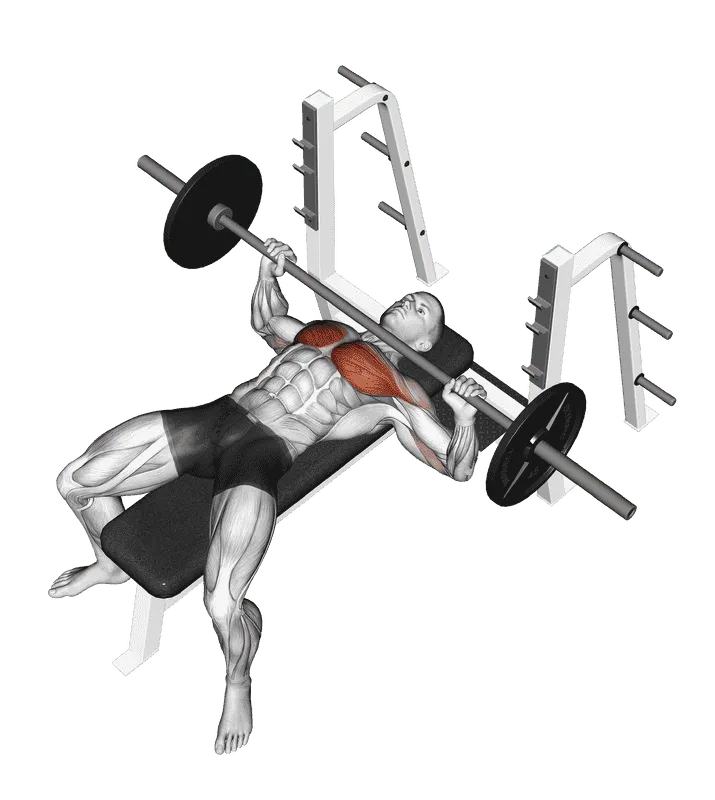
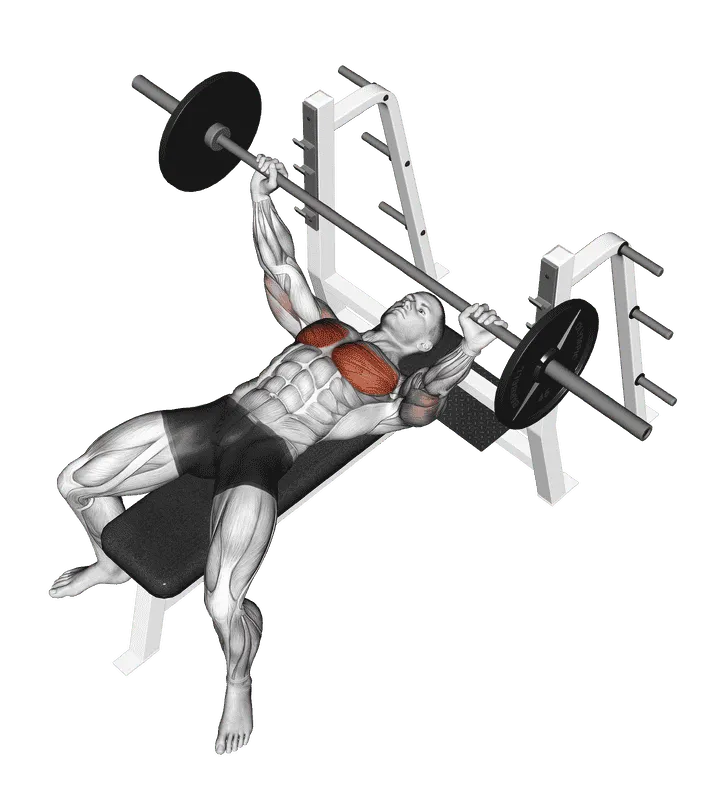
- Sets
- 3–4
- Reps
- 6–10
- Rest
- 120 s
- Tempo
- 3–0–1
The barbell bench press is a premier horizontal pressing compound movement that recruits the pectoralis major, anterior deltoids, and triceps, providing the high mechanical tension necessary to anchor upper-body recomposition.


- Sets
- 3
- Reps
- 8–10
- Rest
- 90 s
- Tempo
- 3–1–1
The barbell Romanian deadlift targets the posterior chain—hamstrings, glutes, and spinal erectors—at elongated muscle lengths, delivering potent mechanical stimulus while burning substantial energy.
Weekly Volume, Frequency, and Proximity to Failure
When training in a caloric deficit, your systemic recovery capacity is slightly reduced compared to a hypercaloric bulking phase. Managing volume and fatigue is paramount:
- Weekly Volume: Target 10 to 16 direct working sets per muscle group per week. This volume range falls directly within the sweet spot for maximizing hypertrophy without overwhelming systemic recovery. Novices can make excellent gains on as few as 8 to 10 sets per week.
- Training Frequency: Train each muscle group 2 to 3 times per week. Splitting your weekly volume across multiple sessions (e.g., an Upper/Lower or Full-Body split) produces higher per-set quality, greater peak force production, and multiple spikes in muscle protein synthesis throughout the week.
- Proximity to Failure (RIR): Train the majority of your working sets to within 1 to 2 Reps in Reserve (RIR). Stopping 1 to 2 reps shy of concentric muscular failure ensures full recruitment of high-threshold motor units while preventing the excessive central fatigue and joint inflammation associated with grinding sets to absolute failure.
- Cardiovascular Training: Use cardio as a tool for cardiovascular conditioning and modest energy expenditure, not as a primary fat loss driver. Excessive high-intensity interval training (HIIT) creates an interference effect with resistance training adaptations and spikes appetite. Prioritize low-impact steady-state activity, such as aiming for 8,000 to 10,000 daily walking steps.
For a structured training program that balances recovery and muscular tension, pair your nutrition with our 8-Week Full Body Fitness Builder.
The Endocrine Gatekeepers: Sleep and Stress Management
Nutrition and workouts provide the blueprint and the stimulus, but hormonal recovery dictates the final outcome. In chronic sleep deprivation or unmitigated psychological stress, body recomposition grinds to a halt.
When you sleep fewer than 7 hours per night during a caloric deficit:
- Cortisol Spikes: Chronically elevated cortisol stimulates muscle proteolysis, impairs glucose uptake via insulin resistance, and prompts extracellular fluid retention.
- Anabolic Hormones Plummet: Nocturnal pulses of growth hormone (GH) and circulating testosterone decline markedly, impairing myofibrillar protein synthesis and satellite cell proliferation.
- Hunger Dysregulation: Ghrelin (the hunger hormone) surges while leptin (the satiety hormone) plummets, dramatically increasing cravings for hyperpalatable, calorie-dense foods.
In clinical trials evaluating sleep-restricted dieters, subjects sleeping 5.5 hours lost 55% less body fat and 60% more lean muscle mass compared to subjects sleeping 8.5 hours on the identical calorie deficit. Prioritize 7.5 to 9 hours of uninterrupted sleep each night to protect your endocrine environment.
How to Track Progress When the Scale Doesn't Move
The most common reason trainees abandon a successful body recomposition program is psychological: they step on the bathroom scale every morning and see the exact same number.
If you lose 1.5 kilograms of adipose tissue over four weeks while gaining 1.5 kilograms of skeletal muscle, your scale weight remains completely unchanged. To an uninformed observer, it looks like a plateau; in reality, it is a textbook recomposition triumph.
If your scale weight remains static, your waist circumference is shrinking, and your strength in the gym is climbing, your protocol is working flawlessly.
Frequently Asked Questions
Frequently asked questions
Can advanced lifters achieve body recomposition?
Yes, but at a much slower rate than beginners. Advanced lifters require meticulous calorie tracking (a 5% to 10% deficit or calorie cycling), high protein intake (2.2 to 2.6 g/kg), and rigorous progressive overload near muscular failure.
Should I eat at maintenance calories or in a deficit for recomposition?
If your body fat is above 15% for men or 24% for women, a slight deficit of 10% to 15% (300 to 500 kcal) is optimal because your adipose stores can supply missing energy. If you are already lean, eating at exact maintenance or utilizing slight workout-day surpluses and rest-day deficits is preferable.
How long does body recomposition take to show visible results?
Most lifters notice changes in waist circumference, shoulder width, and muscle definition within 8 to 12 weeks. Because scale weight may stay virtually flat while fat is replaced by denser muscle tissue, progress should be tracked using circumference tape measurements, progress photos, and gym strength gains.
Will cardio ruin my body recomposition progress?
Excessive high-intensity cardio can interfere with resistance training adaptations (the concurrent training effect) and spike appetite. However, low-intensity steady-state cardio (such as 8,000 to 10,000 daily steps) elevates daily energy expenditure without impairing muscle recovery.
Sources
- Barakat C, Pearson J, Escalante G, Campbell B, De Souza EO. Body Recomposition: Can Trained Individuals Build Muscle and Lose Fat at the Same Time? Strength & Conditioning Journal. 2020. doi.org/10.1519/SSC.0000000000000584 ↩