Your body adapts to exactly what you ask of it. Lift the same weights for the same reps every week and, after the first few months, your progress stalls, because your muscles have no new reason to change. Progressive overload is the fix: gradually making your training harder so your muscles keep adapting.
It's the principle behind every program that works, from a beginner strength program to an advanced bodybuilding split. Here's how to apply it without getting hurt or burning out.
What progressive overload really means
Progressive overload doesn't mean adding weight to the bar every session. It means that over weeks and months, your muscles face a bigger challenge than before. You can get there by lifting more weight, doing more reps or sets, using a bigger range of motion, or moving the same weight with better control.
What doesn't change is effort. Every method below works only if your sets stay hard, finishing within a few reps of failure.
Six ways to progress
| Method | How to apply it | Best for |
|---|---|---|
| Load | Add weight when you reach the top of your rep range | Main compound lifts |
| Reps | Do more reps with the same weight | Every exercise, especially dumbbells and machines |
| Sets | Add a set per muscle per week | Lifters who have stalled but recover well |
| Range and control | Go deeper, lower more slowly, add pauses | Bodyweight and light exercises |
| Density | Do the same work in less time | Conditioning phases, used sparingly |
| Exercise difficulty | Move to a harder variation | Bodyweight training |
1. Add load
This is the classic method. In its position stand on progression, the American College of Sports Medicine calls progressive training necessary for continued gains and recommends a 2 to 10 percent load increase once you can do one or two reps more than your target with your current weight.[1] In practice, that's the smallest jump your gym allows: usually 5 lb (2.5 kg) on upper-body barbell lifts and 5 to 10 lb (2.5 to 5 kg) on squats and deadlifts.
2. Add reps
Adding reps appears to work about as well as adding weight for muscle growth. In an eight-week study of leg training, lifters with at least a year of training experience who progressed by adding reps built about as much muscle as those who added load, while strength gains slightly favored the load group.[2] Reps are especially useful for dumbbells and machines, where the next weight up can be a big jump.
3. Add sets
Volume is a strong driver of growth: in a large meta-analysis, each extra weekly set was linked to a little more muscle gain.[3] When you stall despite good sleep and nutrition, adding one set per session for a muscle is often enough to restart progress. Our guide to sets per muscle per week shows how far to take it.
4. Improve range and control
Squatting deeper, lowering the weight over three seconds or pausing at the bottom of a rep makes the same load harder. These are great progressions for home workouts, and they make you a better lifter at the same time.
5. Increase density
Doing the same sets and reps with shorter rests makes a workout denser, but use it sparingly when muscle is the goal: a meta-analysis found a small growth advantage for resting longer than 60 seconds between sets.[4] Density suits conditioning better than hypertrophy.
6. Progress the exercise
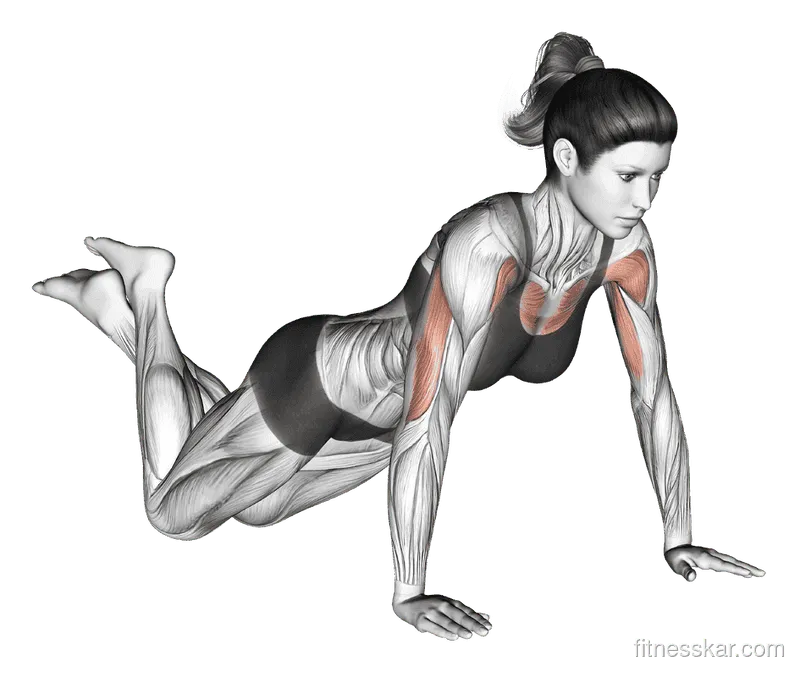
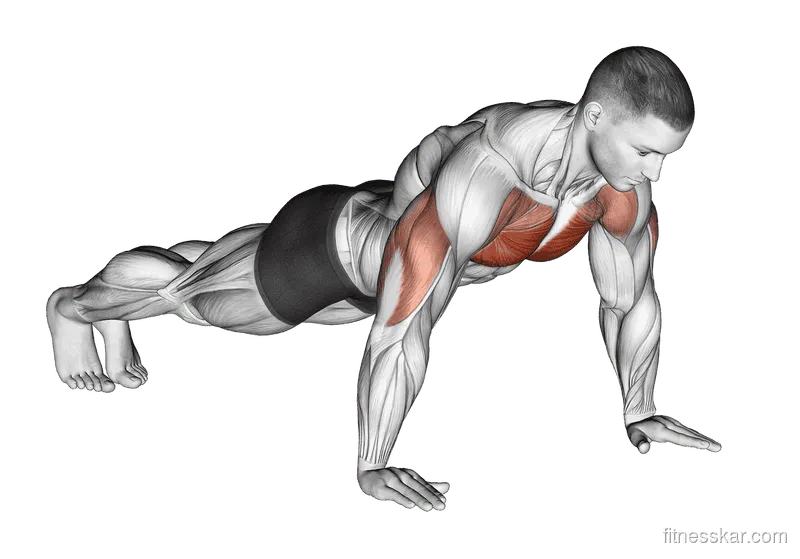
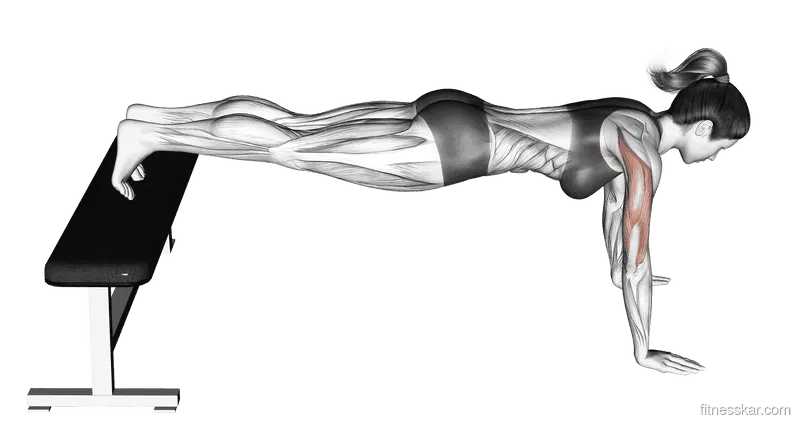
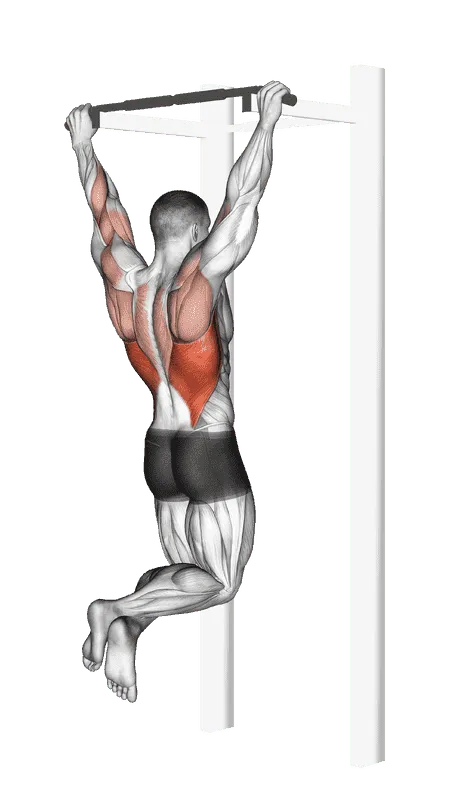
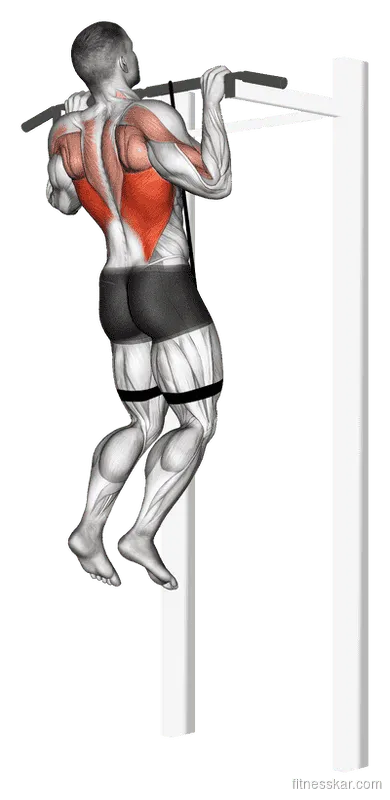
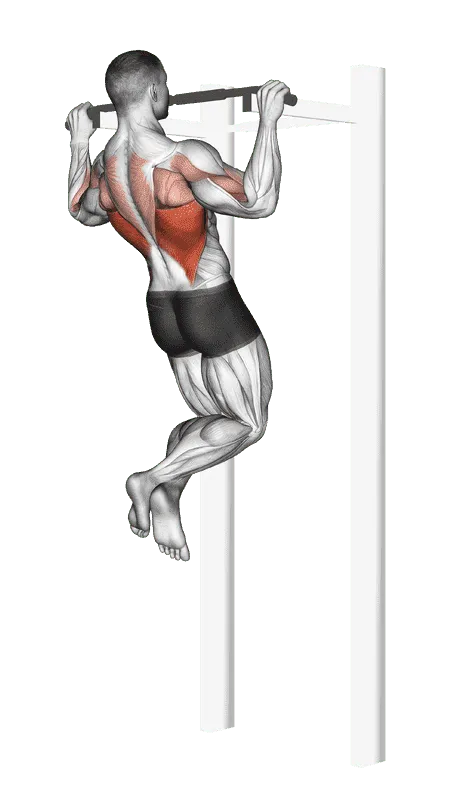
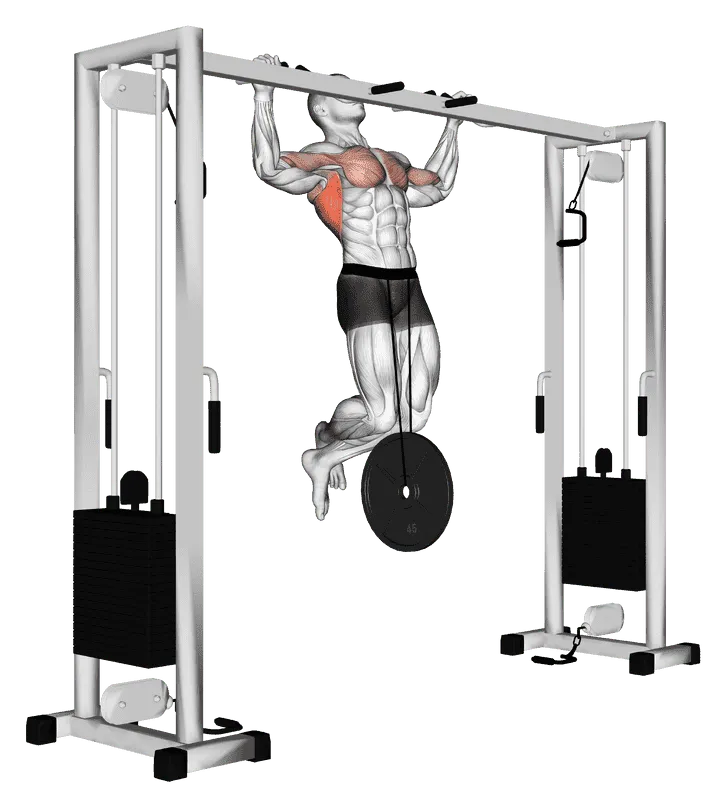
When a bodyweight exercise gets easy, move to a harder version. Push-ups can progress from the push-up on knees to the standard push-up and then the decline push-up. A pull-up progression might look like this:
A pull-up progression
-
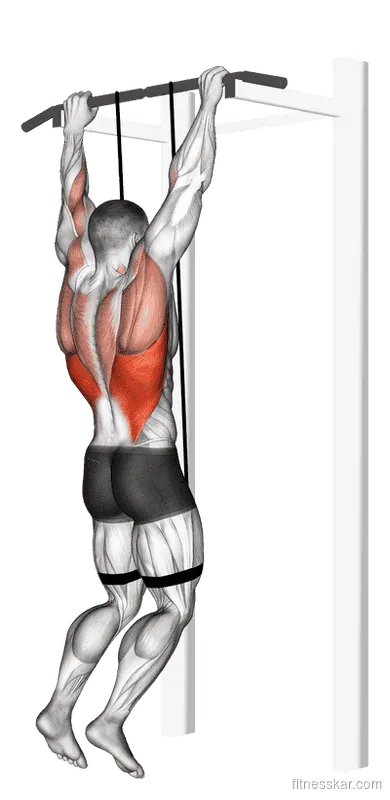
1 Band-Assisted Pull-Up - Sets
- 3
- Reps
- 5–10
- Rest
- 120 s
-
2 Pull-Up - Sets
- 3
- Reps
- 3–10
- Rest
- 150 s
-
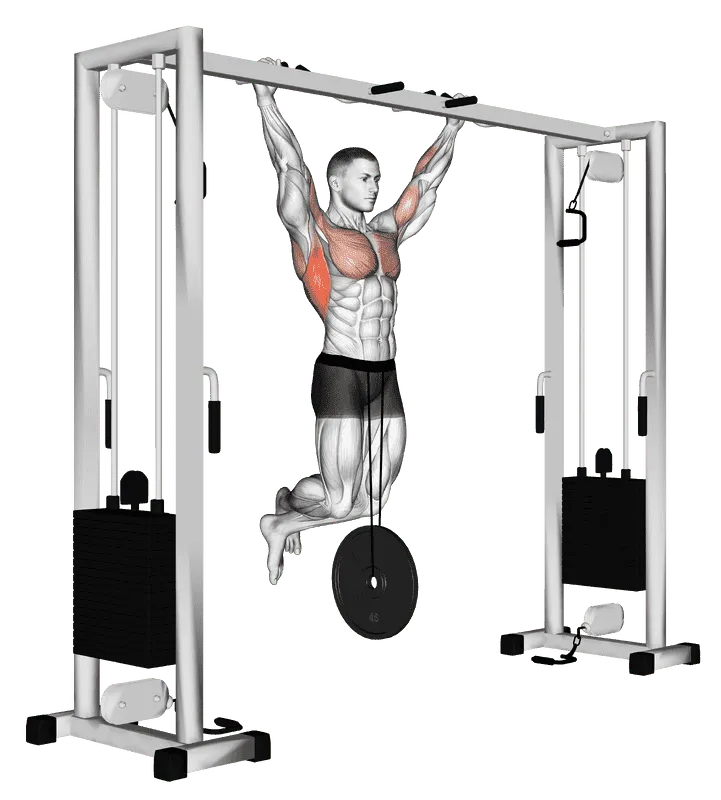
3 Weighted Pull-Up - Sets
- 3
- Reps
- 5–8
- Rest
- 150 s
Double progression: the simplest system that works
Double progression combines reps and load, and it's the easiest way for most lifters to progress.
- Pick a rep range, such as 8 to 12.
- Choose a weight you can lift for about 8 reps with good form, stopping a rep or two short of failure.
- In each session, try to add a rep or two to your sets.
- When you reach the top of the range (12 reps) on every set, increase the weight by the smallest step available.
- Your reps drop back toward 8. Build them up again.
| Week | Weight | Reps per set |
|---|---|---|
| 1 | 135 lb | 10, 9, 8 |
| 2 | 135 lb | 11, 10, 9 |
| 3 | 135 lb | 12, 11, 10 |
| 4 | 135 lb | 12, 12, 12 |
| 5 | 140 lb | 10, 9, 8 |
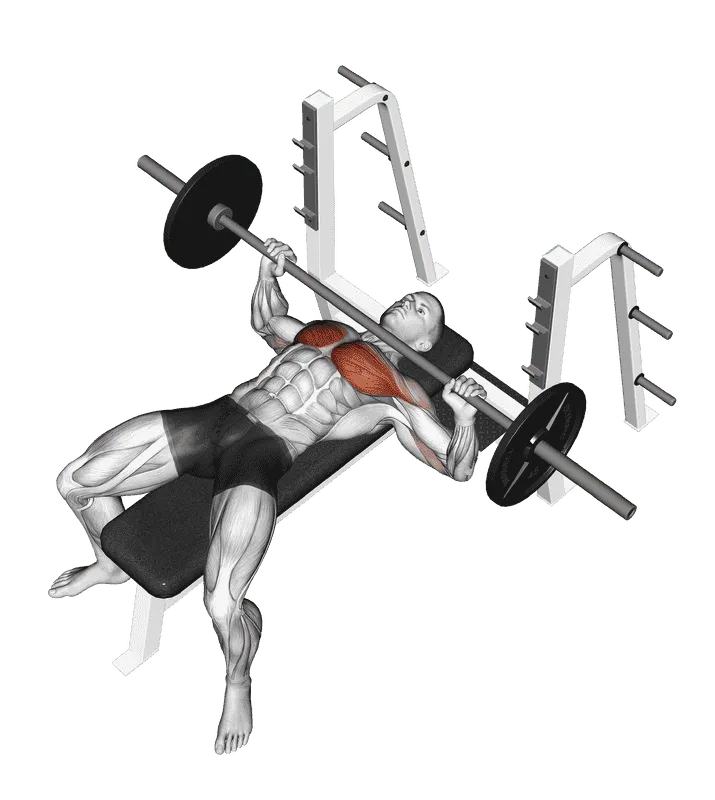
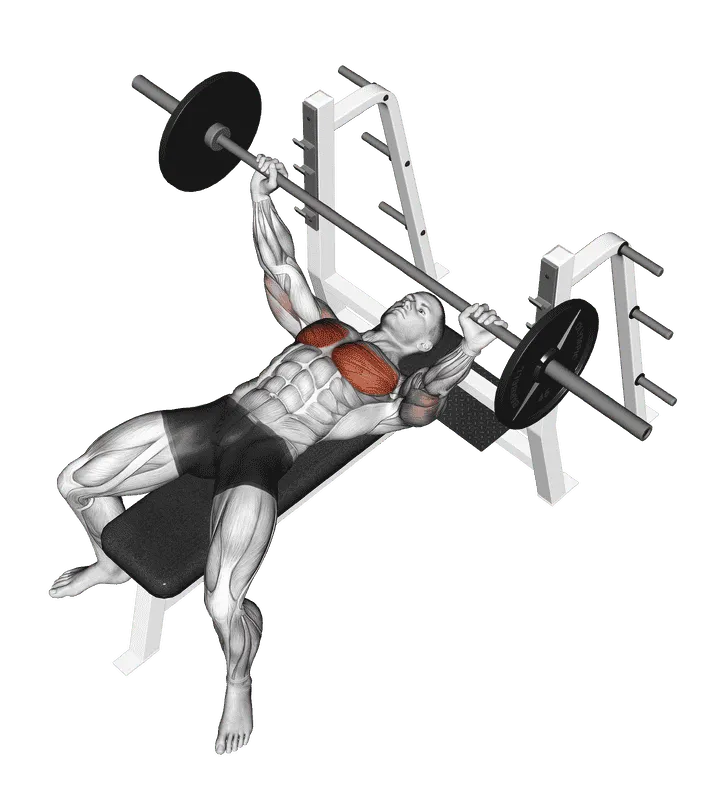
- Sets
- 3
- Reps
- 8–12
- Rest
- 150 s
The same system works for every exercise. On a barbell full squat, for example, you might use a range of 6 to 10 reps and bigger weight jumps.
Use reps in reserve to keep effort honest
Progression only works if your sets stay hard, and the easiest way to judge that is reps in reserve (RIR): how many more reps you could have done at the end of a set. Researchers built a rating-of-perceived-exertion scale around RIR and found that it tracked bar speed closely, especially in experienced lifters,[5] and it lets you adjust your loads set by set to match how you perform on the day.[6]
For muscle growth, aim to finish most sets with 1 to 3 reps in reserve. If a set you planned at 2 RIR felt like 4, add weight or reps next time.
Track your training
You can't progress what you don't measure. Log every working set: the exercise, weight, reps and how hard it felt. Before each session, look at last time's numbers and aim to beat one of them.
To compare heavy and light days, turn your best sets into an estimated one-rep max with the calculator below. Our guide to the one-rep max explains how the estimate works and when to test a real max.
One-rep max calculator
(Epley , Brzycki )
| % of 1RM | Load |
|---|---|
Estimates are most accurate between 2 and 10 reps. Test a true 1RM only with a spotter and a proper warm-up.
When progress stalls: deloads
No one progresses in a straight line. Signs that you need to back off include performance that drops for two or more sessions, nagging joint pain, poor sleep and dreading your workouts. If joint pain doesn't settle after a lighter week, see a doctor or physical therapist.
A deload is a planned easier week. Common approaches are cutting your sets in half, reducing the weight by 10 to 20 percent, or both, then returning to normal training the following week.
Don't expect a deload to boost growth. In a nine-week study of trained lifters, taking one week off in the middle produced similar leg muscle growth to training straight through, but smaller lower-body strength gains.[7] Use a deload when fatigue has built up, not as a magic trick. That's also why many coaches prefer a lighter week over complete rest.
Common progressive-overload mistakes
- Adding weight too fast. If your form breaks down or your range of motion shrinks, you haven't really progressed.
- Switching exercises too often. Keep your main lifts for at least six to eight weeks so you can measure progress.
- Expecting linear progress forever. Beginners can add weight almost every week; after a year or two, a small increase each month is a win.
- Ignoring recovery. Sleep, protein and total calories set the ceiling on how fast you can progress.
- Grinding every set to failure. Constant all-out sets pile up fatigue and make it harder to beat your numbers next time.
Frequently asked questions
Frequently asked questions
How fast should I add weight?
As fast as your reps allow and no faster. Beginners can often add 5 lb (2.5 kg) to upper-body lifts and 10 lb (5 kg) to lower-body lifts every week or two. Experienced lifters may add weight only once a month.
Is adding reps as good as adding weight?
For muscle growth, it appears to be. An eight-week study found similar growth whether lifters progressed their reps or their load, while strength slightly favored adding load.
What if I can't add weight or reps anymore?
Add a set, slow down the lowering phase, add a pause, or take a lighter week to shed fatigue. Also check your sleep, protein and calories.
How often should I deload?
When you need to, not on a fixed calendar. Many lifters end up taking a lighter week every four to eight weeks, but stalled lifts and aching joints are a better guide than a schedule.
Do I need to train to failure to progress?
No. Stopping 1 to 3 reps short of failure lets you progress with less fatigue. Just be honest about how many reps you had left.
Sources
- American College of Sports Medicine. American College of Sports Medicine position stand: progression models in resistance training for healthy adults. Medicine and Science in Sports and Exercise. 2009. pubmed.ncbi.nlm.nih.gov/19204579/ ↩
- Plotkin D, Coleman M, Van Every D, et al. Progressive overload without progressing load? The effects of load or repetition progression on muscular adaptations. PeerJ. 2022. pubmed.ncbi.nlm.nih.gov/36199287/ ↩
- Schoenfeld BJ, Ogborn D, Krieger JW. Dose-response relationship between weekly resistance training volume and increases in muscle mass: a systematic review and meta-analysis. Journal of Sports Sciences. 2017. pubmed.ncbi.nlm.nih.gov/27433992/ ↩
- Singer A, Wolf M, Generoso L, et al. Give it a rest: a systematic review with Bayesian meta-analysis on the effect of inter-set rest interval duration on muscle hypertrophy. Frontiers in Sports and Active Living. 2024. pubmed.ncbi.nlm.nih.gov/39205815/ ↩
- Zourdos MC, Klemp A, Dolan C, et al. Novel resistance training-specific rating of perceived exertion scale measuring repetitions in reserve. Journal of Strength and Conditioning Research. 2016. pubmed.ncbi.nlm.nih.gov/26049792/ ↩
- Helms ER, Cronin J, Storey A, Zourdos MC. Application of the repetitions in reserve-based rating of perceived exertion scale for resistance training. Strength and Conditioning Journal. 2016. pubmed.ncbi.nlm.nih.gov/27531969/ ↩
- Coleman M, Burke R, Augustin F, et al. Gaining more from doing less? The effects of a one-week deload period during supervised resistance training on muscular adaptations. PeerJ. 2024. pubmed.ncbi.nlm.nih.gov/38274324/ ↩