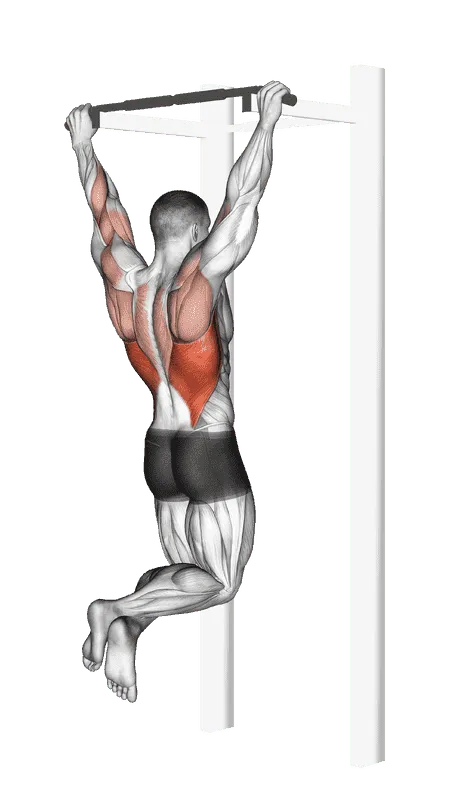
When lifters transition beyond beginner full-body routines, they frequently encounter an organizational dilemma. Many jump directly into a six-day push/pull/legs schedule, only to find that juggling demanding careers, family life, and six intense gym sessions a week leads to accumulated fatigue and missed workouts. Others default to the traditional once-per-week bodybuilding "bro split," isolating one body part each day while leaving substantial muscle growth on the table. For lifters seeking the sweet spot between muscle protein synthesis, manageable fatigue, and schedule adherence, the upper lower split represents one of the most versatile and research-supported training methodologies in modern exercise science.
An upper lower split divides your entire muscular system into two distinct halves: all upper-body pushing and pulling musculature trained in one session, and all lower-body and abdominal musculature trained in the next. By running this rotation twice across a seven-day week—typically on a four-day schedule—every major muscle group is stimulated twice every seven days. This training cadence creates an ideal stimulus-to-fatigue ratio, keeps per-session fatigue below the threshold of counterproductive "junk volume," and provides adequate rest intervals for neuromuscular regeneration.
Whether your primary goal is maximizing myofibrillar hypertrophy, building multi-joint foundational strength, or managing connective tissue health across years of hard training, structuring your training week around an upper lower split provides an optimal framework. Here is the physiological science behind why the split works, how to balance volume landmarks, and a complete four-day masterclass routine you can take directly into the gym.
The Physiology of Training Frequency: Why Twice-Weekly Frequency Accelerates Hypertrophy
To understand why the upper lower split has become a staple among evidence-based physique coaches, we must examine the molecular timeline of Muscle Protein Synthesis (MPS). Following a bout of demanding resistance training, mechanical tension triggers the intracellular signaling cascade dominated by the mechanistic target of rapamycin complex 1 (mTORC1). This biochemical cascade signals ribosomal biogenesis and accelerates the rate at which skeletal myocytes assemble circulating amino acids into new sarcomeric contractile proteins.
However, this anabolic response is transient. In untrained individuals, MPS can remain elevated for up to 72 hours. In trained lifters, however, the muscle protein synthetic response becomes far more compressed: MPS rates peak approximately 24 hours post-workout and plummet back toward baseline levels within 36 to 48 hours.
A landmark systematic review and meta-analysis confirmed that training a muscle group twice per week produces superior hypertrophic outcomes compared to training each muscle group once per week, even when total weekly training volume is closely equated.[1] Beyond the raw frequency of molecular signaling, splitting your work across multiple sessions fundamentally transforms the mechanical quality of every repetition you perform.
Sessional Volume Thresholds: Eradicating "Junk Volume"
In the pursuit of maximum muscular development, more volume is not always better. For decades, bodybuilders believed that obliterating a muscle with 20 sets in a single afternoon was the gold standard for muscle growth. Contemporary exercise science paints a starkly different picture centered on the concept of sessional effective volume thresholds.
Hypertrophic stimulus follows a classic inverted-U dose-response curve within an individual workout:
- The Stimulative Window (Sets 1–6): The first few working sets of an exercise recruit the highest-threshold motor units and deliver the steepest increase in anabolic signaling.
- The Plateau Window (Sets 7–10): Subsequent sets continue to stimulate myofibrillar tension, but each additional set delivers progressively smaller fractional increases in protein synthesis.
- The Junk Volume Zone (Sets 10+): Beyond approximately 8 to 10 hard sets per muscle group in a single training session, mechanical tension drops precipitously due to peripheral and central fatigue. The muscle incurs excessive structural microtrauma and glycogen depletion without eliciting any additional mTORC1 activation.
When you attempt to cram 16 weekly sets of chest training into a single "Monday International Chest Day," your final six to eight sets are performed under intense local metabolic and neural exhaustion. Your motor unit firing rates decline, your bar speed degrades, and you generate disproportionate cellular inflammation that can take up to a week to clear.
As detailed in our comprehensive guide to sets per muscle per week, dividing your total volume landmarks into manageable chunks of 6 to 10 sets per workout maximizes the hypertrophic stimulus-to-fatigue ratio (SFR) while dramatically accelerating between-session recuperation.
Weekly Scheduling and Fatigue Distribution: The 4-Day Architecture
The most widely utilized and biologically sound implementation of the upper lower split is the four-day undulating model. This schedule provides a 2-on, 1-off, 2-on, 2-off structure that synchronizes flawlessly with work-life balance while ensuring no muscle group is trained under excessive residual soreness.
| Day | Focus | Primary Movement Emphasis | Recovery Status |
|---|---|---|---|
| Monday | Upper Body A | Horizontal Push (Chest) & Horizontal Pull (Lats/Rhomboids) | Fresh after 48h weekend rest |
| Tuesday | Lower Body A | Knee-Dominant (Quads) & Calf Hypertrophy | Upper body resting |
| Wednesday | Active Recovery / Rest | Mobility, light walking, metabolic clearance | Systemic central nervous system recovery |
| Thursday | Upper Body B | Vertical Pull (Upper Back) & Vertical Push (Deltoids) | Upper body fully restored (72h rest) |
| Friday | Lower Body B | Hip-Hinge (Hamstrings/Glutes) & Core Stabilization | Lower body fully restored (72h rest) |
| Saturday | Rest | Complete rest or active outdoor recovery | Systemic recovery |
| Sunday | Rest | Complete rest, meal preparation, sleep optimization | Full glycogen restoration |
Why This Architecture Protects the Central Nervous System
The primary advantage of alternating between upper and lower halves of the body—as opposed to consecutive full-body sessions—is the containment of axial loading and localized tissue inflammation.
Heavy compound movements like the squat and deadlift place immense compressive loads along the vertebral column (axial fatigue) and strain the sacroiliac joint and erector spinae. If you perform heavy multi-joint lower-body movements three or four times a week in a full-body setup, your spinal stabilizers never achieve full recovery, increasing the likelihood of lumbar strain.
By clustering your axial loading onto Tuesdays and Fridays, your lumbar spine, gluteal complex, and hamstrings receive 72 to 96 hours of uninterrupted healing before facing heavy mechanical tension again. Meanwhile, your upper body pushing and pulling mechanics operate completely unhindered by lower-body soreness.

Structuring the Upper Sessions: Horizontal vs. Vertical Biomechanics
A frequent flaw in poorly designed upper-body workouts is trying to train every upper-body muscle with equal volume in a single session, resulting in a marathon two-hour workout. The solution is plane-of-motion periodization: dividing Upper A and Upper B into complementary mechanical planes.
Upper A: Horizontal Dominance
On Upper A, the primary multi-joint emphasis centers on horizontal pressing (sternal pectoralis major) and horizontal pulling (latissimus dorsi, middle trapezius, and rhomboids):
- Primary Heavy Horizontal Press: The barbell bench press anchors the workout, loading the pectoralis major through a stable, high-tension bilateral pathway.
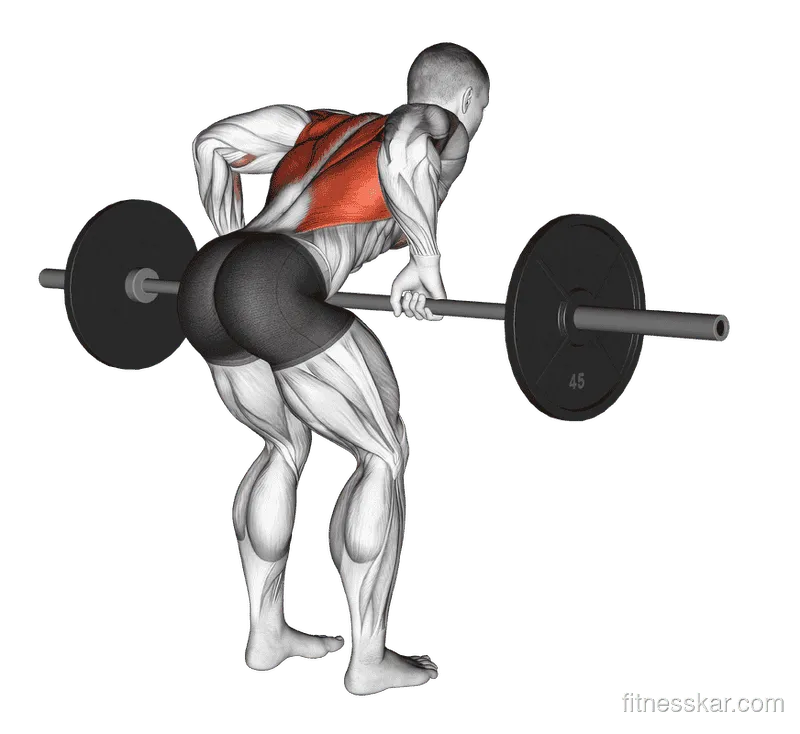
- Primary Horizontal Row: The barbell bent-over row provides complementary antagonist volume, stabilizing scapular retraction while building thickness through the mid-back.
- Secondary Incline Press: Moving to an incline angle with dumbbells targets the clavicular head of the pectorals while allowing wrist and shoulder rotational freedom.
- Accessory Shoulder and Arm Work: Finishing with targeted isolation for the lateral deltoids and elbow flexors/extensors ensures complete aesthetic symmetry.
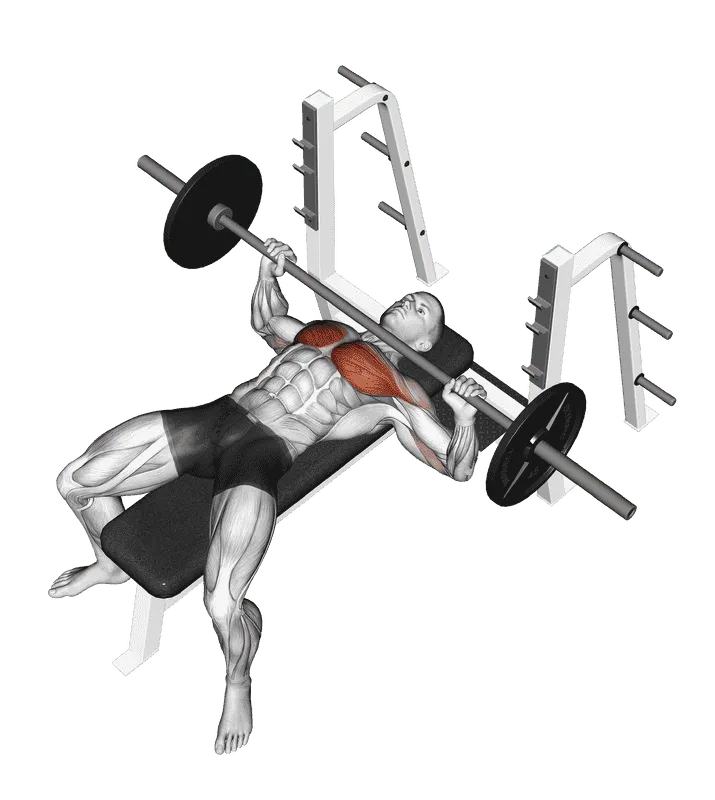
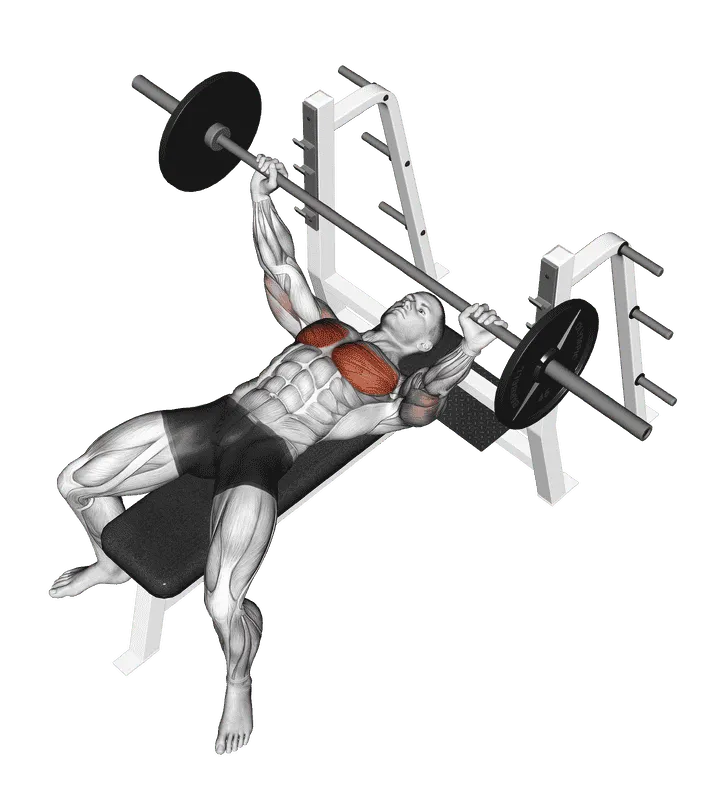
- Sets
- 3–4
- Reps
- 6–8
- Rest
- 180 s
- Tempo
- 3–1–1
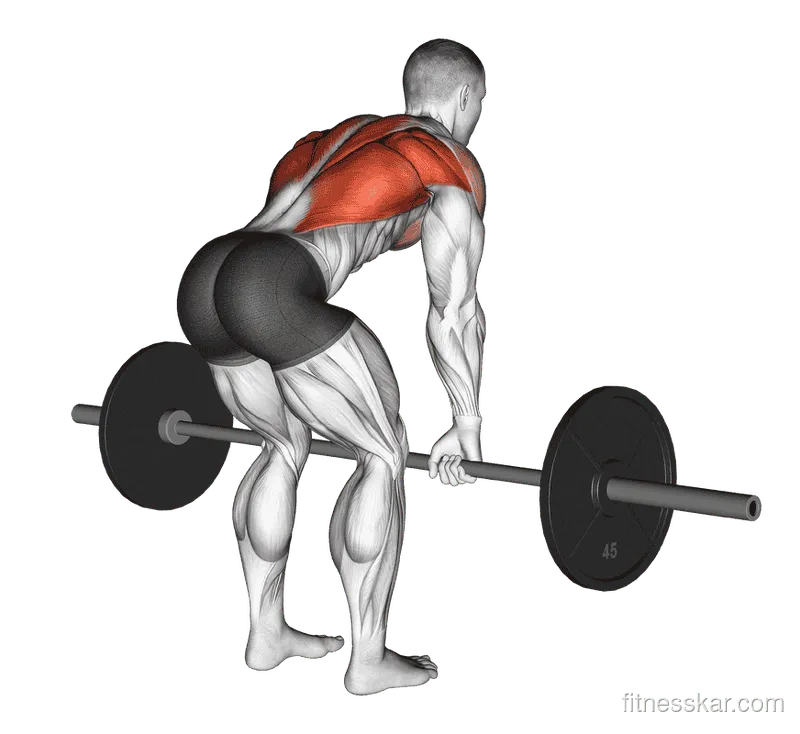
- Sets
- 3–4
- Reps
- 8–10
- Rest
- 120 s
- Tempo
- 2–1–1
Upper B: Vertical Dominance
On Upper B, the mechanical focus shifts to vertical pulling (latissimus dorsi in the frontal plane) and vertical pressing (anterior deltoids and clavicular pectorals):
- Primary Vertical Pull: The pull-up or lat pulldown serves as the primary compound lift, placing the lats under intense stretch-mediated tension.
- Primary Vertical Press: A strict overhead press or heavy dumbbell shoulder press targets the anterior deltoids and serratus anterior.
- Secondary Chest and Back Isolation: Cable flyes and chest-supported rows round out the volume without imposing axial spinal fatigue.
- Direct Arm Hypertrophy: Supersets pairing triceps pushdowns with incline curls provide focused metabolic stress for the upper arms.
Structuring the Lower Sessions: Quad vs. Posterior Chain Periodization
Lower body training demands immense cardiovascular, metabolic, and neurological output. Attempting to max out on heavy squats, heavy deadlifts, leg presses, and lunges in a single leg session causes systemic nausea, degrades technique, and skyrockets injury risk.
In a properly programmed upper lower split, Lower A emphasizes the anterior chain (quadriceps dominance), while Lower B targets the posterior chain (hamstring and glute dominance).
Lower A: Quadriceps Dominance
- The Knee-Flexion Anchor: The barbell full squat is performed first when your neuromuscular system is completely fresh, targeting quad hypertrophy and hip extensor strength through deep knee flexion.
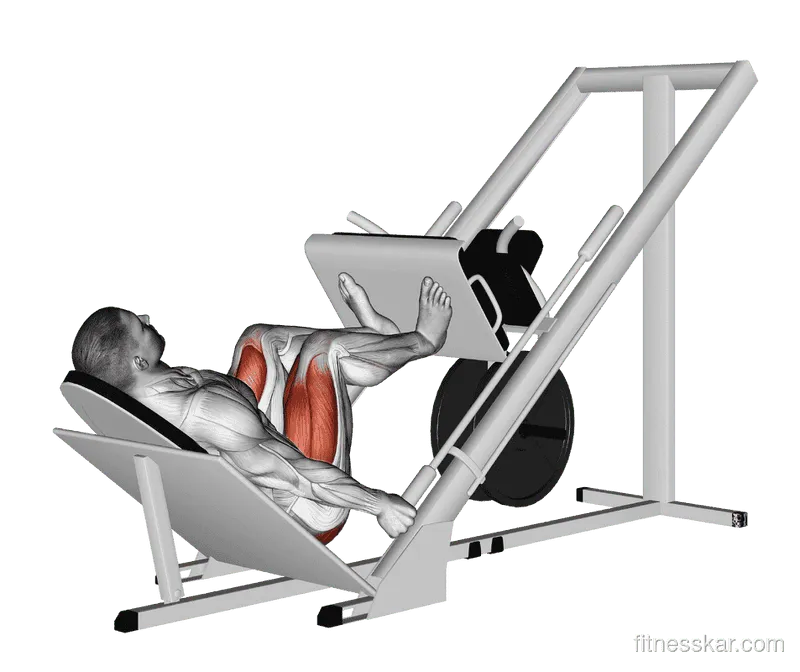
- Secondary Unilateral or Machine Compound: The sled 45° leg press or walking barbell lunges allow you to accumulate intense quadriceps volume without further loading the vertebral column.
- Knee Flexor Isolation: Seated leg curls isolate the hamstrings from the hip joint, providing knee-joint stabilization and balanced joint shear forces.
- Calves and Core: Standing calf raises and hanging leg raises finish the workout.


- Sets
- 3–4
- Reps
- 6–8
- Rest
- 180 s
- Tempo
- 3–1–1

- Sets
- 3
- Reps
- 10–12
- Rest
- 120 s
- Tempo
- 2–1–1
Lower B: Posterior Chain Dominance
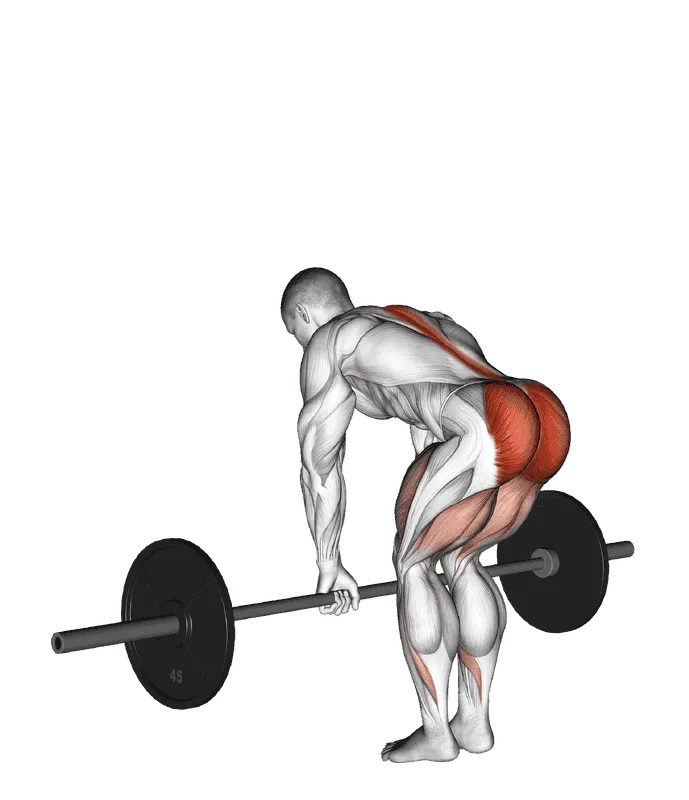
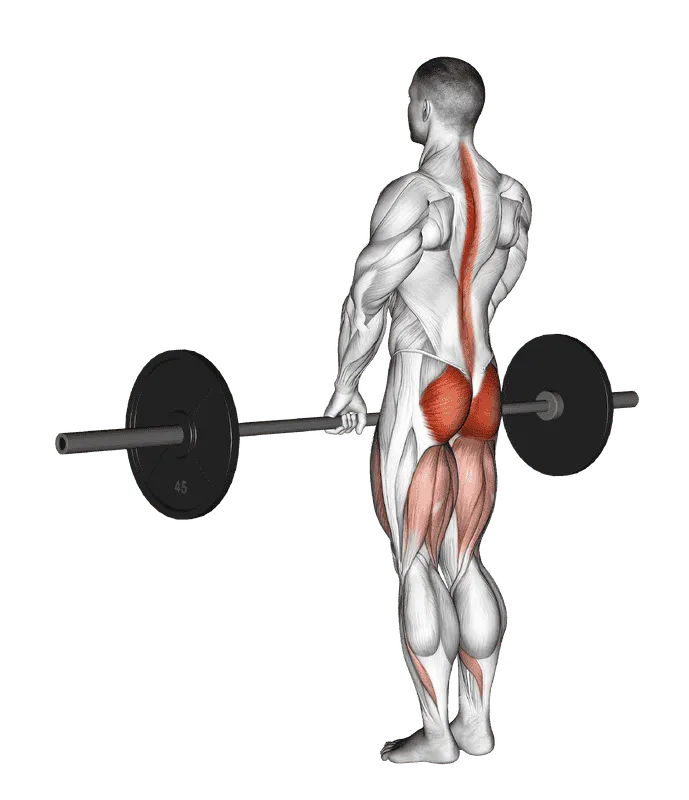
- The Hip-Hinge Anchor: The barbell Romanian deadlift serves as the primary movement, loading the hamstrings and gluteus maximus through a deep eccentric stretch.
- Secondary Knee-Flexion Movement: Front squats, Bulgarian split squats, or hack squats maintain quadriceps frequency with moderate loading.
- Direct Glute and Hamstring Work: Lying leg curls or barbell hip thrusts overload the shortened muscle lengths of the posterior chain.
- Soleus and Deep Core: Seated calf raises target the soleus muscle, accompanied by anti-rotational core work.
- Sets
- 3–4
- Reps
- 8–10
- Rest
- 150 s
- Tempo
- 3–1–1
The Complete 4-Day Upper Lower Training Blueprint
Below is the complete, evidence-based four-day masterclass routine designed for intermediate lifters seeking maximal hypertrophy and strength progression. Every exercise has been selected to provide maximum stimulus with sustainable joint fatigue.
Upper Body Workout A (Monday – Horizontal Emphasis)
| Order | Exercise | Target Sets | Target Reps | RIR Target | Rest Interval |
|---|---|---|---|---|---|
| 1 | Barbell Bench Press | 3–4 | 6–8 | 1–2 RIR | 3 min |
| 2 | Barbell Bent-Over Row | 3–4 | 8–10 | 1–2 RIR | 2 min |
| 3 | Dumbbell Incline Bench Press | 3 | 8–12 | 1 RIR | 2 min |
| 4 | Pull-Up (or Lat Pulldown) | 3 | 8–10 | 1–2 RIR | 2 min |
| 5 | Dumbbell Lateral Raise | 3–4 | 12–15 | 0–1 RIR | 90 sec |
| 6 | Cable Triceps Pushdown | 3 | 10–12 | 1 RIR | 90 sec |
| 7 | Dumbbell Biceps Curl | 3 | 10–12 | 1 RIR | 90 sec |
Lower Body Workout A (Tuesday – Quadriceps Emphasis)
| Order | Exercise | Target Sets | Target Reps | RIR Target | Rest Interval |
|---|---|---|---|---|---|
| 1 | Barbell Full Squat | 3–4 | 6–8 | 1–2 RIR | 3 min |
| 2 | Barbell Romanian Deadlift | 3 | 8–10 | 2 RIR | 2.5 min |
| 3 | Sled 45° Leg Press | 3 | 10–12 | 1 RIR | 2 min |
| 4 | Seated Leg Curl | 3 | 10–12 | 1 RIR | 90 sec |
| 5 | Standing Dumbbell Calf Raise | 4 | 12–15 | 0–1 RIR | 60 sec |
| 6 | Hanging Knee/Leg Raise | 3 | 12–15 | 1 RIR | 60 sec |
Upper Body Workout B (Thursday – Vertical Emphasis)
| Order | Exercise | Target Sets | Target Reps | RIR Target | Rest Interval |
|---|---|---|---|---|---|
| 1 | Pull-Up (Weighted if capable) | 3–4 | 6–8 | 1–2 RIR | 2.5 min |
| 2 | Barbell Standing Military Press | 3–4 | 6–8 | 1–2 RIR | 2.5 min |
| 3 | Chest-Supported Dumbbell Row | 3 | 10–12 | 1 RIR | 2 min |
| 4 | Flat Dumbbell Bench Press | 3 | 8–10 | 1–2 RIR | 2 min |
| 5 | Dumbbell Lateral Raise | 3 | 12–15 | 0–1 RIR | 90 sec |
| 6 | Incline Dumbbell Biceps Curl | 3 | 10–12 | 1 RIR | 90 sec |
| 7 | Overhead Cable Triceps Extension | 3 | 10–12 | 1 RIR | 90 sec |
Lower Body Workout B (Friday – Posterior Chain Emphasis)
| Order | Exercise | Target Sets | Target Reps | RIR Target | Rest Interval |
|---|---|---|---|---|---|
| 1 | Barbell Romanian Deadlift | 3–4 | 6–8 | 1–2 RIR | 3 min |
| 2 | Sled 45° Leg Press (or Hack Squat) | 3 | 8–10 | 1–2 RIR | 2.5 min |
| 3 | Walking Dumbbell Lunge | 3 | 10–12 / leg | 1 RIR | 2 min |
| 4 | Lying Leg Curl | 3 | 10–12 | 1 RIR | 90 sec |
| 5 | Barbell Standing Calf Raise | 4 | 10–12 | 0–1 RIR | 90 sec |
| 6 | Cable Abdominal Crunch | 3 | 12–15 | 1 RIR | 60 sec |
Progressive Overload and Fatigue Management
A training split is merely a structural container; the engine that powers muscle hypertrophy inside that container is the application of progressive overload. If you perform the same weights for the same reps for six months, your body has zero physiological incentive to synthesize new myofibrillar tissue.
The Double Progression Model
For multi-joint and isolation exercises in the upper lower split, the double progression method is the most reliable progression strategy:
- Select a target rep range (for example, 8 to 12 reps on the dumbbell incline bench press).
- Choose a working weight that brings you to 1 to 2 Reps in Reserve (RIR) within that rep range.
- Keep the weight constant across sessions until you can complete the top of the rep range (12 reps) across all prescribed working sets with pristine form.
- In the following workout, increase the load by the smallest incremental jump (typically 1.0 to 2.5 kg / 2.5 to 5 lb per side) and work your way back up from 8 reps.
As highlighted in our muscle recovery guide, systemic fatigue compounds over 4 to 6 weeks of hard training. When your morning resting heart rate rises, your grip strength degrades, or your motivation wanes, program a planned deload week: reduce total working sets by 50% and keep loads at 2 to 3 RIR for seven days before starting your next mesocycle.
Upper Lower Split vs. Push/Pull/Legs (PPL) vs. Full Body: Which Fits You?
Lifters frequently ask whether the upper lower split is superior to a push/pull/legs (PPL) split or a 3-day full-body setup. The objective answer depends upon your available training days and recovery capacity.
| Feature | Upper / Lower Split | Push / Pull / Legs (PPL) | Full Body |
|---|---|---|---|
| Ideal Days / Week | 4 Days (2 Upper, 2 Lower) | 6 Days (or 3 Days) | 3 Days |
| Frequency per Muscle | 2x per week | 2x (on 6-day) or 1x (on 3-day) | 3x per week |
| Session Duration | 60–75 minutes | 50–65 minutes | 75–90 minutes |
| Recovery Balance | Exceptional (3 full rest days) | Demanding on 6-day (1 rest day) | High systemic fatigue per session |
| Best For | Intermediates, busy athletes, 4-day lifters | Advanced lifters with 6 available days | Beginners, lifters with only 3 days |
If you can realistically commit only to four focused gym sessions per week, forcing yourself into a 6-day PPL routine will lead to missed workouts, irregular frequency, and psychological frustration. The four-day upper lower split provides the exact same twice-weekly muscle protein synthesis frequency as a six-day PPL, but with two additional full days of complete rest and recovery every single week.
Nutritional Synergies: Fueling Your 4-Day Mesocycle
Optimizing your training mechanics without supporting the cellular rebuilding process will stall your hypertrophy. To ensure the mechanical tension from your upper and lower sessions translates into visible muscle growth:
- Total Protein Targets: Consume 1.6 to 2.2 grams of protein per kilogram of body weight daily (0.73 to 1.0 g/lb), distributed evenly across 4 meals, as established in our guide to protein for muscle gain.
- Energy Availability: To maximize muscle protein accretion, maintain a modest caloric surplus of 200 to 300 kcal above maintenance, or eat at maintenance if pursuing lean body recomposition.
- Hydration & Micronutrients: Hydrate thoroughly before every session and maintain adequate intracellular mineral levels to support ATP hydrolysis and neuromuscular contraction.
Frequently Asked Questions
Frequently asked questions
Is a 4-day upper lower split enough volume to build maximum muscle?
Yes. A properly programmed 4-day upper lower split provides 12 to 18 high-quality working sets per muscle group per week, which falls squarely within the evidence-based volume sweet spot for intermediate and advanced lifters. Because volume is split into two focused sessions, every set is performed with higher force output and less fatigue than in high-volume single-session splits.
Can complete beginners follow an upper lower split, or is it only for intermediates?
Complete beginners can follow an upper lower split, but they typically progress even faster on a 3-day full-body routine where they practice compound movement patterns three times per week. The upper lower split becomes truly optimal once you have 6 to 12 months of consistent lifting experience and require more volume per muscle group than a single full-body session can reasonably accommodate.
How long should an upper lower workout take?
A well-structured upper lower session typically lasts between 60 and 75 minutes. By utilizing antagonist supersets on upper days (pairing horizontal presses with rows) and keeping rest periods between 2 and 3 minutes for heavy compounds and 60 to 90 seconds for isolation work, you can complete 18 to 22 total sets without rushing your rest or lingering in the gym.
On which days should I train my abs and calves in an upper lower split?
Calves are best trained on Lower days following quad and hamstring work, where your ankle joints are already warm and the systemic demand fits naturally into lower-body mechanics. Abdominals and core stabilizers can be trained at the end of Lower days to maintain spinal integrity during heavy squats, or divided evenly between Upper B and Lower B sessions.
Sources
- Schoenfeld BJ, Ogborn D, Krieger JW. Effects of Resistance Training Frequency on Measures of Muscle Hypertrophy: A Systematic Review and Meta-Analysis. Sports Medicine. 2016;46(11):1689-1697. doi.org/10.1007/s40279-016-0543-8 ↩