Building wide, cap-shaped deltoids requires far more than loading a barbell and pressing it overhead until your shoulders burn. The shoulder complex is a three-headed muscle system with distinct anatomical lines of pull, which means that an exercise that hammers one head will leave another completely untouched. Most lifters possess overdeveloped front shoulders from heavy bench pressing, while their lateral and rear deltoids lag severely behind, creating a flat profile and setting the stage for chronic joint impingement.
The best shoulder exercises solve this imbalance by targeting each deltoid head through its optimal biomechanical plane. By combining stable vertical pressing for the anterior deltoid, continuous-tension abduction for the lateral deltoid, and horizontal abduction with external rotation for the posterior deltoid, you stimulate maximum muscle growth across the entire shoulder girdle. Pair this selection with consistent progressive overload and calibrated weekly volume, and your delts will grow predictably without beating up your rotator cuffs.
The anatomy of 3D deltoids: Why presses alone fail
To design an effective shoulder workout, you must understand how the deltoid muscle is constructed. The deltoid wraps around the glenohumeral joint like an inverted epaulet, originating from three distinct skeletal landmarks and converging onto a single point on the outer shaft of the humerus (the deltoid tuberosity). Because the muscle fibers run in three distinctly different directions, they perform fundamentally different mechanical actions:
- The Anterior (Front) Deltoid: Originates from the anterior lateral third of the clavicle. Its primary function is shoulder flexion (raising the arm forward and up) and horizontal adduction (bringing the arm across the chest). Because the anterior deltoid acts as a prime mover during every flat, incline, and push-up variation in your chest workouts, it rarely needs large amounts of direct isolation work.
- The Lateral (Side) Deltoid: Originates from the acromion process of the scapula. Its sole mechanical role is shoulder abduction—elevating the arm out to the side away from the midline of the body. The lateral deltoid is responsible for upper-body width, creating the visual illusion of a smaller waist and broader V-taper. Crucially, the lateral head has poor leverage during pure vertical pressing movements.
- The Posterior (Rear) Deltoid: Originates from the lower spine of the scapula. Its primary roles are horizontal abduction (pulling the arm backward horizontally) and external humeral rotation. The rear delt stabilizes the humeral head during heavy pressing and balances the anterior dominance created by chest and front delt training.
A landmark electromyographic analysis by Coratella and colleagues demonstrated that while overhead pressing produces high activation in the anterior deltoid, it elicits markedly inferior activation in the lateral deltoid and virtually negligible activation in the posterior deltoid.[1] In other words, if your shoulder training relies almost exclusively on overhead barbell or dumbbell presses, you are only training one-third of your shoulder. Full, rounded deltoid development requires dedicated exercises that directly align with the lateral and posterior fibers.
The 7 best shoulder exercises for hypertrophy
Below are the seven most productive shoulder exercises for complete hypertrophy. Each exercise has been selected for its stability, resistance profile, muscle recruitment efficiency, and joint safety.
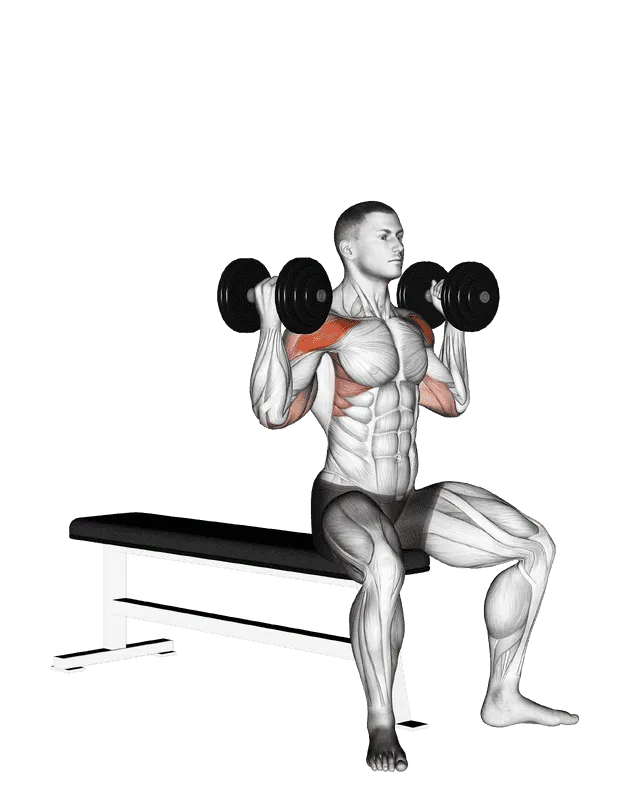
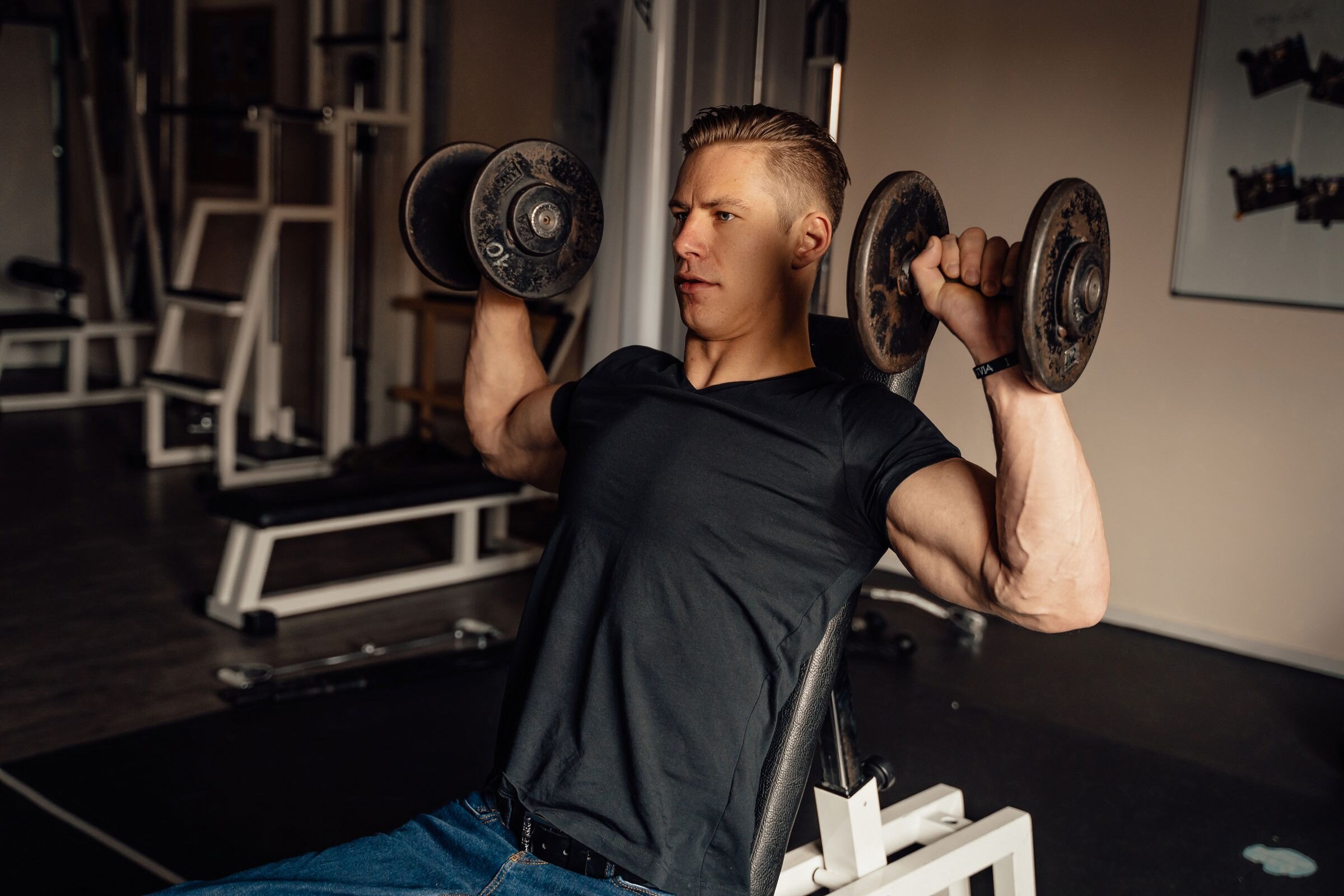
1. Seated dumbbell shoulder press
The dumbbell seated shoulder press is our primary vertical pressing movement for raw anterior deltoid mass and upper-body pressing strength. Unlike a fixed barbell press, dumbbells allow each arm to work independently, eliminating side-to-side strength imbalances. More importantly, dumbbells allow your wrists and elbows to follow your body's natural path of motion rather than being locked into a rigid plane.
By setting an adjustable bench to an 80-to-85-degree incline (just shy of completely vertical), you protect your lumbar spine from hyperextending and line the humerus directly up with the scapular plane. This dramatically reduces subacromial friction while placing maximum mechanical tension on the anterior deltoid and clavicular head of the pectoralis major.
- Primary targets: Anterior deltoid, upper chest, triceps.
- Recommended protocol: 3–4 sets of 6–10 reps with 2–3 minutes of rest.
- Form cue: Bring the dumbbells down until the handles reach roughly ear level, keeping your elbows tucked at a 30-to-45-degree angle in front of your torso rather than flared straight out to the sides. Press up in a gentle arc without clacking the weights together at the top.
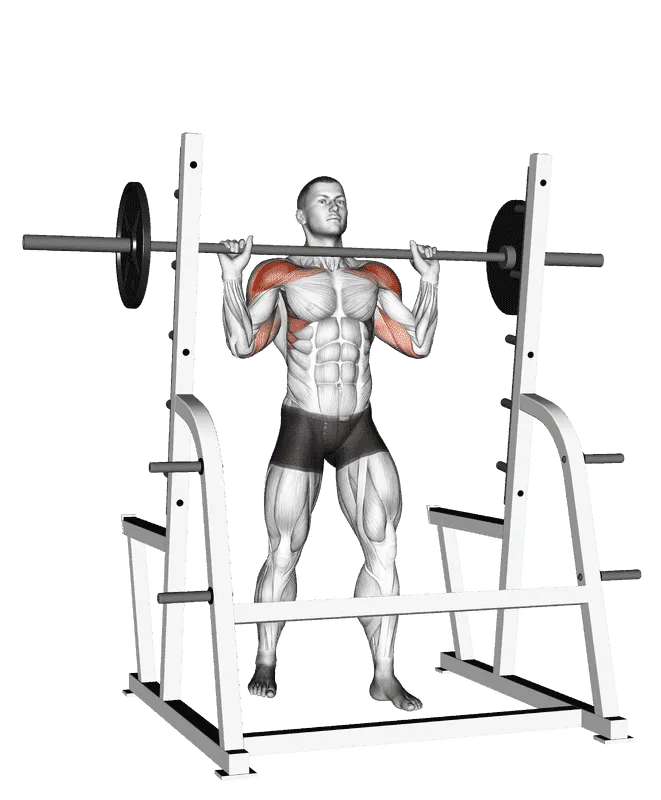
2. Standing barbell military press
The barbell standing military press is the undisputed king of whole-body vertical pressing strength. When executed from a dead stop at collarbone level, the military press recruits the anterior deltoid, triceps brachii, serratus anterior, and clavicular pectoralis, while demanding tremendous isometric bracing from your core, glutes, and upper back.
Because the load is centered over your midfoot, the standing press builds functional overhead capacity that transfers directly to athletic performance and heavy compound lifting. However, because it requires significant thoracic spine mobility and core stability, strict technique must take precedence over the weight on the bar.
- Primary targets: Anterior deltoid, triceps, core stabilizers.
- Recommended protocol: 3 sets of 5–8 reps with 2.5–3 minutes of rest.
- Form cue: Squeeze your glutes and brace your abs before initiating the lift. Pull your chin back slightly as the bar leaves your upper chest, and as soon as the bar passes your forehead, push your head and torso forward into the "window" beneath the bar so the weight locks out directly over your spine.
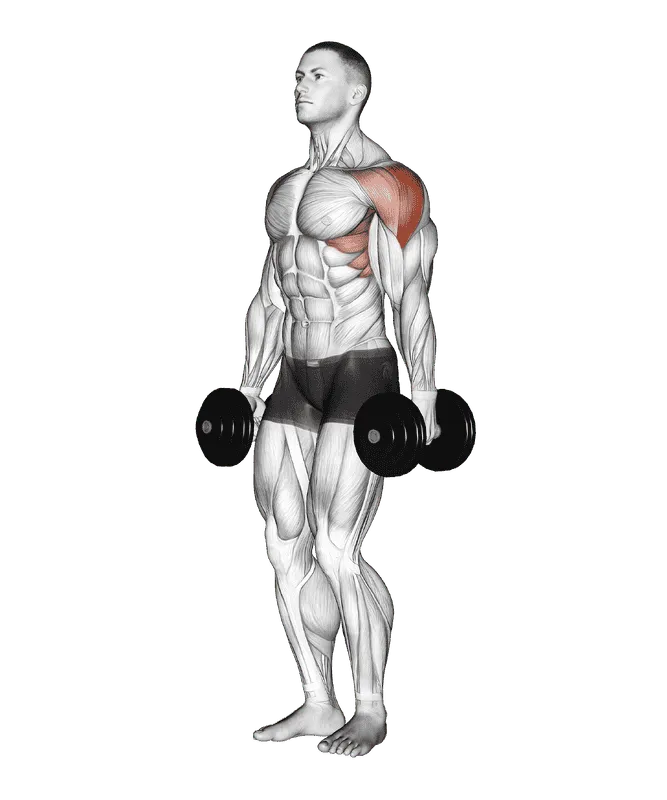
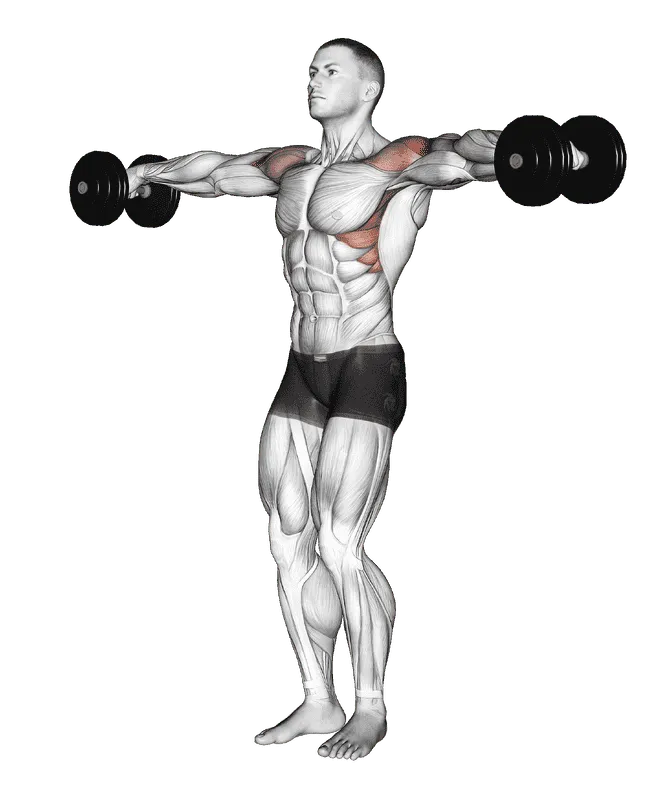
3. Dumbbell lateral raise
If you want wider shoulders, the dumbbell lateral raise is mandatory. It is the single most accessible and proven exercise for isolating the lateral head of the deltoid. Because the lateral deltoid fibers run vertically along the side of the arm, raising the arm sideways against gravity places direct shear and mechanical tension across the middle delt.
The common pitfall with dumbbell lateral raises is using excessive momentum, shrugging the traps, or lifting strictly in the frontal plane (straight out to the sides). Lifting straight out to the sides can compress the supraspinatus tendon against the acromion bone. To avoid this, lean forward roughly 10–15 degrees at your hips and raise the dumbbells in the scapular plane—roughly 30 degrees forward of your collarbone line.
- Sets
- 3–4
- Reps
- 12–15
- Rest
- 90 s
- Tempo
- 2–0–1
- Primary targets: Lateral deltoid.
- Recommended protocol: 3–4 sets of 12–15 reps with 75–90 seconds of rest.
- Form cue: Think about pushing your knuckles out toward the side walls rather than lifting the weights "up." Keep a soft bend in your elbows and stop the movement when your upper arms are parallel to the floor; going higher shifts tension directly onto the upper trapezius.
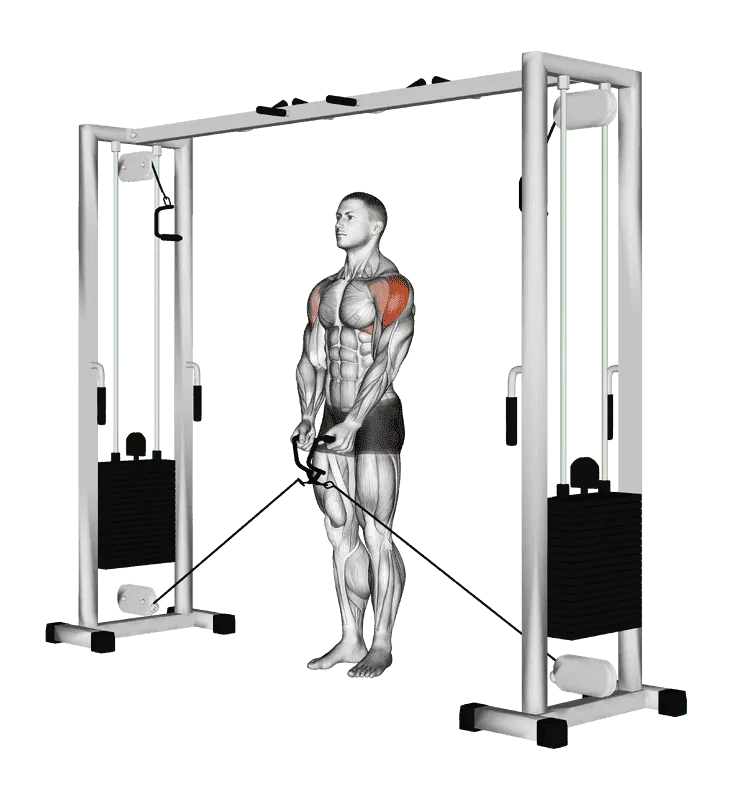
4. Cable lateral raise
While dumbbells provide peak mechanical tension at the very top of a lateral raise (where the lever arm is longest), they provide virtually zero tension at the bottom of the movement where your arms hang at your sides. The cable lateral raise solves this resistance curve limitation by delivering smooth, uninterrupted tension through the entire arc of motion.
By setting the cable pulley at approximately wrist height and standing sideways, the cable pulls diagonally across your body. This creates significant resistance right from the stretched position at the start of the rep, stimulating lateral deltoid fibers that free weights cannot challenge effectively. Unilateral execution also lets you anchor yourself to the cable tower, ensuring strict biomechanical isolation without body sway.
- Primary targets: Lateral deltoid.
- Recommended protocol: 3 sets of 12–15 reps per arm with 60 seconds of rest.
- Form cue: Set the pulley at mid-shin or knee height. Grip the cable handle with the working hand and hold the vertical upright with your opposite hand. Initiate the pull with your side delt, maintaining a steady two-second lowering phase on every rep.
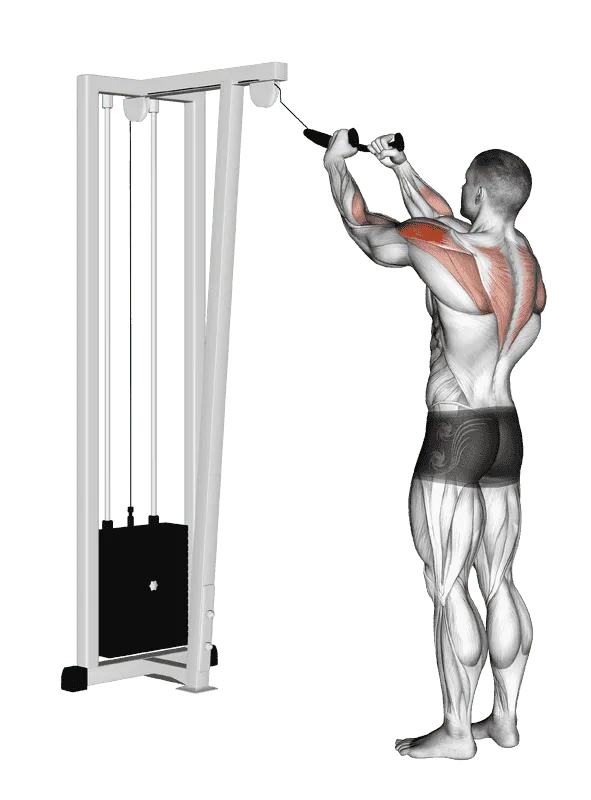
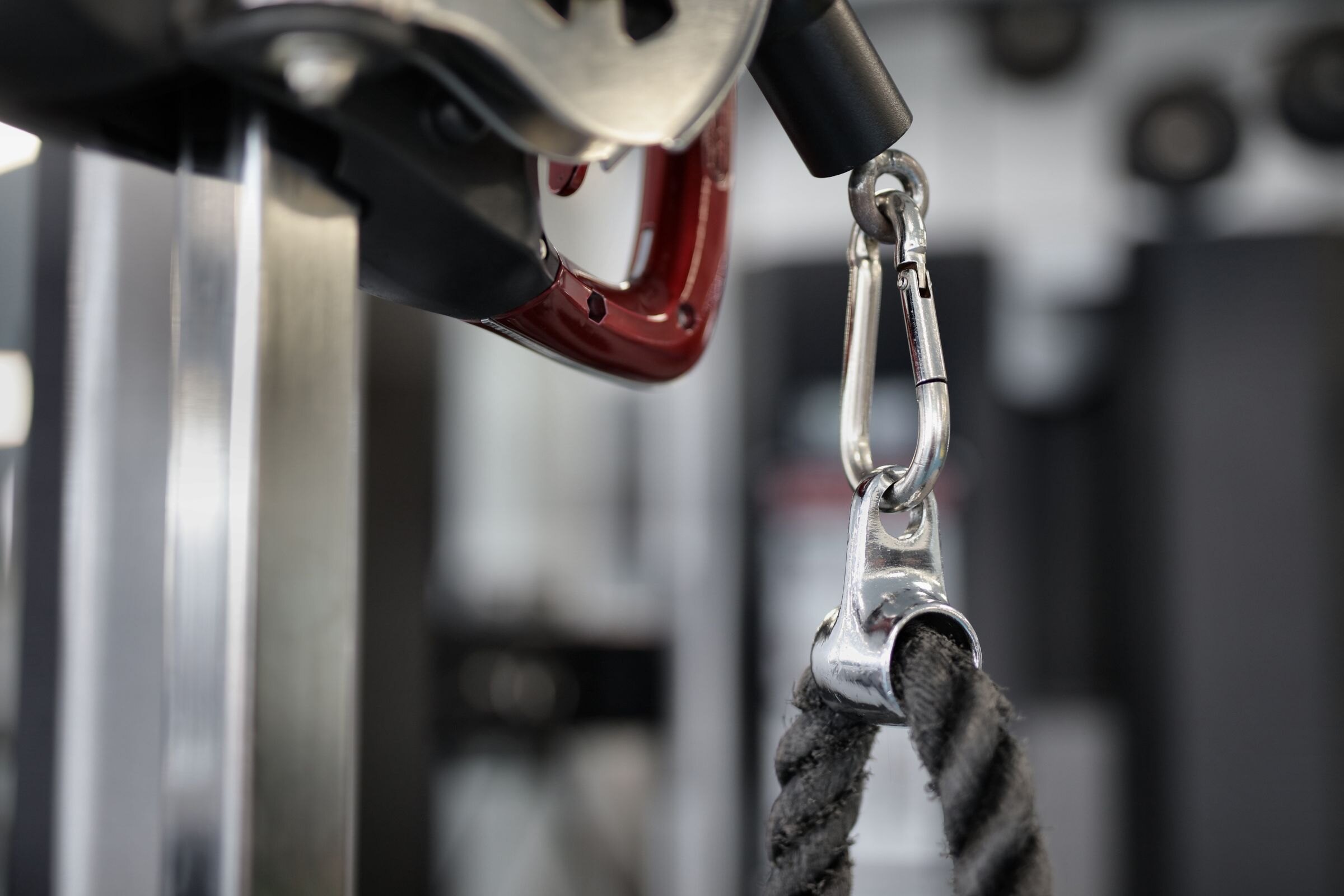
5. Cable rear delt row with rope
The cable rear delt row with rope is one of the most valuable upper-body exercises in existence, functioning simultaneously as a premier posterior deltoid builder and a vital shoulder health preserver. During this movement, you combine horizontal shoulder abduction with external humeral rotation. This dual action activates the rear deltoids, the infraspinatus and teres minor (key rotator cuff muscles), and the lower and middle trapezius.
Decades of bench pressing, smartphone posture, and computer desk work pull the shoulders into chronic internal rotation and forward hunching. This pulling variation directly reverses postural breakdown while carving deep, striated detail into the rear delts and upper back.

- Sets
- 3–4
- Reps
- 12–15
- Rest
- 75 s
- Tempo
- 2–1–1
- Primary targets: Posterior deltoid, rotator cuff (external rotators), mid traps.
- Recommended protocol: 3–4 sets of 12–15 reps with 60–90 seconds of rest.
- Form cue: Set the pulley at chest or eye level. Grasp the rope attachment with an overhand grip. Step back into a stable staggered stance, pull the rope toward your collarbones and chin, and at the end of the stroke, pull your hands apart while driving your elbows back and wide.
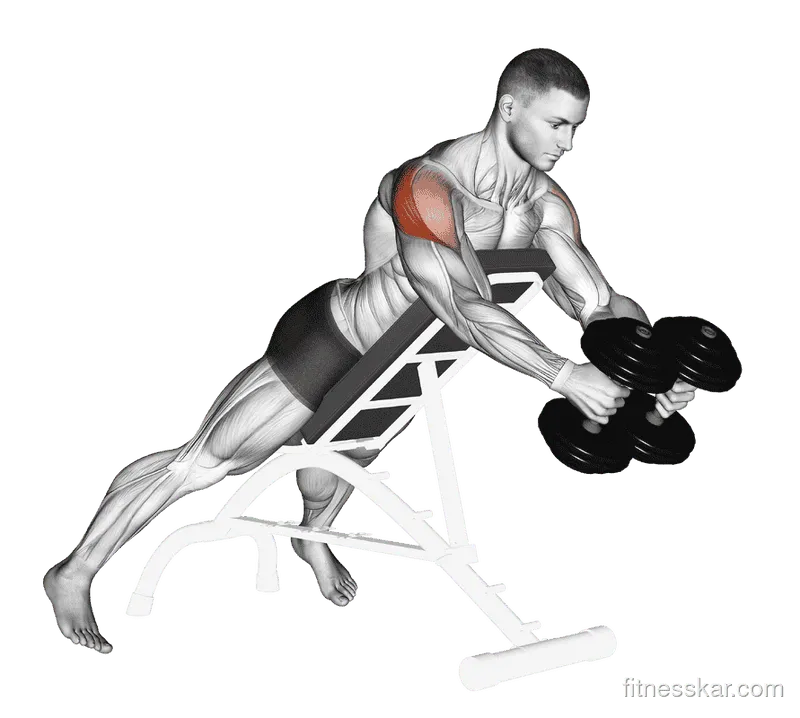
6. Dumbbell reverse fly
The dumbbell reverse fly delivers direct, unadulterated tension to the posterior deltoid using basic gym equipment. By hinging forward at the hips or resting your chest against an incline bench, you place the rear deltoid fibers perpendicular to gravity, allowing them to pull the weight against maximal resistance.
To make this exercise work for rear delts rather than turning it into a scapular row for your rhomboids, you must modify your arm path. Avoid pinching your shoulder blades together aggressively at the top. Instead, let your shoulder blades stay slightly spread (protracted) and focus purely on sweeping your elbows wide apart in a hugging-a-tree arc.
- Primary targets: Posterior deltoid.
- Recommended protocol: 3 sets of 12–15 reps with 90 seconds of rest.
- Form cue: Support your chest on an incline bench or hinge at the hips with a flat back. With elbows slightly bent, sweep the dumbbells outward toward the sides. Keep your pinkies slightly higher than your thumbs at peak contraction to emphasize the rear deltoid over the lateral head.
7. Dumbbell Arnold press
Named after Arnold Schwarzenegger, the dumbbell Arnold press incorporates rotational movement into vertical pressing. Starting with the dumbbells at chest height with palms facing your chest (supinated), you press upward while rotating your wrists outward so that your palms face forward (pronated) at the top of the lift.
This rotational transition increases time under tension and engages the anterior deltoid through an extended active range of motion before handing off to the lateral head during the middle portion of the press. It is especially useful for lifters looking for a high-stimulus pressing variation with moderate weights that does not require heavy spine loading.
- Primary targets: Anterior deltoid, lateral deltoid, triceps.
- Recommended protocol: 3 sets of 8–12 reps with 90–120 seconds of rest.
- Form cue: Control the rotation smoothly throughout the press rather than snapping your wrists at the start or finish. Stop the dumbbells just before full elbow lockout to keep constant tension on the deltoids.
Weekly volume, frequency, and programming landmarks
To maximize shoulder hypertrophy, you cannot train all three deltoid heads with the same generic volume prescription. Because the anterior deltoid receives tremendous indirect stimulation from your bench press and chest training, it requires very few direct isolation sets. Conversely, the lateral and posterior heads receive almost no stimulus from compound presses and require substantial direct weekly volume.
The table below outlines the optimal weekly volume targets for each deltoid head for intermediate-to-advanced lifters, based on evidence-based hypertrophy landmarks:
| Deltoid Head | Weekly Direct Sets | Ideal Rep Range | Frequency | Primary Exercises |
|---|---|---|---|---|
| Anterior (Front) | 6–8 sets | 6–10 reps | 1–2x per week | Seated dumbbell press, barbell overhead press |
| Lateral (Side) | 12–18 sets | 10–20 reps | 2–3x per week | Dumbbell lateral raise, cable lateral raise |
| Posterior (Rear) | 10–16 sets | 12–20 reps | 2–3x per week | Cable rear delt row with rope, reverse fly |
For a comprehensive breakdown of how many total sets you should perform across your entire training split, consult our master guide on sets per muscle per week.
Integrating shoulders into your weekly split
Shoulders recover relatively quickly compared to large muscle masses like the quads or lats, especially on single-joint movements like lateral raises and rear delt pulls. Training delts 2 to 3 times per week maintains an elevated rate of muscle protein synthesis and keeps workout quality high:
- In a Push-Pull-Legs Split: Perform your overhead press and lateral raises on Push Day, and perform your rear delt rows or reverse flys on Pull Day alongside your back exercises. This naturally groups muscles by movement pattern without overlapping fatigue. Explore our complete push-pull-legs split guide to see how to organize this schedule.
- In an Upper/Lower Split: Distribute your shoulder work evenly across both Upper Body days. For example, perform heavy overhead pressing and rear delt pulls on Upper A, and perform lateral raises and dumbbell shoulder presses on Upper B.
Joint longevity: How to protect your rotator cuff
The shoulder is the most mobile joint in the human body, but that mobility comes at the expense of structural stability. The ball-and-socket joint (glenohumeral joint) relies on four small rotator cuff muscles—the supraspinatus, infraspinatus, teres minor, and subscapularis—along with the labrum and surrounding ligaments to keep the arm bone securely in its socket.
To keep your shoulders resilient and pain-free through years of progressive lifting, adhere to three non-negotiable biomechanical rules:
- Always press and raise in the scapular plane: The shoulder blade does not sit flat against your ribcage; it rests at roughly a 30-degree angle forward. Pressing and raising within this 30-degree window allows the ball of your humerus to glide freely without pinching the rotator cuff tendons against the bony roof of the shoulder.
- Prioritize posterior delt and rotator cuff volume: A healthy shoulder requires balanced muscular tension front to back. For every set of pressing you perform, ensure you perform at least one set of horizontal pulling, rear delt rows, or reverse flys.
- Warm up with dynamic external rotation: Before loading heavy presses, spend 3–5 minutes performing light resistance band pull-aparts and external rotations. Warming up the rotator cuff elevates synovial fluid in the joint capsule and activates dynamic stabilizers.
Frequently asked questions
Frequently asked questions
Can I build big shoulders with only overhead press?
No. Overhead pressing builds substantial strength and anterior (front) deltoid mass, but electromyographic research proves it activates only a fraction of the lateral and posterior deltoid fibers. Without direct lateral raises and rear delt movements, your shoulders will lack width, roundness, and joint balance.
How many times a week should I train shoulders for maximum growth?
Training shoulders 2 to 3 times per week is optimal. Because the lateral and posterior deltoids are small muscles that suffer relatively little structural muscle damage from moderate-load isolation work, they recover quickly and respond best to high-frequency, moderate-volume training.
Are cable lateral raises better than dumbbell lateral raises?
Neither is universally better; they complement each other. Dumbbells provide peak resistance at the top of the range of motion where the arm is horizontal, while cables provide continuous mechanical tension right from the stretched position at the start. Using both across your training week ensures maximum fiber recruitment.
How high should I raise my arms during a lateral raise?
Raise your arms until your upper arm is roughly parallel to the floor (approximately 90 degrees of shoulder abduction). Raising your arms higher than parallel engages the upper trapezius and levator scapulae as prime movers, shifting mechanical tension away from the side deltoid while increasing the risk of subacromial impingement.
Sources
- Coratella G, Tornatore G, Longo S, Esposito F, Cè E. An Electromyographic Analysis of Lateral Raise Variations and Overhead Press in Healthy Resistance-Trained Men. International Journal of Environmental Research and Public Health. 2020. doi.org/10.3390/ijerph17176015 ↩