Ask almost anyone what muscle they think of when they picture a muscular physique, and the biceps brachii is inevitably the answer. From playground flexes to golden-era bodybuilding stages, big biceps represent strength, dedication, and aesthetic development. Yet, despite being the most frequently trained muscle group in commercial gyms, well-developed, peaked, and dense biceps remain surprisingly rare. Countless lifters spend months or years performing endless sets of standing barbell curls, swinging the weight with their lower backs, letting their shoulders take over the movement, and wondering why their arms refuse to grow beyond a stubborn plateau.
Building impressive biceps is not simply a matter of hoisting heavier dumbbells by whatever means necessary. It is a precise mechanical equation governed by functional anatomy, joint torque angles, the length-tension relationship of bi-articular muscle fibers, and the neglected role of forearm supination. When you understand how the two distinct heads of the biceps interact with the underlying brachialis and brachioradialis, and how altering shoulder position shifts regional hypertrophy, you can stop wasting energy on junk volume and stimulate dramatic muscular adaptations.
This comprehensive guide breaks down the functional anatomy of the anterior arm, the latest biomechanical research on stretch-mediated hypertrophy, joint-friendly execution protocols, and a plug-and-play programming framework to maximize arm growth. Whether your goal is to build an imposing bicep peak or add sheer cross-sectional thickness to your upper arms, this evidence-based masterclass gives you the complete blueprint.
Functional Anatomy: Deconstructing the Anterior Arm
To optimize your exercise selection, you must look beneath the skin and examine the architectural arrangement of the elbow flexors. While commonly referred to as a single muscle, the anterior compartment of the arm relies on three primary muscles that coordinate to bend the elbow: the biceps brachii, the brachialis, and the brachioradialis.
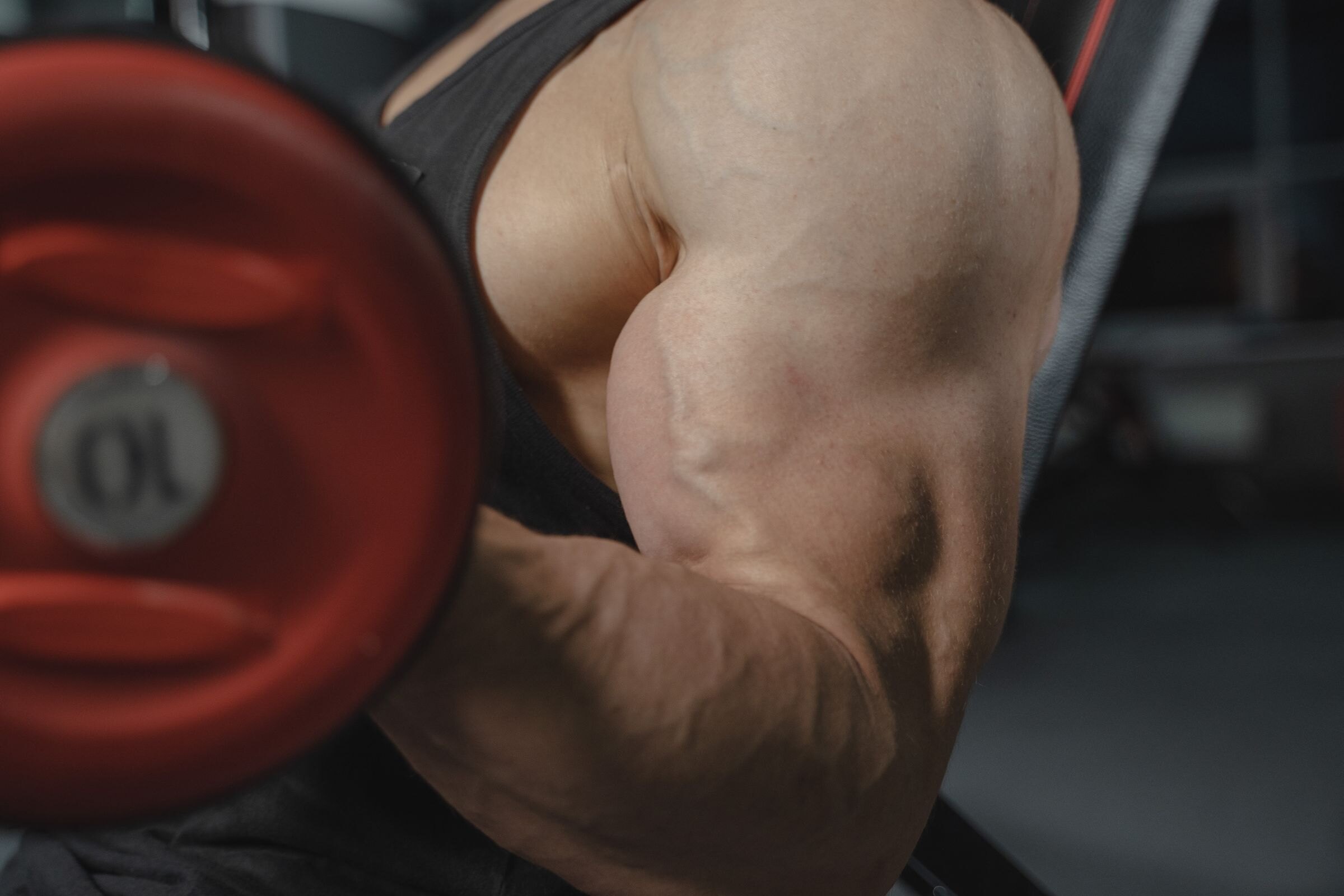
1. The Biceps Brachii (Long Head & Short Head)
The word biceps translates from Latin as "two-headed." Both heads insert onto the radial tuberosity of the forearm and the bicipital aponeurosis, but they originate from distinct bony landmarks on the scapula (shoulder blade):
- The Long Head (Caput Longum): Originates from the supraglenoid tubercle of the scapula. Its long tendon travels over the head of the humerus through the bicipital groove before joining the muscle belly on the lateral (outer) aspect of the upper arm. The long head creates the vertical elevation and contour known as the "bicep peak." Because its tendon crosses the glenohumeral (shoulder) joint, extending your shoulder backward stretches the long head, while flexing your shoulder forward slackens it.
- The Short Head (Caput Breve): Originates from the coracoid process of the scapula and sits on the medial (inner) aspect of the upper arm. The short head gives the arm horizontal fullness, width, and thickness when viewed from the front. Because it originates more medially, it maintains a mechanical advantage when the elbows are positioned slightly forward of the torso or when using wider grip placements.
Critically, the biceps brachii is not merely an elbow flexor—it is the body's most powerful supinator of the forearm. When your palm faces downward (pronation), the biceps tendon wraps around the radius bone like a cord around a spool. As you rotate your palm upward (supination), the tendon unwinds, pulling the radius into alignment. Attempting to build your biceps without actively resisting pronation or completing full supination ignores the muscle's primary anatomical design.
2. The Brachialis: The Secret to Arm Thickness
Lying deep beneath the lower portion of the biceps brachii is the brachialis. Unlike the biceps, the brachialis originates on the distal anterior surface of the humerus and inserts onto the coronoid process and tuberosity of the ulna.
Because the ulna does not rotate during forearm pronation or supination, the brachialis is a pure, mono-articular elbow flexor. It does not cross the shoulder joint and does not care whether your palms are facing up, down, or toward each other. In fact, when the forearm is pronated or kept in a neutral position, the mechanical efficiency of the biceps brachii decreases, forcing the brachialis to handle the lion's share of the load.
Developing the brachialis is essential for two reasons:
- It is a powerful, thick muscle capable of generating massive mechanical tension.
- As it hypertrophies, it literally pushes the biceps brachii away from the humerus, elevating your bicep peak and adding noticeable width to the arm when viewed from the side profile.
3. The Brachioradialis: Tying the Arm Together
The brachioradialis originates on the lateral supracondylar ridge of the humerus and inserts near the styloid process of the radius. Spanning the elbow joint from the upper arm down along the outer forearm, it contributes significantly to elbow flexion when the forearm is in a semi-pronated (neutral) or fully pronated position. Incorporating neutral-grip exercises simultaneously thickens the forearms and builds seamless transition lines between the upper and lower arm.
| Muscle Structure | Joint Crossings | Forearm Sensitivity | Visual Contribution | Optimal Exercise Mechanics |
|---|---|---|---|---|
| Long Head | Shoulder & Elbow | Maximized in full supination | Vertical peak & outer arm sweep | Arms behind torso (incline curls, drag curls) |
| Short Head | Shoulder & Elbow | Maximized in full supination | Inner thickness & front-view width | Arms in front of torso (preacher curls, wide grips) |
| Brachialis | Elbow only | Neutral to pronated grip | Arm thickness & pushing peak upward | Neutral grip (hammer curls, reverse curls) |
| Brachioradialis | Elbow only | Neutral to pronated grip | Top forearm mass & elbow stability | Hammer curls, reverse EZ-bar curls |
The Biomechanics of Elbow Flexion: Angles, Tension, and Length
Maximizing biceps hypertrophy requires aligning your training with the physiological laws of muscle growth. While progressive overload remains foundational, modern exercise science highlights two critical variables: the length-tension relationship and the resistance profile of each movement.
Stretch-Mediated Hypertrophy in the Biceps
When sarcomeres (the microscopic contractile units within muscle fibers) contract while elongated under load, passive structural proteins—specifically titin—undergo mechanical strain. This passive tension, combined with active cross-bridge cycling, triggers elevated anabolic signaling through the focal adhesion kinase and mTOR pathways. This phenomenon is known as stretch-mediated hypertrophy.
Because the long head of the biceps crosses the shoulder joint, its muscle fibers can be placed into an elongated state by extending the humerus behind the plane of the torso. When you perform an incline dumbbell curl set at a 45-to-60-degree angle, the long head begins the repetition under significant passive stretch, maximizing mechanical tension in the lengthened range.

The Landmark Pedrosa et al. (2023) Study
The importance of loading the biceps at long muscle lengths was confirmed in a landmark clinical trial conducted by Pedrosa and colleagues.[1]
The researchers evaluated the effects of range of motion on muscle adaptations in the arm curl. Participants trained their elbow flexors over a 9-week period comparing partial range of motion in the initial (lengthened) range—from full extension (0 degrees) to moderate flexion (68 degrees)—versus partial training in the final (shortened) range (from 68 to 118 degrees), and full range of motion.
The findings provided definitive proof for hypertrophy programming:
- Superior Overall Hypertrophy: Training in the initial, lengthened range of motion produced substantially greater increases in biceps muscle cross-sectional area compared to training in the final, shortened range.
- Regional Distal Adaptations: Lengthened partial training induced significantly greater distal muscle hypertrophy, demonstrating that regional muscle growth responds directly to where tension peaks in the joint excursion.
- Implications for Exercise Selection: Exercises that load the biceps heavily when the elbow is extended—such as preacher curls and incline curls—provide a more potent hypertrophic stimulus than movements where tension drops off in the stretched position.
To maximize muscle growth, your bicep program must prioritize exercises that challenge the muscle in its lengthened state rather than merely seeking a quick pump at the top contraction.
Exercise Selection: The Four Movement Categories
An evidence-based arm routine does not require a dozen random variations. Instead, it systematically covers four distinct movement categories based on shoulder angle and forearm position.
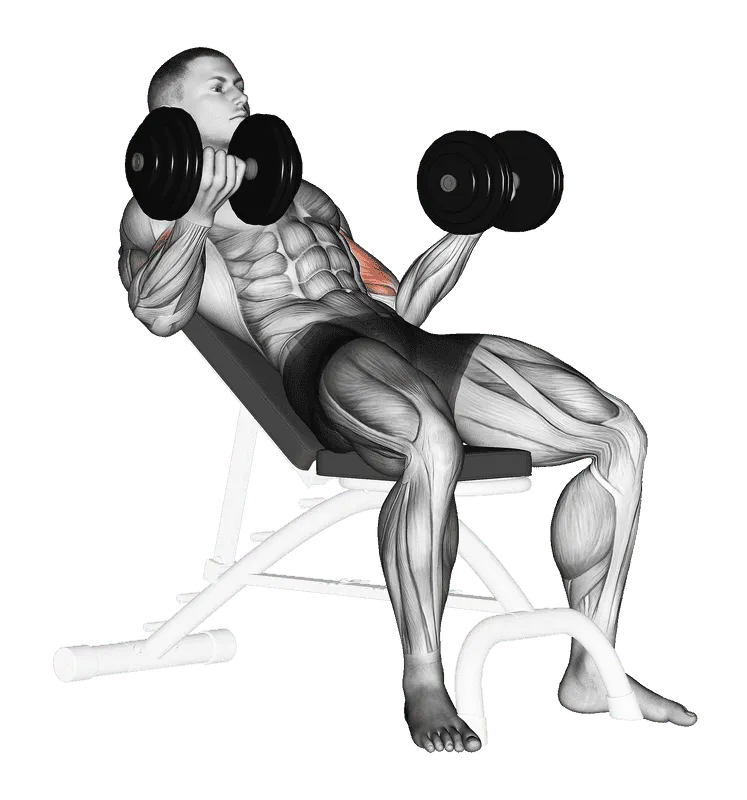
1. Incline Curls: Lengthening the Long Head
The dumbbell incline biceps curl is arguably the single most effective free-weight exercise for targeting the long head of the biceps. By setting an adjustable bench to roughly 45 to 60 degrees and allowing your arms to hang straight down behind your ribcage, you extend the humerus and stretch the long head before the movement even begins.

- Sets
- 3–4
- Reps
- 8–12
- Rest
- 90 s
- Tempo
- 3–0–1–1
Coaching Cues for Maximum Growth:
- Avoid setting the bench too low (e.g., 30 degrees), which places excessive shear stress on the anterior shoulder capsule without providing additional bicep benefit. A 45-to-60-degree incline hits the sweet spot.
- Keep your elbows stationary behind your torso throughout the entire concentric phase. If your elbows drift forward toward your ribs, your anterior deltoids take over the load and relieve tension from the long head.
- Emphasize the bottom stretch: pause for a split second with elbows fully extended before initiating the next curl.
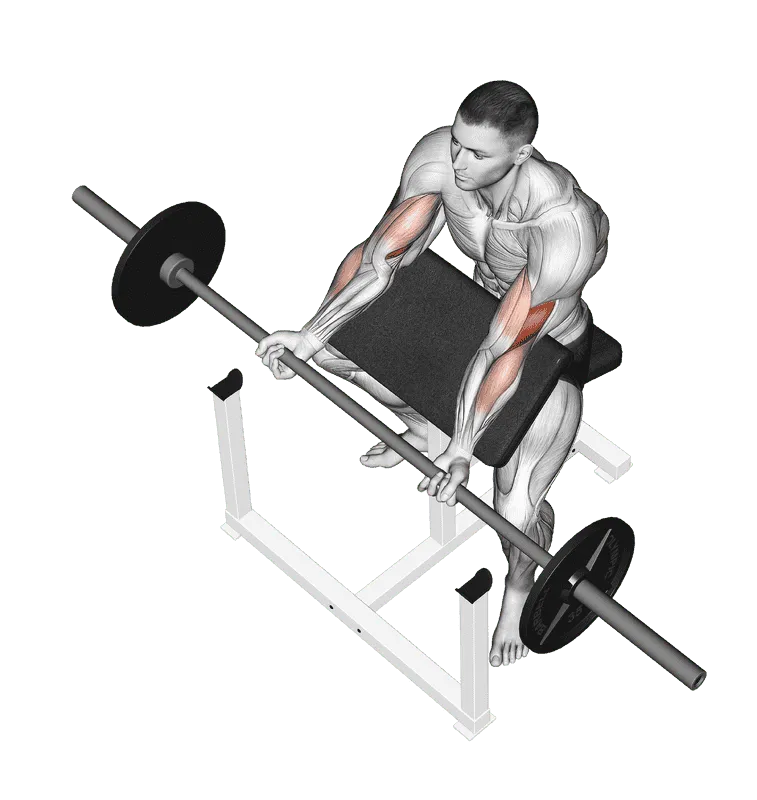
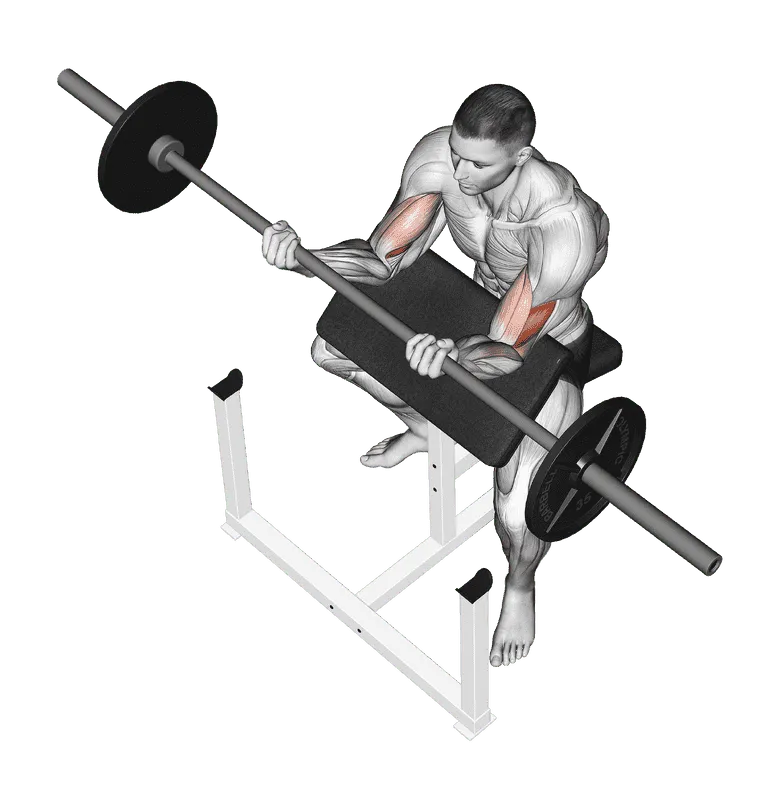
2. Preacher Curls: Peak Tension at the Lengthened Range
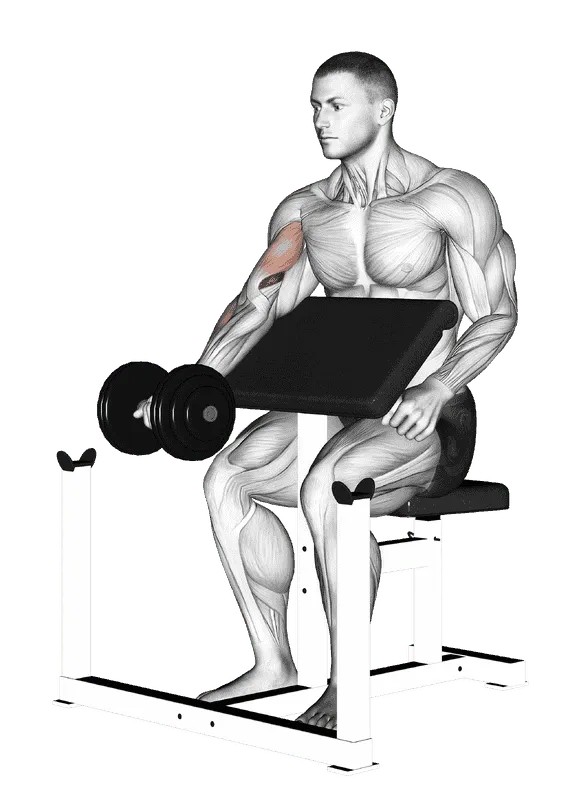
While incline curls stretch the long head at the shoulder, the barbell preacher curl (or dumbbell preacher curl) alters the resistance curve at the elbow. On a preacher bench, your upper arms are supported at roughly a 45-degree angle in front of your body.
Because the line of gravity acts perpendicular to your forearms when your elbows are at 90 degrees, the hardest portion of a preacher curl occurs during the bottom third of the repetition—precisely when the biceps are stretched.
- Barbell vs. Dumbbell: Using an EZ-bar or dumbbells allows your wrists to sit in a more natural, semi-supinated angle, reducing strain on the medial collateral ligament of the elbow.
- Tension Management: As you curl the bar toward your chin on a preacher bench, the forearms become vertical, and gravitational torque drops to zero. To keep continuous tension on the muscle, stop the concentric contraction just before your forearms become completely perpendicular to the floor, then lower the weight under strict 3-second eccentric control.
- Sets
- 3
- Reps
- 10–12
- Rest
- 90 s
- Tempo
- 3–0–1–0
3. Standing Barbells and Dumbbells: Mid-Range Overload
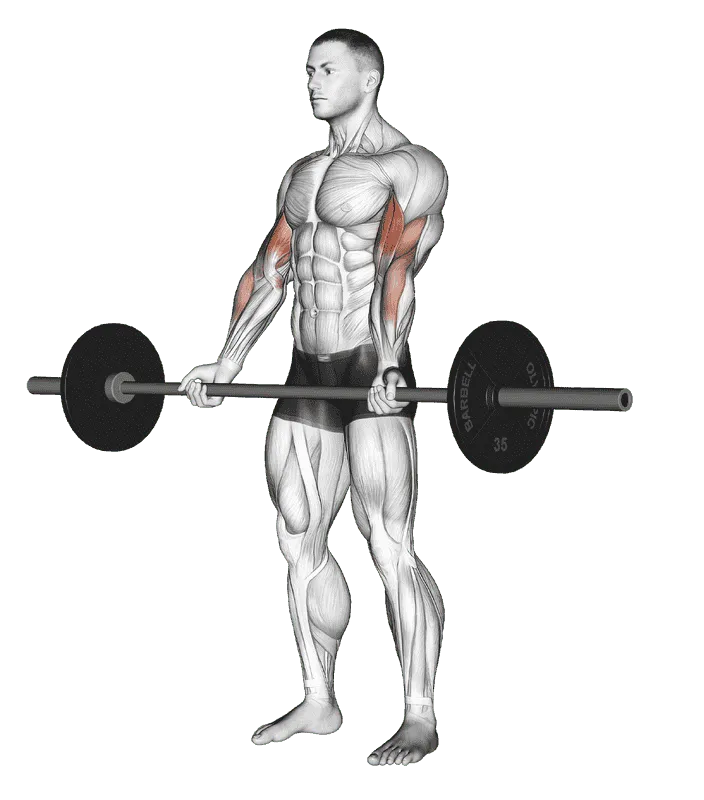
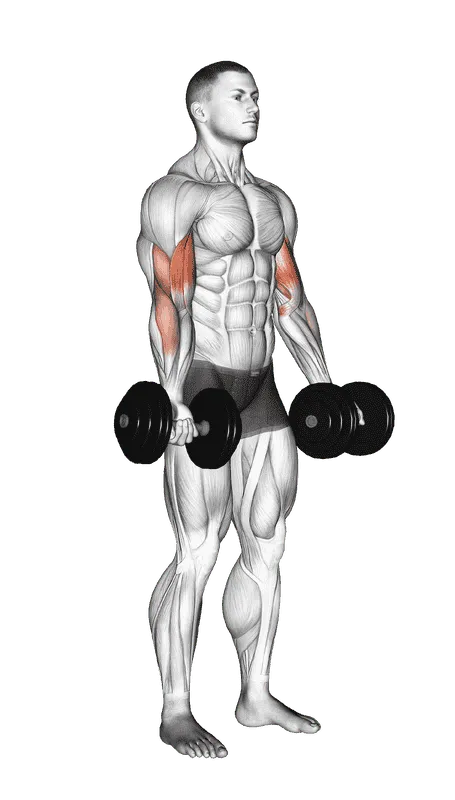
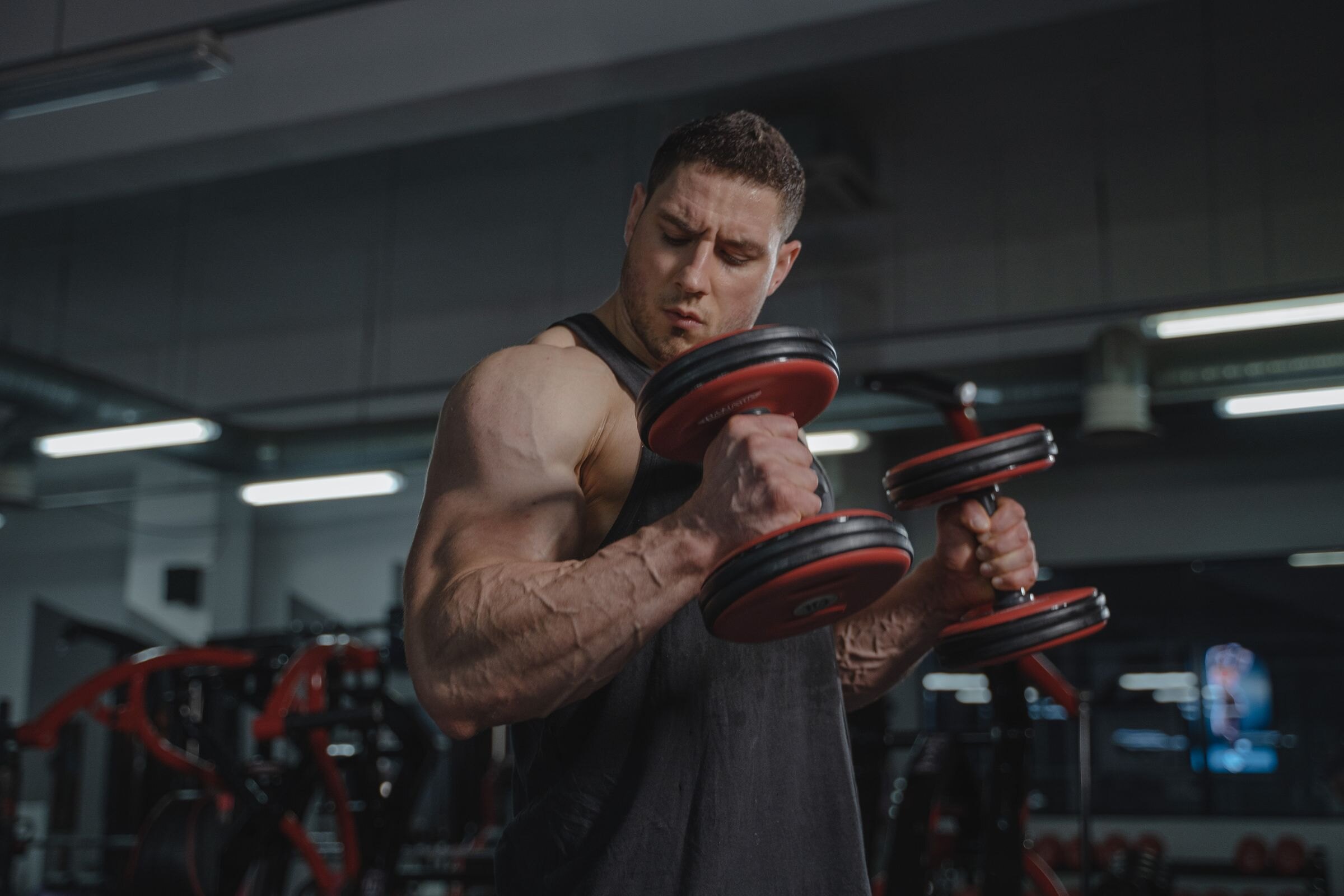
The classic standing barbell curl and dumbbell biceps curl represent the gold standard for overloading the elbow flexors with absolute mechanical tension. With your arms hanging in a neutral position at your sides, the biceps operate from their resting anatomical length.
- Shoulder-Width Grip: Balances mechanical tension across both the long and short heads of the biceps.
- Close Grip (barbell standing close-grip curl): Placing hands inside shoulder width shifts the line of pull slightly toward the lateral aspect, emphasizing the long head.
- Wide Grip (barbell standing wide-grip curl): Placing hands outside shoulder width biases the medial fibers of the short head for inner thickness.
- Avoid the "Cheat Curl" Trap: Swings from the lower back and hips turn a bicep builder into a sloppy spinal extension movement. Maintain a slight forward torso lean, brace your core, keep your knees soft, and pin your elbows to your sides. A tiny amount of controlled body English on the final rep of a heavy set is acceptable, but swinging from rep one eliminates muscle recruitment.
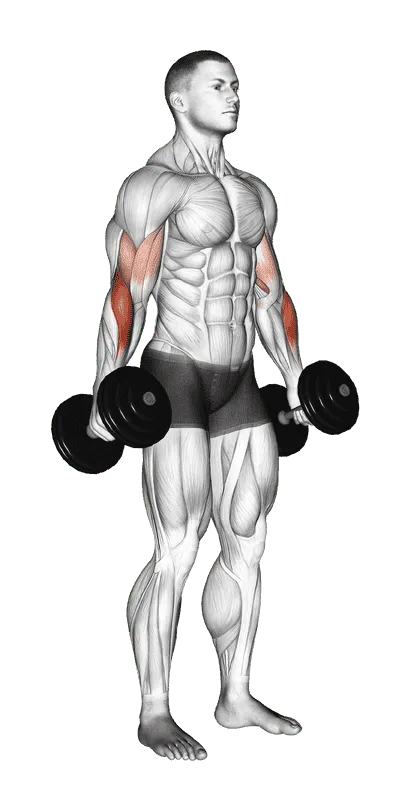
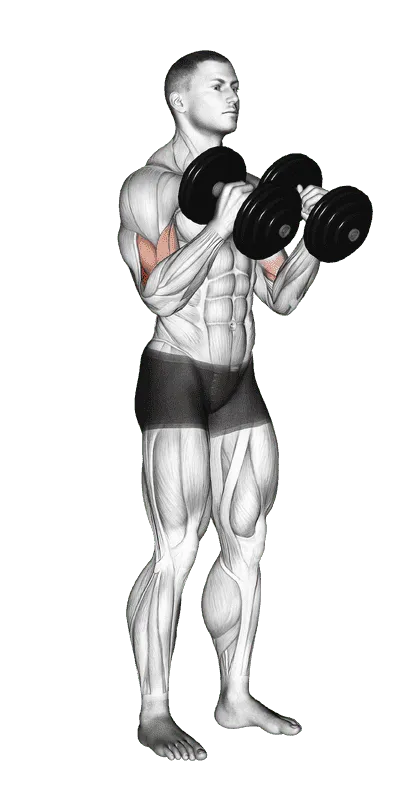
4. Neutral-Grip Hammer Curls: Unleashing the Brachialis
To maximize overall arm thickness and forearm development, neutral-grip variations are non-negotiable. The dumbbell hammer curl and cable hammer curl orient the wrists with palms facing each other throughout the repetition.
- Sets
- 3–4
- Reps
- 10–12
- Rest
- 75 s
- Tempo
- 2–0–1–1
By placing the biceps in a mechanically disadvantaged position, hammer curls shift primary recruitment to the brachialis and brachioradialis. Over time, growing these two muscles pushes the biceps upward, producing arms that appear thick, dense, and 3D from both front and side profiles.
5. Multi-Joint Synergy: Chin-Ups for Mass
While isolation curls target the elbow flexors directly, multi-joint compound pulling movements provide heavy overload that cannot be replicated with light dumbbells. The supinated-grip chin-up is one of the most potent upper-body mass builders in existence. By combining full shoulder extension with loaded elbow flexion against your entire bodyweight, chin-ups allow you to overload the biceps with immense mechanical tension.
Programming & Volume Landmarks: How to Structure Arm Growth
Muscle growth is a systemic process governed by the balance between stimulus and systemic fatigue. Because your biceps act as secondary synergists during all back exercises—including lat pulldowns, barbell rows, dumbbell rows, and pull-ups—you must account for compound pulling volume when calculating weekly bicep targets.
According to evidence-based hypertrophy frameworks established by Dr. Mike Israetel and Renaissance Periodization, direct biceps training should adhere to specific volume landmarks:
- Maintenance Volume (MV): 4 to 6 direct sets per week (sufficient to maintain current arm size if you are performing heavy vertical and horizontal pulling).
- Minimum Effective Volume (MEV): 6 to 8 direct sets per week for measurable hypertrophy in beginner and intermediate lifters.
- Maximum Adaptive Volume (MAV): 10 to 14 direct sets per week for most lifters. This range provides the sweet spot of maximal growth stimulus without exceeding your body's ability to repair microtrauma.
- Maximum Recoverable Volume (MRV): 16 to 18 direct sets per week. Exceeding this threshold frequently leads to distal bicep tendon strain, medial epicondyle irritation, and diminished performance on back day.
To explore how weekly volume landmarks interact across other muscle groups, review our in-depth guide on sets per muscle per week.
Frequency and Proximity to Failure (RIR)
The biceps are a relatively small muscle group with a high proportion of type II fast-twitch fibers, yet their recovery is expedited because their overall contractile mass is small compared to the quadriceps or latissimus dorsi. A training frequency of two times per week is optimal for the vast majority of lifters. Splitting your weekly volume across two separate sessions allows you to train with significantly higher per-set intensity and set quality.
Program the majority of your working sets within 1 to 3 repetitions in reserve (RIR). For heavy compound pulling like chin-ups, maintain 2 RIR to protect your central nervous system. For isolation cable curls and dumbbell preacher curls, you can safely train to 1 RIR or take your final set to technical failure. For a deeper breakdown of fatigue management and failure thresholds, consult our comprehensive analysis on training to failure.
| Exercise Pattern | Target Anatomy | Rep Range | Proximity to Failure (RIR) | Weekly Sets |
|---|---|---|---|---|
| Incline Dumbbell Curl | Long Head (lengthened stretch) | 8–12 reps | 1–2 RIR | 4–5 sets |
| Preacher Curl (EZ/DB) | Short Head & Distal Biceps | 10–12 reps | 1–2 RIR | 3–4 sets |
| Standing Barbell Curl | Both Heads (maximum load) | 6–8 reps | 2 RIR | 3–4 sets |
| Hammer Curl (DB/Cable) | Brachialis & Brachioradialis | 10–15 reps | 0–1 RIR | 3–4 sets |
Sample 2-Day Biceps Specialization Protocol
Below is an evidence-based training protocol designed to maximize all three elbow flexor compartments while preserving elbow and wrist integrity. Integrate these workouts into your upper/lower or push/pull/legs split, such as our structured 4-day hypertrophy plan or the comprehensive 10-week mass builder.
Workout A (Heavy Overload & Lengthened Stretch Focus)
- Chin-Up: 3 sets × 6–8 reps (bodyweight or added load, tempo 3-0-1-0, rest 120s, 2 RIR)
- Dumbbell Incline Biceps Curl: 3 sets × 8–10 reps (tempo 3-0-1-1, rest 90s, 1 RIR)
- Dumbbell Hammer Curl: 3 sets × 10–12 reps (tempo 2-0-1-1, rest 75s, 1 RIR)
Workout B (Short Head Width & Continuous Tension Focus)
- Barbell Curl: 3 sets × 6–8 reps (shoulder-width grip, tempo 3-0-1-0, rest 90s, 2 RIR)
- Barbell Preacher Curl: 3 sets × 10–12 reps (tempo 3-0-1-0, rest 90s, 1 RIR)
- Cable Hammer Curl (with rope): 2 sets × 12–15 reps (with a 2-second peak squeeze at the top, rest 60s, 0–1 RIR)
To ensure balanced arm aesthetics and joint stability, combine this protocol with our sister guide on the triceps hypertrophy guide and explore our full breakdown of the best arm exercises.
Joint Health: Preventing Bicep Tendonitis and Wrist Pain
Nothing halts arm progression faster than distal bicep tendonitis or wrist pain. The distal bicep tendon inserts onto the radial tuberosity, where it withstands substantial traction forces during heavy pulling and curling.
To safeguard your joints while training for maximum mass:
- Switch to an EZ-Curl Bar: The angled grips of an EZ-bar permit roughly 20 to 30 degrees of natural pronation, aligning the radius and ulna comfortably without diminishing bicep activation.
- Control the Lowering Phase: The eccentric (lowering) phase is where muscle damage and mechanical tension are highest. Dropping weights rapidly and bouncing out of the bottom position violently shocks the bicep tendon. Adhere to a strict 3-second lowering tempo on every repetition.
- Warm Up the Forearms and Rotators: Perform 2 to 3 light warm-up sets of hammer curls or light wrist rotations before tackling heavy barbell curls to lubricate the elbow joint capsule with synovial fluid.
Frequently Asked Questions
Frequently asked questions
Can I build bigger biceps using only pull-ups and rows without direct curls?
While heavy vertical and horizontal pulling recruits the biceps as secondary synergists, it does not challenge the elbow flexors through their full range of motion or isolate forearm supination. Direct isolation curls are essential to maximize long-head and short-head hypertrophy.
How do I get a taller bicep peak?
Bicep peak is largely determined by the genetic shape and tendon insertion length of your long head. However, you can maximize your existing peak by emphasizing curls with your arms behind your torso (such as incline dumbbell curls) and heavily developing the underlying brachialis with neutral-grip hammer curls to push the biceps upward.
Which is better for biceps: straight barbell curls or dumbbell curls?
Dumbbell curls offer superior versatility because they allow full forearm supination throughout each repetition and adjust to your individual wrist anatomy. Barbell curls allow greater absolute loading and mechanical tension. Combining both in your weekly routine delivers the best of both worlds.
How often should I train my biceps per week?
Training biceps directly twice per week is ideal for most lifters. This frequency allows you to accumulate 8 to 14 high-quality weekly sets without excessive intrasession fatigue, elevating muscle protein synthesis multiple times throughout the week.
Sources
- Pedrosa GF, Simões MG, Figueiredo MOC, et al. Training in the Initial Range of Motion Promotes Greater Muscle Adaptations Than at Final in the Arm Curl. Sports. 2023. doi.org/10.3390/sports11020039 ↩