Stretch-mediated hypertrophy is the accelerated muscle growth that occurs when muscle fibers are loaded and forced to produce force while stretched at long muscle lengths. For decades, conventional bodybuilding dogma insisted that the "peak contraction"—the hard squeeze at the top of a repetition—was the most critical phase for sparking muscular development. However, modern exercise science has turned this notion on its head: training a muscle in its lengthened state generates both active and passive mechanical tension, stimulating distinct molecular signaling cascades and triggering superior hypertrophy compared to training in shortened positions alone.
By challenging muscles at long muscle lengths, lifters recruit high-threshold motor units and engage titin—the giant structural protein responsible for passive elasticity in muscle fibers. Whether you execute full range of motion repetitions with a dedicated stretch pause or integrate long-length partials at the end of a demanding set, exploiting lengthened-position biomechanics is one of the most reliable ways to overcome plateaus. When paired with structured progressive overload and calculated proximity to failure (training to failure vs. RIR), this approach maximizes muscle protein synthesis across your entire physique.
Here is the exhaustive, evidence-based breakdown of how stretch-mediated hypertrophy works, the anatomical reasons certain muscles respond dramatically to lengthened loading, and how to program these exercises for optimal results.
The Physiology of Muscle Length and Mechanical Tension
To understand why loading muscles in a stretched position produces superior growth, we must examine the microscopic machinery of skeletal muscle contraction: the sarcomere. Sarcomeres are the basic contractile units of muscle fibers, composed primarily of the overlapping proteins actin (thin filaments) and myosin (thick filaments).

Active vs. Passive Mechanical Tension
Hypertrophy is fundamentally driven by mechanical tension: the physical force experienced by individual muscle fibers when they resist an external load. This tension is detected by mechanosensors located at the costameres and cell membranes, which convert mechanical stimuli into intracellular biochemical cascades—primarily the activation of the mechanistic target of rapamycin complex 1 (mTORC1).
Mechanical tension exists in two primary forms:
- Active Tension: Generated when myosin heads attach to actin filaments, forming cross-bridges that pull the filaments past one another during the power stroke. Active tension is highest when actin and myosin have optimal physical overlap.
- Passive Tension: Generated when a muscle fiber is stretched beyond its resting length. As the sarcomere elongates, structural proteins within the cytoskeleton resist the stretch, acting like microscopic rubber bands.
When you train a muscle at short muscle lengths (such as squeezing a biceps curl at the top), tension is almost exclusively active. But when you train a muscle at long muscle lengths (such as the bottom of an incline curl or deep squat), active cross-bridge cycling occurs simultaneously with immense passive resistance. The convergence of active and passive tension produces an additive mechanical stimulus that is unattainable in shortened positions.
The Critical Role of Titin
The primary molecular driver of passive tension is titin, the largest protein known in the human body. Spanning from the Z-disc to the M-line of each sarcomere, titin functions as a molecular spring that maintains structural alignment and provides passive elasticity.
Historically, titin was considered merely a passive structural scaffold. However, groundbreaking biomechanical research reveals that titin interacts dynamically with calcium during active contractions:
- When a muscle is activated, calcium binds to titin, increasing its stiffness.
- As the activated muscle lengthens under load (an eccentric contraction or stretched isometric hold), titin uncoils and resists the elongation with tremendous force.
- This strain activates a specialized domain on the protein known as the titin kinase domain, triggering downstream signaling pathways that stimulate longitudinal and cross-sectional muscle protein synthesis.
Because titin only contributes significant mechanical tension when sarcomeres are stretched onto the descending limb of their length-tension curve, exercises that fail to stretch the target muscle leave this potent hypertrophic mechanism untapped.
The Length-Tension Relationship and Sarcomerogenesis
Every muscle group has a unique length-tension relationship that dictates how much force its sarcomeres can produce across varying joint angles:
- Ascending Limb (Short Lengths): The sarcomere is overly compressed. Actin filaments overlap excessively, interfering with cross-bridge binding and resulting in low active force and zero passive tension.
- Plateau (Moderate Lengths): Optimal filament overlap allows the maximum number of myosin heads to bind with actin, generating peak active force.
- Descending Limb (Long Lengths): Filaments are pulled apart, reducing the number of active cross-bridges. However, passive tension from titin and connective collagen skyrockets.
When muscle fibers are routinely subjected to high mechanical strain on the descending limb, the body adapts by adding sarcomeres in series—a process known as sarcomerogenesis. Adding sarcomeres end-to-end increases the overall length of muscle fascicles. This structural adaptation not only increases muscle architectural volume, creating a fuller, more complete muscular appearance, but also shifts the optimal angle of peak force production, protecting the muscle against future strain injuries during athletic tasks.
Regional Hypertrophy and Muscle Damage
A compelling benefit of stretch-mediated training is the induction of regional hypertrophy. Skeletal muscles are not uniform blocks of tissue; they consist of distinct neuromuscular compartments that are recruited differentially depending on the joint angle and length of contraction.
Research demonstrates that training at long muscle lengths preferentially stimulates muscle growth in the distal regions (closer to the tendon insertions), whereas shortened training tends to concentrate growth in the muscle belly or proximal regions. Relying solely on shortened movements often leaves distal muscle fibers under-stimulated.
It is equally important to clarify the distinction between productive mechanical tension and muscle damage. Because lengthened contractions stress the sarcomere infrastructure, they frequently induce significant delayed-onset muscle soreness (DOMS). While some lifters assume soreness is the driver of growth, muscle damage is merely a side effect of high passive strain. The true hypertrophic stimulus is the mechanical tension detected by mechanosensors and titin. As your muscles undergo the "repeated bout effect," DOMS diminishes substantially while the hypertrophic response persists, provided you manage your overall fatigue and optimize your recovery through sleep and muscle growth.
Full ROM vs. Long-Length Partials (LLPs): What the Research Proves
The surge of interest in stretch-mediated hypertrophy has fueled an intense debate among lifters: Should we perform full range of motion (ROM) repetitions, or should we exclusively perform partial repetitions in the stretched position?
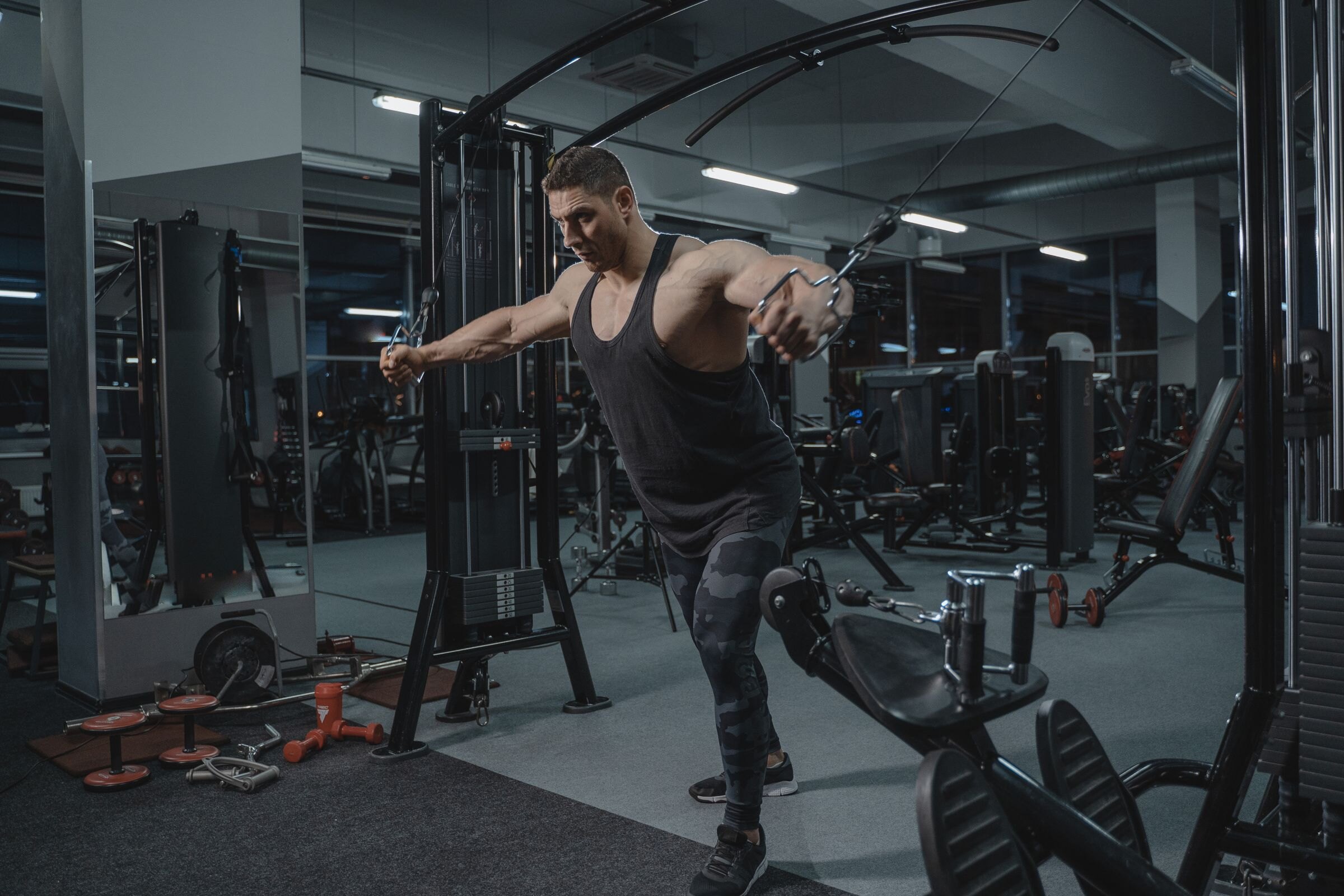
In a comprehensive systematic review and meta-analysis examining partial versus full range of motion resistance training across all available literature,[1] researchers synthesized data comparing various range of motion protocols on muscle hypertrophy and strength gains. The meta-analytic findings revealed a distinct hierarchy of training efficacy:
- Long-Length Partials Outperform Short-Length Partials: Training exclusively in the lengthened half of a movement consistently beats training in the shortened half (such as doing only the top half of a leg curl or bench press).
- Long-Length Partials Match or Slightly Exceed Full ROM: In several muscle groups, training only in the stretched portion of the repetition produced hypertrophy that was equal to, and in some studies slightly greater than, conventional full range of motion.
- Full ROM Drastically Outperforms Short-Length Partials: Even when full ROM includes the less stimulative shortened portion, traveling through the full excursion ensures that the muscle experiences the lengthened position on every single repetition.
Why Full ROM Remains the Optimal Baseline
Despite the impressive data on long-length partials, coaches and sports scientists urge lifters not to abandon full range of motion entirely. Full ROM training offers critical advantages that pure partials cannot replicate:
- Connective Tissue Adaptation: Moving joints through their full physiological excursion promotes synovial fluid circulation, cartilage nourishment, and balanced tendon remodeling across the entire joint capsule.
- Functional Strength & Motor Control: Full ROM builds strength across all joint angles, improving neurological coordination and preventing movement compensations in daily activities and sport.
- Repeatability and Standardization: Measuring progressive overload is far easier with full ROM. With partials, lifters often inadvertently cut their range of motion shorter as fatigue sets in, creating the illusion of progressive overload when they are simply doing less work.
Therefore, the gold-standard recommendation is to use full range of motion with an emphasized stretch as your foundation, while strategically deploying long-length partials as an overload technique on appropriate exercises.
Muscle-by-Muscle Guide to Lengthened Position Training
Not all skeletal muscles experience stretch-mediated hypertrophy to the same degree. The phenomenon is most pronounced in muscles that cross two joints (bi-articular muscles) or muscles whose sarcomeres are pulled onto the descending limb during typical joint excursions. Here is the anatomical breakdown of how to exploit the stretch for each major muscle group.
1. The Hamstrings
The hamstrings consist of four muscle bellies: the semitendinosus, semimembranosus, and biceps femoris long head (all bi-articular, crossing both the hip and knee), plus the biceps femoris short head (mono-articular, crossing only the knee).
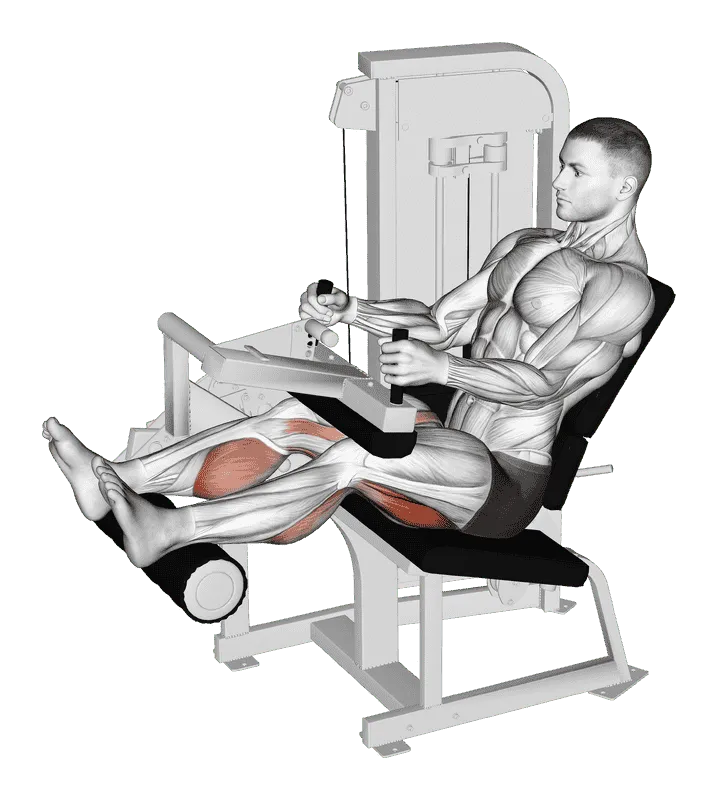
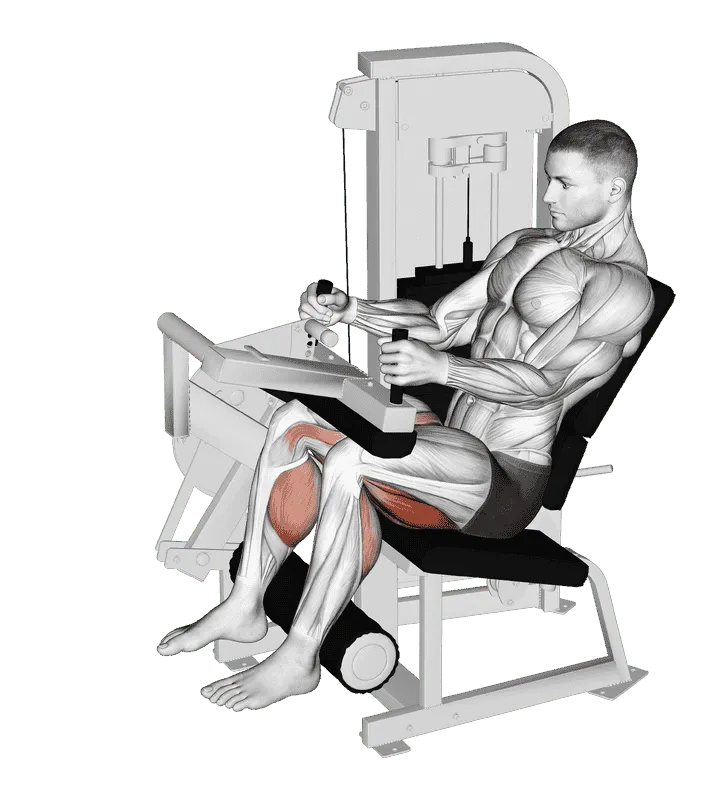
When you perform a standard lying leg curl, your hips remain extended, which slackens the proximal origin of the bi-articular hamstrings. In contrast, the Seated Leg Curl places the hips into roughly 90 degrees of flexion while the knees extend, putting the hamstrings under an extreme passive stretch. Landmark comparative studies have shown that seated leg curls induce nearly 1.5 to 2 times greater hamstring hypertrophy than lying leg curls over identical training periods.
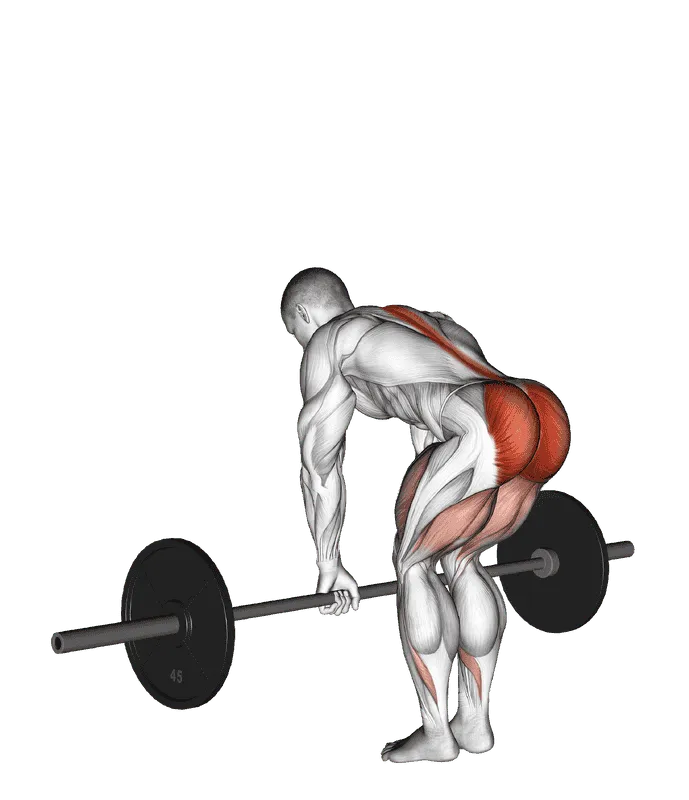
Similarly, the Barbell Romanian Deadlift flexes the hips under heavy load while keeping the knees relatively extended, providing immense stretch-mediated tension to the hamstrings and gluteus maximus.
- Sets
- 3
- Reps
- 10–12
- Rest
- 120 s
- Tempo
- 2–1–1
2. The Triceps (Long Head)
The triceps brachii comprises three heads: lateral, medial, and long. While the lateral and medial heads cross only the elbow joint, the long head originates on the infraglenoid tubercle of the scapula, crossing both the shoulder and elbow joints.
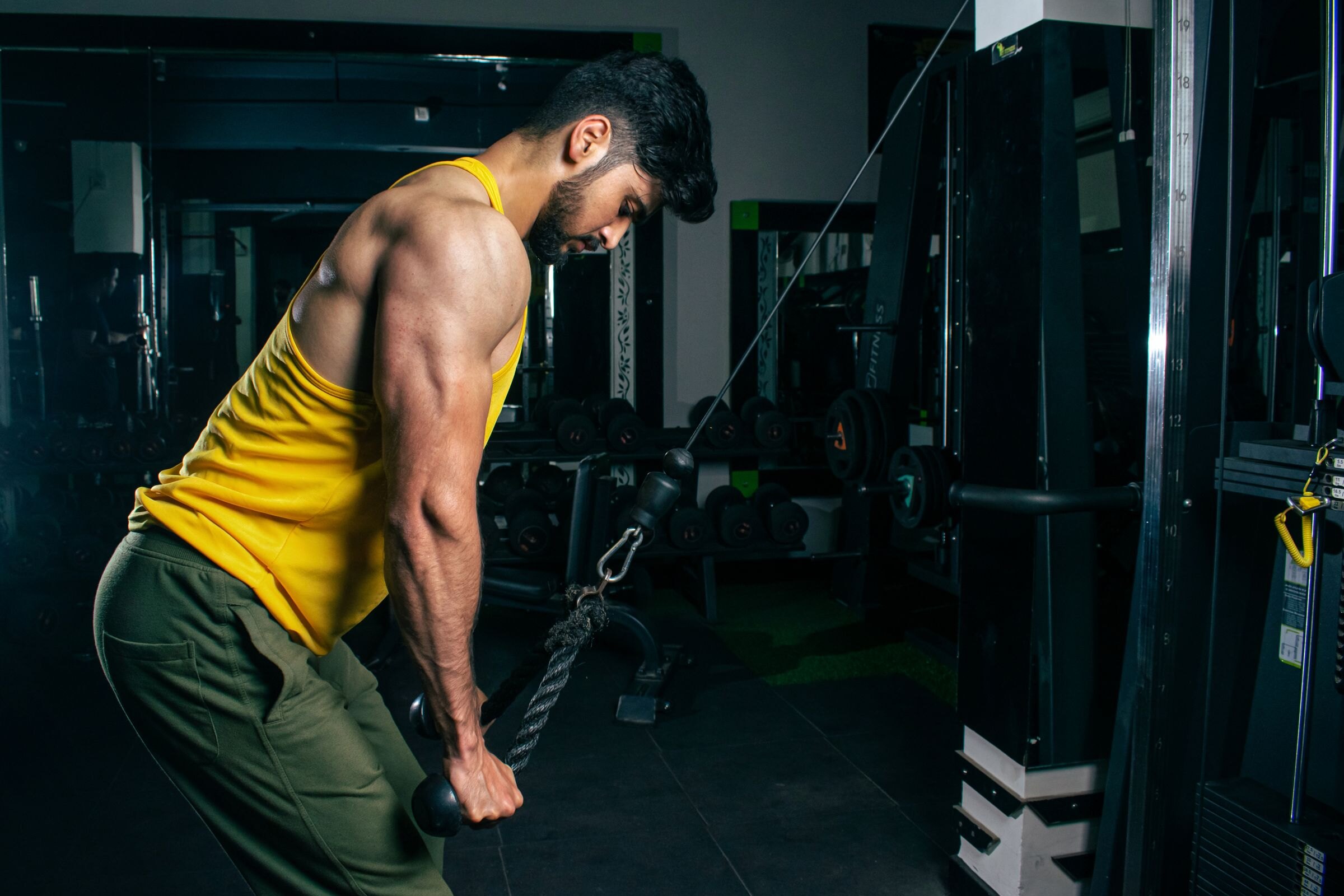
During standard triceps pressdowns, your upper arms remain pinned at your sides in shoulder extension, leaving the long head in an active insufficiency state (shortened at the shoulder). To load the long head at its optimal lengthened position, the shoulder must be fully flexed overhead. Movements like the Barbell Standing Overhead Triceps Extension or cable overhead extensions force the long head to produce torque while intensely stretched across both joints, unlocking superior long-head hypertrophy.
3. The Biceps (Long Head)
Similar to the triceps, the biceps brachii crosses both the shoulder and elbow joints. The long head originates from the supraglenoid tubercle of the scapula.
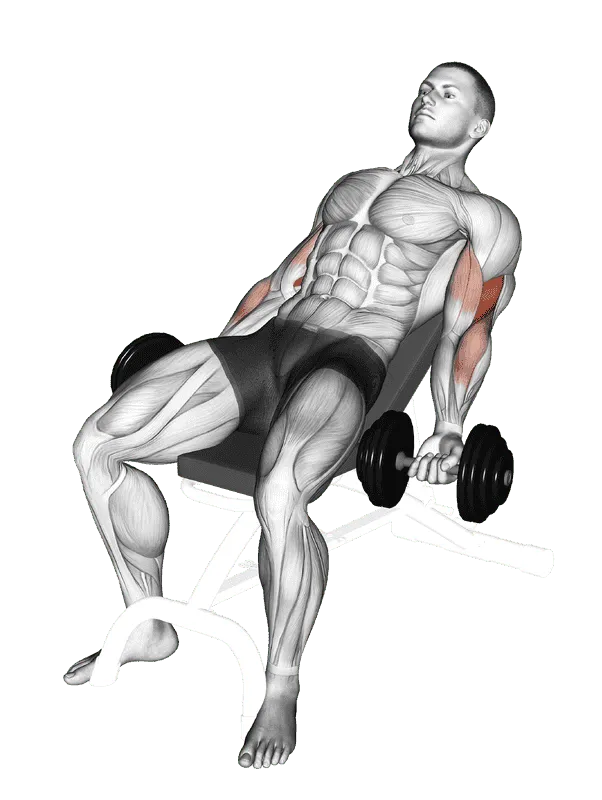
Standard standing barbell curls position the elbows directly beneath the shoulders. However, when performing the Dumbbell Incline Curl on an incline bench set to 45 to 60 degrees, your elbows sit behind your torso in shoulder hyperextension. This orientation stretches the long head across the shoulder before the curl even begins, dramatically increasing passive tension at the bottom of each repetition.
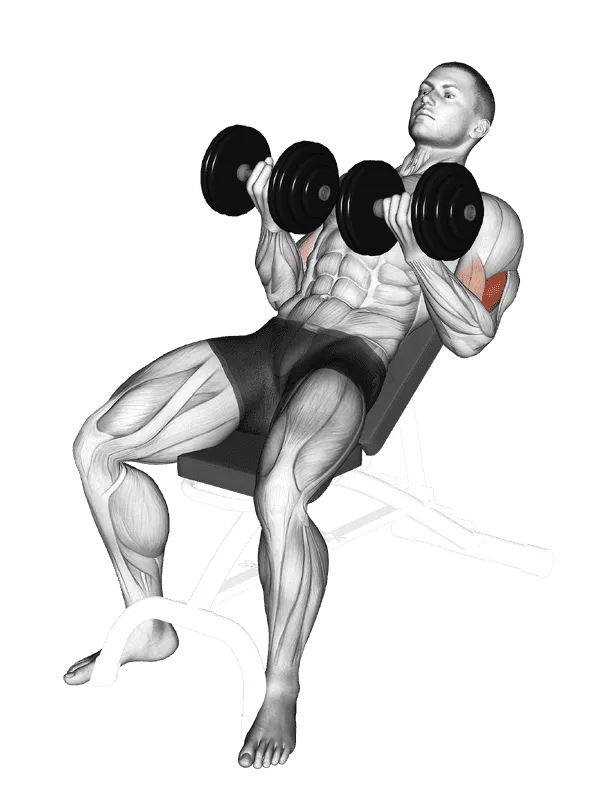
- Sets
- 3–4
- Reps
- 8–12
- Rest
- 120 s
- Tempo
- 3–1–1
4. The Quadriceps
The quadriceps consists of three vastus muscles (lateralis, medialis, intermedius) which cross only the knee, and the rectus femoris, which crosses both the hip and knee.
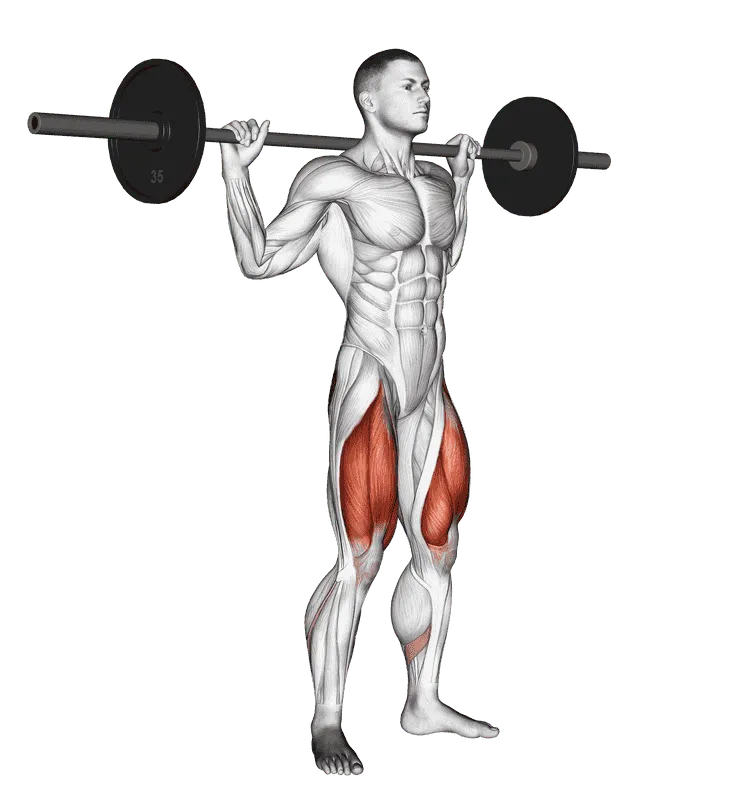
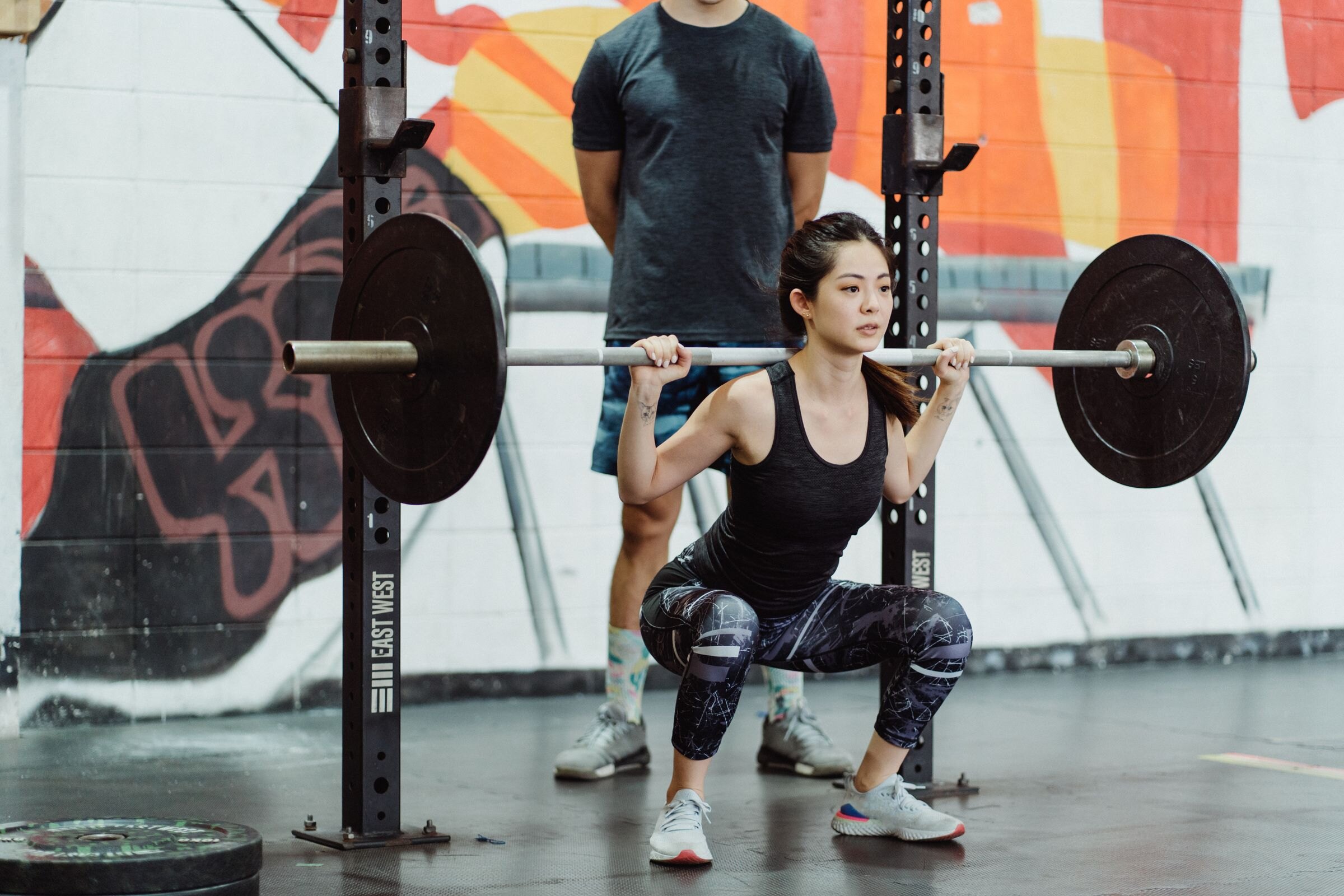
During a Barbell Full Squat, the vasti muscles are stretched to their maximum capacity as the knees achieve deep flexion at the bottom of the hole. Pausing in the deep squat places extreme mechanical tension on the vastus lateralis and medialis. However, because the hip flexes simultaneously with the knee in a squat, the rectus femoris maintains a relatively constant length and receives minimal growth stimulus.
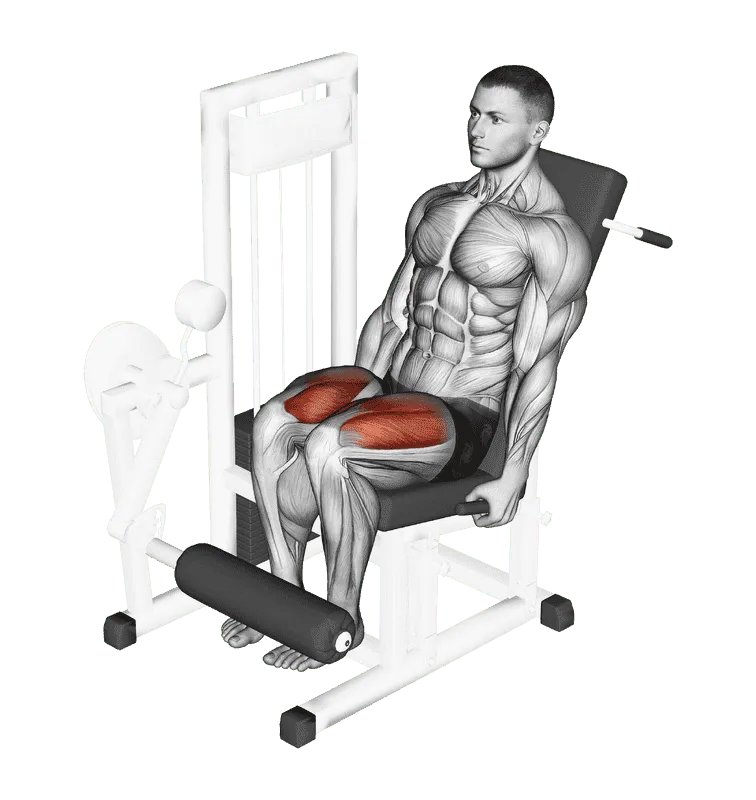
To achieve stretch-mediated hypertrophy in the rectus femoris, the hip must remain extended while the knee flexes—such as during sissy squats, reverse Nordic curls, or Leg Extensions performed with the backrest reclined backward.
5. The Calves (Gastrocnemius vs. Soleus)
The calf complex consists of the superficial gastrocnemius (bi-articular, crossing the knee and ankle) and the deeper soleus (mono-articular, crossing only the ankle).
When you perform seated calf raises with knees bent at 90 degrees, the gastrocnemius is slackened and unable to produce substantial force, leaving the soleus to do nearly all the work. To trigger stretch-mediated hypertrophy in the gastrocnemius, you must perform Standing Calf Raises with knees locked straight, lowering your heels into deep dorsiflexion and pausing for 2 to 3 seconds at the bottom. This pause eliminates the Achilles tendon stretch reflex and forces the gastrocnemius to bear pure passive and active tension under stretch.
6. The Chest (Pectoralis Major)
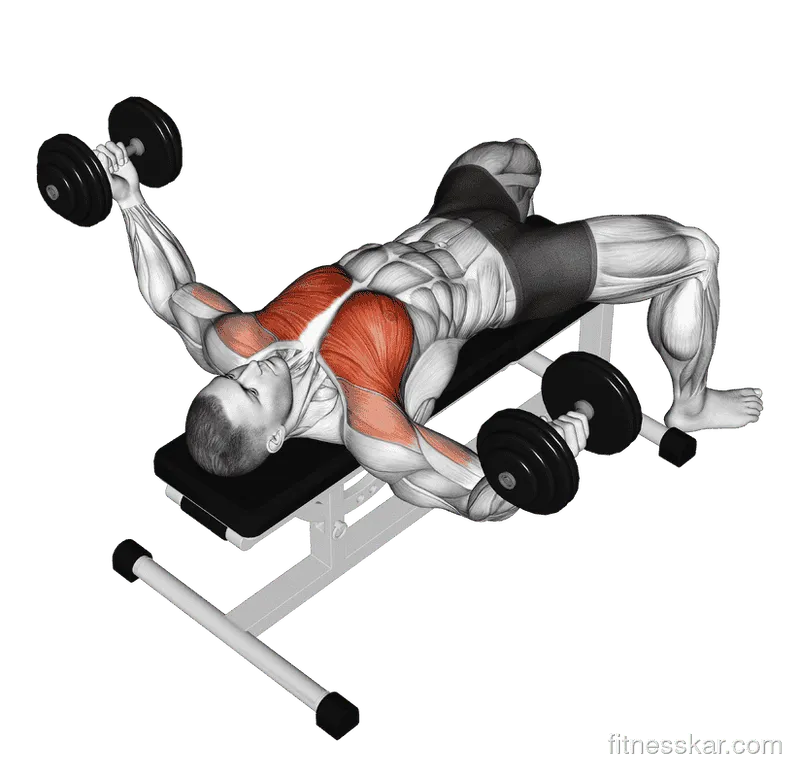
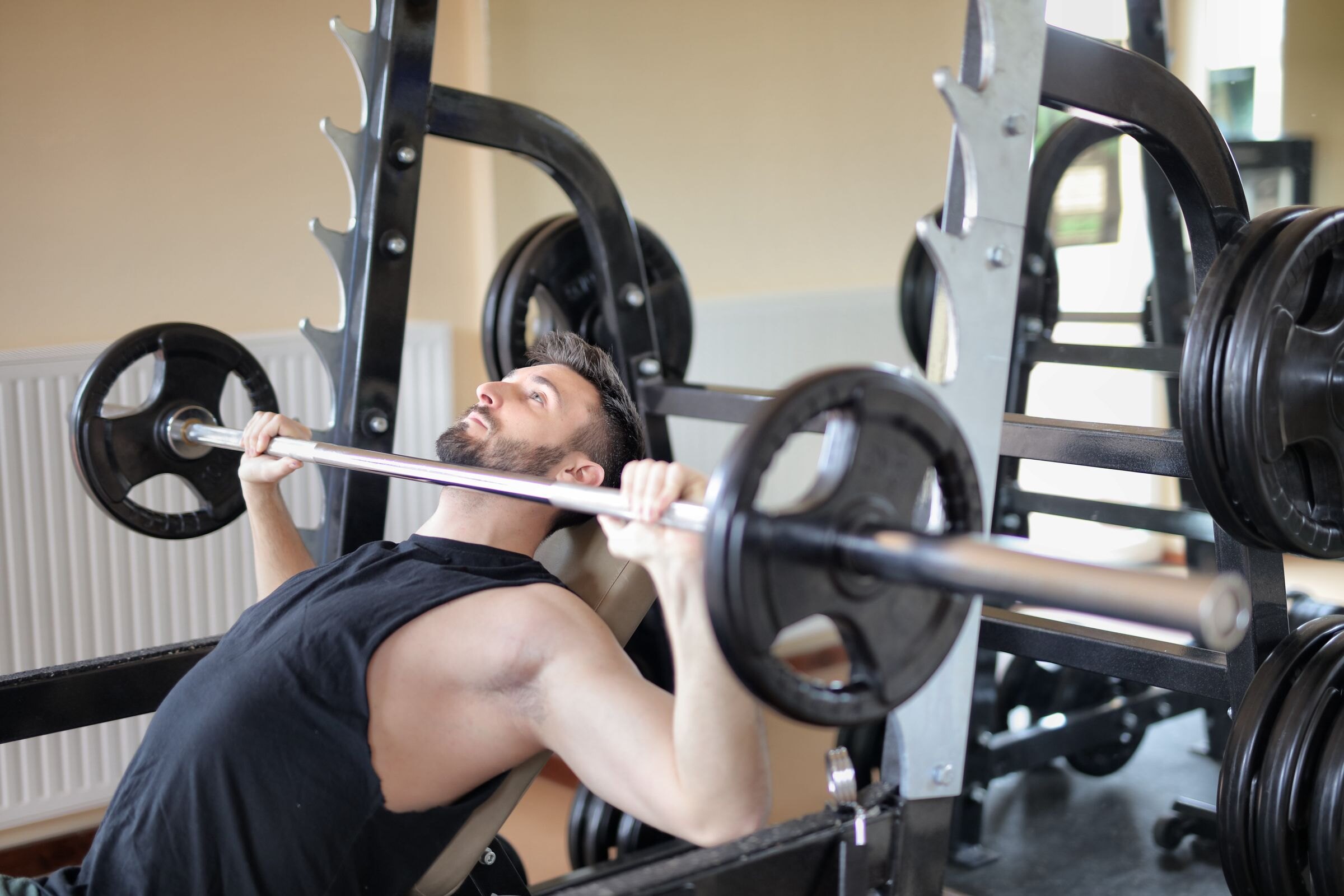
The pectoralis major reaches its longest muscle length during horizontal shoulder abduction and transverse extension. When performing the Dumbbell Fly or deep dumbbell chest presses, the dumbbells allow your elbows to descend well below the plane of the torso. This deep stretch places the sternal and clavicular fibers under immense passive tension that a rigid barbell touching the sternum cannot replicate.
Practical Programming: How to Apply Lengthened Training
Integrating stretch-mediated techniques into your weekly routine does not require overhauling your entire workout plan. Instead, apply these three evidence-based protocols:
| Muscle Group | Primary Lengthened Movement | Key Biomechanical Cue | Recommended Rep Range & Cadence |
|---|---|---|---|
| Hamstrings | Seated Leg Curl | Hinge torso forward; avoid rounding back | 3 sets of 10–12 reps (2-1-1 tempo, 1s stretch pause) |
| Triceps | Barbell Standing Overhead Triceps Extension | Keep elbows pointed upward; lower bar behind head | 3 sets of 8–10 reps (3-1-1 tempo, 1s deep pause) |
| Biceps | Dumbbell Incline Curl | Keep elbows behind torso throughout movement | 3 sets of 10–12 reps (3-1-1 tempo, 1s dead-stop bottom) |
| Quads (Vasti) | Barbell Full Squat | Descend below parallel with upright torso | 3–4 sets of 6–8 reps (3-1-0 tempo, full depth) |
| Quads (Rectus) | Leg Extensions | Recline backrest; pause at bottom stretch | 3 sets of 12–15 reps (2-1-1 tempo) |
| Calves | Standing Calf Raises | Full heel drop; 2-second dead stop in stretch | 3–4 sets of 10–12 reps (2-2-1 tempo, 2s bottom pause) |
| Chest | Dumbbell Fly | Flare elbows slightly; feel deep pectoral stretch | 3 sets of 10–12 reps (3-1-1 tempo, avoid bouncing) |
Protocol 1: The Accentuated Stretch Pause
The simplest, safest way to capitalize on stretch-mediated hypertrophy is to add a deliberate 1 to 2-second isometric pause at the longest position of every repetition on full ROM exercises.
Most lifters bounce out of the bottom of squats, bench presses, and leg curls to exploit the elastic energy stored in tendons (the stretch-shortening cycle). While this helps lift heavier loads, it robs the muscle fibers of mechanical tension. Pausing for 1 to 2 seconds dissipates passive elastic recoil and forces the contractile units and titin to bear the full load under tension.
Protocol 2: Integrated Long-Length Partials (LLPs)
For advanced lifters looking to maximize muscle stimulus on isolation movements, long-length partials can be deployed using two distinct methods:
- End-of-Set Lengthened Partials: Perform your set through a full range of motion until reaching concentric failure (0 RIR). Instead of racking the weight, immediately perform an additional 4 to 6 partial repetitions in the bottom half to bottom third of the range of motion until reaching absolute failure. This extends mechanical tension at long lengths without adding systemic fatigue.
- Pure Lengthened Sets: On exercises with forgiving resistance profiles (such as cable lateral raises, seated leg curls, or machine chest presses), perform the entire set exclusively within the bottom 50% of the range of motion for 10 to 15 repetitions.
Managing Fatigue and Weekly Volume
Because lengthened training stresses the sarcomere structure and activates titin under load, it initially creates higher microscopic muscle damage and neuromuscular fatigue than shortened training.
If you abruptly switch every exercise in your routine to lengthened partials with deep pauses, you risk exceeding your maximum recoverable volume. To prevent overtraining:
- Limit deliberate lengthened partials to 1 or 2 exercises per muscle group per session.
- Keep your total weekly sets within the proven optimal range outlined in our guide on how many sets per muscle per week (typically 10 to 20 hard sets per muscle group weekly).
- Prioritize high-quality sleep, as detailed in our guide on sleep and muscle growth, to allow adequate time for myofibrillar protein synthesis and connective tissue recovery.
To put these principles into practice within a structured, periodized program, follow our complete 10-Week Mass Builder.
Frequently Asked Questions
Frequently asked questions
Does stretch-mediated hypertrophy mean I should stop locking out my repetitions?
No. Full range of motion that includes complete lockout remains the gold-standard foundation for overall joint health, tendon remodeling, and balanced strength across all joint angles. Rather than cutting out lockouts entirely, focus on controlling the eccentric phase and spending quality time under tension in the deep stretched position.
Are long-length partials safe for my joints and tendons?
When performed with controlled cadence and appropriate loads, long-length training is completely safe. The primary risk occurs when lifters bounce or use momentum at the end range of motion, placing sudden ballistic stress on connective tissues. Always control the lowering phase with a 2 to 3-second tempo and avoid ballistic jerks in the stretched position.
Which muscles do not experience significant stretch-mediated hypertrophy?
Muscles that operate primarily on the ascending limb or plateau of the length-tension curve—and mono-articular muscles that cannot be stretched past their resting length—experience minimal stretch-mediated benefits. Examples include the deltoids (particularly the lateral head) and the soleus muscle in the calves. These muscles still grow reliably from standard mechanical tension across full range of motion.
How often should I include stretch-pause repetitions in my program?
You can include stretch-pause repetitions on 1 to 2 exercises per muscle group in every workout. For example, use a 2-second stretch pause on seated leg curls and standing calf raises during your lower body sessions, while performing squats and Romanian deadlifts with standard controlled full range of motion.
How long does it take for muscle soreness to decrease when switching to lengthened training?
Due to the repeated bout effect, your nervous system and muscle fibers adapt rapidly to lengthened training. While your first 1 to 2 sessions may produce substantial delayed-onset muscle soreness (DOMS), soreness typically normalizes to standard levels within two to three weeks of consistent training.
Sources
- Wolf M, Androulakis-Korakakis P, Fisher JP, Schoenfeld BJ, Steele J. Partial vs full range of motion resistance training: a systematic review and meta-analysis. International Journal of Strength and Conditioning. 2023. doi.org/10.47206/ijsc.v3i1.182 ↩