If your goal is to build significantly larger, more defined arms that stretch your shirt sleeves, focusing exclusively on biceps curls is the most common strategic mistake in bodybuilding. Anatomically, the triceps brachii comprises roughly 60 to 67 percent of total upper-arm muscle volume. While a peaked bicep catches the eye from the front, it is a dense, fully developed triceps complex that establishes true arm thickness, width, and impressive silhouette from every angle. Yet, thousands of dedicated lifters spend years performing generic rope pushdowns and heavy skull crushers without seeing substantial growth, often battling nagging elbow tendonitis in the process.
Achieving maximum triceps hypertrophy is not a matter of piling more weight onto a straight bar and swinging your elbows. It is an intricate biomechanical equation governed by glenohumeral (shoulder) joint angles, the length-tension relationship of bi-articular muscle fibers, and matching the resistance curve of an exercise to the human strength curve. When you align your exercise selection with how the three distinct heads of the triceps actually contract and stretch, arm growth accelerates dramatically while joint stress plummets.
This comprehensive guide dissects the functional anatomy, cutting-edge hypertrophy science, joint-friendly execution cues, and practical programming required to maximize triceps development. Whether you want to overcome a persistent bench press lockout plateau or add noticeable mass to lagging arms, this evidence-based masterclass delivers the complete blueprint.
Functional Anatomy: The Tri-Headed Engine of Arm Mass
To build a complete physique, you must first understand the structural machinery beneath the skin. The word "triceps" derives from the Latin for "three-headed." These three distinct muscular compartments converge onto a single broad tendon that inserts onto the olecranon process of the ulna (the bony tip of your elbow). While all three heads work synergistically to extend the elbow joint (straighten the arm), their distinct anatomical origins dictate how and when they are maximally recruited.

1. The Lateral Head (Caput Laterale)
The lateral head originates on the posterior surface of the humerus, superior to the radial groove. It forms the prominent outer muscular sweep visible when viewing your arm from the side profile—the iconic outer half of the "horseshoe."
Because the lateral head originates on the arm bone and crosses only the elbow joint (a mono-articular muscle), its resting length does not change when you raise or lower your arm at the shoulder. It is heavily activated across all elbow extension tasks, but it is especially dominant during movements performed with your arms at your sides, such as the cable triceps pushdown or weighted dips. It contains a high proportion of fast-twitch (type II) muscle fibers, making it exceptionally responsive to heavy, explosive loads and strict mechanical tension.
2. The Medial Head (Caput Mediale)
The medial head originates on the extensive posterior surface of the humerus below the radial groove, spanning down toward the elbow. It lies deep beneath the long and lateral heads, visible near the medial and distal portion of the elbow joint.
Often referred to by exercise scientists as the "workhorse" of elbow extension, the medial head is active during every single extension movement regardless of angle, load, or speed. Like the lateral head, it is mono-articular and crosses only the elbow. However, it possesses a higher percentage of slow-twitch (type I) endurance fibers and provides essential joint stability throughout the entire range of motion, particularly during the initial phase of elbow extension from a deeply bent position. Neglecting the medial head leaves the elbow joint vulnerable to instability during heavy pressing.
3. The Long Head (Caput Longum)
The long head is the anatomical crown jewel of triceps training. Making up approximately 50 percent of the entire triceps muscle volume, it is the largest and most powerful of the three heads, sitting along the posterior and inner border of the upper arm.
Unlike the lateral and medial heads, the long head is bi-articular (a two-joint muscle). It originates on the infraglenoid tubercle of the scapula (shoulder blade) and crosses both the glenohumeral (shoulder) joint and the elbow joint. Because of this dual-joint attachment, the long head performs two distinct biomechanical actions:
- Elbow extension: Straightening the forearm away from the upper arm.
- Shoulder adduction and extension: Pulling the upper arm backward and inward toward the torso.
This anatomical reality introduces a critical physiological challenge known as active insufficiency. When your arm is positioned down at your side (zero degrees of shoulder elevation), the long head is already shortened at the shoulder joint. Attempting to contract it further through elbow extension causes its actin and myosin filaments to overlap excessively, diminishing its ability to generate active contractile force. To place the long head under meaningful tension and full stretch, you must elevate your humerus overhead into shoulder flexion.
| Triceps Head | Joint Crossings | Skeletal Origin | Primary Visual Contribution | Optimal Shoulder Angle |
|---|---|---|---|---|
| Lateral Head | Elbow only (mono-articular) | Posterior humerus (above radial groove) | Outer "horseshoe" sweep | 0°–45° (at sides / pushdowns) |
| Medial Head | Elbow only (mono-articular) | Posterior humerus (below radial groove) | Lower arm thickness & elbow stability | All angles (0°–180°) |
| Long Head | Shoulder & elbow (bi-articular) | Infraglenoid tubercle of scapula | Inner mass & 50% of total triceps size | 90°–180° (incline & overhead) |
The Biomechanics of Overhead Training: Stretch-Mediated Hypertrophy
In recent years, exercise physiology has undergone a paradigm shift regarding the primary drivers of muscle growth. While high levels of mechanical tension and progressive overload remain non-negotiable, a growing body of evidence confirms that applying mechanical tension at long muscle lengths—a phenomenon termed stretch-mediated hypertrophy—yields superior muscular adaptations compared to training at short muscle lengths.
When a muscle fiber contracts under load while fully stretched, titin (a giant structural protein filament within the sarcomere) is elongated. This passive mechanical tension combines with active actin-myosin cross-bridge cycling to send powerful intracellular signals via the focal adhesion kinase (FAK) and mTORC1 pathways, stimulating elevated rates of muscle protein synthesis.
The Landmark Maeo et al. (2023) Study
The debate over whether overhead triceps extensions are genuinely superior to traditional pushdowns was definitively settled by a landmark clinical study conducted by Maeo and colleagues.[1]
The researchers recruited recreationally active young adults and subjected them to a 12-week unilateral training protocol. Each participant trained one arm with overhead cable triceps extensions (shoulder flexed to 180 degrees) and the opposing arm with conventional cable pushdowns (shoulder in a neutral position at 0 degrees). Both arms performed identical sets, repetitions, relative loading, and frequency.
The findings were striking:
- Overall Triceps Hypertrophy: The overhead-trained arms experienced a 1.4-fold greater increase in total triceps muscle volume compared to the pushdown-trained arms (19.9% volume increase versus 14.1%).
- Long Head Specific Growth: The long head demonstrated a dramatic 1.5-fold advantage in muscle cross-sectional area when trained overhead (28.5% growth versus 19.6% in the neutral arm).
- Lateral and Medial Head Growth: Contrary to traditional assumptions that pushdowns are uniquely superior for the lateral head, the lateral and medial heads also grew substantially—and in fact slightly favored the overhead condition (14.6% vs 10.5%).
Why did the mono-articular heads grow so effectively overhead? When the long head is placed in a stretched position, total motor unit recruitment across the entire triceps complex increases to overcome the challenging mechanical lever arm. Lifters who exclusively perform pushdowns and dips are leaving roughly 40 percent of their potential triceps mass on the table.
Exercise Selection: Matching Resistance Profiles to Anatomy
Not all triceps exercises are created equal. An optimal exercise must not only recruit the target muscle fibers but also distribute mechanical tension smoothly without subjecting the elbow joint to destructive shear forces. Below, we analyze the four foundational movement patterns necessary for complete triceps hypertrophy.
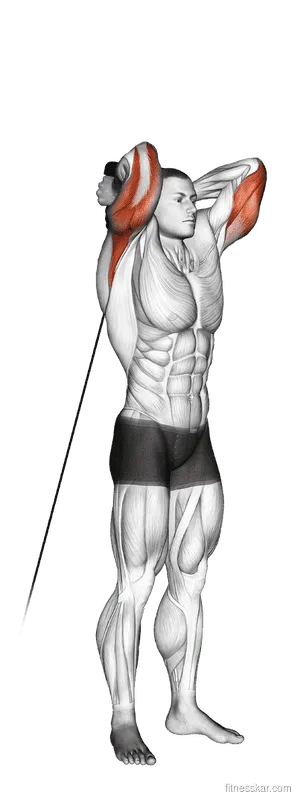
1. Overhead Cable Extensions: Maximizing the Long Head
Free-weight dumbbell overhead extensions have been a gym staple for decades, but they suffer from a major biomechanical flaw: as you press the dumbbell to the top lockout, gravity pulls directly down through your bones, reducing muscle tension to zero. Conversely, at the very bottom, joint torque peaks sharply.
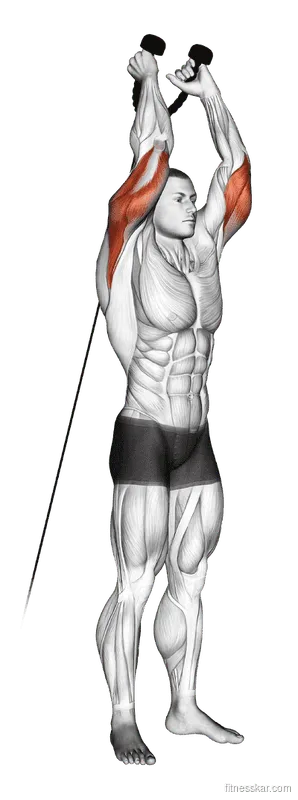
Using an adjustable dual-cable column solves this completely. By setting the pulleys at roughly chest or hip height and extending your arms forward and overhead (often called the "Katana extension" or dual-cable cross-body extension), the cables provide continuous, uninterrupted tension from full elbow flexion all the way to complete lockout.
- Sets
- 3–4
- Reps
- 10–12
- Rest
- 90 s
- Tempo
- 3–0–1–1
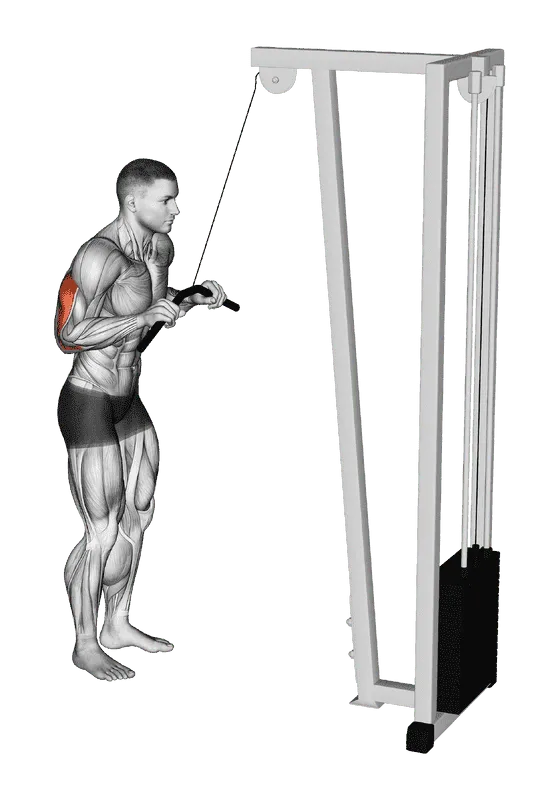
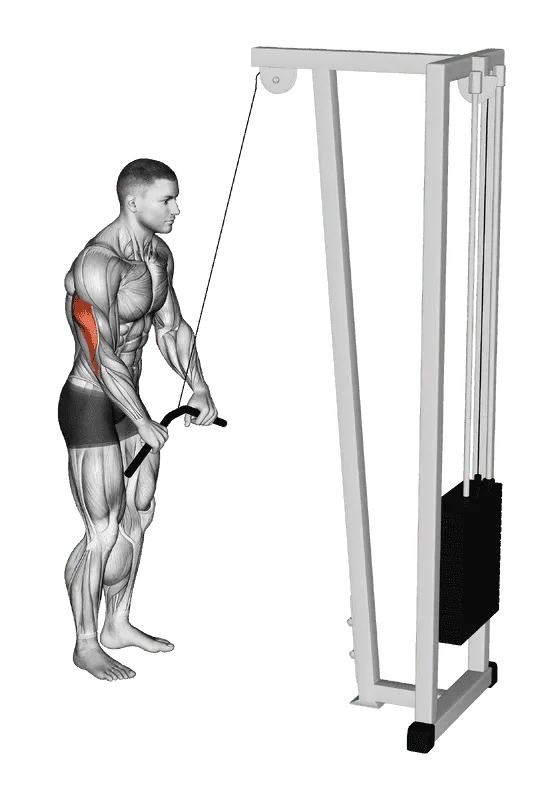
2. Cable Pushdowns: Isolating the Lateral and Medial Heads
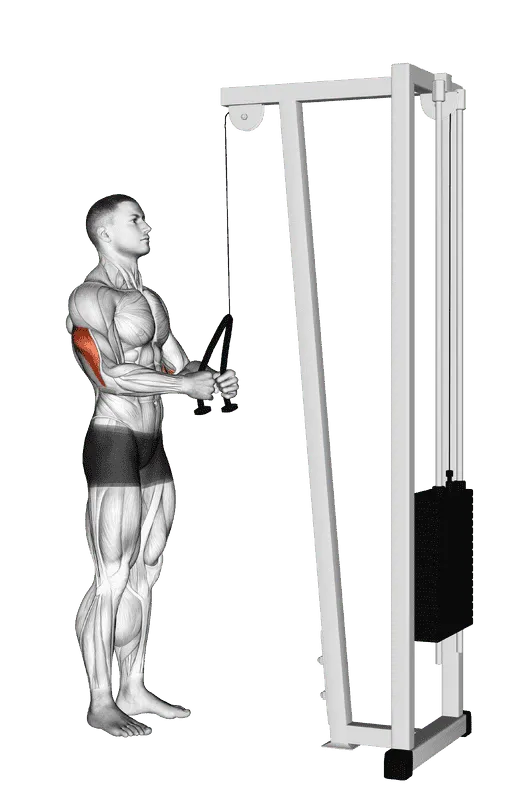
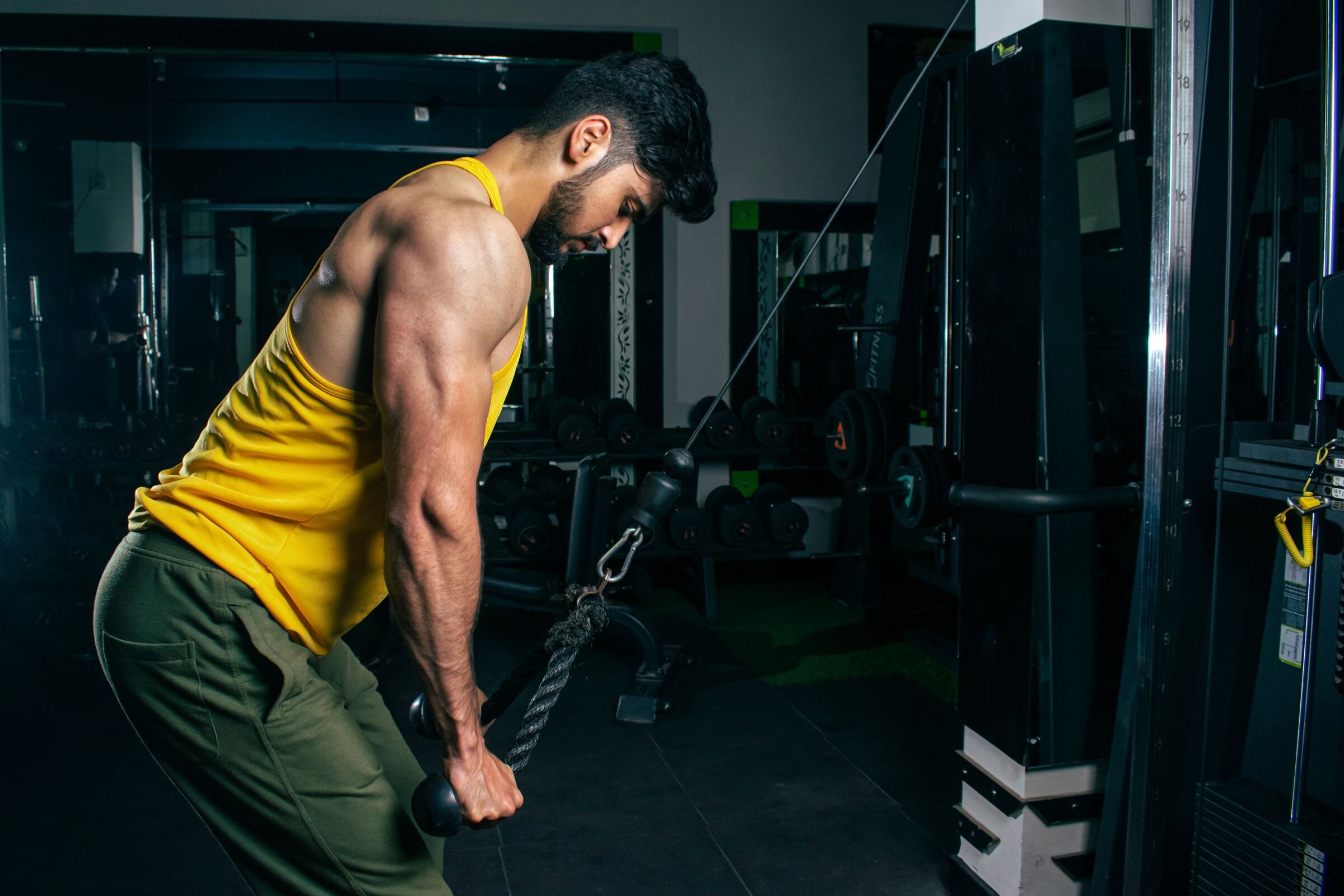
The cable triceps pushdown remains an indispensable movement for overloading the lateral and medial heads in their shortened-to-mid range. However, how you grip the attachment makes a substantial difference:
- Straight or V-Bar: Allows heavier loading and maximal mechanical tension, but can force the wrists into slight pronation and lock the elbows into an unnatural path.
- Rope Attachment: Allows you to pull the handles apart at the bottom, extending the range of motion and increasing peak contraction in the lateral head.
- Individual Dual Cables: Attaching two single handles to a high pulley allows your hands to travel completely past your hips, eliminating the artificial stopping point created by a bar hitting your thighs.
- Sets
- 3–4
- Reps
- 8–12
- Rest
- 75 s
- Tempo
- 2–0–1–1
3. The 90-Degree Angle: Skull Crushers and JM Presses
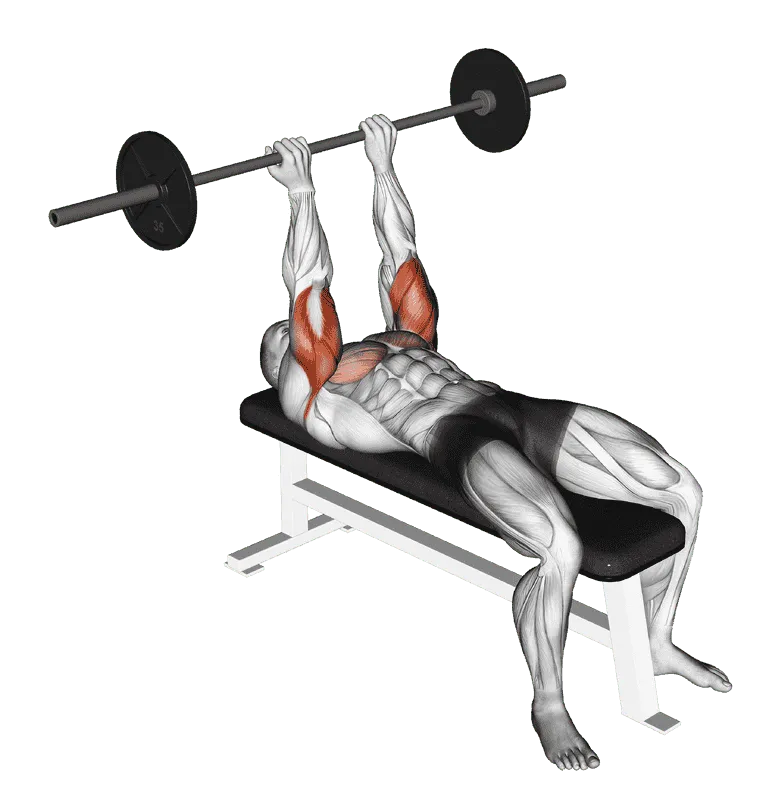
Exercises performed with the upper arms perpendicular to the torso (90 degrees of shoulder elevation) bridge the gap between neutral pushdowns and fully overhead extensions. Movements like the barbell lying triceps extension (skull crusher) place moderate stretch on the long head while allowing substantial loading.
To optimize the skull crusher for muscle growth and joint safety:
- Perform it on a slight incline (15 to 30 degrees) or angle your arms slightly backward (roughly 70 to 80 degrees relative to the floor) rather than pointing straight up. This maintains continuous tension on the triceps at the top of the rep instead of letting the bones support the load.
- Lower the barbell toward the crown of your head or slightly behind the bench, rather than toward your forehead or nose. This deepens the stretch on the long head and reduces the acute shear angle on the olecranon tendon.
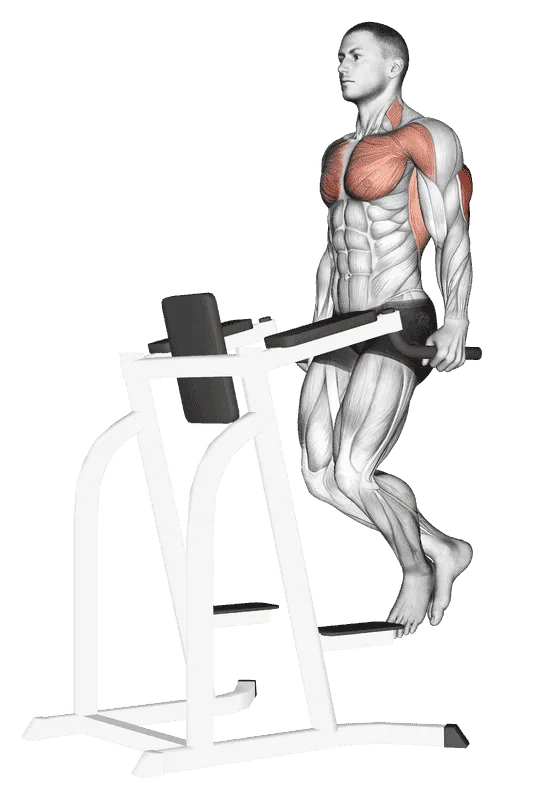
4. Heavy Multi-Joint Overload: Close-Grip Bench and Dips
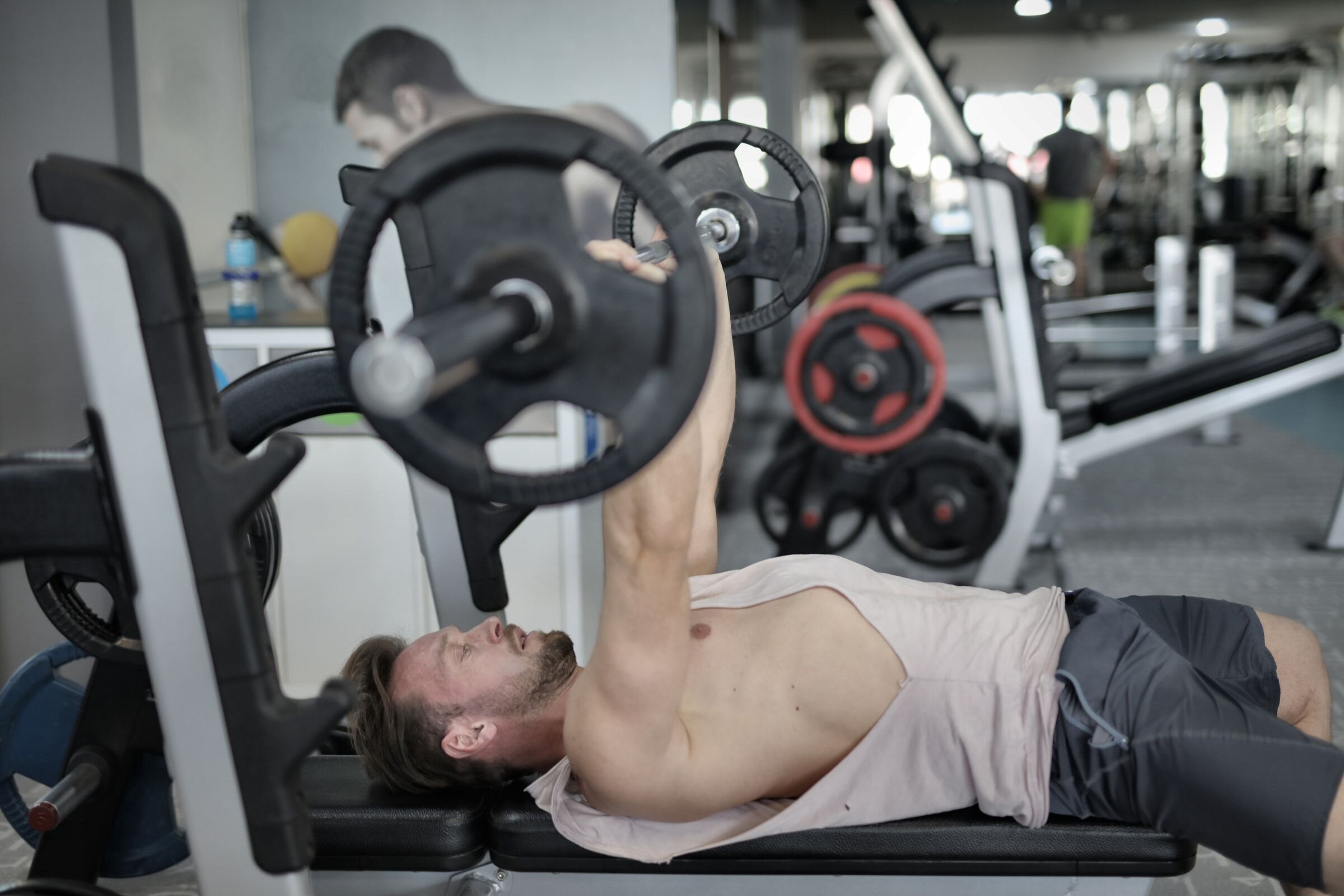
Isolation exercises sculpt muscle, but heavy compound presses build foundational density and neural drive. The barbell close-grip bench press and parallel bar dips allow you to overload the triceps with significantly greater absolute loads than any extension could tolerate.
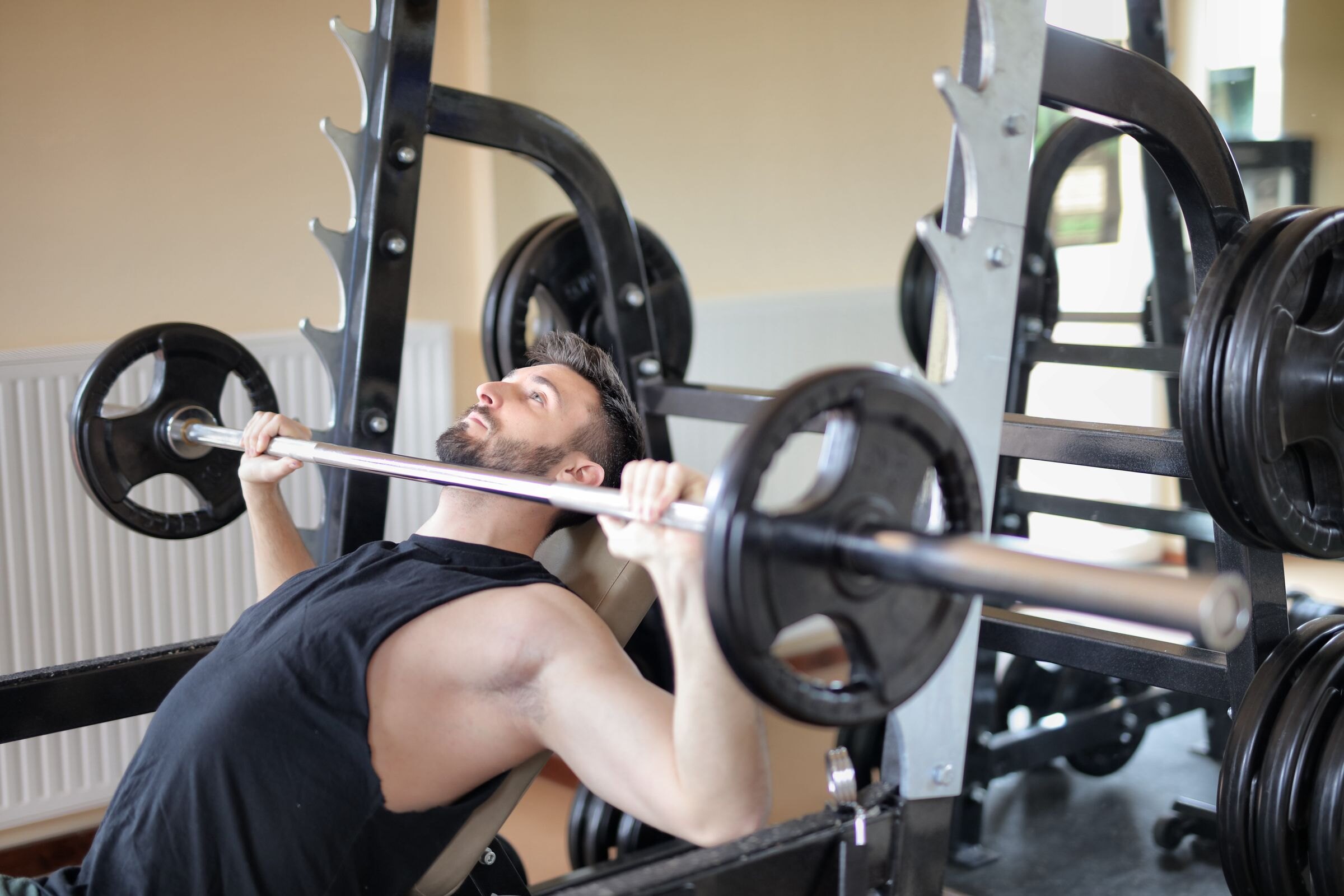
- Close-Grip Bench Width: Avoid gripping the bar with your hands only a few inches apart. An excessively narrow grip places intense torque on the wrists and forces the elbows into an extreme flare. The optimal grip is roughly shoulder-width apart (index fingers aligned with the smooth knurling transition). This maximizes triceps recruitment while maintaining a healthy glenohumeral bar path. Our dedicated breakdown on how to bench press covers optimal scapular retraction cues in depth.
- Dips Execution: To direct tension onto the triceps rather than the pectoralis major, keep your torso completely upright, keep your elbows tucked close to your sides, and avoid leaning forward excessively.
Programming & Volume Landmarks: How to Structure Triceps Growth
Muscle growth requires a calculated balance between stimulus and fatigue. Because your triceps act as primary synergists during all horizontal and vertical pressing movements—including barbell bench presses, dumbbell incline presses, and overhead shoulder presses—you cannot program triceps volume in a vacuum.
According to hypertrophy volume frameworks popularized by Dr. Mike Israetel and Renaissance Periodization, direct triceps training should follow specific weekly volume landmarks:
- Maintenance Volume (MV): 4 to 6 direct sets per week (sufficient to retain current arm size if you are performing heavy chest pressing).
- Minimum Effective Volume (MEV): 6 to 8 direct sets per week for measurable hypertrophy.
- Maximum Adaptive Volume (MAV): 10 to 14 direct sets per week for the vast majority of intermediate and advanced lifters.
- Maximum Recoverable Volume (MRV): 18 to 20 direct sets per week. Exceeding this threshold almost universally results in elbow tendon irritation and diminished recovery capacity.
To review how weekly volume interacts with other upper-body muscle groups, refer to our comprehensive guide on sets per muscle per week.
Frequency and Intensity Targets
The triceps recover relatively quickly compared to larger muscle groups like the quadriceps or hamstrings, making a training frequency of two times per week optimal. Spreading your weekly volume across two distinct sessions maintains higher set quality, prevents excessive intrasession fatigue, and elevates muscle protein synthesis twice during the week.
Train the majority of your working sets within a proximity to failure of 1 to 3 repetitions in reserve (RIR). For compound movements like close-grip presses, stay closer to 2 to 3 RIR to protect joint integrity. For cable extensions and pushdowns, you can safely push to 1 RIR or occasional technical failure on the final set. To master proximity to failure and when to stop a set, consult our guide on training to failure.
| Exercise Category | Primary Muscle Head | Ideal Rep Range | Proximity to Failure (RIR) | Weekly Set Allocation |
|---|---|---|---|---|
| Overhead Cable Extension | Long Head (deep stretch) | 10–15 reps | 1–2 RIR | 4–6 sets |
| Cable Pushdown (Rope/Dual) | Lateral & Medial Heads | 8–12 reps | 0–2 RIR | 3–5 sets |
| Close-Grip Press or Dip | All Heads (compound mass) | 6–8 reps | 2–3 RIR | 3–4 sets |
| Incline Lying DB Extension | Long & Lateral Heads | 10–12 reps | 1–2 RIR | 2–3 sets |
Sample 2-Day Triceps Specialization Routine
Below is an evidence-based training split designed to maximize all three heads of the triceps while safeguarding elbow health. Integrate this protocol into an upper/lower or push/pull/legs routine, such as our structured 4-day hypertrophy plan or the comprehensive 10-week mass builder.
Workout A (Heavy Compound & Overhead Focus)
- Barbell Close-Grip Bench Press: 3 sets × 6–8 reps (tempo 3-1-0-1, rest 120s, 2 RIR)
- Cable Rope Overhead Triceps Extension: 3 sets × 10–12 reps (tempo 3-0-1-1, rest 90s, 1 RIR)
- Cable Triceps Pushdown: 3 sets × 12–15 reps (tempo 2-0-1-1, rest 60s, 1 RIR)
Workout B (Stretch & Continuous Tension Focus)
- Parallel Bar Dips: 3 sets × 8–10 reps (bodyweight or weighted, tempo 3-0-1-0, rest 90s, 2 RIR)
- Barbell Lying Triceps Extension (on 15° Incline): 3 sets × 10–12 reps (tempo 3-0-1-0, rest 90s, 1 RIR)
- Cable Rope Triceps Pushdown: 2 sets × 15–20 reps (drop set on final set, rest 60s, 0 RIR)
To broaden your exercise repertoire across both the anterior and posterior compartments of the upper arm, explore our curated list of the best arm exercises.
Elbow Joint Longevity: Preventing Lifter's Elbow
Nothing halts arm progression faster than distal triceps tendinopathy—commonly known among strength athletes as "lifter's elbow." This chronic condition is characterized by sharp, burning pain at the distal insertion of the triceps tendon on the olecranon process, typically triggered by high-frequency heavy skull crushers and flared-elbow pressing.
To bulletproof your elbows while continuing to build mass:
- Pre-Exhaust with Cables Before Free Weights: If heavy skull crushers hurt your elbows, perform your cable pushdowns or light overhead rope extensions first. Pumping blood into the muscle and warming up the synovial fluid in the elbow joint lubricates the cartilage and allows you to train heavier compound lifts afterward with zero joint discomfort.
- Control the Eccentric Phase: Dropping heavy dumbbells quickly into full flexion creates intense eccentric peak force spikes on the tendon. Adhere strictly to a 3-second lowering tempo to place mechanical tension on the muscle belly rather than passive connective tissue.
- Use Neutral and Semi-Supinated Grips: Pronated (overhand) straight-bar extensions lock the radius and ulna in a fixed position. Switching to ropes, ergonomic grips, or dumbbells allows the forearm bones to rotate naturally, relieving wrist and elbow strain.
Frequently Asked Questions
Frequently asked questions
Can I build huge triceps using only the bench press and push-ups?
While heavy pressing develops substantial mass in the lateral and medial heads, it leaves the long head underdeveloped because the arms remain at your sides. Maximizing overall arm size requires direct overhead extensions to train the long head at long muscle lengths.
How often should I train my triceps for maximum growth?
Training triceps directly twice per week is ideal for most lifters. This frequency allows you to achieve 10 to 14 high-quality weekly sets without excessive intra-workout fatigue, elevating muscle protein synthesis multiple times throughout the week.
Why do skull crushers cause elbow pain, and what is the best alternative?
Traditional skull crushers place maximum gravitational torque at 90 degrees of elbow flexion, creating extreme shear forces on the distal triceps tendon. Dual-cable overhead extensions or incline dumbbell skull crushers provide a superior, joint-friendly alternative with smoother resistance curves.
Is a straight bar or rope attachment better for cable pushdowns?
A straight bar allows heavier absolute loads and maximizes mechanical tension on the lateral head, whereas a rope attachment allows you to pull your hands past your hips for a greater active range of motion. Combining both across your weekly program yields the most balanced development.
Sources
- Maeo S, Wu Y, Huang M, et al. Triceps brachii hypertrophy is substantially greater after elbow extension training performed in the overhead versus neutral arm position. European Journal of Sport Science. 2023. doi.org/10.1080/17461391.2022.2100279 ↩