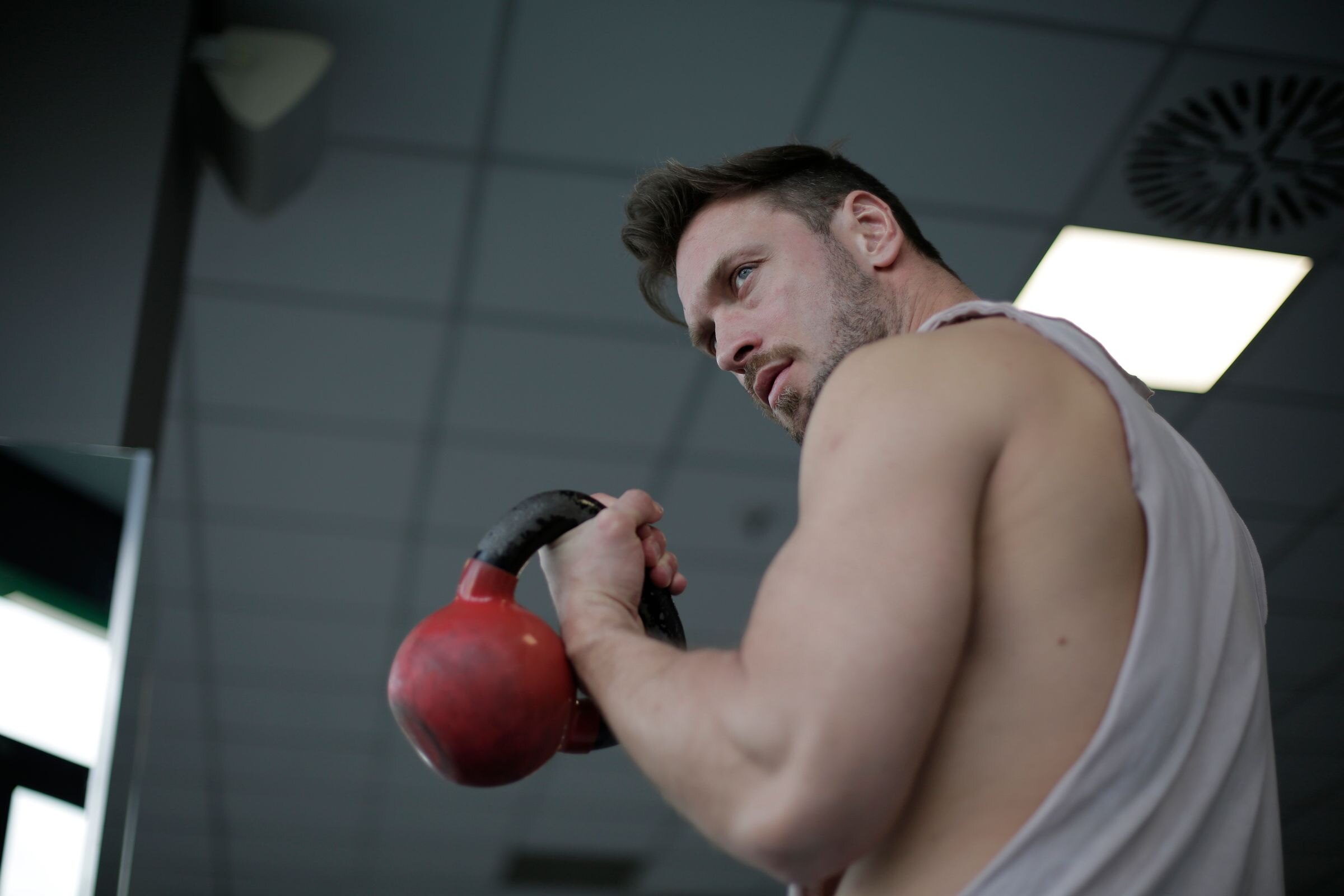
Kettlebell conditioning is structured, interval-based training using ballistic hip hinges and full-body kettlebell lifts to build aerobic capacity, power endurance, and trunk stability without the repetitive joint impact of road running. Executed with clean mechanics and timed work-to-rest intervals, 20-minute kettlebell sessions can significantly raise maximal oxygen uptake (VO2max) in just four weeks.[1]
Lifters often face an awkward choice: log pavement miles that beat up knees and ankles, or coast on cardio machines that never challenge your glutes, grip, or core. Below, you will learn why ballistic kettlebell intervals spare your joints, how to groove a spine-safe hip hinge, which starting weight in kilograms and pounds fits you, and three structured workouts you can plug into your week immediately.
Why Kettlebell Conditioning Builds Stamina Without Beating Up Your Joints
Most cardio tools force a compromise between cardiovascular intensity and joint longevity. Well-coached kettlebell conditioning delivers both through its geometry and loading rhythm.
Low-Impact Ballistics and Joint Longevity
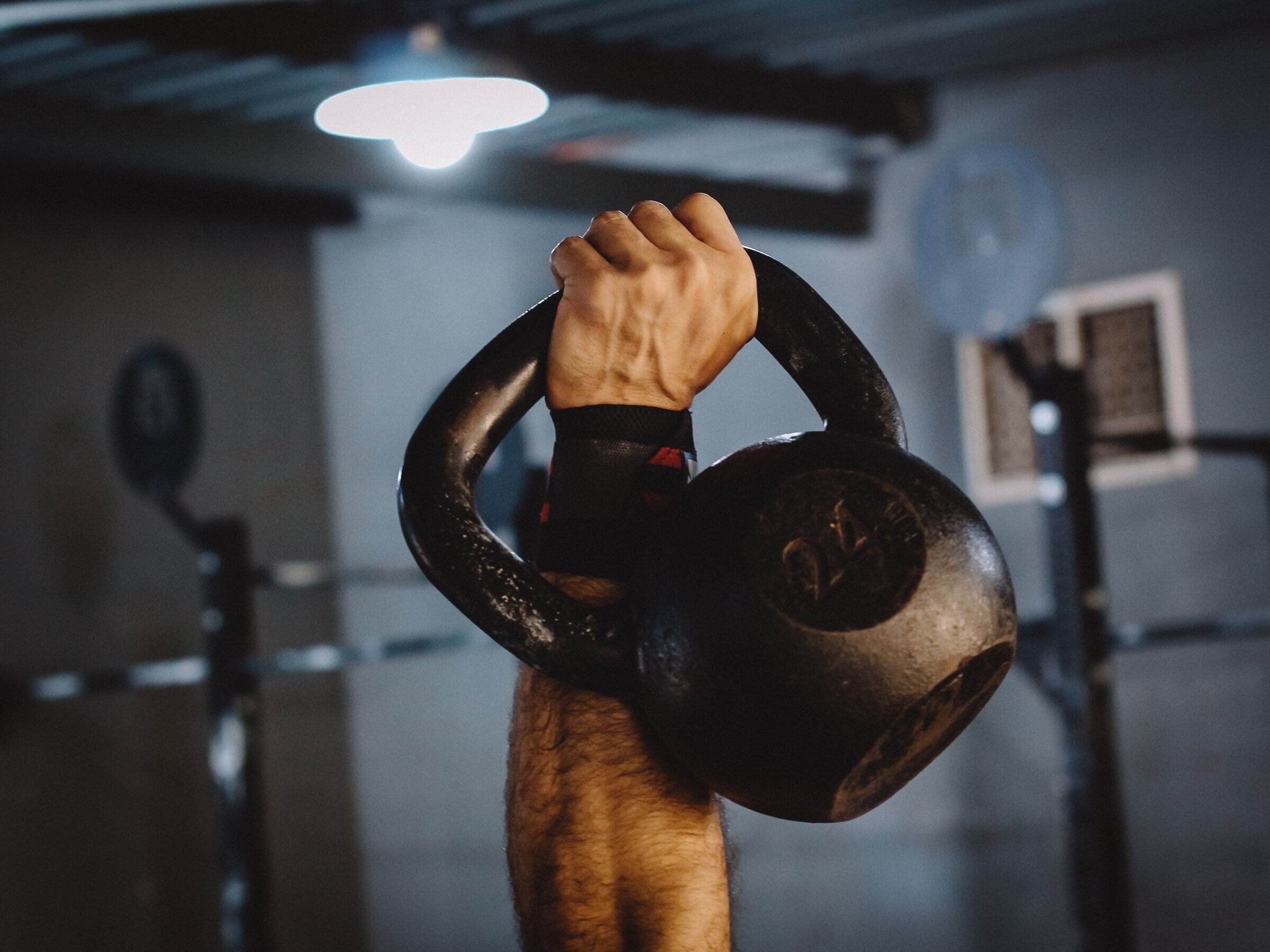
Unlike a dumbbell centered in your palm, a cast-iron kettlebell hangs below its handle. That offset mass shifts leverage through every arc, challenging your grip, forearms, shoulder stabilizers, and trunk to guide momentum smoothly.
Equally important, your feet stay planted. Instead of absorbing thousands of high-impact heel strikes on concrete, your hips and knees load through concentric-dominant hip extension. Paired with progressive volume—principles we expand in our joint durability guide—kettlebell intervals build tough tendons and posterior-chain stamina with far less joint wear than pavement running.
The Tension-Relaxation Engine
A sharp swing is a cyclic sprint for your hips and lungs. Each rep peaks with split-second full-body tension—glutes firing, quads locking, lats packing, and abs bracing—followed by a brief weightless "float" at chest height before reversing. Because swing loads are lighter than barbell deadlifts, conditioning output depends on maximal rep intent: accelerating every rep recruits oxygen-hungry posterior-chain muscles continuously.
The Mechanics of Joint-Safe Kettlebell Ballistics
Lower-back tightness during swings almost always stems from technique, not the kettlebell. Safe ballistics rely on hip-spine dissociation: hinging smoothly at the hip crease while your ribcage and pelvis stay locked together. Building that 360-degree trunk brace—detailed in our lower back durability guide—turns your torso into a stiff lever that transfers force cleanly without lumbar shear.
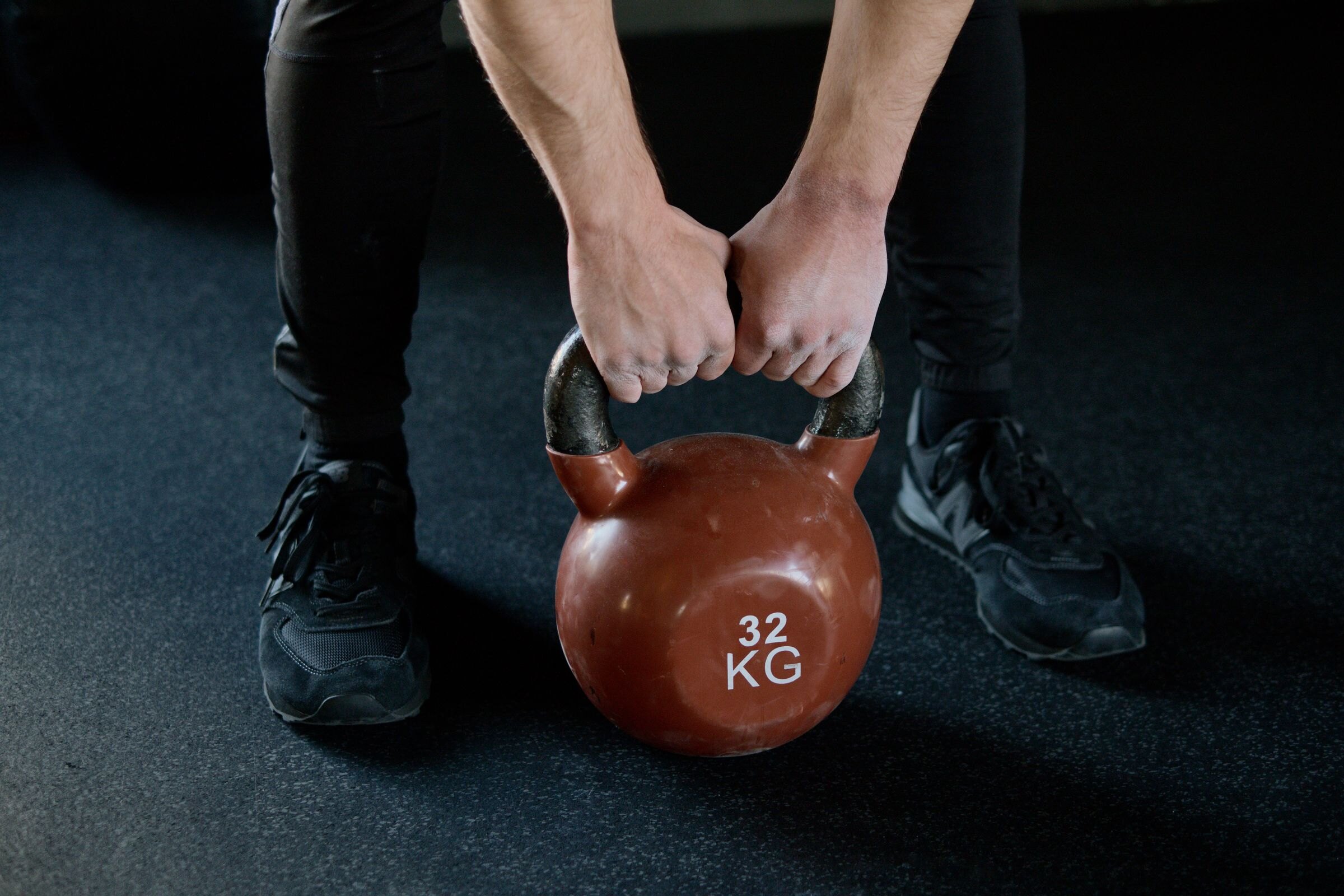
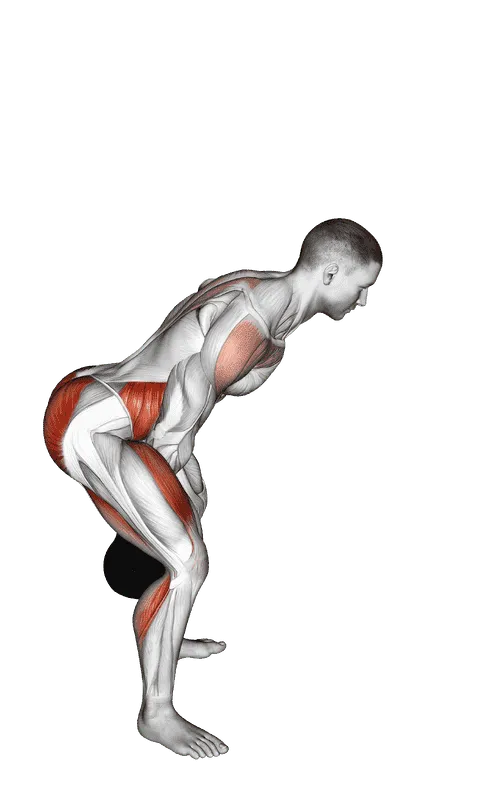
Place the kettlebell one foot-length ahead of your toes with feet just outside shoulder width. Push your hips back with soft knees, grip the handle firmly, tilt the bell toward you, and pack your lats down so your back stays flat before hiking.
Four Non-Negotiable Swing Cues
Check these four mechanics on every set:
- Hike high: Snap the bell back so your forearms brush your upper inner thighs above knee height; letting it droop pulls on your lower back.
- Pack lats, relax arms: Pull shoulders down as if bending the handle. Arms stay passive ropes—never front-raise the weight.
- Snap hips first, hinge late: Drive through midfoot to project the bell to chest height, and stay standing tall on the downswing until your forearms nearly touch your hips.
- Finish in a tall plank: Lock quads, squeeze glutes, stack ribs over pelvis, and exhale crisply—never lean back.
The Four-Stage Prerequisite Ladder
Jumping straight into high-rep snatches invites bruised wrists and irritated shoulders. Earn each stage first.
| Stage | Movement | Readiness Standard | Focus |
|---|---|---|---|
| Stage 1 | Two-hand swing | 10×10 crisp reps, flat spine | Hinge timing & hip drive |
| Stage 2 | One-arm swing, goblet squat | 10 square reps/side; deep squats | Anti-rotation & grip |
| Stage 3 | Press, push press, get-up | Straight wrist, stacked ribs | Overhead durability |
| Stage 4 | One-arm snatch intervals | Soft catch across 10–15 min | Peak VO2max power |
The Core Movements of a Kettlebell Conditioning Workout
A balanced kettlebell conditioning workout pairs fast ballistic hinges with slower strength lifts so heart rate stays high while every joint pattern stays resilient. Explore Fitnesskar's library of kettlebell exercises anytime to review frame-by-frame form.
1. Two-Hand and One-Arm Kettlebell Swings
The two-hand swing powers kettlebell swing conditioning. Symmetrical loading lets you use meaningful weight safely, practice explosive hip drive, and accumulate high aerobic volume without knee pounding.
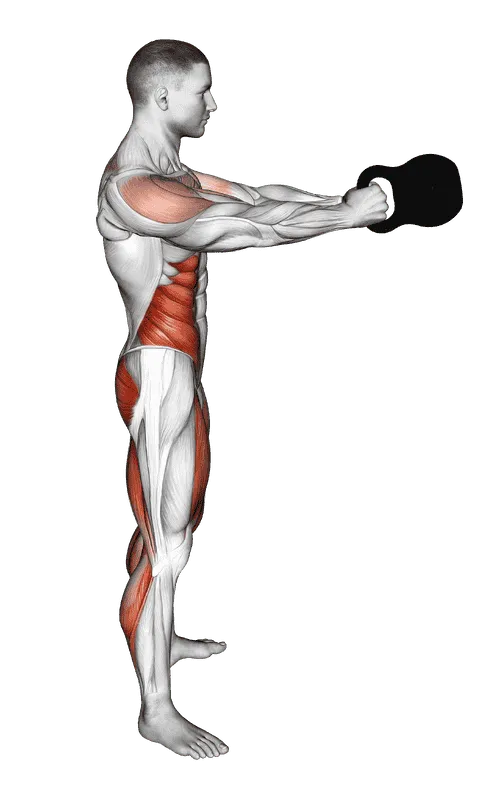
- Sets
- 6–10
- Reps
- 10–15
- Rest
- 60 s
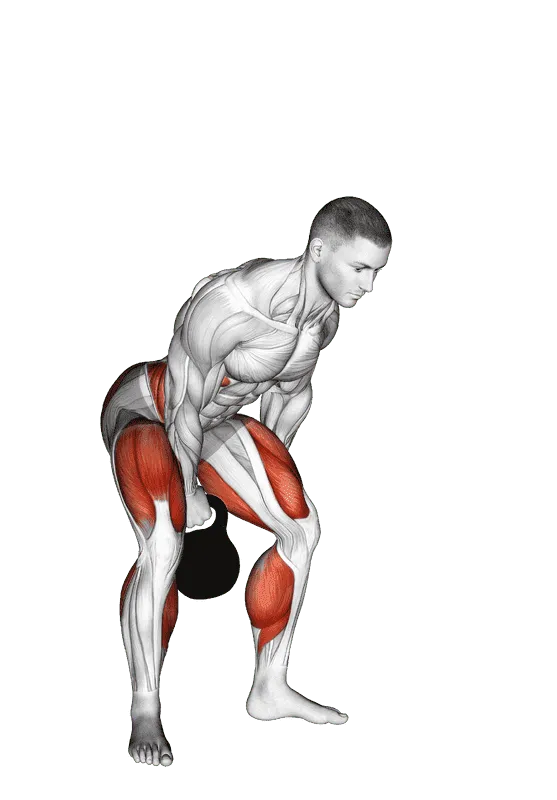
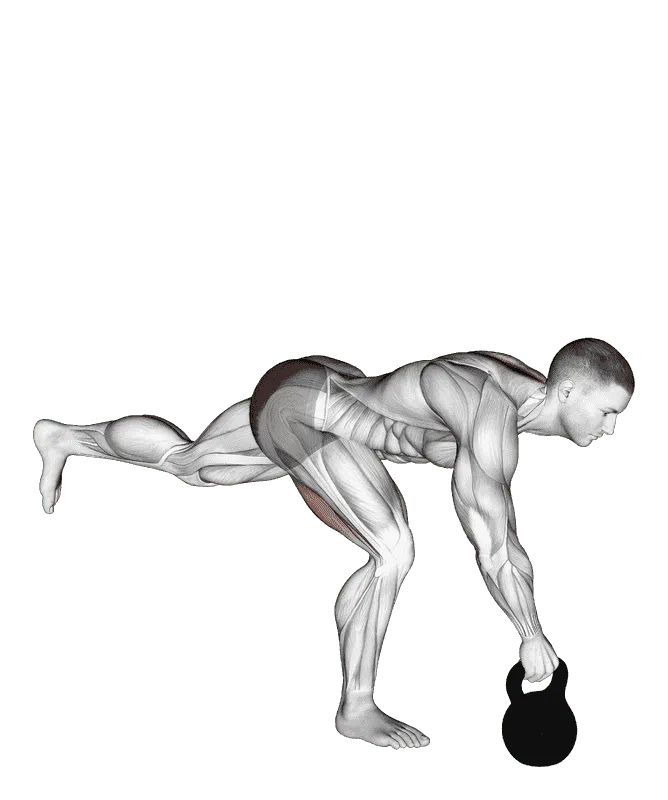
Once two-hand reps stay sharp under fatigue, advance to the Kettlebell One-Arm Swing to add anti-rotation trunk demand and grip stamina while keeping both shoulders square. On lighter prep days, add the Kettlebell One-Legged Deadlift to sharpen unilateral hamstring and ankle stability.
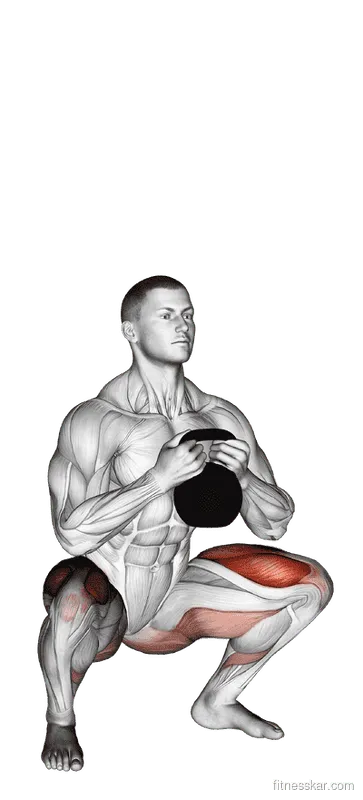
2. Kettlebell Goblet Squat
Front-loaded squatting balances posterior-chain hinges by strengthening your quadriceps, knees, and anterior core. Holding the bell at chest height acts as a natural counterbalance for an upright, deep squat.
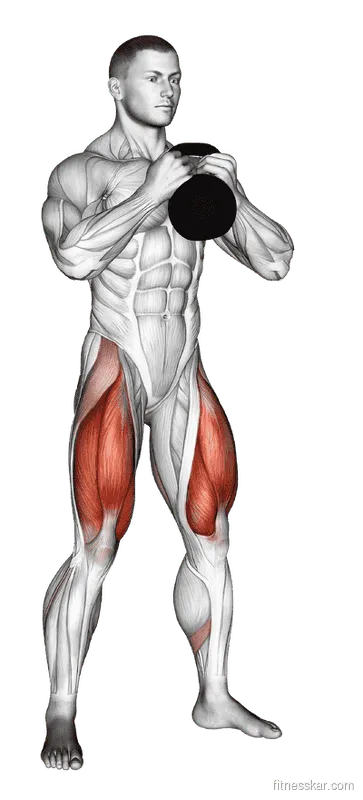
- Sets
- 3–4
- Reps
- 8–12
- Rest
- 75 s
- Tempo
- 3–1–1
Use the Kettlebell Goblet Squat to open tight hips during warm-ups or anchor demanding conditioning complexes.
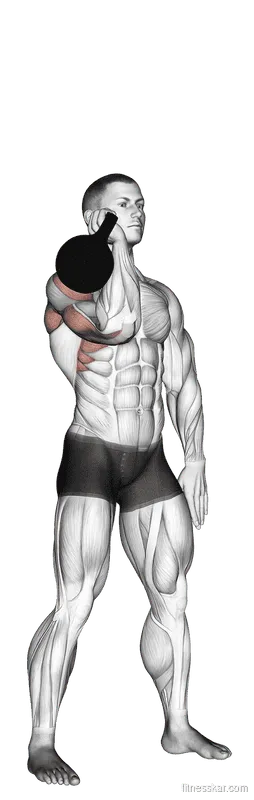
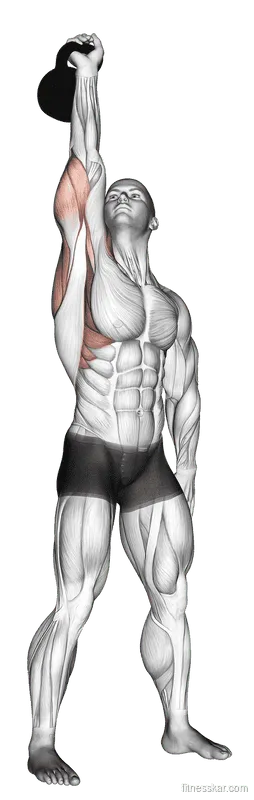
3. Overhead Strength and Scapular Stability
Overhead conditioning requires a neutral vertical wrist, packed shoulder blade, and braced ribcage before you add momentum. Build strict pressing control first.
- Sets
- 3–4
- Reps
- 5–8 per side
- Rest
- 90 s
- Tempo
- 2–1–1
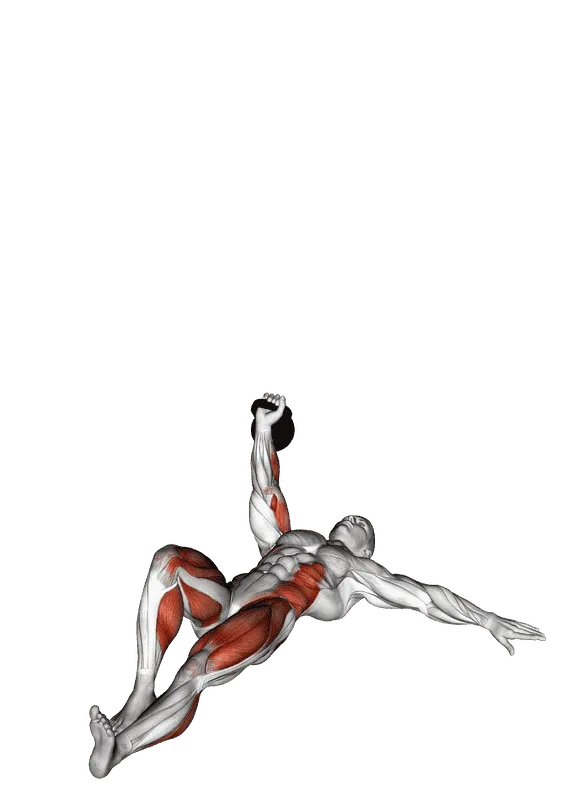
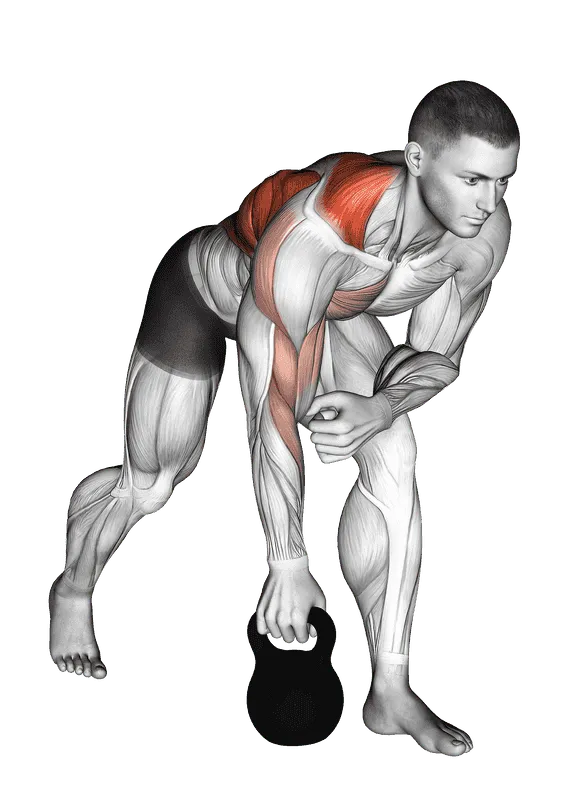
Once strict presses feel solid, add crisp leg drive via the Kettlebell One-Arm Push Press for heavier complexes, and build multi-planar shoulder control with the Kettlebell Turkish Get-Up. Pair all overhead work with horizontal pulling using the Kettlebell One-Arm Row.
4. Kettlebell One-Arm Snatch
The Kettlebell One-Arm Snatch drives a one-arm swing in one close arc straight to overhead lockout. At chest height, guide your elbow slightly back and punch upward through the handle so the bell lands softly along your forearm rather than slapping your wrist. This vertical ballistic lift powered the 15:15 VO2max trial[1] and belongs in Stage 4 after mastering swings and strict lockouts.
Choosing the Right Starting Kettlebell Weight
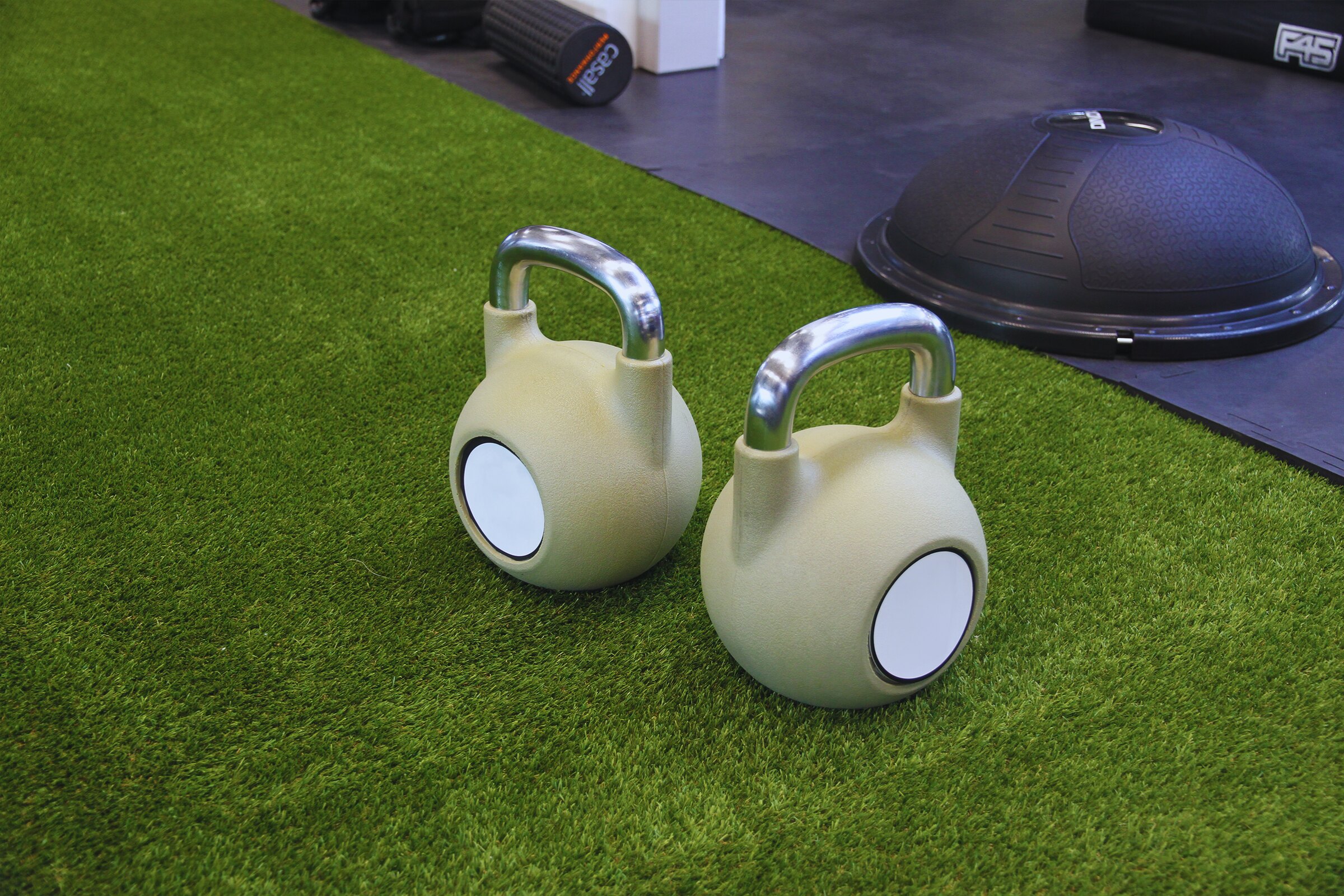
Weight choice affects kettlebell mechanics more than almost any other gym tool. A bell that is too light—like 4 kg (9 lb) or 6 kg (13 lb) on swings—invites arm lifting and hides hinge faults, while an overly heavy bell causes lumbar rounding or bent wrists overhead.
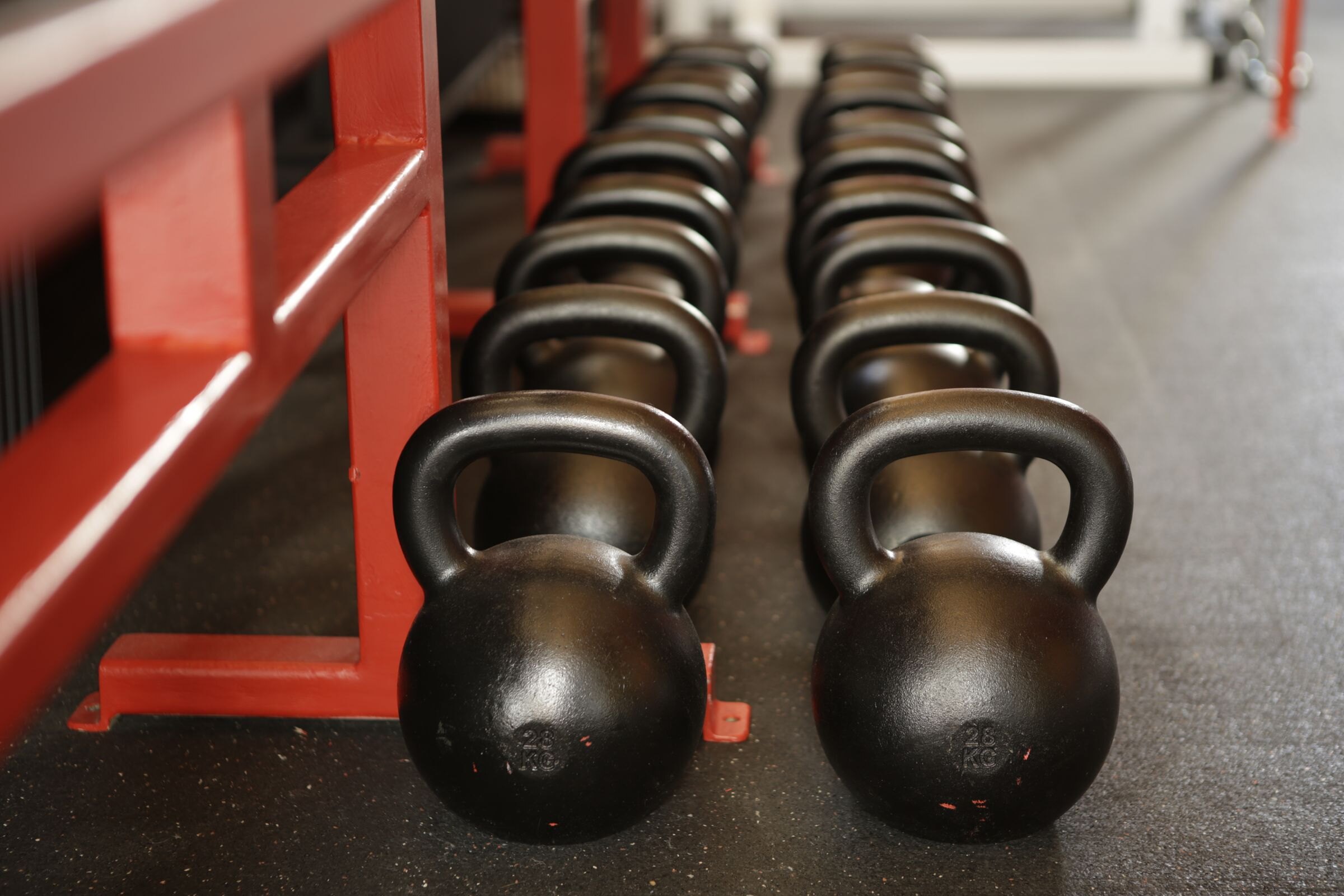
Use these cast-iron starting weights as your baseline:
| Lifter Profile | Two-Hand Swing | Goblet Squat | Press, Get-Up & Snatch |
|---|---|---|---|
| Beginner Women | 12 kg (26 lb) | 8–12 kg (18–26 lb) | 6–8 kg (13–18 lb) |
| Beginner Men | 16 kg (35 lb) | 12–16 kg (26–35 lb) | 12 kg (26 lb) |
| Intermediate Women | 16 kg (35 lb) | 16 kg (35 lb) | 10–12 kg (22–26 lb) |
| Intermediate Men | 20–24 kg (44–53 lb) | 20–24 kg (44–53 lb) | 16 kg (35 lb) |
| Experienced Women | 20–24 kg (44–53 lb) | 20–24 kg (44–53 lb) | 14–16 kg (31–35 lb) |
| Experienced Men | 28–32 kg (62–70 lb) | 24–32 kg (53–70 lb) | 20–24 kg (44–53 lb) |
Because standard bells jump in 4 kg (9 lb) steps, move up only when final-round reps stay fast and your breathing settles within 30 to 45 seconds of rest.
Three Plug-and-Play Kettlebell Conditioning Protocols
Random burnout circuits wreck spine mechanics fast. Effective kettlebell conditioning uses crisp intervals so power stays high—an energy-system principle explained in our HIIT vs. steady-state cardio guide. Prep hips, core, and shoulders for 8 to 10 minutes first with our dynamic warm-up guide.
| Protocol | Best For | Format | Movements | Weekly Dose |
|---|---|---|---|---|
| A: Swing EMOM | Beginners & finishers | 10–12 reps/min × 10 min | Two-hand swing | 2–3×/week |
| B: 15:15 Intervals | VO2max & stamina | 15 s on / 15 s off × 12–20 min | One-arm swing or snatch | 2–3×/week |
| C: Full-Body Complex | Strength-endurance | 3–4 rounds, 75–90 s rest | Squat, row, press, swing | 1–2×/week |
Protocol A: 10-Minute Swing EMOM
Perform 10 to 12 explosive two-hand swings at the top of every minute for 10 minutes (100 to 120 crisp reps). Each burst takes roughly 20 seconds, leaving 40 seconds of nasal standing recovery. Drop to 8 reps per minute if hip speed slows late.
Protocol B: 15:15 Aerobic Capacity Intervals
Modeled on the Falatic et al. protocol, alternate 15 seconds of crisp ballistic reps with 15 seconds of rest for 12 to 20 minutes, switching hands each interval (7 to 9 reps per burst).[1] Intermediates should use the Kettlebell One-Arm Swing, building from 12 to 20 minutes over four weeks; advanced lifters who cleared Stage 3 can use the Kettlebell One-Arm Snatch with a lighter bell.
Protocol C: Total-Body Strength-Endurance Complex
Run 3 to 4 rounds resting 75 to 90 seconds between rounds for a compact 20-minute full-body session:
- 8 reps Kettlebell Goblet Squat
- 8 reps per side Kettlebell One-Arm Row
- 6 reps per side Kettlebell One-Arm Push Press (or strict Kettlebell One-Arm Military Press)
- 12 reps two-hand Kettlebell Swing
Fitting Kettlebell Conditioning Into Your Weekly Split
Run two to three sessions per week: plug Protocol A after strength sessions as a 10-minute finisher, or schedule Protocol B or C on separate days at least 48 hours from heavy deadlifts. Want a free gym schedule that already weaves the Kettlebell Goblet Squat into explosive cardio and core work? Try Fitnesskar's 40-Min Explosive Cardio & Core Burn.
Common Technique Mistakes and Joint-Safety Guardrails
Fix these four habits early to protect your back, hips, and wrists:
- Squatting the swing: Deep knee bend turns a hinge into a front-raise squat. Keep shins nearly vertical and push hips straight back.
- Hinging too early: Folding while the bell is at chest height tugs your lumbar spine. Wait upright until your forearms nearly touch your hips.
- Leaning back at lockout: Overarching your lower back compresses spinal joints. Lock quads, squeeze glutes, and keep ribs stacked.
- Slapping the wrist: Flipping the bell over a bent wrist bruises your forearm. Keep wrists straight, punch through early, and regress to one-arm swings if lockout fades.
Frequently Asked Questions
Frequently asked questions
Can kettlebell conditioning replace running or traditional cardio?
Yes, for most general-fitness and strength goals, structured kettlebell intervals build aerobic capacity without pavement impact. Controlled research showed three weekly 20-minute snatch interval sessions raised VO2max by roughly 6% in four weeks, even in trained collegiate athletes.[1] Distance runners should keep key runs and use kettlebells as cross-training.
How many days per week should I do kettlebell conditioning?
Plan two to three sessions weekly—either two 10-minute swing EMOM finishers after lifting or two to three standalone 20-minute sessions. Space hard ballistic hinges at least 48 hours away from heavy deadlifts.
What weight kettlebell should beginners start with?
Beginner women typically start well with 12 kg (26 lb) for swings and goblet squats, plus 6 to 8 kg (13 to 18 lb) for presses and get-ups. Beginner men typically start with 16 kg (35 lb) for swings and squats and 12 kg (26 lb) for overhead lifts.
Are kettlebell swings safe for the lower back?
Yes, when coached as a braced hip hinge—hiking high between the upper thighs, hinging late, and finishing in a tall plank without leaning back. If your lower back tightens before your glutes fatigue, halve your reps per set or drill crisp dead-stop swings first.
Sources
- Falatic JA, Plato PA, Holder C, et al. Effects of Kettlebell Training on Aerobic Capacity. Journal of Strength and Conditioning Research. 2015;29(7):1943–1947. doi.org/10.1519/JSC.0000000000000845 ↩