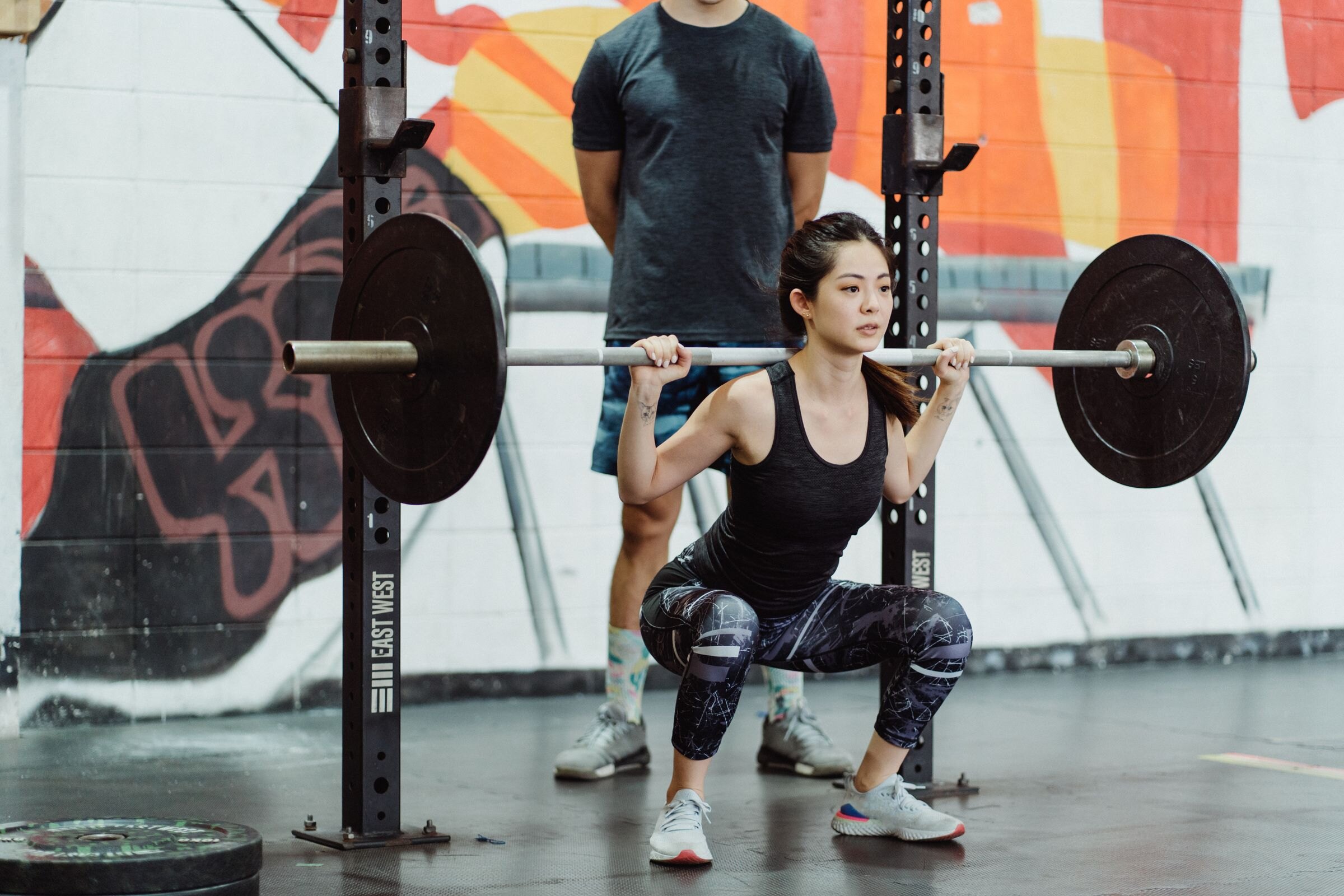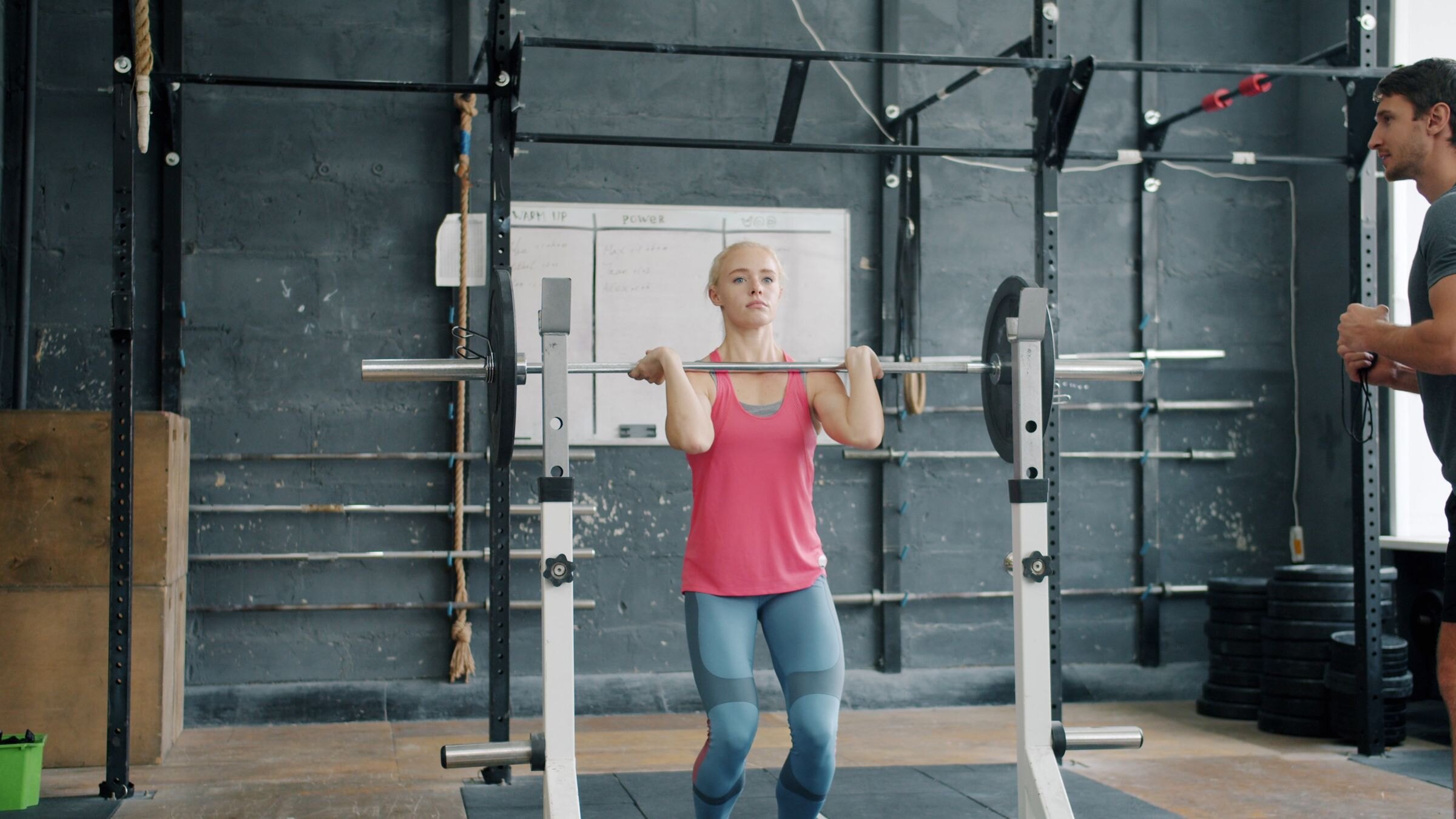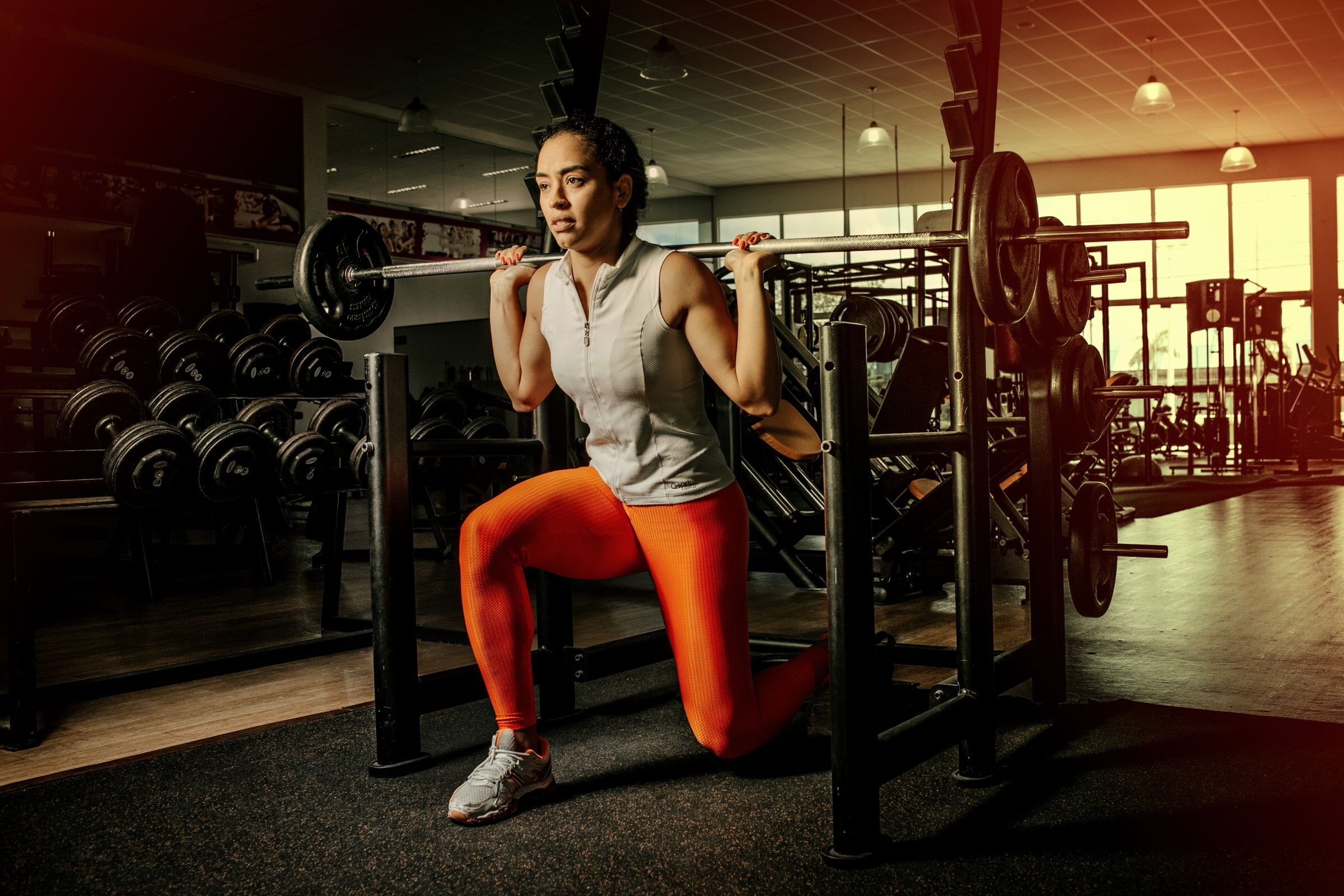
An effective lower body workout for women does far more than string together random booty-band circuits or exhausting 30-rep jump squats. To build full, lifted glutes, sleek hamstrings, firm inner thighs, and athletic quadriceps—while protecting your knees and lower back—your program must train all four lower-body muscle compartments twice per week across 10 to 16 hard weekly sets, pairing heavy shortened-position hip thrusts with deep lengthened-position squats, hinges, and single-leg stability work.[1]
Scroll through social media and you will see two extremes that stall female lower-body progress. Half of the workouts consist of unweighted kickbacks and mini-band pulses that create a temporary burn without enough mechanical tension to reshape muscle tissue. The other half cram seven heavy barbell and machine variations into one grueling two-hour "leg day," leaving you too sore to walk for five days while your form breaks down halfway through the session.
When you replace random fatigue with exercise biomechanics, sculpting your lower body becomes straightforward and measurable. Below, we examine how female pelvic geometry influences exercise setup, how to shift tension toward your glutes or quads on demand, and the exact two-day gym and home-dumbbell blueprint to transform your lower half.
Female Lower-Body Physiology: Why Women Excel on Leg Day
If you have ever noticed that your lower body gains strength faster than your upper body—or that you recover surprisingly quickly between sets of squats and hip thrusts—human physiology backs up your experience.
Fiber Composition, Recovery Speed, and Relative Strength Gains
Compared with men of similar training status, women carry a higher proportion of total skeletal muscle mass in the hips and thighs, alongside a greater share of oxidative Type I muscle fibers, denser capillary networks, and higher intramuscular triglyceride utilization. During lower-body resistance training, those traits give female lifters superior resistance to peripheral neuromuscular fatigue and faster phosphocreatine resynthesis between sets. In practical terms, while a male lifter may need three to four minutes to recover after a hard set of eight squats, many women restore full force output within 90 to 150 seconds.
In a landmark systematic review and meta-analysis published in Sports Medicine, researcher Amanda Hagstrom and colleagues screened 14,067 papers and pooled 24 controlled resistance-training studies conducted exclusively in healthy adult women (with lower-body dynamic strength evaluated across 19 trials and muscular hypertrophy across 15 trials spanning 4 weeks to 12 months).[1] Resistance training produced a large, statistically significant increase in female lower-body dynamic strength (Hedges' g = 1.40, p < 0.001) alongside significant muscular hypertrophy (Hedges' g = 0.52, p = 0.002).[1] Crucially, sub-analyses revealed that training frequency and weekly training volume significantly moderated lower-body strength gains in women (p < 0.001), confirming that spreading quality sets across two to three weekly sessions outperforms sporadic single-day marathons.[1]
Pelvic Width, the Q-Angle, and Knee-Friendly Mechanics
Female skeletal anatomy also shapes how lower-body movements feel and where joints experience stress. Because the female pelvis is proportionally wider relative to femur length, the femur angles slightly inward from the hip socket toward the knee—creating a larger quadriceps angle (Q-angle).
A wider Q-angle is completely normal, not a structural flaw. However, if your lateral hip stabilizers—specifically the gluteus medius and gluteus minimus—underperform under heavy load, your knees tend to drift inward during squats, lunges, and step-ups, a pattern biomechanists call dynamic knee valgus. Training single-leg patterns alongside direct hip abduction strengthens the outer hip cuff, keeps your kneecap tracking cleanly over your second and third toes, and simultaneously builds the upper-outer glute contour.
The 4 Anatomical Compartments of a Balanced Female Lower Body
Many commercial "glute programs" ignore the muscles above and below the hips, creating imbalanced strength ratios and leaving knee stability vulnerable. A complete lower body workout for women develops four synergistic compartments across their full length-tension curves:
- The Gluteal Complex (Gluteus Maximus, Medius, and Minimus): As we cover in depth in our Glute Hypertrophy Guide, the gluteus maximus drives hip extension and posterior pelvic tilt, giving the glutes rearward projection, while the gluteus medius and minimus sit higher on the lateral pelvis to abduct the thigh and stabilize your hips on one leg, creating the rounded "upper shelf."
- The Hamstrings (Hip Extension and Knee Flexion): Three of your four hamstring heads cross both the hip and the knee, lengthening during hip hinges like the Barbell Romanian Deadlift. However, the short head of the biceps femoris crosses only the knee joint. If you only do deadlifts and skip leg curls, an entire head of your hamstrings goes untrained—leaving the back of your thighs under-stimulated and reducing anterior cruciate ligament (ACL) protection.
- The Quadriceps (Athletic Sweep and Knee Integrity): Your four quad muscles extend the knee and decelerate your body every time you walk downstairs or lower into a squat. Lifting weights through controlled knee flexion builds sleek, firm definition along the front of the thigh without thick bulk—a hormonal reality explained in our Women's Hypertrophy Guide.
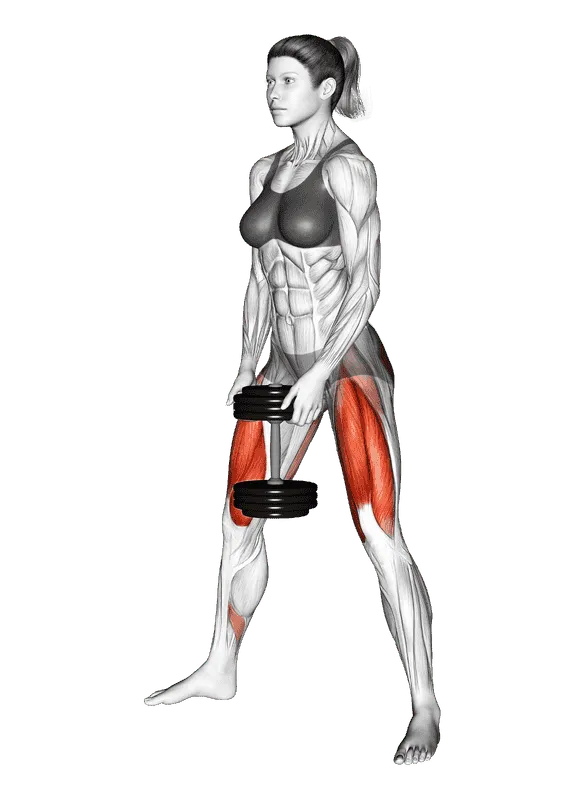
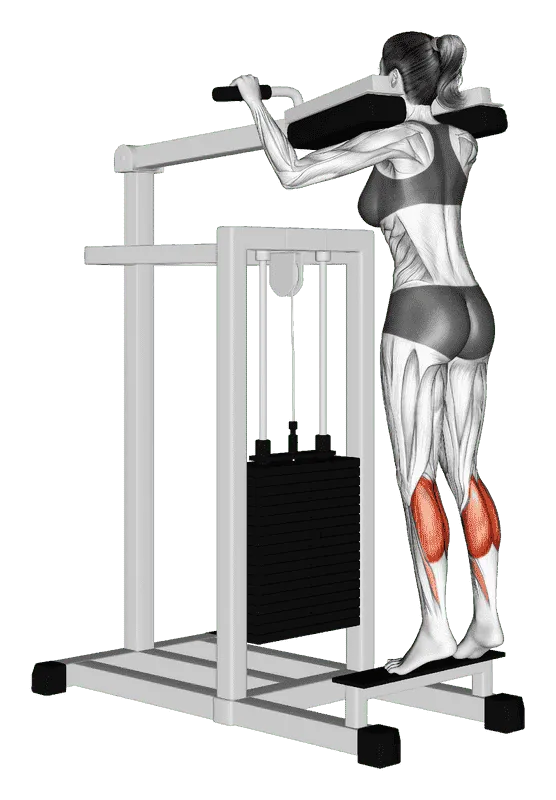
- The Hip Adductors and Calves (The Overlooked Sculptors): Your inner thighs—led by the adductor magnus—are not just thigh-squeezing muscles. At the bottom of a deep squat, lunge, or Dumbbell Sumo Squat, the adductor magnus has one of the largest hip-extension moment arms in the lower body, helping launch you out of the hole while firming the inner thigh line. Pairing adductor work with standing calf raises frames the ankle and lower leg symmetrically.
| Adjustment Variable | Glute & Hamstring Bias | Quadriceps Bias |
|---|---|---|
| Split Squat / Lunge Setup | Slightly longer stride, vertical front shin, 20°–30° torso hinge | Shorter stride, upright torso, front knee travels forward over toes |
| 45° Leg Press Foot Position | Feet high and shoulder-width on platform, push through heels | Feet lower and narrower on platform, full ankle dorsiflexion |
| Barbell / Goblet Squat Stance | Shoulder-width or slightly wider stance, sit hips back and down | Heel-elevated or shoulder-width stance, knees track well past toes |
| Step-Up Execution | Knee-height bench, lean torso slightly forward, zero back-foot push | Slightly lower box, upright chest, control slow 3-second knee bend |
The 6 Pillar Movements for Female Glute and Leg Hypertrophy
Rather than switching exercises every week to "confuse" your muscles—which only resets neurological coordination and obscures strength tracking—anchor your training around six foundational movements for 8 to 12 weeks at a time.
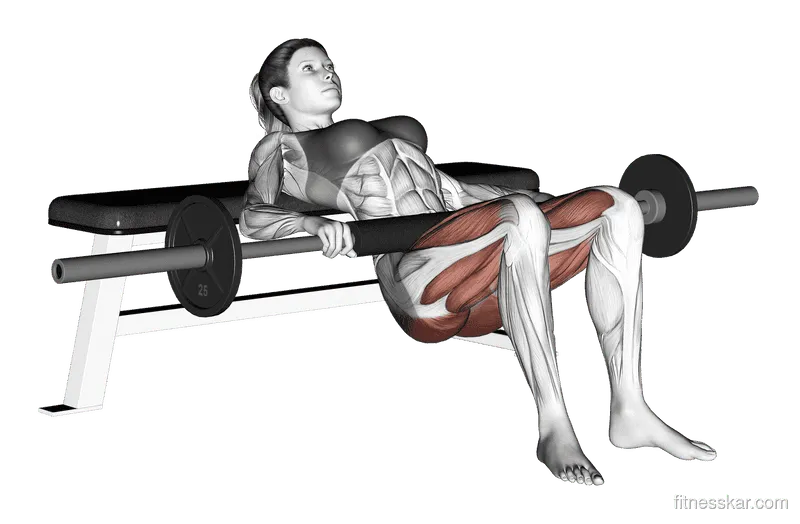
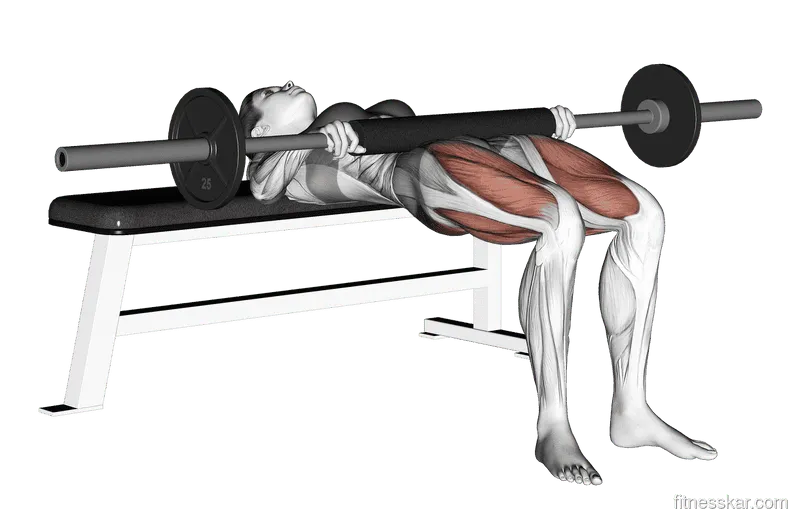
1. Shortened-Position Glute Anchor: Barbell Hip Thrust
No lower-body movement loads the gluteus maximus at full hip extension as directly as the Barbell Hip Thrust. While squats and hinges peak in difficulty at the bottom stretch, horizontal hip thrusts peak in mechanical torque right at the top lockout, where glute muscle fibers shorten completely and reach maximal voluntary activation without lower-back fatigue limiting the set. For bench-height calibration and pad placement details, read our dedicated How to Hip Thrust tutorial.
- Sets
- 3–4
- Reps
- 8–12
- Rest
- 120 s
- Tempo
- 2–1–1
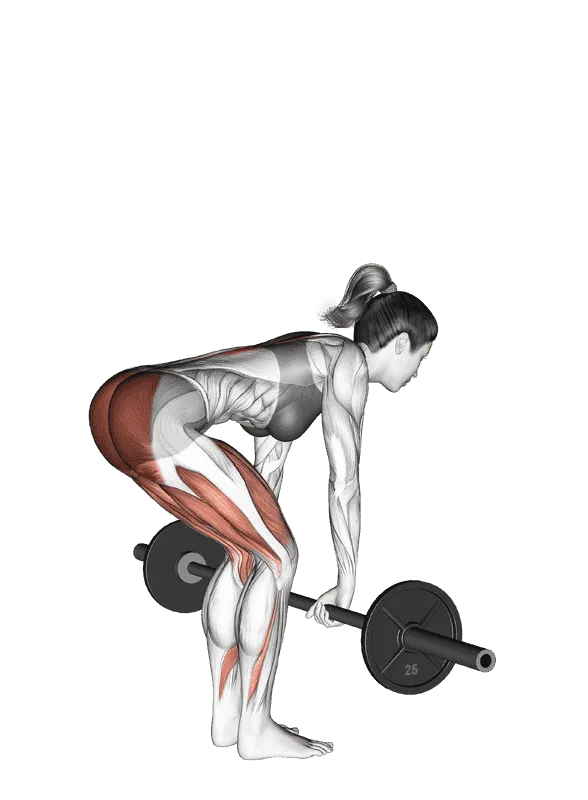
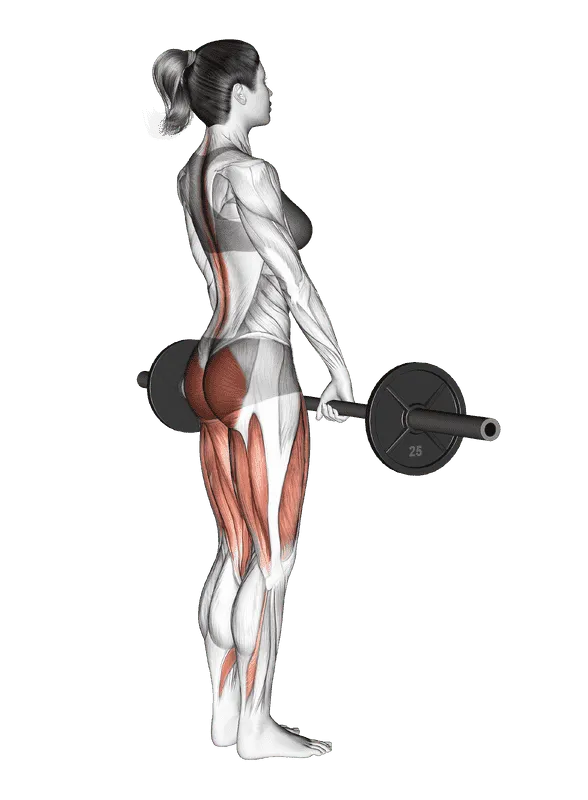
2. Lengthened Posterior-Chain Hinge: Barbell or Dumbbell Romanian Deadlift
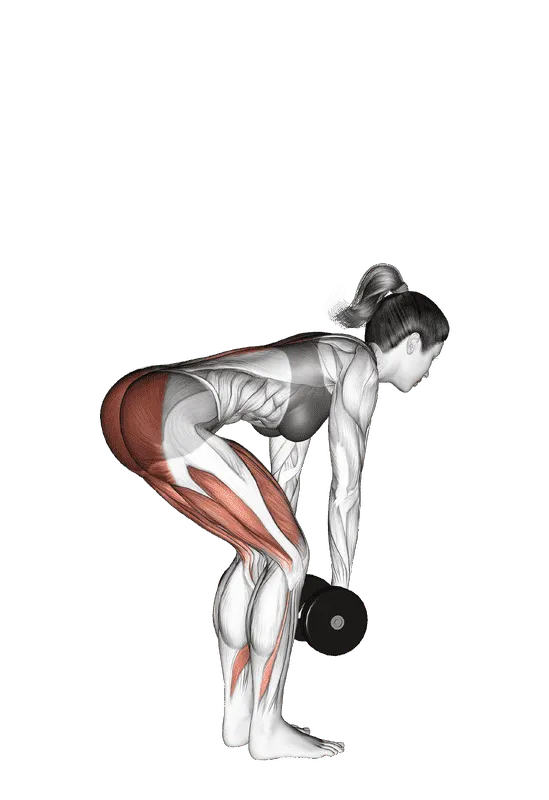
To trigger stretch-mediated hypertrophy across both your hamstrings and lower gluteal fibers, pair your hip thrust with a controlled hip hinge. Both the Barbell Romanian Deadlift and the Dumbbell Romanian Deadlift load the posterior chain under high eccentric tension. Stop lowering the instant your hips stop traveling backward—usually around mid-shin—so tension stays locked in your hamstrings and glutes rather than spilling onto your lumbar spine. Review grip and bracing nuances in our How to Romanian Deadlift guide.
- Sets
- 3–4
- Reps
- 8–10
- Rest
- 120 s
- Tempo
- 3–1–1
3. Unilateral Stretch & Stability Powerhouse: Dumbbell Bulgarian Split Squat
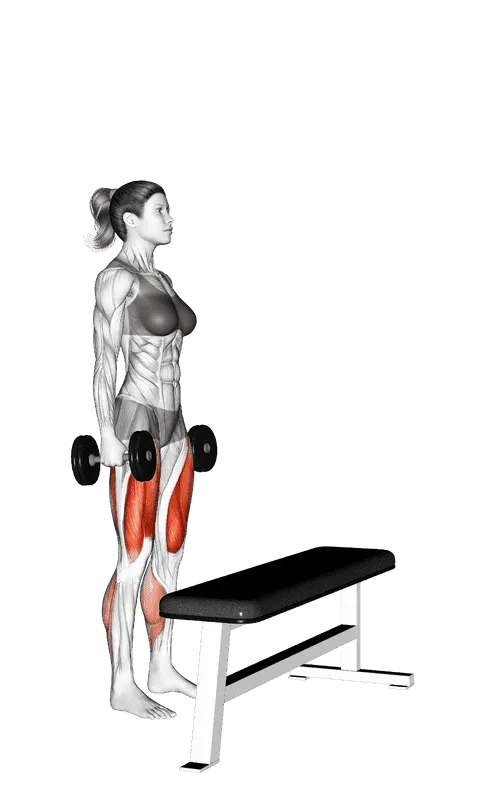
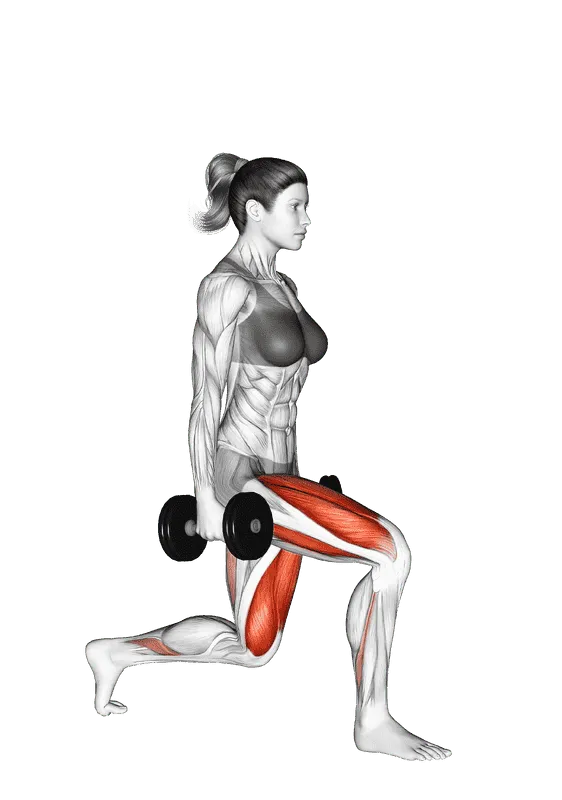
Single-leg work is non-negotiable in a well-designed lower body workout for women. The Dumbbell Bulgarian Split Squat eliminates left-to-right strength asymmetries, challenges the gluteus medius to prevent pelvic drop in the frontal plane, and places the lead hip into deep loaded flexion with less than half the spinal compression of a heavy Barbell Full Squat. Beginners who struggle with rear-foot balance can start with the Dumbbell Rear Lunge or Dumbbell Step-Up before progressing to the elevated split squat.


- Sets
- 3
- Reps
- 8–12
- Rest
- 90 s
- Tempo
- 3–0–1
4. Deep Knee-Flexion Compound: Goblet Squat, Barbell Squat, or 45° Leg Press
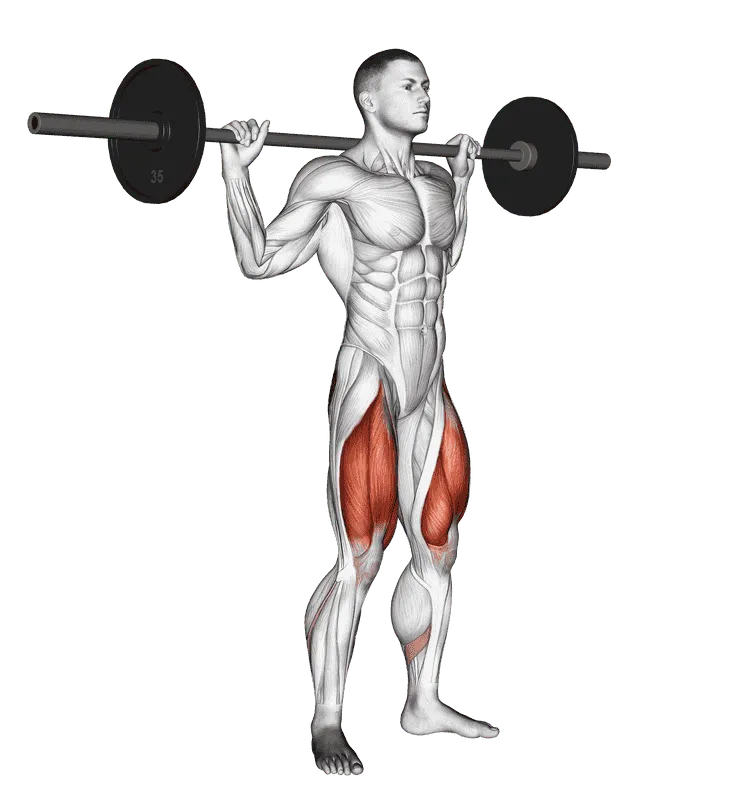
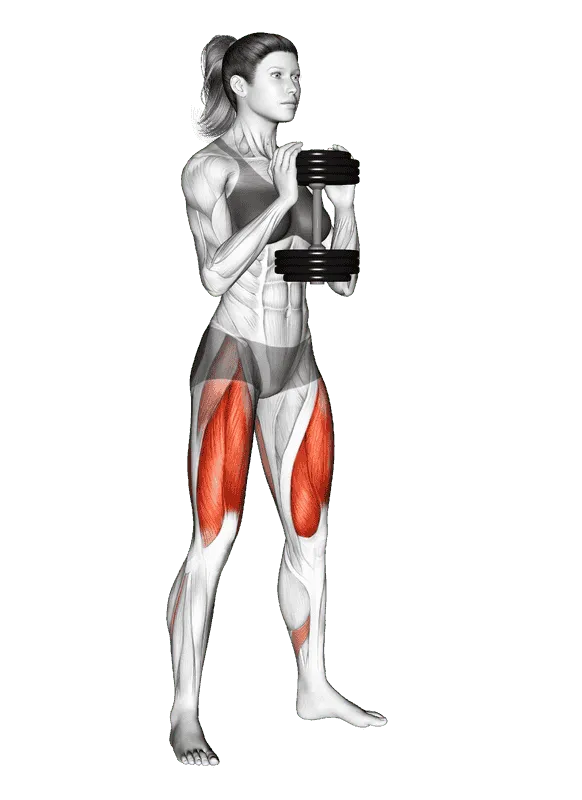
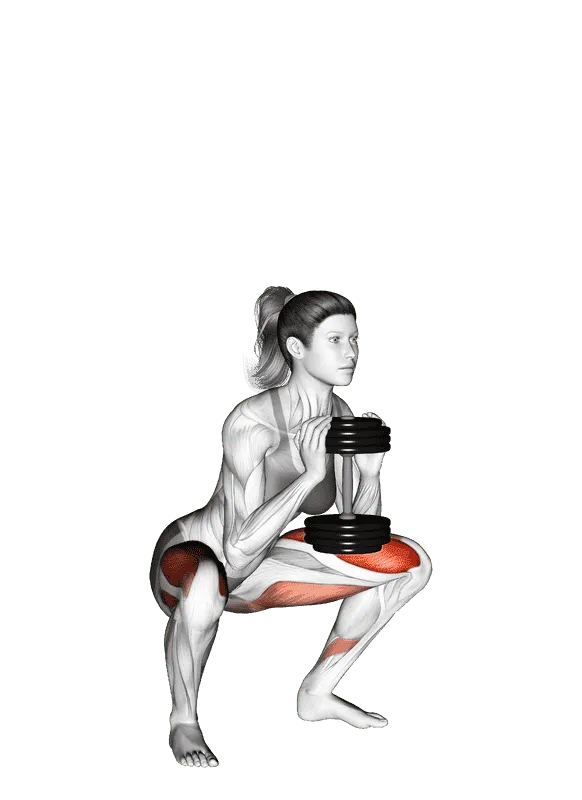
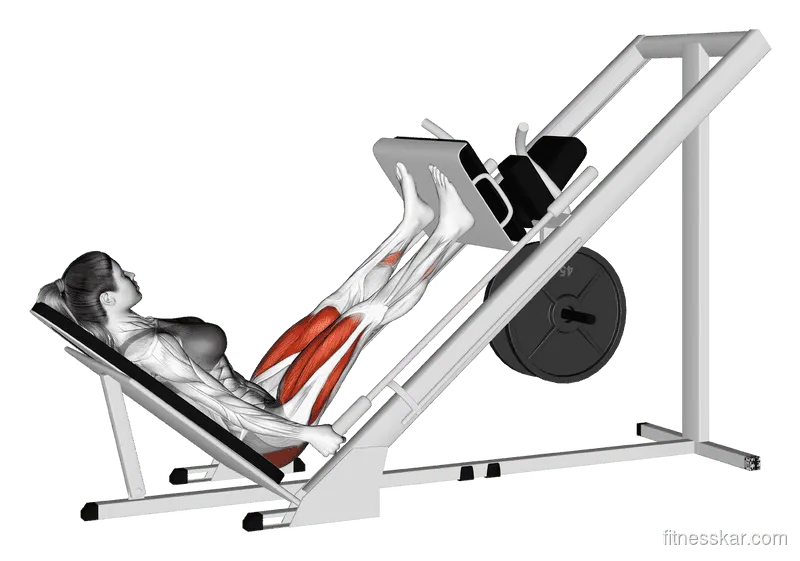
Every balanced leg plan needs one bilateral knee-dominant compound lift that trains the quadriceps, adductors, and glutes simultaneously through deep flexion. The Dumbbell Goblet Squat acts as a natural counterbalance that lets lifters sink below parallel with an upright spine, while the Sled 45-Degree Leg Press stabilizes your pelvis against a back pad so you can safely push your quads and glutes within 1 to 2 reps of muscular failure.
5. Dedicated Knee Flexion & Extension: Seated Leg Curl and Leg Extension
After your multi-joint lifts, plug anatomical gaps with targeted machine or stability-ball isolation:
- Knee-flexion hamstrings: Research consistently shows that performing a seated leg curl—where your hips are flexed at 90 degrees, pre-stretching the biarticular hamstrings at the hip—stimulates robust hamstring growth alongside full recruitment of the short head of the biceps femoris. Training at home? Use the Leg Curl (on Stability Ball), keeping your hips bridged in a straight line as you curl your heels under your glutes.
- Rectus femoris & inner thighs: Two to three controlled sets of leg extension isolate the rectus femoris down the center of the thigh, while seated hip adduction or wide-stance Dumbbell Sumo Squat sets directly strengthen and firm the inner thighs.
6. Upper-Shelf & Lateral Hip Finisher: Cable or Seated Hip Abduction
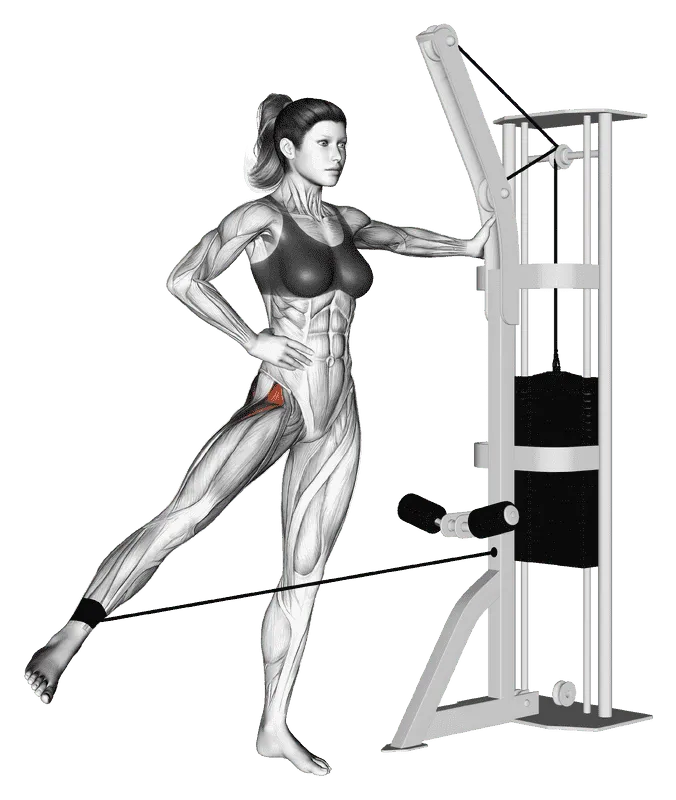
Finish your sessions with high-rep frontal-plane abduction or diagonal hip extension to cap the outer glute line without taxing your central nervous system. Standing Cable Hip Abduction, seated hip abduction, and Cable Standing Hip Extension maintain continuous cable tension from stretch to contraction, hitting the gluteus medius and upper gluteus maximus fibers in the 12 to 20 rep range.
The Complete 2-Day Lower Body Workout for Women
Training your lower body twice per week with 48 to 72 hours of recovery between sessions (for example, Monday and Thursday, or Tuesday and Friday) hits the exact hypertrophy sweet spot: 12 to 15 weekly sets for glutes, 8 to 10 sets for quads, and 8 to 10 sets for hamstrings. Pair these two workouts with our two-day Upper Body Workout for Women for a complete four-day physique split.
Before Every Session: The 6-Minute Dynamic Hip & Glute Primer
Skip 20 minutes of static hamstring stretching before lifting, which temporarily blunts force output. Run this crisp dynamic sequence instead:
- 90/90 Hip Switches & Deep Squat Pry: 6 slow reps per side to lubricate hip internal and external rotation.
- Half-Kneeling Hip Flexor Pulse: 30 seconds per side, squeezing the back glute to unlock full hip extension after hours of sitting at a desk.
- Bodyweight Single-Leg Glute Bridge: 10 crisp reps per side to prime mind-muscle connection before touching a barbell.
- 2 Ramp-Up Warm-Up Sets on your first compound lift (50% of working weight × 8 reps, then 75% × 4 reps).
Lower Body Day A: Glute & Posterior-Chain Hinge Focus (Gym)
| Order | Exercise | Sets | Reps | Rest | Coaching Focus |
|---|---|---|---|---|---|
| 1 | Barbell Hip Thrust | 4 | 8–10 | 120 s | 1-sec hard glute pause at lockout; vertical shins |
| 2 | Barbell Romanian Deadlift | 3 | 8–10 | 120 s | 3-sec lowering; push hips straight back, neutral spine |
| 3 | Dumbbell Bulgarian Split Squat | 3 | 8–10 / leg | 90 s | 20° forward torso lean to maximize glute stretch |
| 4 | Seated Leg Curl | 3 | 10–12 | 75 s | Lean torso slightly forward; control full return stretch |
| 5 | Cable Standing Hip Extension | 2–3 | 12–15 / leg | 60 s | Angle kickback 20°–30° outward; zero lower-back arch |
Lower Body Day B: Quad, Unilateral & Outer-Glute Sculpt (Gym)
Space Day B two to three days after Day A so your lower back and hamstrings enter the session completely fresh.
Lower Body Day B — Quad, Unilateral & Outer-Glute Sculpt
-
1 Dumbbell Goblet Squat - Sets
- 3
- Reps
- 8–12
- Rest
- 120 s
-

2 Sled 45-Degree Leg Press - Sets
- 3
- Reps
- 10–12
- Rest
- 120 s
-
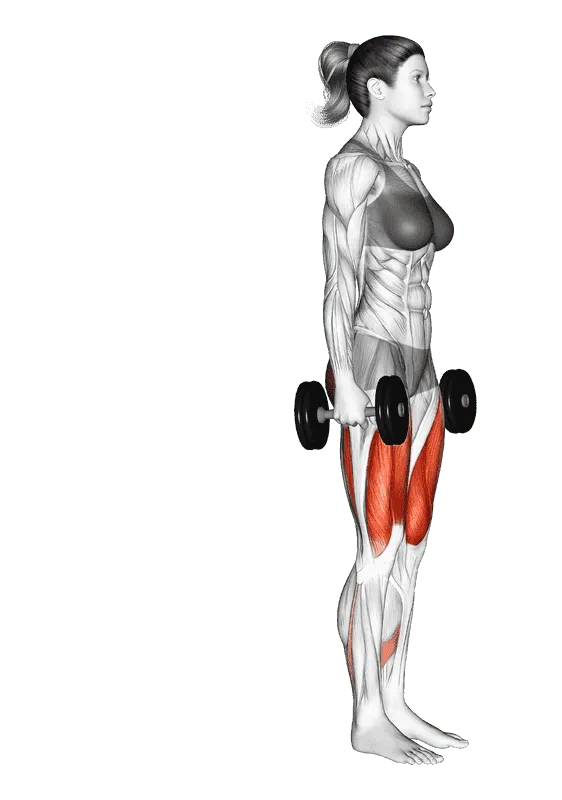
3 Dumbbell Rear Lunge - Sets
- 3
- Reps
- 10–12
- Rest
- 90 s
-
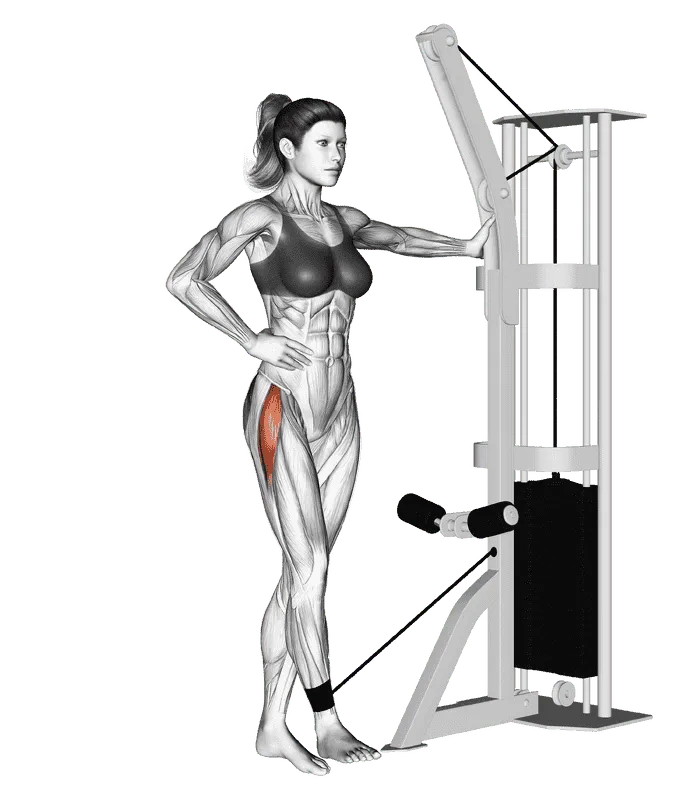
4 Cable Hip Abduction - Sets
- 3
- Reps
- 15–20
- Rest
- 60 s
-
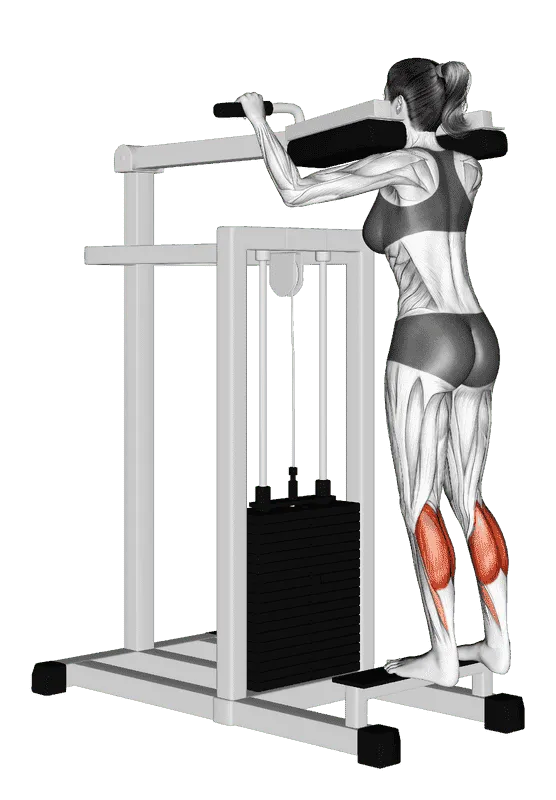
5 Lever Standing Calf Raise - Sets
- 3
- Reps
- 12–15
- Rest
- 60 s
Training at Home? The Dumbbell-Only Swap Matrix
If you train in a living room or apartment gym with adjustable dumbbells and a sturdy bench or couch, swap machine movements one-for-one using identical set and rep targets:
- Instead of Barbell Hip Thrust: Perform single-leg hip thrusts with a dumbbell resting across your working hip, or slow 3-second-pause Dumbbell Step-Up sets on a knee-high bench.
- Instead of Barbell RDL & Leg Press: Use Dumbbell Romanian Deadlift with a 2-second bottom stretch pause, and wide-stance Dumbbell Sumo Squat sets elevated on two flat weight plates or hardcover books.
- Instead of Seated Leg Curl & Cable Abduction: Use the Leg Curl (on Stability Ball) (or slick-floor towel hamstring sliders) and side-lying weighted hip abductions. You can also load our ready-made 6-Move Dumbbell Leg Builder directly in the app.
Want a structured multi-week progression logged automatically on your phone? Follow our dedicated women's lower-body and 10-Week Upper/Lower Muscle Builder for Women plans inside Fitnesskar:
Progressive Overload, Nutrition, and Common Leg-Day Mistakes
Use Double Progression to Guarantee New Muscle Shape
Your glutes and legs are the strongest muscles on your frame—meaning they adapt rapidly to static weights. If you have used the same 8 kg (18 lb) dumbbells for goblet squats since last spring, your body has zero biological reason to add firm tissue.
Apply double progression on every exercise:
- Pick a load that leaves 1 to 3 reps in reserve (1–3 RIR) at the bottom of your prescribed rep range—for instance, hitting 3 sets of 8 crisp reps on a 8–12 rep exercise.
- Keep the weight fixed over the next two to four weeks while adding 1 repetition per set whenever form stays rock-solid.
- Once you hit the top of the range across all sets (3 × 12 with 1–2 RIR), increase the barbell by 2.5 to 5 kg (5 to 10 lb) or move up one dumbbell pair, drop back to 8 reps, and repeat the climb.
Fueling Lower-Body Growth Without Unwanted Fat Gain
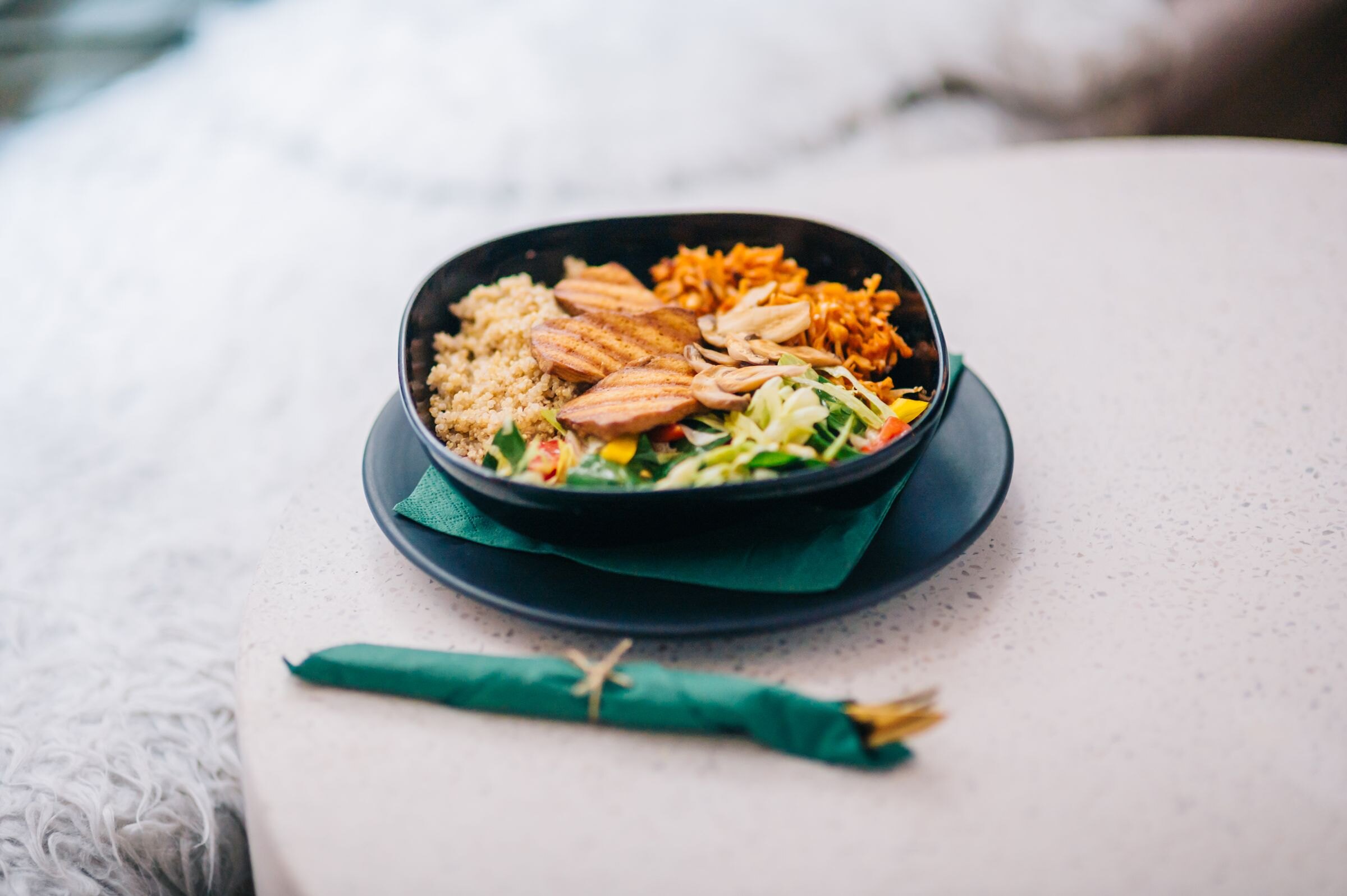
Hard lower-body sessions create substantial muscle protein turnover over the following 36 to 48 hours. Even the sharpest training split will stall if you chronically undereat protein or slash carbohydrates so low that your squat and RDL weights regress:
- Daily protein target: Aim for 1.6 to 2.2 g of protein per kilogram of body weight (roughly 95 to 130 g/day for a 60 kg / 132 lb woman), divided across three to four meals of 25 to 35 g each so every meal clears the leucine threshold for muscle protein synthesis.
- Smart pre-workout carbohydrates: Eating 30 to 50 g of easily digested carbohydrates (such as oats, rice, banana, or sourdough toast) 60 to 120 minutes before leg day tops off intramuscular glycogen, helping you sustain force output through your fourth compound exercise.
- Calorie alignment: Maintain calorie balance (body recomposition) or a gentle 150 to 250 kcal daily surplus if your priority is building fuller glute curves, or a conservative 300 to 400 kcal deficit with high protein if leaning out your legs while preserving shape is goal number one.
4 Lower-Body Mistakes That Sabotage Female Results
- Treating mini-band circuits as the main workout: Resistance bands provide ascending tension useful for warm-ups, but they cannot match the mechanical load of progressive barbells, dumbbells, and cables. Spend 5 minutes warming up, then move straight to your primary lift while fresh.
- Hyperextending the lower back at the top of hip thrusts and kickbacks: Throwing your head back and arching your lumbar spine makes it look like your hips went higher, while actually shifting load off your glutes and pinching your lumbar facet joints. Keep your ribs stacked over your pelvis and tuck your chin.
- Turning every leg day into a cardio circuit: Racing from squats to lunges with 20 seconds of rest turns strength training into breathless conditioning—slashing the weight you can lift and blunting motor-unit recruitment. Rest the full 90 to 120 seconds on compounds.
- Program-hopping every Monday: Neurological mastery of movements like Bulgarian split squats takes two to three weeks. Stick with the same core movements for 8 to 12 weeks so progressive overload translates directly into hypertrophy rather than relearning coordination.
Frequently Asked Questions
Frequently asked questions
How many days a week should women train lower body for glute and leg growth?
Two well-structured lower-body workouts per week, spaced 48 to 72 hours apart, is the optimal frequency for almost all women. Two sessions deliver 10 to 16 hard weekly sets with high mechanical tension while giving your glutes, hamstrings, quads, and joints full recovery to grow stronger.
Will heavy squats and leg presses make my thighs look bulky?
No. Women produce 15 to 20 times less testosterone than men, so lifting challenging weights in the 6 to 15 rep range builds firm, athletic muscle curves rather than blocky mass. If you want maximum glute growth with minimal extra quad size, emphasize hip thrusts, Romanian deadlifts, vertical-shin split squats, and hip abductions.
How do I grow my glutes if I always feel squats and lunges in my quads?
Adjust your setup levers rather than abandoning compound lifts. Take a slightly longer stance on split squats and reverse lunges, keep your front shin vertical, hinge your torso 20 to 30 degrees forward from the hips with a flat back, and start Lower Day A with barbell hip thrusts so your glutes get your freshest effort.
Can I build shapely legs and glutes at home with dumbbells only?
Yes, provided you progress beyond ultra-light weights. Unilateral exercises like dumbbell Bulgarian split squats, single-leg hip thrusts, step-ups, and slow-eccentric dumbbell Romanian deadlifts place almost your entire load onto one leg at a time, generating plenty of tension for hypertrophy with moderate home dumbbells.
How long does it take to see visible glute and leg changes from strength training?
Neurological strength increases within the first 2 to 4 weeks, firmer muscle tone and posture shifts typically appear between weeks 6 and 8, and clearly measurable changes in glute projection and leg shape emerge after 12 to 16 weeks of consistent progressive overload and 1.6 to 2.2 g/kg daily protein.
Sources
- Hagstrom AD, Marshall PW, Halaki M, Hackett DA. The Effect of Resistance Training in Women on Dynamic Strength and Muscular Hypertrophy: A Systematic Review with Meta-analysis. Sports Medicine. 2020. doi.org/10.1007/s40279-019-01247-x ↩