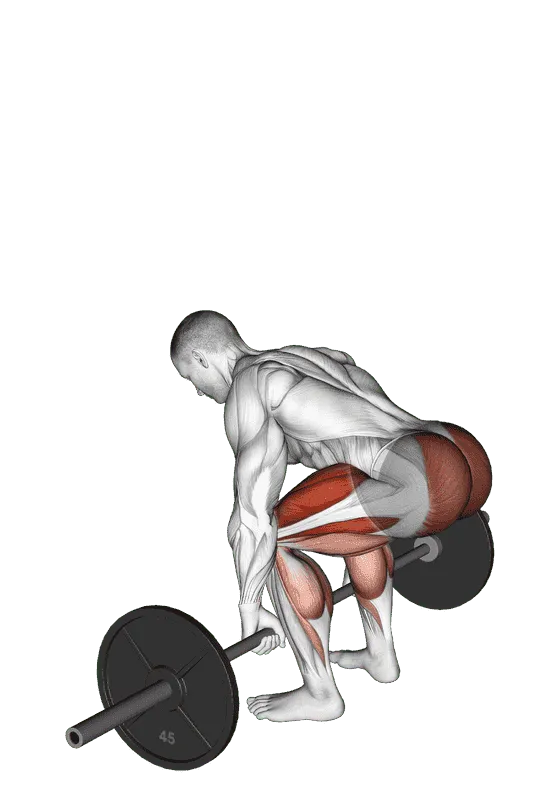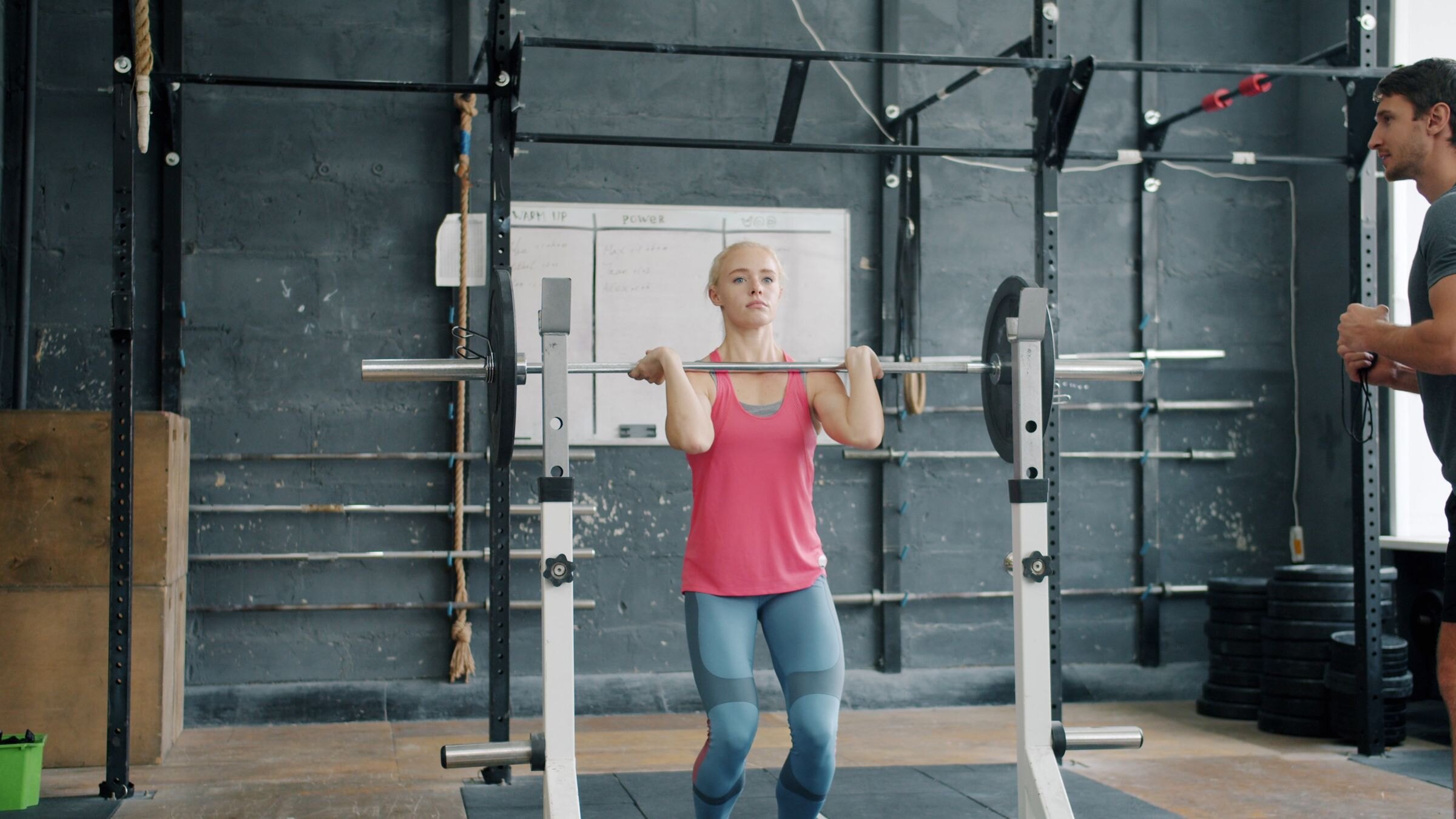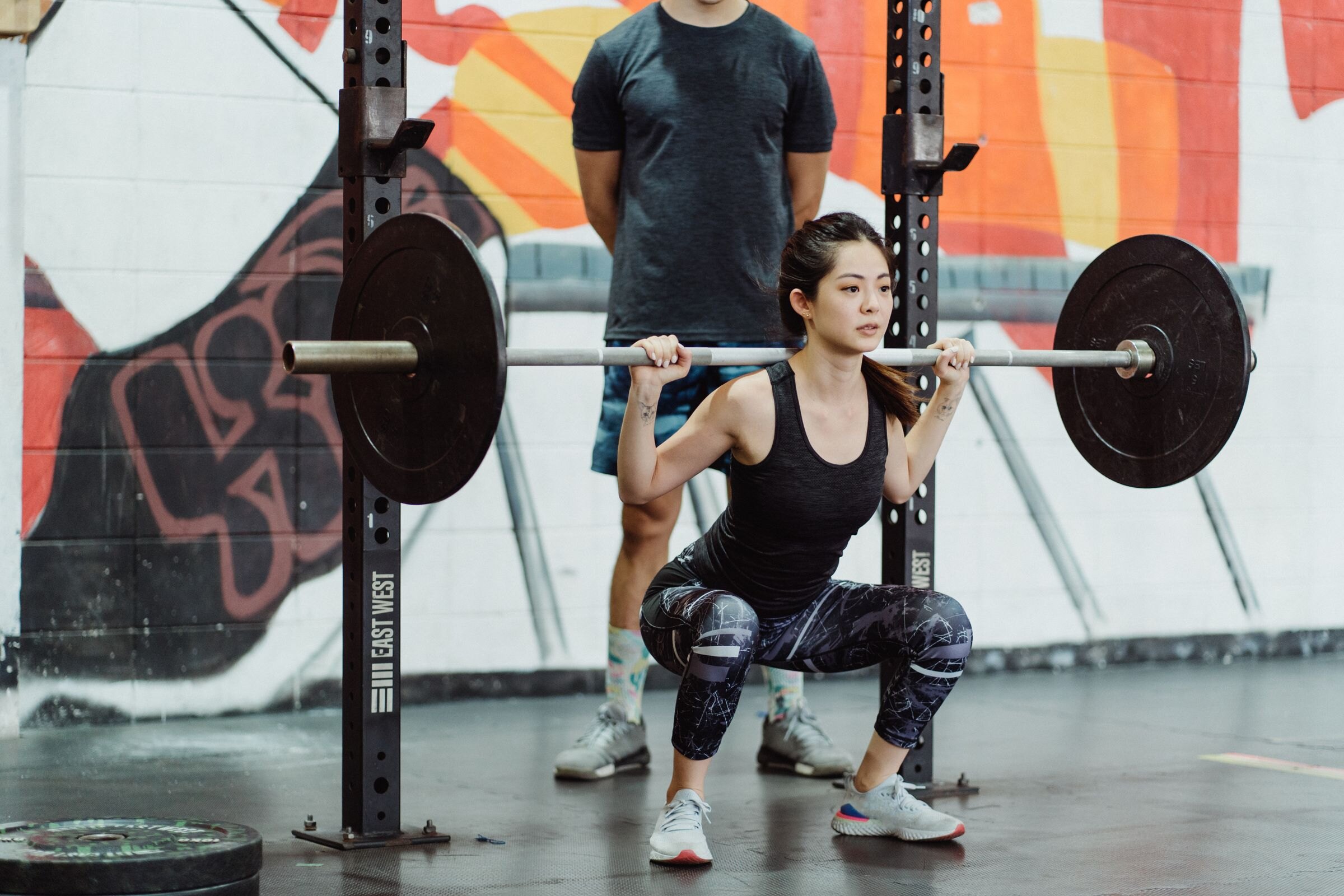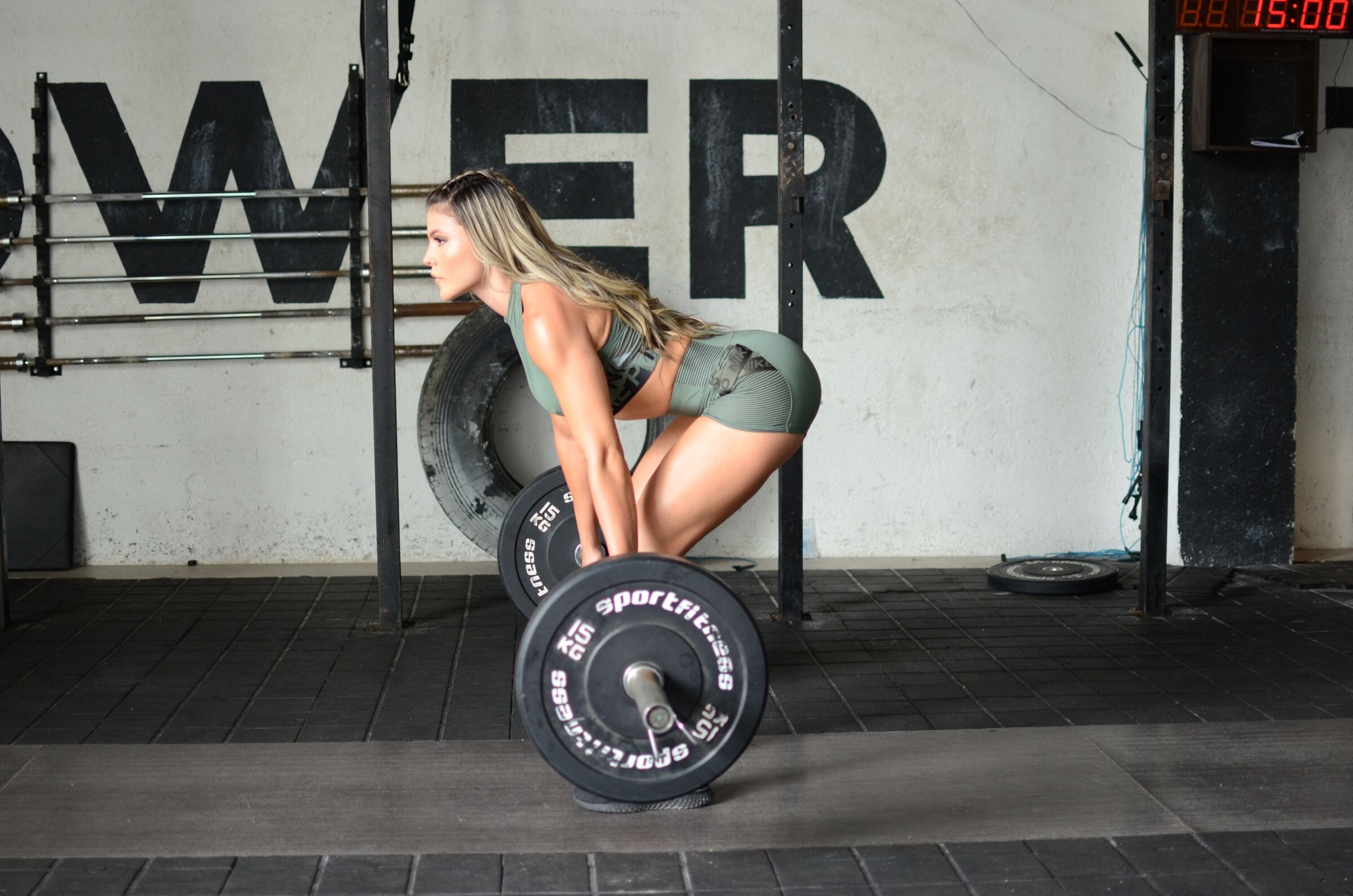
The Romanian deadlift (RDL) is the cornerstone of posterior chain development. While the barbell hip thrust delivers peak mechanical tension in the fully contracted, shortened position, the Romanian deadlift does the exact opposite: it loads your gluteus maximus and hamstrings under intense mechanical tension at their longest, fully stretched anatomical lengths. In exercise science, this lengthened loading is the primary driver of stretch-mediated hypertrophy, producing profound muscle growth, athletic hip extension power, and robust resilience against hamstring tears.
Yet, despite its status as a staple in physique and athletic routines, the Romanian deadlift is routinely performed with technical errors. Lifters frequently turn the movement into a squat by bending their knees excessively, round their lumbar spines under load, allow the barbell or dumbbells to drift away from their shins, or hyperextend their lower backs at the top of the lift. These flaws not only drain mechanical tension away from your glutes and hamstrings—they direct destructive shear forces onto your intervertebral discs and lower back musculature. Mastering the pure mechanics of the hip hinge transforms this exercise into an unrivaled growth stimulator for your glutes and hamstrings.
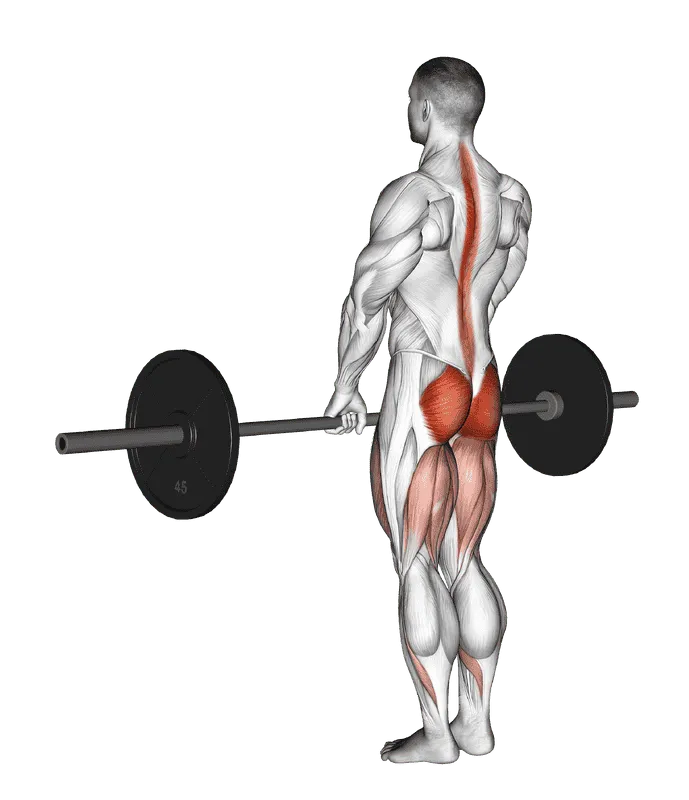
- Sets
- 3–4
- Reps
- 8–10
- Rest
- 120 s
- Tempo
- 3–1–1
Biomechanics of the Hip Hinge: Why the RDL Builds Muscle
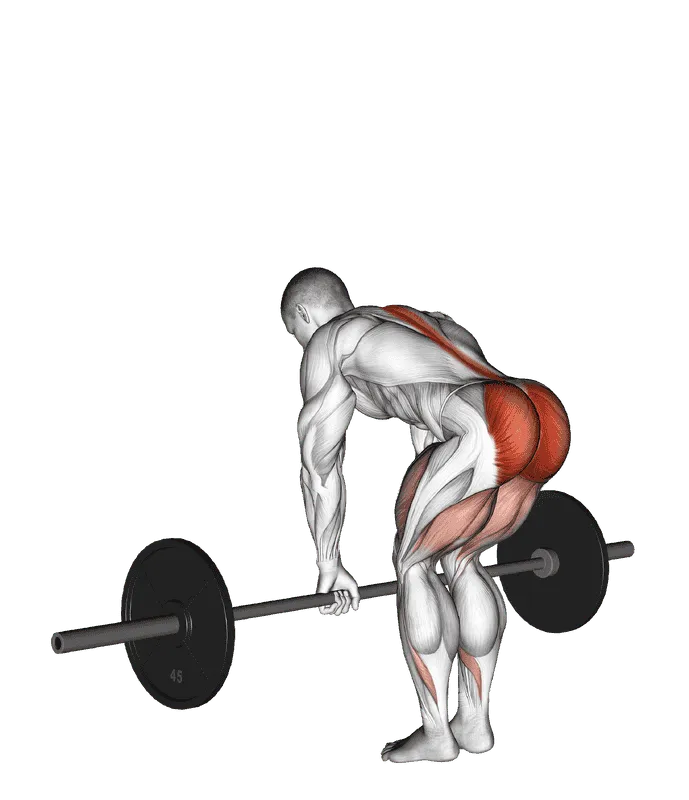
To understand why the barbell Romanian deadlift is uniquely effective for building rounder glutes and thicker hamstrings, we must analyze the biomechanics of hip extension and the length-tension relationship of the posterior chain. In human locomotion and athletic movement, the gluteus maximus and the three hamstring muscles—biceps femoris long head, semitendinosus, and semimembranosus—act as the primary engines of hip extension.
When you perform a standard back squat, your hips and knees flex simultaneously. Because the hamstring muscles cross both the hip joint (as extensors) and the knee joint (as flexors), their overall length remains relatively constant during a squat—shortening at the knee while lengthening at the hip. This phenomenon, known as Lombard's paradox, explains why squats produce substantial quadriceps and gluteus maximus growth but minimal hamstring hypertrophy.
The Romanian deadlift changes this kinetic chain completely. By maintaining a soft, fixed knee bend while driving your pelvis backwards, your knees remain stationary while your hips undergo deep flexion. This movement forces the hamstrings and glute fibers into an extreme anatomical stretch under continuous load. A landmark electromyographic analysis by Coratella and colleagues compared muscle excitation across deadlift variants in competitive lifters, confirming that the Romanian deadlift elicits exceptionally high excitation of both the biceps femoris and gluteus maximus precisely because it maximizes the internal moment arm at the hip joint while maintaining active tension throughout the eccentric phase.[1]
Furthermore, the mechanical tension experienced by muscle sarcomeres when resisting a load in a stretched state triggers mechanotransduction cascades—upregulating mTORC1 signaling and downstream muscle protein synthesis. When you combine the stretched-position tension of the RDL with the peak shortened-position tension of the hip thrust, you subject the gluteus maximus to complete mechanical overload across its entire physiological excursion.
Step-by-Step Setup: The Barbell Romanian Deadlift Blueprint
Executing a flawless barbell Romanian deadlift requires meticulous setup from the floor or rack. Unlike the conventional deadlift which begins from a dead stop on the floor, the RDL begins from an upright standing position and focuses primarily on the eccentric descent. Follow this step-by-step technical blueprint:

1. Stance and Foot Pressure
- Position your feet approximately hip-width apart, which is slightly narrower than your squat stance.
- Point your toes straight ahead or allow a very subtle outward flare (5 to 10 degrees).
- Distribute your body weight evenly across the "foot tripod": the base of your big toe, the base of your pinky toe, and the center of your heel. Do not let your toes lift off the ground, as pressing through the midfoot maintains balance and enables powerful ground reaction forces.
2. The Unrack and Grip
- Unrack the barbell from a power rack set at roughly mid-thigh height, or deadlift the bar to standing using clean conventional mechanics.
- Grip the bar with a double-overhand grip just outside your thighs. For heavier working sets, use lifting straps or a hook grip to prevent grip fatigue from cutting your posterior chain sets short.
- Take two measured steps back, establish your stance, and stand tall with your shoulders stacked directly over your hips.
3. Lat Engagement and Core Bracing
- Before initiating any movement, lock your torso into a rigid cylinder. Inhale deeply into your belly and expand your ribcage 360 degrees (the Valsalva maneuver), bracing your abdominals as if preparing to take a punch.
- Actively engage your latissimus dorsi by imagining you are trying to "bend the barbell across your shins" or "squeeze oranges in your armpits." This lat engagement pulls the barbell tightly against your thighs and prevents your upper back from rounding under load.
4. The Soft Knee Unlock
- Unlock your knees slightly (approximately 15 to 20 degrees of flexion).
- Critical rule: Once you establish this soft knee angle, freeze it in place. Do not bend your knees any further during the initial descent, and do not lock them out straight. Your lower legs (shins) must remain perpendicular to the floor.
5. The Hip Hinge (The Descent)
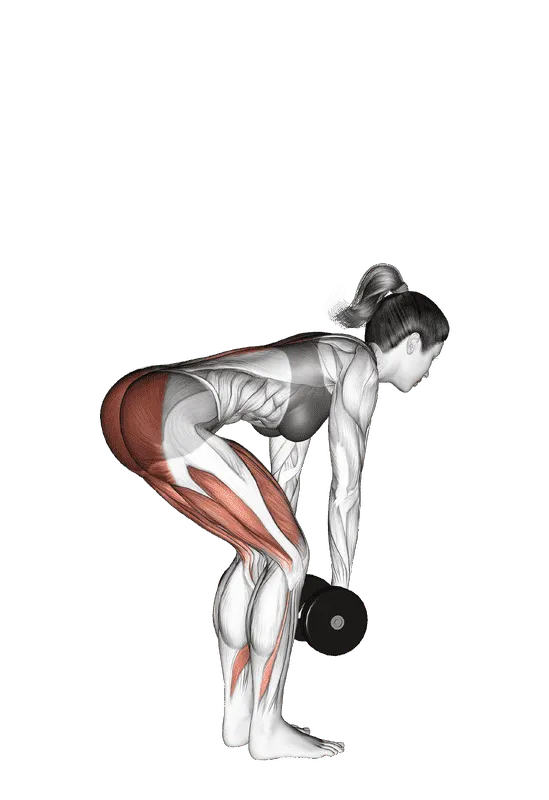
- Initiate the eccentric phase not by bending over, but by pushing your hips directly backward toward the wall behind you. Imagine your hands are full of groceries and you must shut a car door behind you using only your buttocks.
- Allow your torso to tilt forward naturally as your pelvis travels rearward, keeping your spine completely neutral from your sacrum to the crown of your head.
- Keep the barbell "painted" to your legs. The bar should glide down your quads, cross your kneecaps, and travel down your anterior shins. If daylight appears between the bar and your legs, you are letting the load drift forward.
6. Identifying the Depth Limit
- Lower the barbell only as far as your hips can travel backwards. For most lifters with average hamstring flexibility, this corresponds to just below the kneecap or mid-shin level.
- Stop your descent the exact moment your hips cease rearward movement. Continuing to lower the bar past this point requires your pelvis to rotate and your lumbar spine to bend, converting a safe hip hinge into dangerous spinal flexion.
7. The Concentric Ascent and Lockout
- Reverse the movement by violently pushing the floor away through your midfoot and driving your hips forward.
- Squeeze your glutes hard to bring your pelvis back to neutral beneath your ribcage.
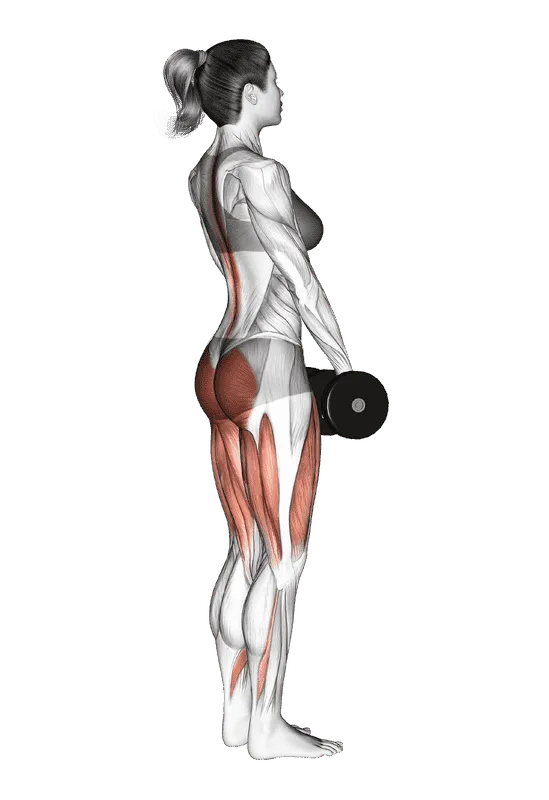
- Stand tall at lockout. Never lean backward or hyperextend your lumbar spine at the top. Complete the rep with your glutes squeezed, ribs pulled down, and spine straight.
| Movement Phase | Target Muscle Action | Primary Technical Cue | Common Error to Avoid |
|---|---|---|---|
| Setup & Unrack | Latissimus dorsi & core stabilization | "Squeeze oranges in armpits; pack the neck" | Shrugging shoulders toward ears |
| Descent (Eccentric) | Glutes & hamstrings lengthening | "Push hips back to shut the car door" | Bending at the waist or squatting down |
| Bottom Position | Maximum stretch under load | "Shins vertical; bar glued to shins" | Allowing bar to drift forward into space |
| Ascent (Concentric) | Hip extension via glutes & hamstrings | "Drive floor away; thrust hips forward" | Pulling with lower back musculature |
| Lockout | Gluteus maximus peak contraction | "Stand tall; tuck ribs into pelvis" | Hyperextending lower back backward |
Glute Bias vs. Hamstring Bias: The Crucial Adjustments
One of the greatest advantages of the Romanian deadlift is its versatility. By making subtle adjustments to your knee flexion angle, stance width, and hip displacement vector, you can deliberately shift the primary hypertrophic stress toward either your gluteus maximus or your hamstring complex.
The Glute-Biased Romanian Deadlift
To emphasize the gluteus maximus:
- Increase Knee Flexion: Allow your knees to bend roughly 25 to 35 degrees during the descent. Your shins will have a very slight forward angle (though far less than in a squat).
- Drive Hips Down and Back: Instead of pushing your hips purely horizontally, drive your hips backward and slightly downward. This enhances hip flexion depth while unloading the distal hamstrings.
- Widen Your Stance Slightly: Adopt a shoulder-width stance with your feet flared outward 15 to 20 degrees. This externally rotated position aligns the resistance vector directly with the diagonal fiber orientation of the upper and lower gluteus maximus.
- Range of Motion: Stop the barbell just below the kneecap. Going deeper into mid-shin requires knee straightening or spinal flexion, which diminishes glute activation.
The Hamstring-Biased Romanian Deadlift
To target the biceps femoris and semitendinosus:
- Maintain Stiff Knees: Keep knee flexion strictly minimal—just enough to unlock the joint (10 to 15 degrees). Maintain this exact angle throughout the rep.
- Strict Horizontal Hip Drive: Your hips must move exclusively backward on a horizontal plane. Your shins must stay strictly vertical (perpendicular to the floor) at all times.
- Narrow Hip-Width Stance: Keep your feet directly beneath your hips with toes pointing straight ahead. This maximizes the stretch along the longitudinal axis of the hamstring bellies.
- Deep Stretch: Lower the weight until you feel an intense, tight stretch across the back of your thighs (typically mid-shin level). Pause for a full second in this loaded stretch before reversing direction.
| Variable | Glute-Biased RDL | Hamstring-Biased RDL |
|---|---|---|
| Knee Angle | Moderate flexion (~25° to 35°) | Minimal flexion / stiff knees (~10° to 15°) |
| Hip Travel Direction | Backward and slightly downward | Exclusively horizontal and backward |
| Stance Width | Shoulder-width with 15° outward foot flare | Hip-width with feet pointing straight ahead |
| Shin Position | Very slight forward incline | Strictly vertical (90° to the floor) |
| Bottom Cutoff Point | Just beneath the kneecap | Mid-shin (at peak hamstring stretch) |
| Primary Driver | Gluteus maximus (lengthened division) | Biceps femoris & semitendinosus |
Dumbbell RDL vs. Barbell RDL: Selecting the Best Tool
While the barbell remains the gold standard for overloading the hip hinge with heavy absolute resistance, the dumbbell Romanian deadlift offers unique biomechanical benefits that make it superior for certain body types and goals.
Advantages of the Dumbbell RDL
- Freedom of Arm Path: A barbell locks your hands in a fixed pronated position in front of your body. Dumbbells allow your wrists to rotate naturally into a neutral or semi-neutral grip, which many lifters find significantly more comfortable for their shoulders and wrists.
- Side Loading for Pure Glute Engagement: With dumbbells, you can trace the weights along the anterolateral (outside-front) line of your thighs rather than directly in front of your shins. This shifts the center of mass closer to your hips, reducing spinal shear stress while increasing glute tension.
- Addressing Bilateral Asymmetries: Holding independent weights forces both sides of your posterior chain to handle equal workloads, preventing your dominant side from compensating.
- Sets
- 3
- Reps
- 10–12
- Rest
- 90 s
- Tempo
- 3–0–1
Advantages of the Barbell RDL
- Superior Progressive Overload Capacity: You can micro-load a barbell in 1 kg or 2.5 lb increments and safely handle loads exceeding 100 kg (225 lb). Most commercial gyms lack dumbbells heavy enough to challenge an experienced lifter's posterior chain.
- Tension Stability: The rigid bar allows you to generate intense full-body irradiation by actively pulling the bar into your shins with your latissimus dorsi.
The Editorial Verdict: Use the barbell Romanian deadlift as your primary heavy compound hinge (sets of 6 to 8 reps) to build foundational strength and raw muscle mass. Use the dumbbell Romanian deadlift for moderate-rep hypertrophy work (sets of 10 to 12 reps) or when aiming for a glute-biased movement with greater freedom of joint mechanics.
Critical Technical Mistakes and How to Correct Them
Because the Romanian deadlift places heavy eccentric loads on the posterior chain, technical mistakes can quickly lead to lower back discomfort or acute sacroiliac joint irritation. Avoid these four common breakdowns:
1. Allowing the Weight to Drift Away from the Legs
- The Mistake: Letting the barbell or dumbbells swing forward several inches away from your shins during the descent.
- The Consequence: Gravity pulls the weight straight down. As the horizontal distance between the barbell and your lumbar spine increases, the external moment arm on your lower back multiplies exponentially. This turns a safe glute builder into severe lumbar shear.
- The Correction: Engage your lats before every repetition. Drag the knurling of the barbell down your thighs and shins throughout the entire descent. If your socks are not getting brushed by the bar, you are drifting forward.
2. "Squatting" the Deadlift
- The Mistake: Continuing to bend your knees as the weight descends, dropping your hips down toward the floor as if performing a front squat.
- The Consequence: The moment your knees travel forward, your shins lose their vertical angle, your hips move closer to the bar, and tension immediately shifts away from your glutes and hamstrings onto your quadriceps.
- The Correction: Place a bench or plyo box 2 inches behind your calves. During your descent, keep your calves pinned against the bench while pushing your hips back over the box. Your shins must stay vertical.
3. Hyper-Extending the Lumbar Spine at Lockout
- The Mistake: Leaning backward at the top of the movement and arching your lower back in an exaggerated attempt to "lock out."
- The Consequence: Leaning backward does not increase glute recruitment—it compresses your lumbar facet joints and jams your posterior intervertebral discs together under heavy compressive load.
- The Correction: Lock out the lift by finishing with your ribs pulled down and your pelvis in a neutral or slight posterior tilt. Squeeze your glutes to stop the movement; do not hyperextend your spine.
4. Neck Hyperextension ("Looking in the Mirror")
- The Mistake: Staring up at the gym mirror while your torso hinges downward, forcing your cervical spine into extreme extension.
- The Consequence: Cervical hyperextension breaks spinal neutrality and disrupts neuromuscular signaling through the kinetic chain, often triggering upper trap tightness and neck strain.
- The Correction: "Pack your neck" by creating a slight double chin. Pick a spot on the floor roughly 6 to 8 feet in front of you and keep your gaze fixed there as you hinge forward. Your neck should form a continuous straight line with your upper and mid-back.
Programming and Hypertrophy Volume Guidelines
To maximize muscle growth without exceeding your recovery capacity, the Romanian deadlift should be programmed systematically according to evidence-based volume landmarks:
- Weekly Volume: For intermediate and advanced lifters, 6 to 10 total challenging working sets of hip hinges per week (split across 1 to 2 sessions) provides the sweet spot for posterior chain hypertrophy.
- Intensity and Proximity to Failure: Train between 1 and 3 Repetitions in Reserve (RIR). Training to absolute mechanical failure on an RDL introduces unnecessary axial fatigue and spinal risk without offering superior hypertrophic benefit compared to stopping 1 rep shy of failure.
- Heavy Hypertrophy Rep Range (Barbell RDL): 3–4 sets of 6–8 reps with 2 to 3 minutes of rest.
- Metabolic Hypertrophy Rep Range (Dumbbell RDL): 3 sets of 10–12 reps with 90 to 120 seconds of rest.
Complete Glute and Hamstring Training Session Blueprint
To achieve complete glute development, pair lengthened-position movements with shortened-position exercises and unilateral stability drills. Incorporate this workout into a structured split:
| Exercise Order | Movement | Focus & Length-Tension Role | Sets | Reps | Rest Period | Tempo |
|---|---|---|---|---|---|---|
| 1. Primary Hinge | Barbell Romanian Deadlift | Glute/Hamstring Lengthened Loading | 3 – 4 | 6 – 8 | 150 sec | 3-1-1 |
| 2. Primary Thrust | Barbell Hip Thrust | Gluteus Maximus Shortened Peak Tension | 3 – 4 | 8 – 10 | 120 sec | 2-1-1 |
| 3. Unilateral Builder | Bulgarian Split Squat | Gluteus Maximus & Quad Stability | 3 | 10 – 12 / leg | 90 sec | 2-0-1 |
| 4. Knee Flexion Isolation | Lying or Seated Hamstring Curl | Distal Hamstring Isolation | 3 | 12 – 15 | 75 sec | 2-0-2 |
| 5. Abduction Finisher | Cable or Machine Hip Abduction | Upper Glute (Medius/Minimus) Tension | 3 | 15 – 20 | 60 sec | 1-1-1 |
Following this blueprint ensures that your posterior chain receives progressive overload (progressive overload principles) across all functional vectors, accelerating muscular hypertrophy while safeguarding your joints.
Frequently Asked Questions
Frequently asked questions
What is the main difference between an RDL and a conventional deadlift?
A conventional deadlift begins from a dead stop on the floor, incorporates substantial knee flexion and quad drive off the ground, and focuses on maximum weight lifted. A Romanian deadlift starts from the top, maintains a soft and stationary knee angle throughout, relies purely on the hip hinge to deeply stretch the glutes and hamstrings, and never touches the floor between repetitions.
How low should I go when performing a Romanian deadlift?
You should only descend as far as your hips can travel backwards. For most lifters, this is right below the kneecap or mid-shin. The moment your hips stop moving backward, continuing to lower the weight forces your lower back to round, which shifts dangerous shear stress onto your spine without providing any extra glute or hamstring stimulation.
Why do I feel Romanian deadlifts in my lower back instead of my glutes?
Lower back strain during an RDL typically happens for two reasons: allowing the barbell or dumbbells to drift away from your legs (which massively increases the spinal moment arm), or hyperextending your lower back at the top lockout. Keep the bar glued to your shins throughout the rep and finish tall by squeezing your glutes rather than arching backward.
Can Romanian deadlifts replace back squats for lower-body muscle growth?
Romanian deadlifts and back squats complement each other rather than replace one another. Squats excel at building quadriceps and loading the glutes through deep knee flexion, while Romanian deadlifts heavily load the hamstrings and glutes through horizontal hip extension. For complete lower-body hypertrophy, include both movements in your training split.
Sources
- Coratella G, Tornatore G, Longo S, et al. An electromyographic analysis of Romanian, step-Romanian, and stiff-leg deadlift: Implication for resistance training. International Journal of Environmental Research and Public Health. 2022. doi.org/10.3390/ijerph19031903 ↩