For maximum muscle growth, training each muscle group two times per week is the evidence-based sweet spot for the vast majority of natural lifters. While traditional once-per-week "bro splits" can still produce hypertrophy if weekly volume is sufficiently high, spreading your sets across two to three weekly sessions stimulates muscle protein synthesis more frequently, prevents per-session "junk volume," and maintains higher mechanical tension and lifting performance across every working set.
Few topics in resistance training generate as much heated debate as training frequency. Walk into any commercial gym, and you will find veteran bodybuilders who swear by training each body part once every seven days with blistering volume. Meanwhile, modern evidence-based lifters advocate hitting muscles two or three times weekly, and powerlifters often squat or bench press four times a week.
This division creates immense confusion. Should you obliterate your chest on Monday with twenty sets and wait until next week, or should you divide that work into ten sets on Monday and ten sets on Thursday?
The answer lies in how muscle tissue responds to mechanical loading, how long the cellular machinery of muscle building remains elevated following a workout, and how systemic fatigue limits the quality of your sets. In this comprehensive guide, we examine the physiological mechanisms of training frequency, analyze landmark scientific literature, and outline exact programming frameworks to optimize muscle hypertrophy.
The Physiological Mechanisms: Why Frequency Matters
To understand why training frequency influences hypertrophy, we must look at the cellular cascade triggered by resistance training. Lifting weights is not what builds muscle; lifting weights creates an adaptive stimulus—specifically mechanical tension—that prompts your body to synthesize new contractile proteins.

1. Muscle Protein Synthesis (MPS) Kinetics
When you complete a rigorous resistance training session, you activate the mechanistic target of rapamycin complex 1 (mTORC1) signaling pathway, which initiates muscle protein synthesis (MPS). At the same time, muscle protein breakdown (MPB) also increases. Muscle hypertrophy occurs only when net protein balance remains positive over time—meaning MPS exceeds MPB.
In untrained novices, a single bout of resistance exercise causes a prolonged elevation in MPS that can persist for 48 to 72 hours. However, as your training age advances and your neuromuscular system adapts (a biological phenomenon known as the "repeated bout effect"), the temporal window of elevated MPS shrinks dramatically.
In resistance-trained individuals, MPS peaks between 10 and 14 hours post-workout and returns to near-baseline levels within 24 to 36 hours.
Consider the practical ramifications of this time-course:
- 1x Per Week Frequency: You stimulate MPS on Monday. By Wednesday afternoon, protein synthesis has returned to baseline. For the remaining five days of the week, that muscle group experiences no elevated muscle-building signal.
- 2x Per Week Frequency: You stimulate MPS on Monday and again on Thursday. You effectively spend 48 to 72 hours of the week in an elevated anabolic state rather than just 24 to 36 hours.
- 3x Per Week Frequency: You stimulate MPS on Monday, Wednesday, and Friday, creating rolling pulses of protein synthesis throughout the entire microcycle.
While elevated MPS alone does not guarantee long-term muscle gains without sufficient total volume and caloric support, multiple anabolic spikes throughout the week create a more favorable environment for myofibrillar accumulation.
2. The Per-Session Volume Threshold and "Junk Volume"
The most compelling physiological argument for higher frequency is the law of diminishing returns regarding per-session training volume. Many lifters believe that if four sets produce great growth, eight sets must produce double the growth, and sixteen sets must produce four times as much.
Human muscular physiology does not work linearly.
Research evaluating intracellular signaling pathways, muscle damage markers, and fractional synthetic rates demonstrates that the dose-response relationship between sets and muscle growth follows an inverted-U curve in a single workout.
Between 6 and 10 hard sets per muscle group in a single session, the anabolic signaling pathway becomes saturated. Beyond approximately 8 to 10 sets:
- Intracellular Energy Depletion: Intramuscular glycogen stores become severely depleted, reducing the tension each muscle fiber can produce.
- Excitation-Contraction Coupling Failure: Calcium release from the sarcoplasmic reticulum is impaired, leading to slower motor unit recruitment.
- Disproportionate Muscle Damage: Excess volume causes microtrauma that exceeds the body's repair capacity, shifting the metabolic priority toward cellular cleanup rather than new tissue growth.
Any sets performed past this threshold become "junk volume." They demand high systemic recovery without providing additional hypertrophic stimulus. If your program calls for 16 weekly sets of chest training, performing all 16 sets on Monday means sets 11 through 16 are performed under extreme fatigue with compromised force output.
However, if you split those 16 sets into two sessions of 8 sets (for example, on an upper lower split), every single set is completed with pristine focus, full motor unit recruitment, and maximum poundage. You accumulate the same 16 sets, but the average mechanical tension per repetition is substantially higher.
3. Neuromuscular Quality and Load Maintenance
Muscle hypertrophy is primarily driven by mechanical tension—the physical force experienced by individual muscle fibers when they produce force against a load while contracting at slow velocities.
When you condense an entire week's volume into a single workout, fatigue accumulates exponentially. By your fourth or fifth exercise for the same muscle group, your force production capacity drops by 20% to 35%. You are forced to drop the weight, reduce the reps, or compromise your technique.
By increasing frequency to two or three sessions per week:
- You approach each exercise with refreshed central and peripheral neural pathways.
- You can lift heavier loads for the same target rep range, or perform more repetitions with a given load, dramatically increasing total effective workload.
- Your mind-muscle connection and movement mechanics remain sharp, reducing the risk of joint wear and connective tissue strain.
What Does the Science Say? Volume-Equated vs. Non-Equated Studies
To interpret exercise science accurately, one must understand the difference between volume-equated and non-volume-equated research.

The Landmark 2019 Systematic Review & Meta-Analysis
In a landmark systematic review and meta-analysis published in the Journal of Sports Sciences, Dr. Brad Schoenfeld, Jozo Grgic, and James Krieger examined the totality of peer-reviewed literature on resistance training frequency for muscle hypertrophy.[1]
Their analysis yielded several crucial conclusions:
- When Volume Is Equated: When subjects perform the exact same total number of weekly sets and repetitions, training frequency (whether a muscle is trained 1, 2, 3, or 4 times per week) produces statistically similar hypertrophy on average.
- Frequency as a Gateway to Volume: In the real world, training volume is rarely held constant. Higher frequency allows lifters to perform more total weekly sets without reaching the point of exhausting, unproductive session volume.
- Sub-Group Trends in Trained Lifters: When looking specifically at resistance-trained individuals requiring higher volumes (15+ sets per week), dividing volume across two or more sessions consistently trended toward greater hypertrophy compared to cramming that volume into a single session.
In essence, frequency is not a magical stimulus in isolation. Rather, frequency is the organizational vehicle that enables you to deliver higher quality, higher volume training over time.
If your weekly requirement for a muscle is only 6 total sets, doing them all in one session works reasonably well because you stay under the 8-to-10 set saturation ceiling. But as your training age advances and you require 12, 16, or 20 weekly sets to force continued adaptation—as detailed in our guide on how many sets per muscle per week—a once-per-week frequency becomes a biological bottleneck.
Evaluating Popular Training Splits by Frequency
Every training split represents a distinct distribution of weekly frequency. Let us evaluate the most popular gym splits through an evidence-based lens.
| Training Split | Frequency per Muscle | Weekly Schedule | Hypertrophic Pros | Potential Cons | Best Suited For |
|---|---|---|---|---|---|
| Traditional Bro Split | 1x every 7 days | Chest, Back, Shoulders, Legs, Arms (5 days) | High localized pump; simple mental focus on one body part | 5–6 days of baseline MPS; high junk volume past 10 sets | Beginners or lifters prioritizing extreme session pumps |
| Upper / Lower Split | 2x per week | Upper, Lower, Rest, Upper, Lower, Rest, Rest (4 days) | Optimal MPS frequency; keeps session volume under threshold; great balance | Workouts can run long if exercise selection is excessive | Intermediate to advanced lifters; busy professionals |
| Push / Pull / Legs (PPL) | 2x every 5–7 days | Push, Pull, Legs, Rest, Push, Pull, Legs (6 days) | Synergistic muscle groupings; excellent recovery between movement patterns | Demands 5–6 gym days per week; requires high recovery capacity | Dedicated lifters with flexible schedules |
| Full Body Split | 3x per week | Full Body, Rest, Full Body, Rest, Full Body (3 days) | Maximum MPS frequency; short, potent sessions; maximum weekly flexibility | High systemic fatigue per workout; complex exercise ordering | Beginners, athletes, and lifters with limited gym days |
1. The Bro Split (1x Weekly Frequency)
The classic bodybuilder routine trains each body part once per week (e.g., Chest on Monday, Back on Tuesday, Shoulders on Wednesday, Legs on Thursday, Arms on Friday).
The Verdict: While countless lifters have built impressive physiques on bro splits, it is suboptimal for advanced natural lifters. Concentrating 15 to 20 sets of chest into a single afternoon causes extreme acute soreness and cellular damage, but the muscle sits dormant for the remaining five days of the week. Unless you are a genetic outlier or using exogenous anabolic compounds (which artificially elevate protein synthesis around the clock), a 1x frequency leaves significant growth potential on the table.
2. The Upper/Lower Split (2x Weekly Frequency)
An upper lower split divides your body into upper-body pressing and pulling, and lower-body quad, hamstring, and calf work. It is typically run four days per week (e.g., Upper A on Monday, Lower A on Tuesday, Upper B on Thursday, Lower B on Friday).
The Verdict: The Upper/Lower split is arguably the most efficient and sustainable structure for intermediate and advanced lifters. It hits every major muscle group twice per week, providing two robust spikes in MPS spaced 72 hours apart. Per-session volume for each muscle stays at a productive 6 to 8 sets, eliminating junk volume while allowing maximum load progression.
3. Push/Pull/Legs (PPL) (2x Weekly Frequency)
A push pull legs split organizes training by movement pattern: pushing muscles (chest, anterior deltoids, triceps), pulling muscles (lats, upper back, rear delts, biceps), and leg muscles (quadriceps, hamstrings, glutes, calves).
The Verdict: When run as a 6-day split (PPL-Rest-PPL or PPLPPL-Rest), PPL provides an ideal twice-weekly frequency with minimal overlap between movement mechanics. It allows lifters to dedicate serious focus to compound lifts while keeping workouts structured and manageable. The primary limitation is the high lifestyle commitment of training six days per week.
4. Full Body (3x Weekly Frequency)
A full body workout split trains the entire body three days per week (e.g., Monday, Wednesday, Friday), with one or two exercises per muscle group per session.
The Verdict: Full body training is remarkably effective. It distributes 12 to 15 weekly sets into bite-sized 4-to-5 set doses per session. Every set is executed with fresh energy and peak motor unit recruitment. For beginners, full body training provides repeated neurological practice on complex lifts. For busy lifters who can only train three days per week, it is far superior to trying to squeeze a 5-day split into a limited schedule.
Muscle-Specific Recovery Curves: Why One Size Does Not Fit All
Not all muscles recover at the same rate. Applying a uniform frequency to every muscle group in your body ignores fundamental differences in muscle architecture, pennation angles, fiber type composition, and joint biomechanics.
Fast-Recovering Muscles (Optimal Frequency: 3 to 4 Times per Week)
- Lateral and Rear Deltoids: The lateral and posterior heads of the deltoid are small, experience minimal stretch-mediated damage when trained with isolation raises, and are involved primarily in single-joint abduction. They can easily be trained 3 to 4 times per week with high volume.
- Biceps and Triceps: While arms receive indirect stimulus during heavy presses and rows, their direct isolation work generates minimal systemic fatigue. Dedicated lifters often see dramatic arm growth when moving from once-per-week arm days to hitting triceps and biceps 3 times weekly.
- Calves and Abs: These muscles have high proportions of slow-twitch, fatigue-resistant fibers designed for continuous postural stabilization. They recover within 24 to 36 hours and respond exceptionally well to higher frequencies (3 to 5 times per week).
Moderate-Recovering Muscles (Optimal Frequency: 2 Times per Week)
- Pectoralis Major (Chest): Heavy horizontal pressing involves high eccentric loading and deep stretches, producing significant structural microtrauma. Two sessions per week—spaced 72 to 96 hours apart—is ideal for the chest.
- Latissimus Dorsi and Upper Back: The back complex can handle substantial volume, but heavy rowing places continuous demands on the lower back and spinal erectors. Two focused back sessions weekly provide the best balance of stimulus and recovery.
- Quadriceps: Squats, leg presses, and lunges create massive systemic fatigue and metabolic perturbation. Training quads twice per week provides the necessary 48 to 72 hours of cellular repair.
Slow-Recovering Muscle Groups (Optimal Frequency: 1.5 to 2 Times per Week)
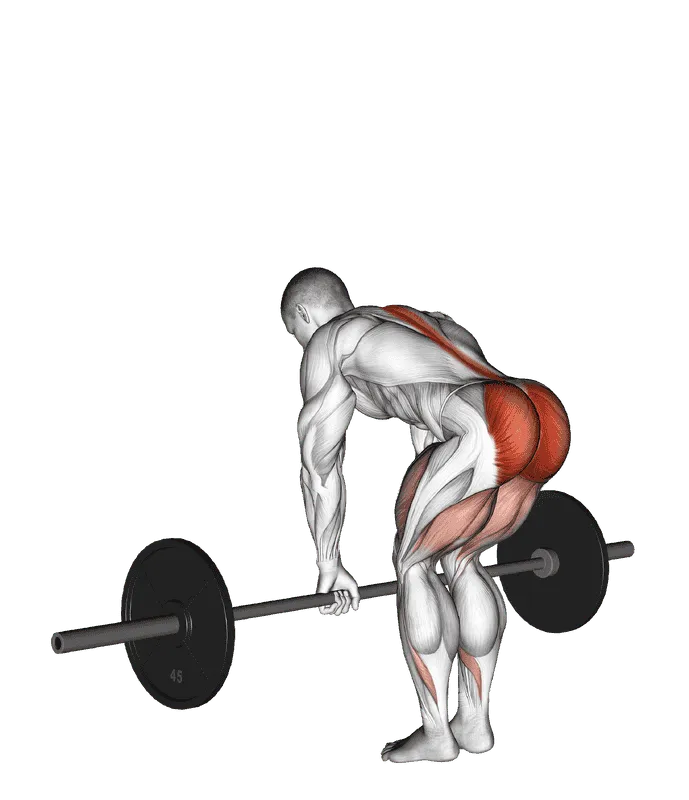
- Hamstrings: Because the hamstrings possess a high percentage of fast-twitch fibers and undergo severe eccentric stretching during hinge movements like the Barbell Romanian Deadlift, they incur extensive damage. Most lifters cannot recover from more than two dedicated hamstring workouts per week without experiencing performance declines.
- Spinal Erectors (Lower Back): The erector spinae endure heavy isometric tension during deadlifts, squats, and bent-over rows. Training the lower back directly more than once or twice per week often leads to chronic neural fatigue and compromised lumbar stability.
Core Exercises Across High-Frequency Splits
To make high-frequency training work without breaking down your joints, you must choose exercises that provide high mechanical tension with manageable connective tissue stress. Below are two foundational compound movements and how to integrate them across a multi-session weekly frequency.
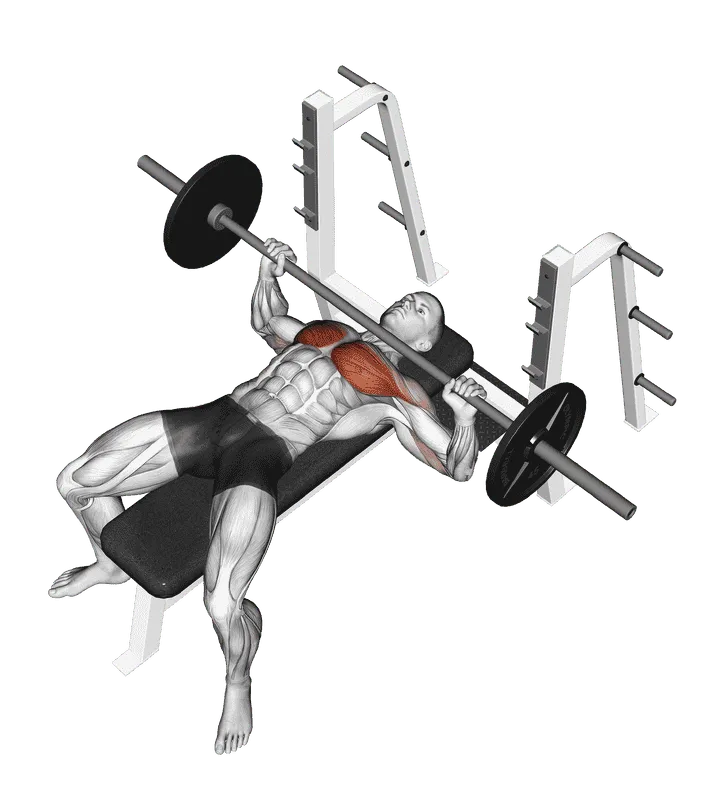
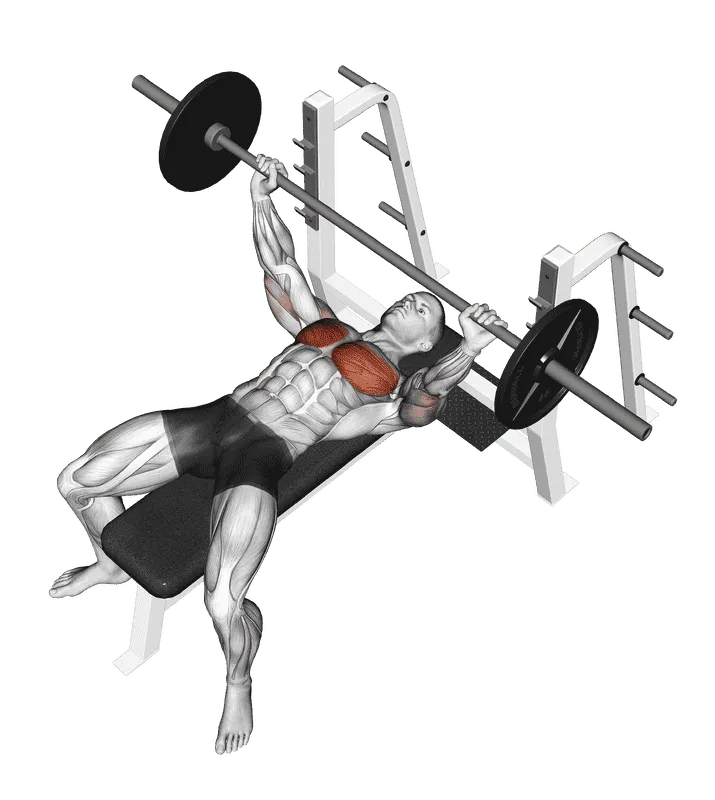
- Sets
- 3–4
- Reps
- 6–8
- Rest
- 180 s
- Tempo
- 3–0–1
The Barbell Bench Press serves as the primary mass-builder for the anterior chest, anterior deltoids, and triceps. When training chest twice per week, avoid performing heavy barbell bench presses to absolute failure in both sessions. Instead, use a heavy-light or primary-secondary structure:
- Session 1 (Heavy / Low Rep): Barbell Bench Press for 3 to 4 sets of 6 to 8 reps, resting 2 to 3 minutes between sets.
- Session 2 (Moderate / Higher Rep): Incline Dumbbell Press or Cable Chest Flys for 3 to 4 sets of 10 to 12 reps, focusing on deep muscular stretch and metabolic accumulation.
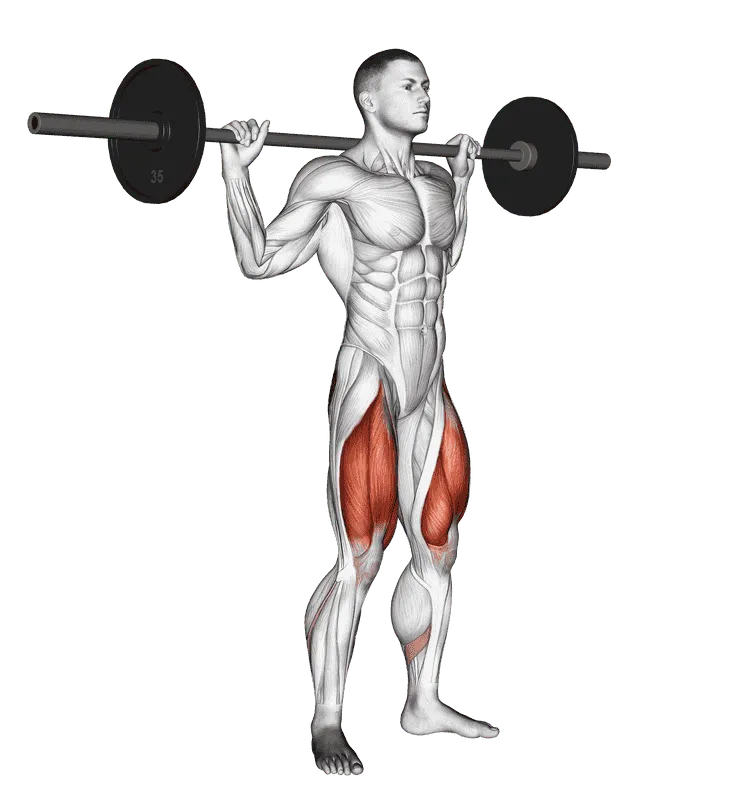
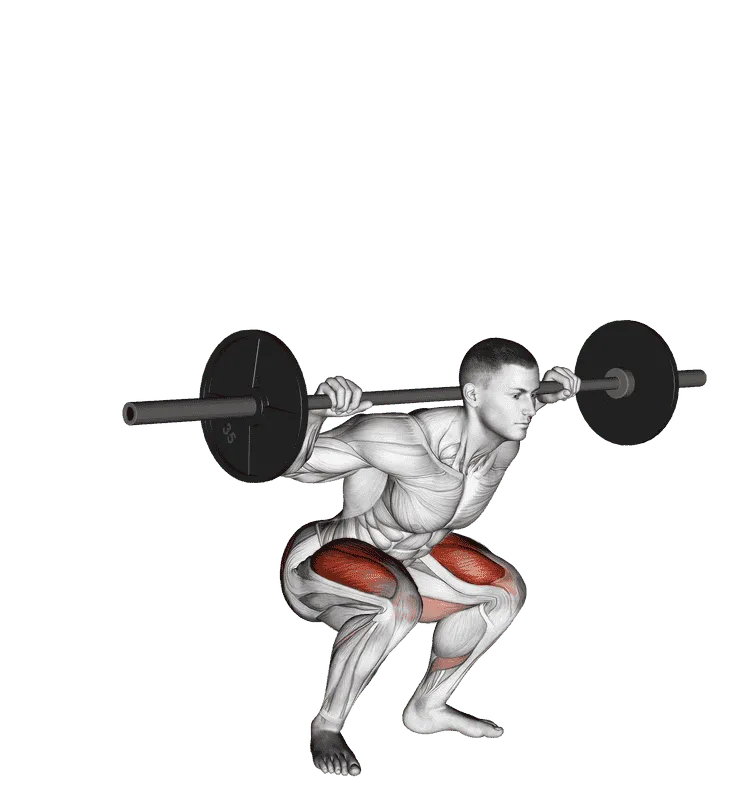
- Sets
- 3–4
- Reps
- 6–10
- Rest
- 180 s
- Tempo
- 3–1–1
The Barbell Full Squat is the gold standard for quadriceps, adductor, and glute development. In a high-frequency program, squatting heavy two or three times a week requires careful volume management. If you perform back squats on Monday, consider substituting leg presses, hack squats, or Bulgarian split squats on your second lower-body day to minimize spinal compression while still delivering maximum quadriceps tension.
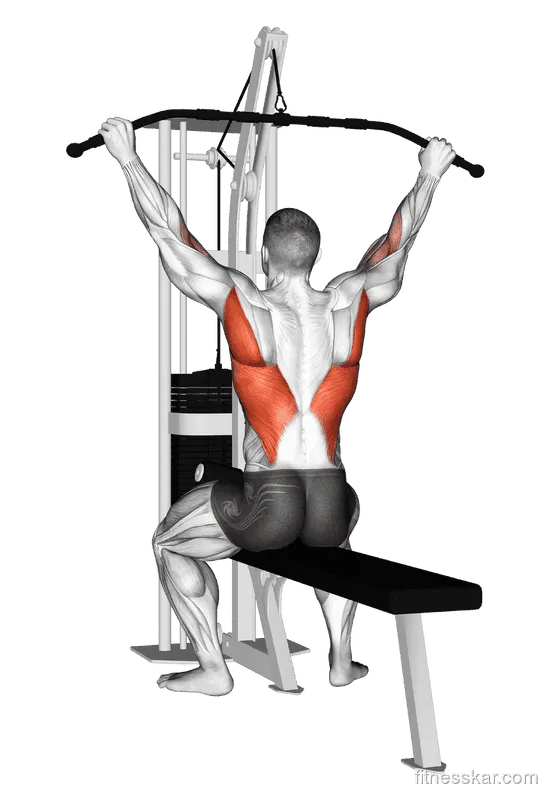
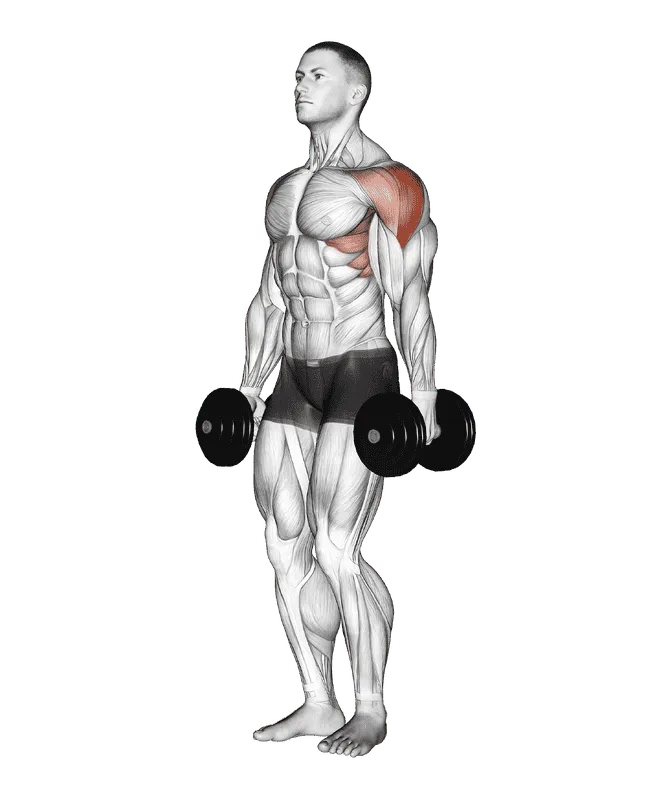
To complement these foundational lifts, balance your upper-body pulling with the Lat Pulldown to target back width, and integrate the Dumbbell Lateral Raise two to three times per week to build broad, three-dimensional shoulder caps without adding spinal fatigue.
Evidence-Based Frequency Programming Framework
How do you translate these scientific principles into an actionable weekly routine? Follow this step-by-step programming algorithm:
Step 1: Establish Your Total Weekly Set Volume
Determine your target weekly sets per muscle group based on your training age:
- Beginner (0–1 years lifting): 8–12 sets per muscle per week.
- Intermediate (1–3 years lifting): 12–16 sets per muscle per week.
- Advanced (3+ years lifting): 16–22 sets per muscle per week.
Step 2: Divide by the Per-Session Volume Cap (6 to 10 Sets)
Divide your target weekly volume so that no single session exceeds 8 to 10 sets for any individual muscle group:
Example 1: 16 weekly sets for chest
- Traditional 1x Frequency: 16 sets in one workout (violates the per-session ceiling; high junk volume).
- Recommended 2x Frequency: 8 sets on Monday, 8 sets on Thursday (ideal; 100% high-quality sets).
Example 2: 20 weekly sets for lateral delts
- Standard 2x Frequency: 10 sets on Monday, 10 sets on Thursday (acceptable, but lateral delts recover fast).
- Optimal 3x Frequency: 7 sets on Monday, 7 sets on Wednesday, 6 sets on Friday (superior; fresh force output every time).
Step 3: Vary Rep Ranges and Loading Vectors
When training a muscle multiple times per week, do not repeat the exact same exercises with the exact same rep ranges in both workouts. Varying exercises distributes stress across different joints and targets different portions of the rep ranges for muscle growth:
- Day A (Mechanical Tension Focus): Heavy compound movements, 6–8 reps, 2–3 minutes rest, long eccentric tempo.
- Day B (Metabolic & Stretch Focus): Machine or cable movements, 10–15 reps, 60–90 seconds rest, peak contraction or deep stretch emphasis.
If you are looking for a complete, pre-built periodized routine that organizes optimal frequency and progressive volume automatically, explore our 4-Day Muscle Mass Builder for an Upper/Lower setup, or our 8-Week Full Body Fitness Builder for a high-frequency 3-day split. Lifters wanting an advanced 5-day rotation should review our 8‑Week Muscle Mass Accelerator.
Frequently Asked Questions
Frequently asked questions
Is training a muscle once a week completely useless for building muscle?
No, training a muscle once per week is not useless. If you train with high effort and sufficient volume, you will still build muscle. However, scientific research demonstrates that splitting that same volume across two or three weekly sessions leads to superior set quality, less junk volume, and more frequent elevations in muscle protein synthesis, making higher frequency more efficient for long-term hypertrophy.
Can training a muscle three times a week cause overtraining?
Training three times a week will only cause overtraining if you fail to manage your per-session volume. If you perform 15 sets every single workout, you will quickly exceed your recovery capacity. However, if you take your normal weekly volume (e.g., 12 sets) and divide it into three small, potent sessions of 4 sets each, your body will recover easily while maintaining higher set performance.
Which muscles should be trained with the highest frequency?
Smaller muscle groups that incur minimal stretch-mediated microtrauma and produce low systemic fatigue respond best to high frequency. The lateral deltoids, rear deltoids, biceps, calves, and abdominal muscles recover within 24 to 48 hours and can comfortably be trained three to four times per week.
How long should I rest between workouts for the same muscle group?
For large compound muscle groups such as the quadriceps, hamstrings, and chest, allow 48 to 72 hours of recovery between intense training bouts. For smaller isolation-trained muscles such as the side delts or calves, 24 to 48 hours of recovery is generally sufficient.
Sources
- Schoenfeld BJ, Grgic J, Krieger J. How many times per week should a muscle be trained to maximize muscle hypertrophy? A systematic review and meta-analysis of studies examining the effects of resistance training frequency. Journal of Sports Sciences. 2019;37(11):1286-1295. doi:10.1080/02640414.2018.1555906. pubmed.ncbi.nlm.nih.gov/30558493/ ↩