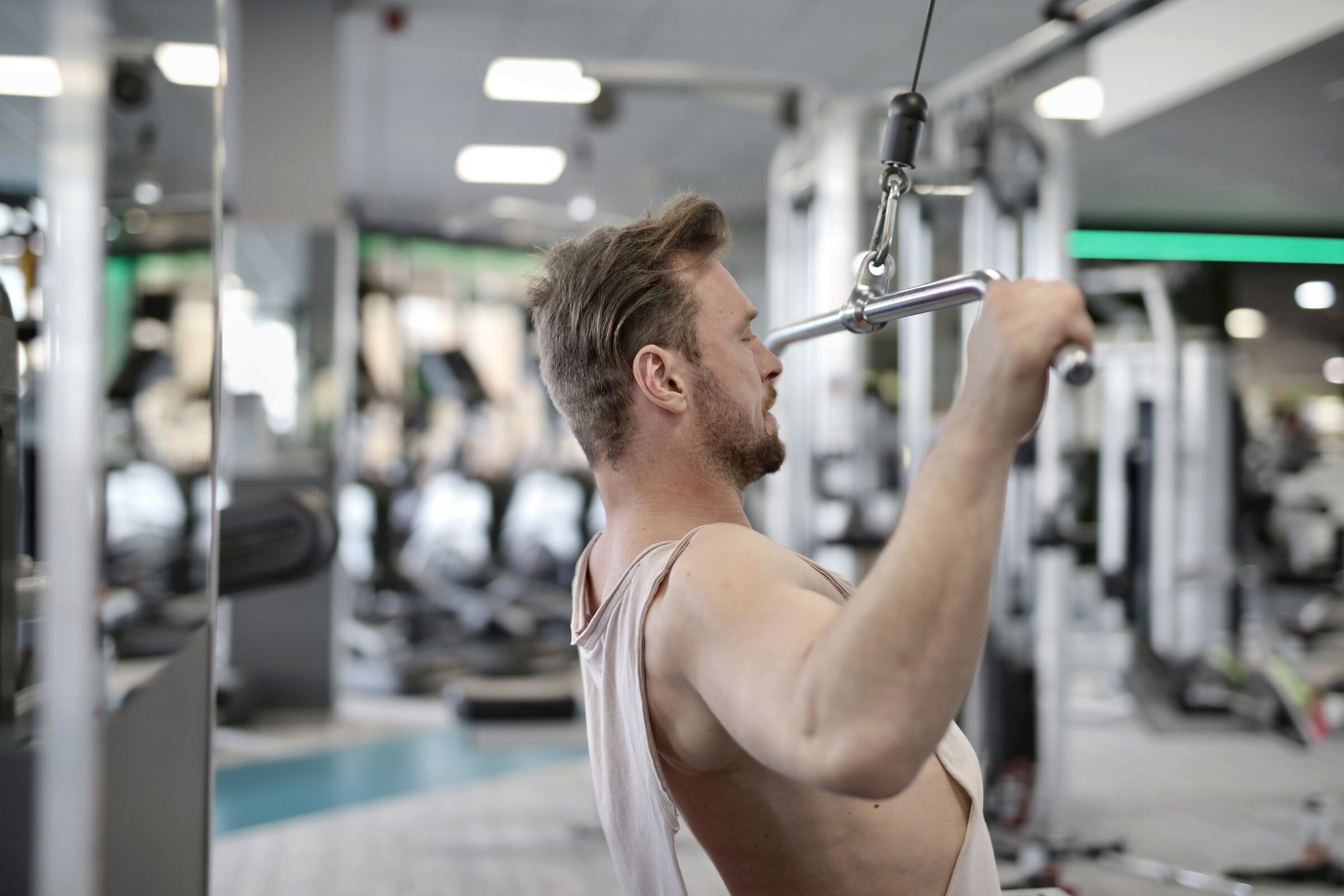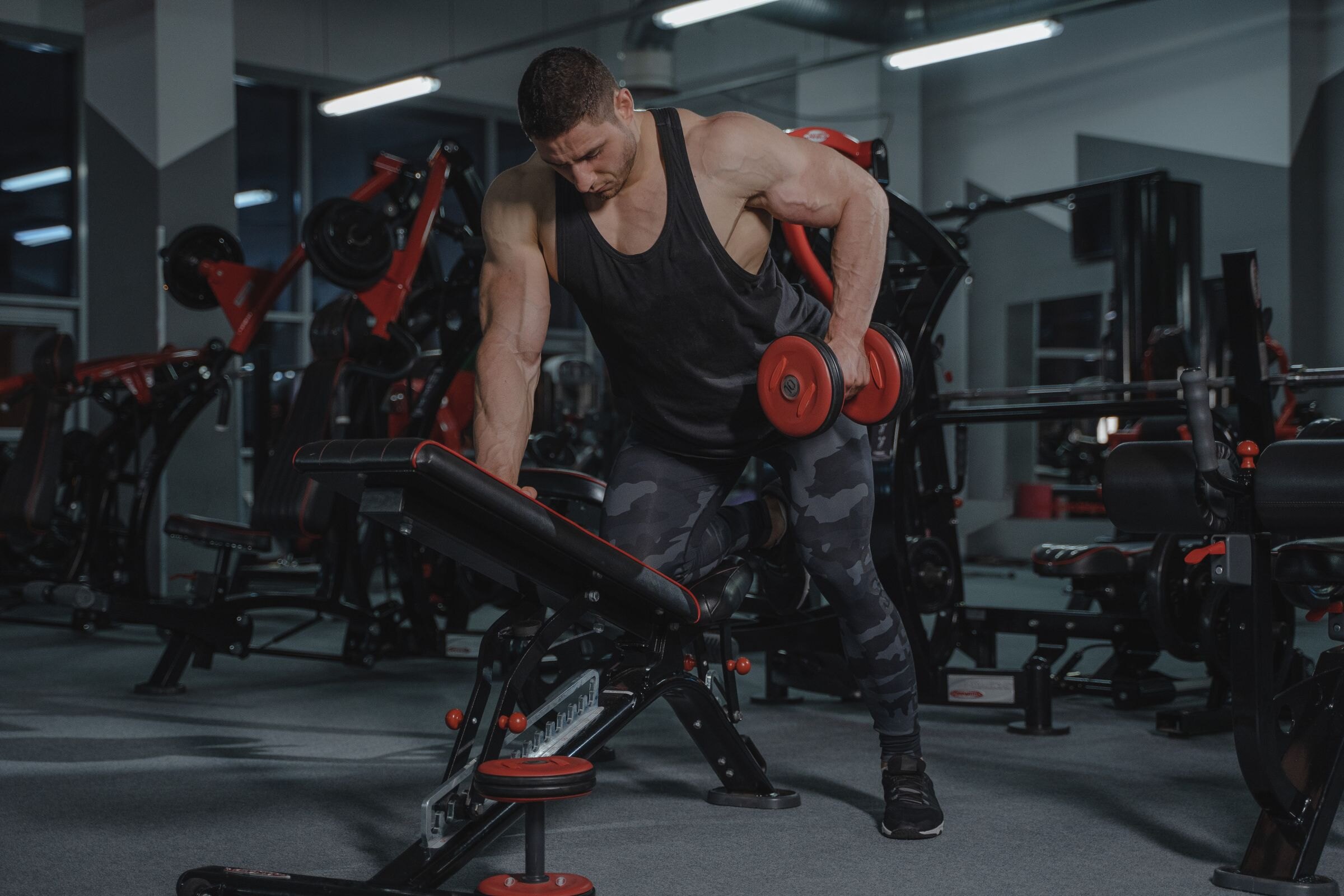
Achieving standout upper back hypertrophy requires shifting tension away from tucked-elbow lat pulling and toward scapular protraction-to-retraction with a 45- to 75-degree elbow flare. While vertical pulldowns build torso width from the front, dense three-dimensional thickness across the upper, middle, and lower trapezius, rhomboids, and rear deltoids comes from horizontal chest-supported rows, face-height rope pulls, and slightly hinged shrugs that match the predominantly horizontal fiber angles of your shoulder girdle.[1] Program 10 to 18 hard weekly sets across two or three sessions to build an unmistakable upper-back shelf.
Walk into almost any gym on back day and you will see lifters chasing a bigger back with endless sets of lat pulldowns, close-grip cable rows pulled into the waist, and hurried, bouncing barbell shrugs at the end of the session. Years later, many develop respectable width from the front yet look surprisingly flat from the side. Under a T-shirt, their upper thoracic spine lacks the rugged, layered muscularity that frames the neck, caps the rear shoulders, and stabilizes heavy squats and deadlifts.
That gap happens because the muscles that widen your silhouette and the muscles that thicken your upper torso respond to opposite joint mechanics. Once you align your bench setup, grip width, and elbow trajectory with the true fiber orientation of the trapezius and rhomboids, stubborn upper-back plateaus disappear rapidly.
Functional Anatomy of Upper Back Hypertrophy
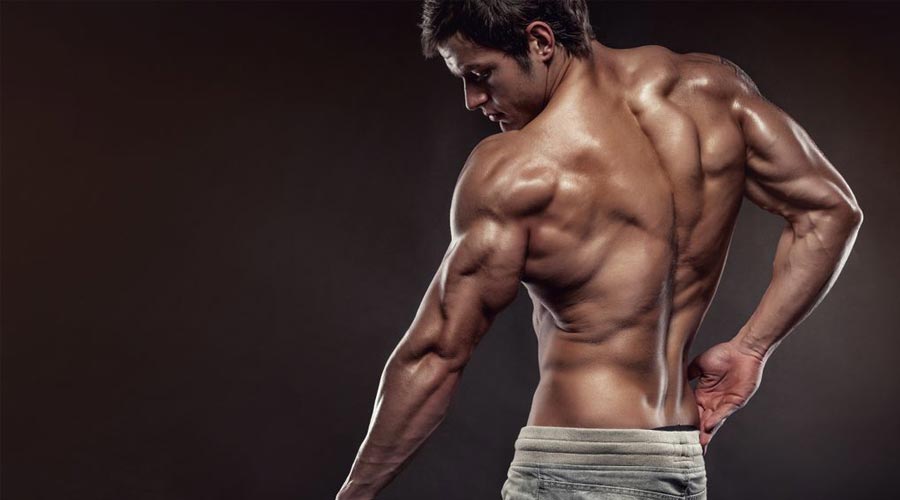
When coaches talk about "the upper back" or "the yoke," they are not describing a single slab of muscle. They are referring to a multi-layered muscular complex spanning from the base of your skull down to your twelfth thoracic vertebra (T12) and outward across both shoulder blades. Understanding how these fibers are arranged explains why single-angle rowing never maximizes upper back hypertrophy.
| Muscle Region | Primary Attachment Span | Dominant Fiber Direction | Primary Joint Action | Best Loading Vector |
|---|---|---|---|---|
| Upper Trapezius | Skull base & C1–C6 ligament to outer third of clavicle | Downward, outward, and largely transverse[1] | Upward clavicular rotation & backward draw | 10°–15° hinged shrugs & wide-grip pulls |
| Middle Trapezius | C7–T3 vertebrae to acromion & scapular spine | Strictly horizontal (transverse)[1] | Pure scapular retraction | Chest-supported flared rows & prone shrugs |
| Lower Trapezius | T4–T12 vertebrae to medial scapular spine | Upward and outward diagonal | Scapular depression & upward rotation | High-pulley face pulls & incline Y-raises |
| Rhomboid Major & Minor | C7–T5 vertebrae to medial border of scapula | Downward and outward diagonal | Scapular retraction & downward rotation | Sternum-level wide rows & Kelso shrugs |
| Posterior Deltoid | Spine of scapula to deltoid tuberosity of humerus | Horizontal/diagonal across back of shoulder | Transverse shoulder abduction & external rotation | Flared high rows & chest-supported reverse flyes |
1. The Trapezius: One Muscle, Three Distinct Engines
Textbook diagrams often shrink the trapezius in lifters' minds to the small triangles sitting between the neck and shoulders. In reality, the trapezius is a massive diamond-shaped sheet whose middle and lower divisions cover most of your upper and mid-spine.
In a landmark cadaveric and volumetric investigation, biomechanists Garth Johnson and Nikolai Bogduk mapped the exact fascicular orientation and cross-sectional volume of every bundle of the human trapezius.[1] Their findings overturned decades of gym folklore:
- Upper Fibers (Occipital and Nuchal): Rather than running vertically from the ears to the shoulders, these fibers travel downward and predominantly transversely (horizontally) to insert onto the outer third of your collarbone (clavicle). Rather than acting as simple vertical elevators, they pull the clavicle backward and medially, rotating it upward around the sternoclavicular joint at the top of your breastbone.[1]
- Middle Fibers (C7 to T3): Volumetric measurements revealed that the fascicles originating around C7, T1, and the lower nuchal ligament are the thickest, highest-volume bundles in the entire muscle.[1] They run almost perfectly horizontally to the acromion and spine of the scapula, making them powerhouse horizontal retractors.
- Lower Fibers (T4 to T12): These fibers angle upward and outward to insert onto the medial root of the scapular spine. They anchor the shoulder blade down against the ribcage and assist in upward rotation during overhead and face-height pulling.
2. Rhomboid Major and Minor: The Deep Thickness Builders
Directly beneath the middle trapezius lie the rhomboid minor and rhomboid major, connecting the spinous processes of C7 through T5 to the inner (medial) edge of your shoulder blade. While you cannot see the rhomboids directly on the skin's surface, hypertrophying them pushes the overlying trapezius outward—creating thick, unmistakable depth on either side of your spine. Because their fibers angle slightly upward toward the spine, they retract and slightly elevate the inner border of the scapula whenever your elbows drive behind your torso.
3. Posterior Deltoids and the External Rotator Shelf
No upper back looks complete without well-developed posterior deltoids, supported underneath by the infraspinatus and teres minor. Visually, these muscles cap the outer corners of your upper back and blend seamlessly into the scapular spine. Biomechanically, whenever you row a weight with your upper arms flared away from your sides (transverse abduction), the rear deltoids act as the primary mover at the shoulder joint while the mid-traps and rhomboids lock and retract the shoulder blades.
Width vs. Thickness: Elbow Path and Scapular Excursion
In our dedicated lat hypertrophy guide, we detailed how keeping your elbows tucked tightly against your ribs (0 to 30 degrees of abduction) aligns resistance with the vertical and diagonal sweep of the latissimus dorsi—and why stopping the pull once your elbow reaches your torso maximizes lat tension.
Building upper-back thickness flips both of those rules on their head.
The 45-to-75-Degree Elbow Flare Rule
The angle between your upper arm and your torso dictates whether your lats or your upper-back retractors bear the brunt of a horizontal pull:
- Tucked Path (0°–30°): Pulls the handle low toward your hip crease in the sagittal plane. The lats enjoy peak mechanical leverage, while the scapula barely needs to glide toward the spine.
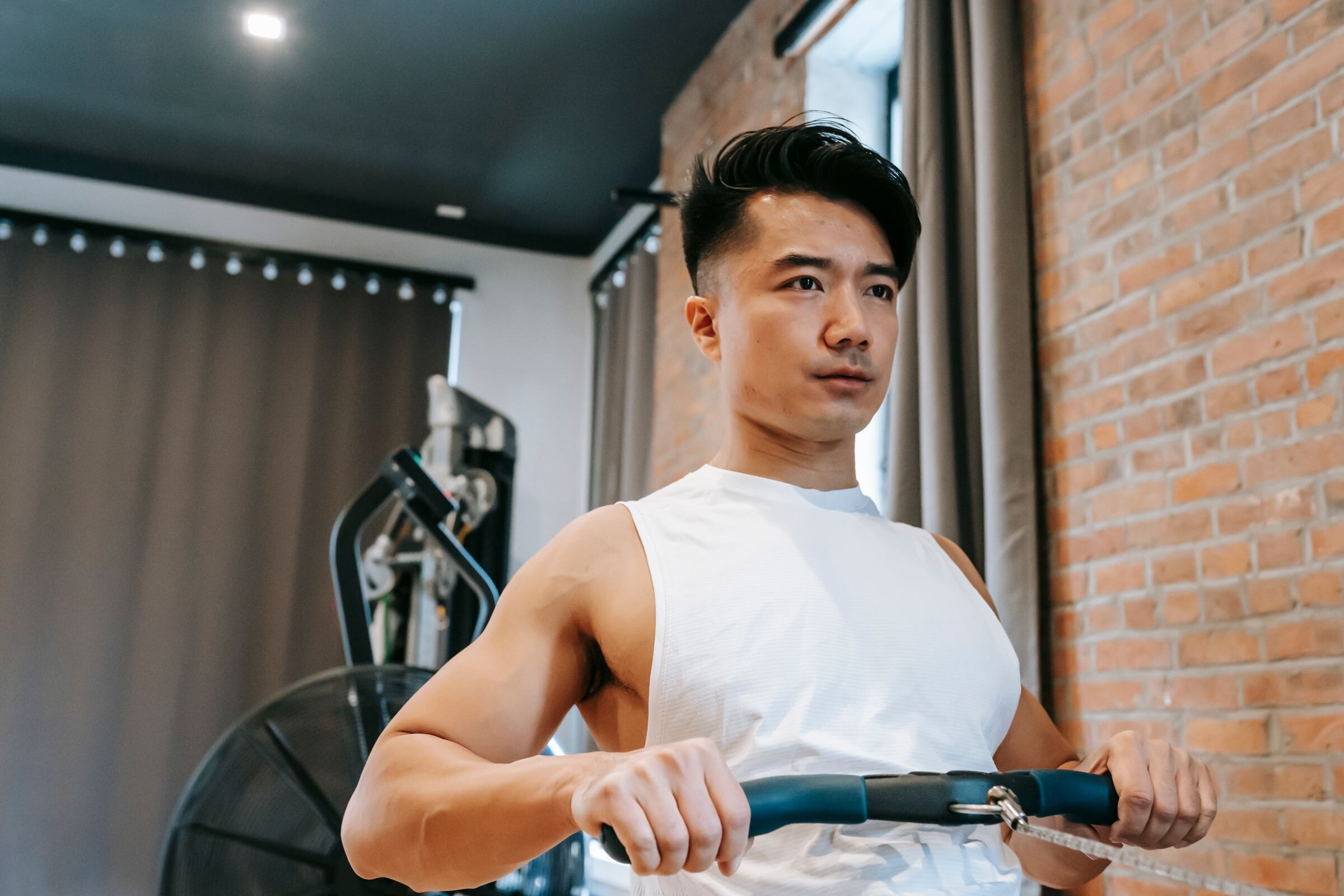
- Flared Path (45°–75°): Pulls the handle higher—toward your lower sternum, upper chest, or base of the neck—in the transverse plane. At this wider humeral angle, the latissimus dorsi loses its favorable line of pull. Mechanical tension transfers squarely onto the middle trapezius, rhomboids, and posterior deltoids via transverse shoulder extension and full scapular retraction.
Notice that 45 to 75 degrees is the sweet spot for heavy compound rows—not a rigid 90-degree T-shape with heavy loads, which can crowd the subacromial space if your shoulders lack internal rotation clearance. Save 80- to 90-degree elbow angles for lighter rope pulls and reverse fly variations where external rotation keeps the joint centration clean.
Loaded Scapular Protraction: Stretch-Mediated Upper-Back Growth
During bench presses and squats, coaches rightly cue you to keep your shoulder blades pinned back and down. Carrying that rigid cue over to upper-back rows is one of the fastest ways to sabotage your gains.
If your shoulder blades stay locked together for the entire set, your arms bend and straighten while your rhomboids and middle trapezius only contract isometrically. As detailed in our deep dive on stretch-mediated hypertrophy, skeletal muscle fibers experience potent mechanical-tension signaling when loaded actively at long muscle lengths.
For the middle trapezius and rhomboids, that stretched position occurs during controlled scapular protraction—letting the weight pull your shoulder blades smoothly forward and apart around the curve of your ribcage at the bottom of each repetition, while keeping your thoracic spine braced. Every rep should follow a deliberate two-phase rhythm:
- Bottom Stretch: Allow your shoulders to glide forward until you feel a deep, loaded stretch between your shoulder blades (without collapsing your lower back).
- Initiation & Squeeze: Initiate the concentric pull by driving your shoulder blades back toward your spine as you drive your elbows wide behind your torso, pausing briefly when your scapulae meet.
Why Most Lifters Shrug Wrong: Rethinking Trap Mechanics
Watch the average gym-goer train upper traps and you will see the same routine: loading four plates per side onto a barbell, grabbing it with a narrow grip brushing the inner thighs, rolling the shoulders in awkward circles, and bouncing the bar two inches up and down.
Aligning Resistance With Transverse Trap Fibers
Remember Johnson and Bogduk's anatomical map: the upper trapezius inserts onto the outer third of the collarbone and runs inward and slightly upward toward the midline of your neck—not straight up toward the ceiling.[1] When you stand bolt-upright with your hands narrow in front of your thighs, gravity pulls straight down while your upper traps want to pull upward, inward, and slightly backward. In fact, a vertical narrow shrug places much of the early elevation load onto the smaller levator scapulae along the side of the neck rather than maximizing upper-trap recruitment.
Two small setup adjustments transform any shrug immediately:
- Use a Slightly Wider Grip (~20°–30° Abduction): Grip a barbell slightly outside shoulder width—where your arms angle outward roughly 20 to 30 degrees from your ribs—or hold dumbbells slightly away from your outer thighs. Slightly abducting the arms pre-rotates the scapula upward and lines the outer clavicle up cleanly with the upper-trap fibers.
- Add a 10- to 15-Degree Forward Torso Hinge: Soften your knees and push your hips back just slightly so your chest leans forward 10 to 15 degrees. Now, when you shrug your shoulders "up and back toward the base of your ears," you are pulling directly against gravity along the natural backward-and-inward vector of both the upper and C7/T1 middle trapezius.[1] Never roll your shoulders at the top; rolling adds zero resistance against gravity and only grinds the acromioclavicular joint.
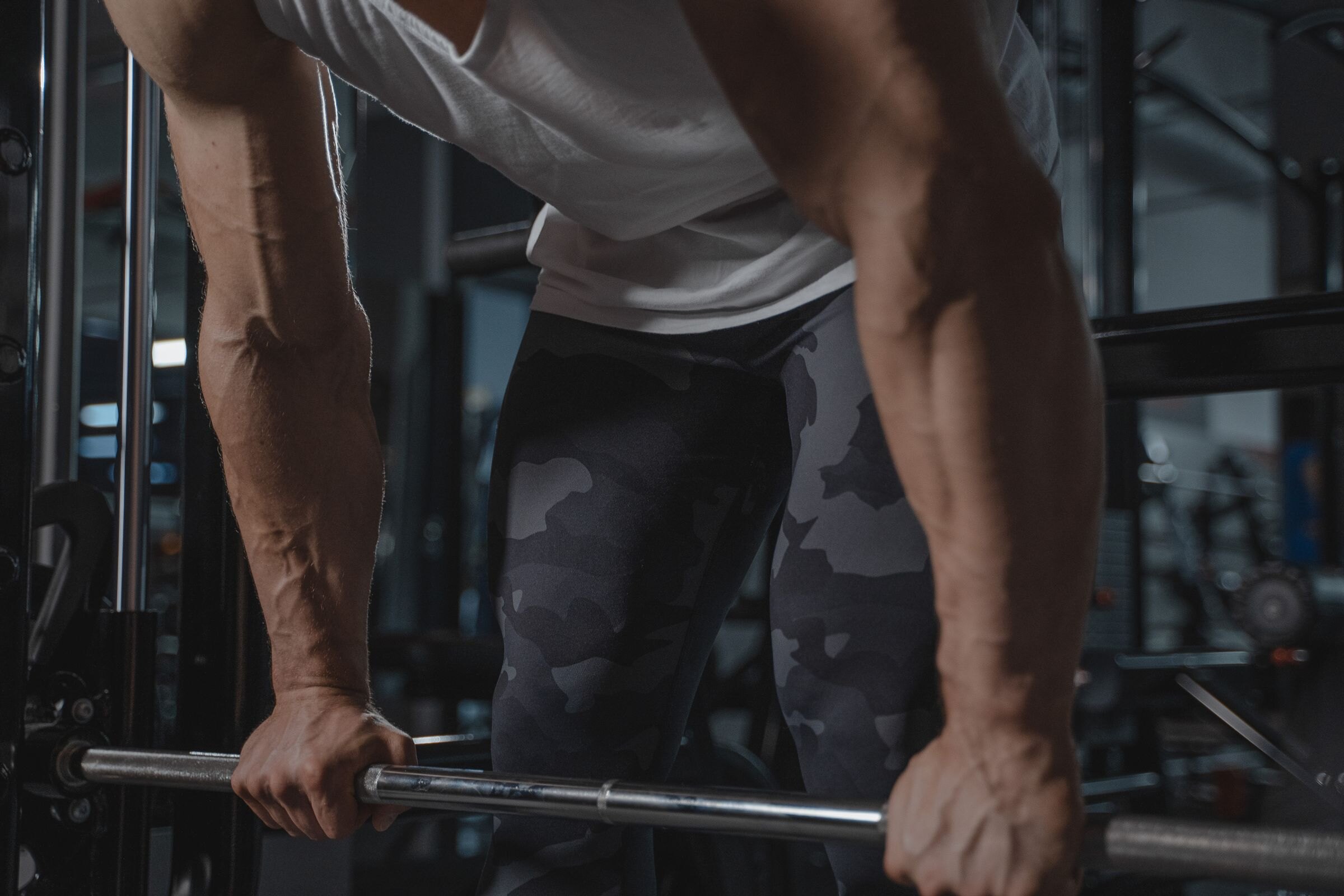
The Chest-Supported Scapular Shrug (Kelso Shrug)
Popularized by strength author Paul Kelso, the Kelso shrug applies the shrug concept horizontally to isolate the middle trapezius and rhomboids with zero biceps fatigue. Set an incline bench to 30–45 degrees, lie chest-down holding dumbbells (or sit on a chest-supported row machine), and keep your elbows nearly straight throughout the set. Let the weights pull your shoulder blades apart at the bottom, then retract your shoulder blades forcefully up and together—moving the load purely through scapular glide—and hold the peak contraction for two full seconds.
Doing 10 to 15 Kelso shrugs immediately after reaching elbow-flexion failure on chest-supported rows is one of the most effective mechanical drop sets in bodybuilding: even when your biceps and rear delts are exhausted, your stronger scapular retractors still have several high-tension reps left in the tank.
Use Lifting Straps Strategically
Your combined trapezius and rhomboid musculature is vastly stronger than the small finger flexors in your forearms. Refusing to wear lifting straps on heavy rows, shrugs, and barbell rack pulls guarantees that your grip fails long before your upper back approaches hypertrophy-inducing fatigue. Even worse, white-knuckling heavy bars across dozens of weekly sets is a leading trigger for medial and lateral elbow tendinopathy, as we cover in our guide to joint durability and tendon health. Train your grip separately with dedicated loaded carries or wrist work, and strap in on your heaviest upper-back sets so target-muscle tension—not finger strength—ends the set.
The Best Exercises for Upper Back and Trap Thickness
To build complete three-dimensional density from C1 to T12, build your program around three movement categories: heavy flared horizontal rows, high-pulley scapular/rear-delt pulls, and hinged trap overload. If you want to see how these compare with lat-focused vertical pulls, review our roundup of the best back exercises.
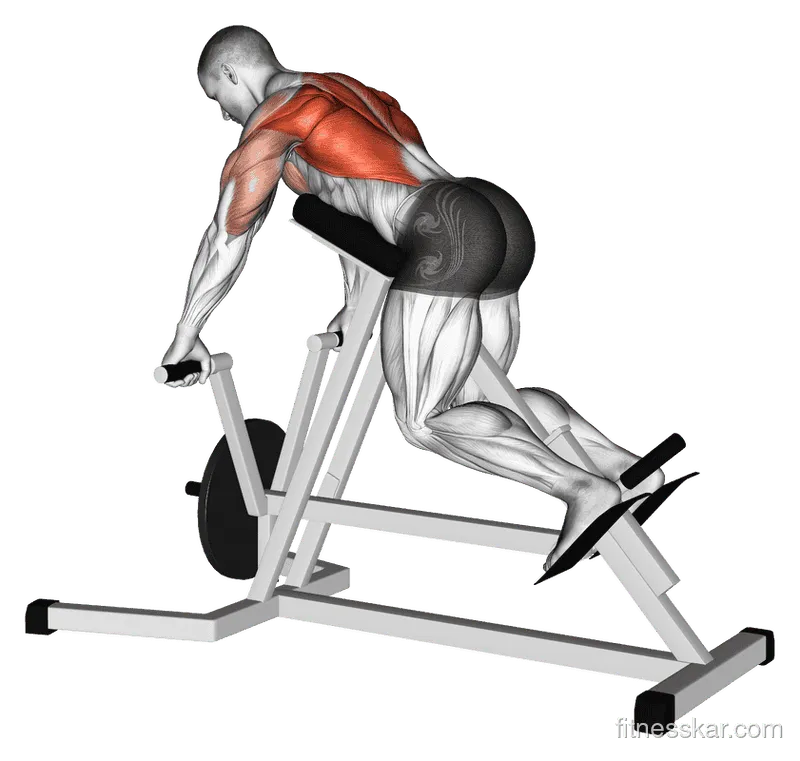
1. Chest-Supported Flared Rows (Mid-Trap & Rhomboid Foundation)
The lever lying T-bar row is the gold-standard mass builder for mid-back thickness. Because the angled chest pad locks your torso in place, you can let heavy weight stretch your scapulae apart safely at the bottom and drive your elbows out at 60 degrees on the way up.

- Sets
- 3–4
- Reps
- 6–10
- Rest
- 150 s
- Tempo
- 3–0–1–1
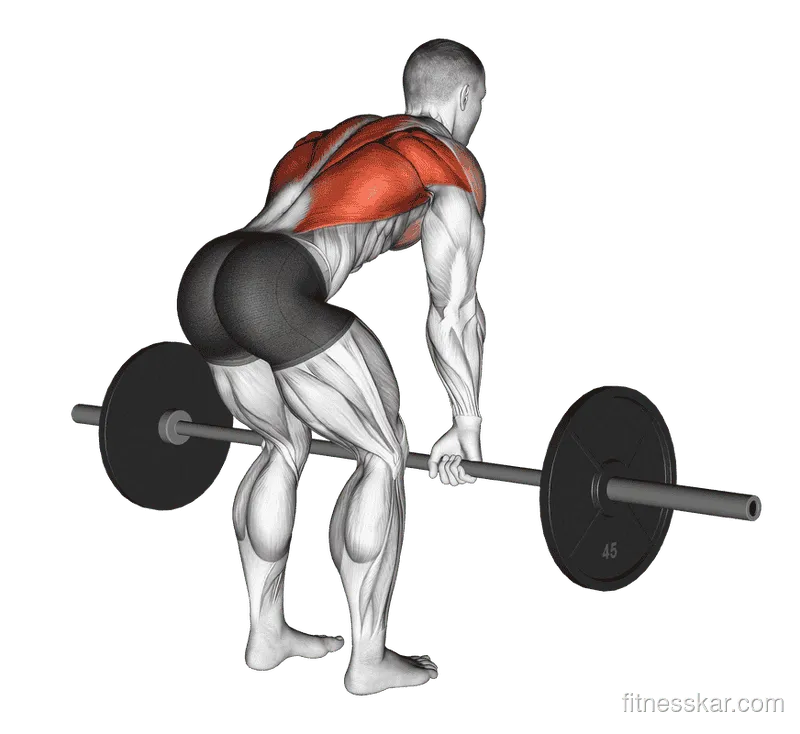
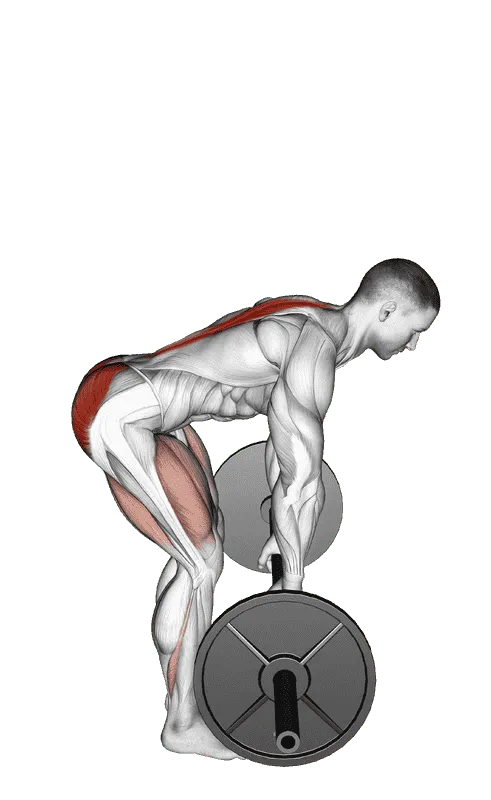
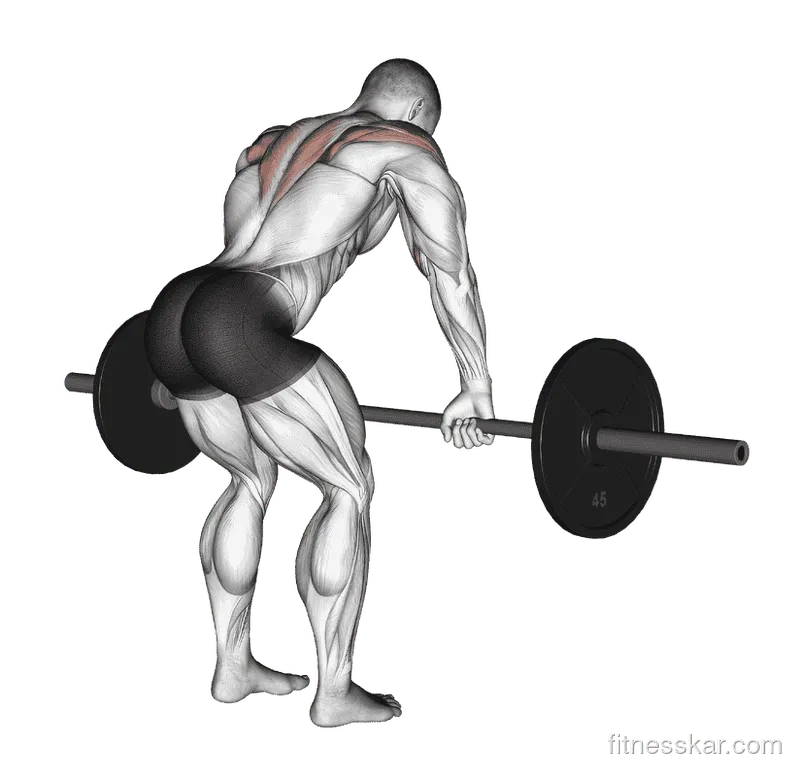
If your gym lacks a chest-supported T-bar station, the wide-grip seated cable row and the free-weight barbell rear delt row deliver the same wide-elbow transverse pull. On seated cables, keep your torso upright with a proud sternum rather than swinging backward at the hips; let your shoulder blades protract forward on the 3-second eccentric, then drive the wide bar straight to your lower sternum.
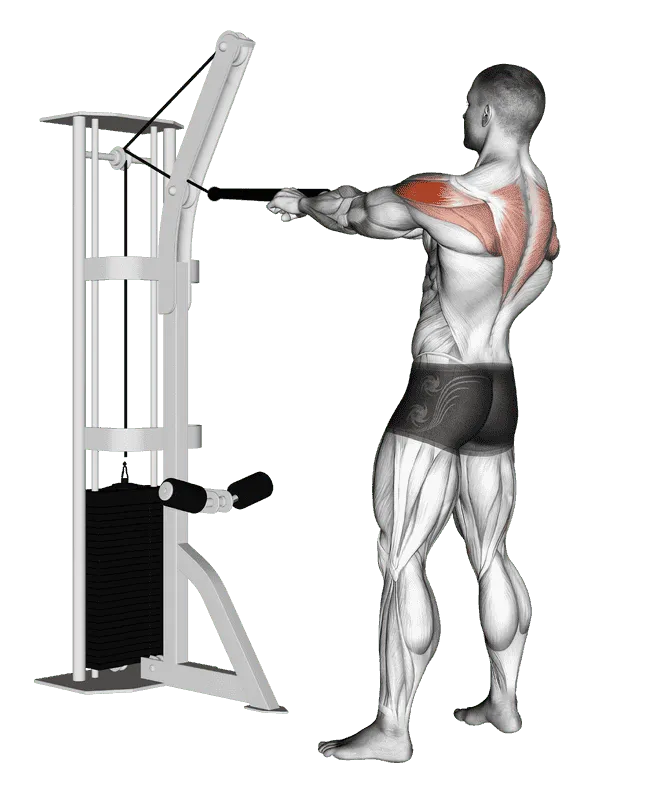
2. High-Pulley Rope Pulls & Reverse Flyes (Lower Traps & Rear Delts)
Heavy rows still allow the stronger middle traps and teres major to dominate if your upper back rounds slightly. Pairing heavy rows with the standing cable rear delt row with a rope—commonly coached as the high rope face pull—targets the lower trapezius, posterior deltoids, and external rotators simultaneously.

- Sets
- 3–4
- Reps
- 12–15
- Rest
- 90 s
- Tempo
- 2–0–1–2
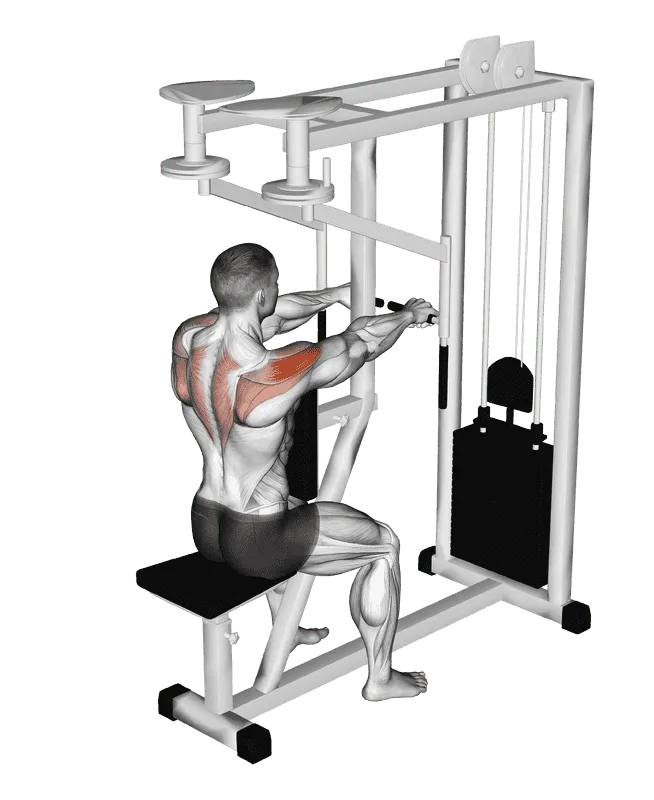
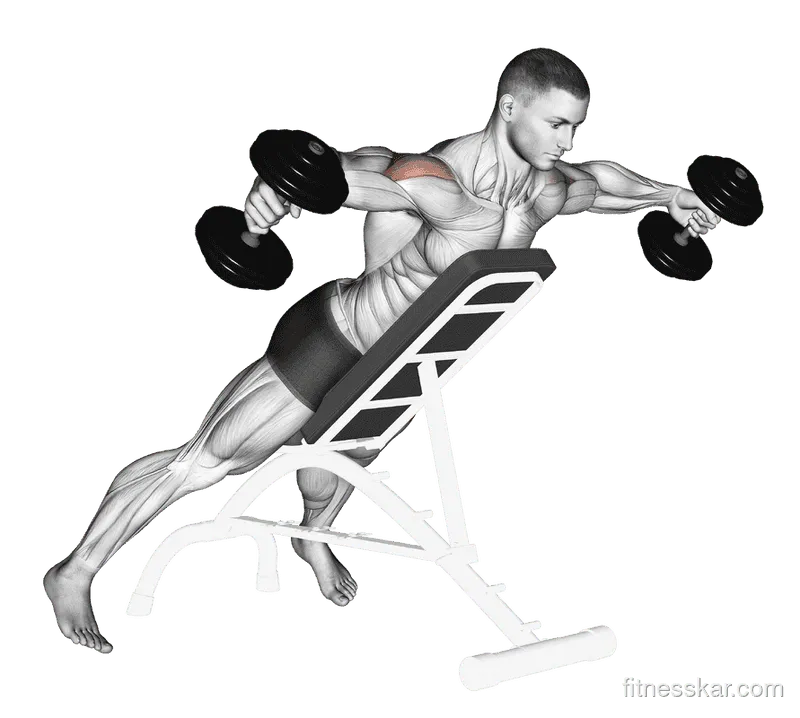
Round out the outer shelf of your upper back with strict isolation on the incline dumbbell reverse fly or the lever seated reverse fly (reverse pec-deck). Focus on sweeping your hands wide toward the walls rather than pinching your neck upward, keeping constant tension on the posterior deltoids and scapular spine.
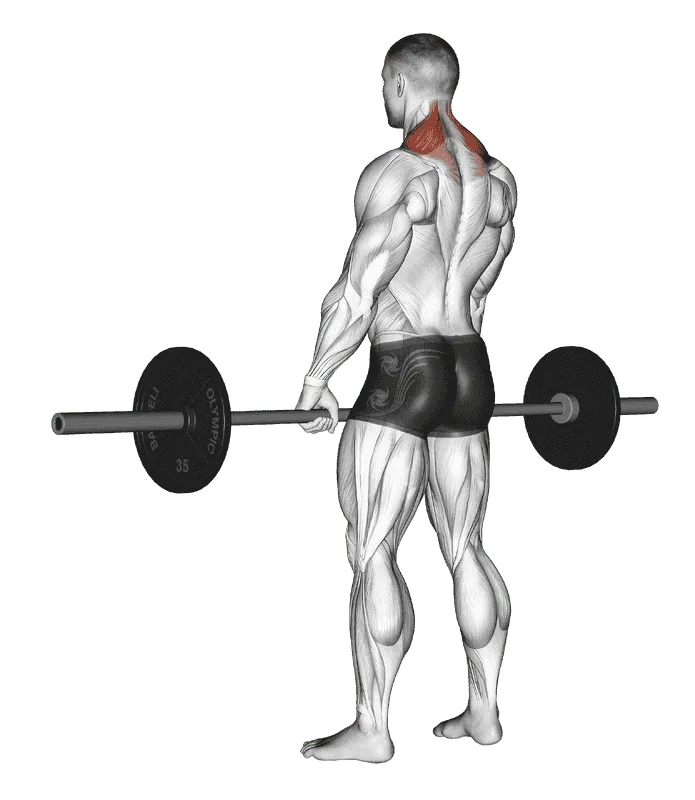
3. Hinged Shrugs & Heavy Isometric Pulls (Upper-Trap Yoke)
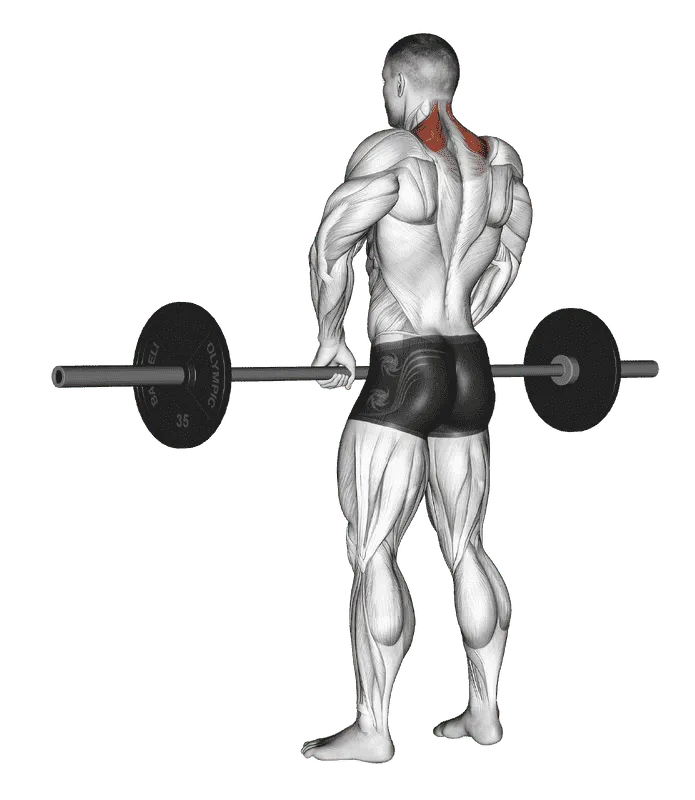
For direct upper-trap mass, center your work on the barbell shrug or neutral-grip dumbbell shrug. Use lifting straps, set your grip just outside shoulder width, hinge forward 10 to 15 degrees at the hips, and pause every single repetition at the top—bouncing iron off tendon elasticity cheats the upper trapezius out of peak isometric tension. Advanced lifters with healthy lower backs can also rotate in heavy barbell rack pulls from just above or below the kneecap to expose the entire trapezius diamond to supramaximal isometric stretch.
- Sets
- 3–4
- Reps
- 10–12
- Rest
- 120 s
- Tempo
- 2–1–1–2
Weekly Volume Landmarks for Upper Back Hypertrophy
Because compound back rows, deadlifts, and rear-delt isolation overlap heavily, smart programming tracks horizontal scapular retractors (mid/lower traps, rhomboids, rear delts) separately from direct upper-trap elevation (shrugs). Use these evidence-based weekly set landmarks (counted as hard sets taken within 0 to 3 Reps in Reserve) to calibrate your training block:
| Volume Landmark | Mid-Back & Rhomboids (Flared Rows & Face Pulls) | Upper Trapezius (Direct Shrugs) | Coaching Application |
|---|---|---|---|
| Maintenance (MV) | 4–6 sets / week | 0–2 sets / week | Maintain size during busy weeks or heavy deadlift blocks |
| Minimum Effective (MEV) | 6–8 sets / week | 4–6 sets / week | Threshold to spark measurable new hypertrophy |
| Maximum Adaptive (MAV) | 10–18 sets / week | 8–14 sets / week | Ideal growth zone; progress from 10 to 16+ sets across 5–6 weeks |
| Maximum Recoverable (MRV) | 20–24+ sets / week | 16–20+ sets / week | Recovery ceiling; exceeding this stalls strength and irritates tendons |
Frequency, Rep Ranges, and Mesocycle Progression
Because upper-back retractors and traps feature dense pennate architecture and relatively short moment arms compared to hamstrings or quads, local muscle soreness clears within 36 to 48 hours. Splitting your weekly volume across 2 to 3 sessions per week (for example, Pull Day A and Pull Day B, or two Upper-Body days) produces crisp execution on every set instead of junk volume at the tail end of a marathon workout.
Vary your loading zones across those movements:
- Chest-supported wide rows: 6–10 and 8–12 reps (1–2 RIR) for peak mechanical tension.
- Barbell and dumbbell shrugs: 8–12 heavy strapped reps and 12–15 paused reps (1 RIR).
- Rope face pulls and reverse flyes: 12–20 controlled reps (0–2 RIR) so heavier prime movers do not hijack the movement.
Complete Upper-Back & Traps Specialization Session
Run this session once per week as your thickness-focused pull workout, and pair it 72 hours later with a width-focused lat workout plus 3 bonus sets of dumbbell shrugs and reverse flyes:
Complete Upper-Back & Traps Thickness Workout
-
1 Lever Lying T-Bar Row - Sets
- 4
- Reps
- 6–10
- Rest
- 150 s
-
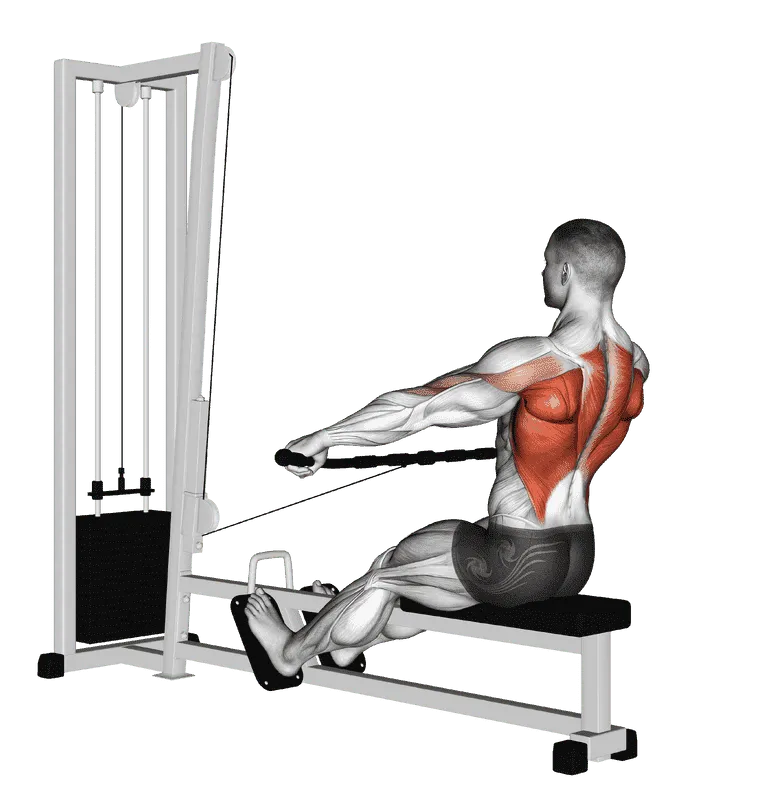
2 Cable Seated Wide-Grip Row - Sets
- 3
- Reps
- 8–12
- Rest
- 120 s
-
3 Barbell Shrug - Sets
- 3
- Reps
- 10–12
- Rest
- 120 s
-
4 Cable Standing Rear Delt Row (with Rope) - Sets
- 3
- Reps
- 12–15
- Rest
- 90 s
-
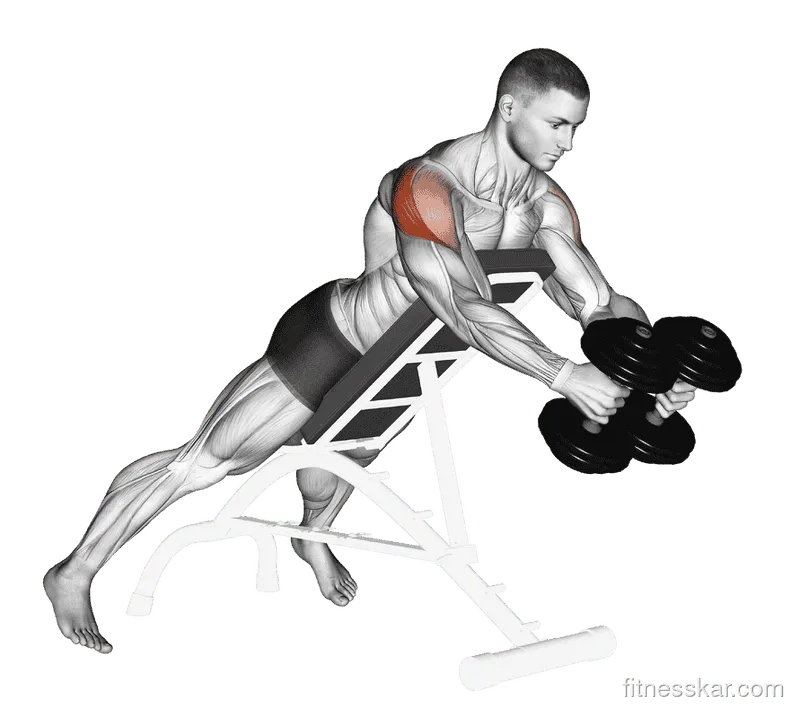
5 Dumbbell Reverse Fly - Sets
- 3
- Reps
- 12–15
- Rest
- 75 s

To plug these mechanics directly into a structured multi-week split inside the app, pair them with our 4-Day Muscle Mass Builder or jump straight into our dedicated posterior-yoke routine below:
Frequently Asked Questions
Frequently asked questions
Do deadlifts alone build maximum upper back and trap size?
Deadlifts expose the traps and rhomboids to massive isometric tension, which builds impressive baseline thickness, but muscles grow fastest when trained through dynamic stretch and shortening. Adding chest-supported flared rows and paused shrugs stimulates significantly more complete hypertrophy without multiplying lower-back fatigue.
What is the difference between rowing for lats and rowing for upper back thickness?
Lat-focused rows keep your elbows tucked close to your ribs (0–30 degrees) and pull low toward your hips, limiting scapular movement. Upper-back rows flare your elbows out to 45–75 degrees, pull higher toward your sternum, and emphasize full scapular protraction at the bottom and tight retraction at the top.
Should I roll my shoulders during barbell or dumbbell shrugs?
No. Gravity only pulls straight downward, so rolling your shoulders forward or backward adds zero effective resistance while placing unnecessary grinding shear on your shoulder joints. Hinge your torso forward 10 to 15 degrees and shrug straight up and slightly back, holding for two seconds at the top.
How many times per week should I train my upper back and traps?
Twice to three times per week is optimal for most lifters. Because the upper traps and scapular retractors recover faster locally than large lower-body muscles, splitting 10 to 18 weekly sets across two or three workouts produces higher per-set force output than doing everything in one exhausting session.
Why do I feel upper-back rows mostly in my biceps and forearms?
Two mistakes usually cause arm takeover: death-gripping the handle without lifting straps and curling your wrists inward while keeping your shoulder blades frozen. Use straps on heavy sets, think of your hands as passive hooks, let your shoulder blades stretch apart at the bottom, and lead every pull by driving your elbows wide behind you.
Sources
- Johnson G, Bogduk N, Nowitzke A, House D. Anatomy and actions of the trapezius muscle. Clinical Biomechanics. 1994;9(1):44-50. doi.org/10.1016/0268-0033(94)90057-4 ↩