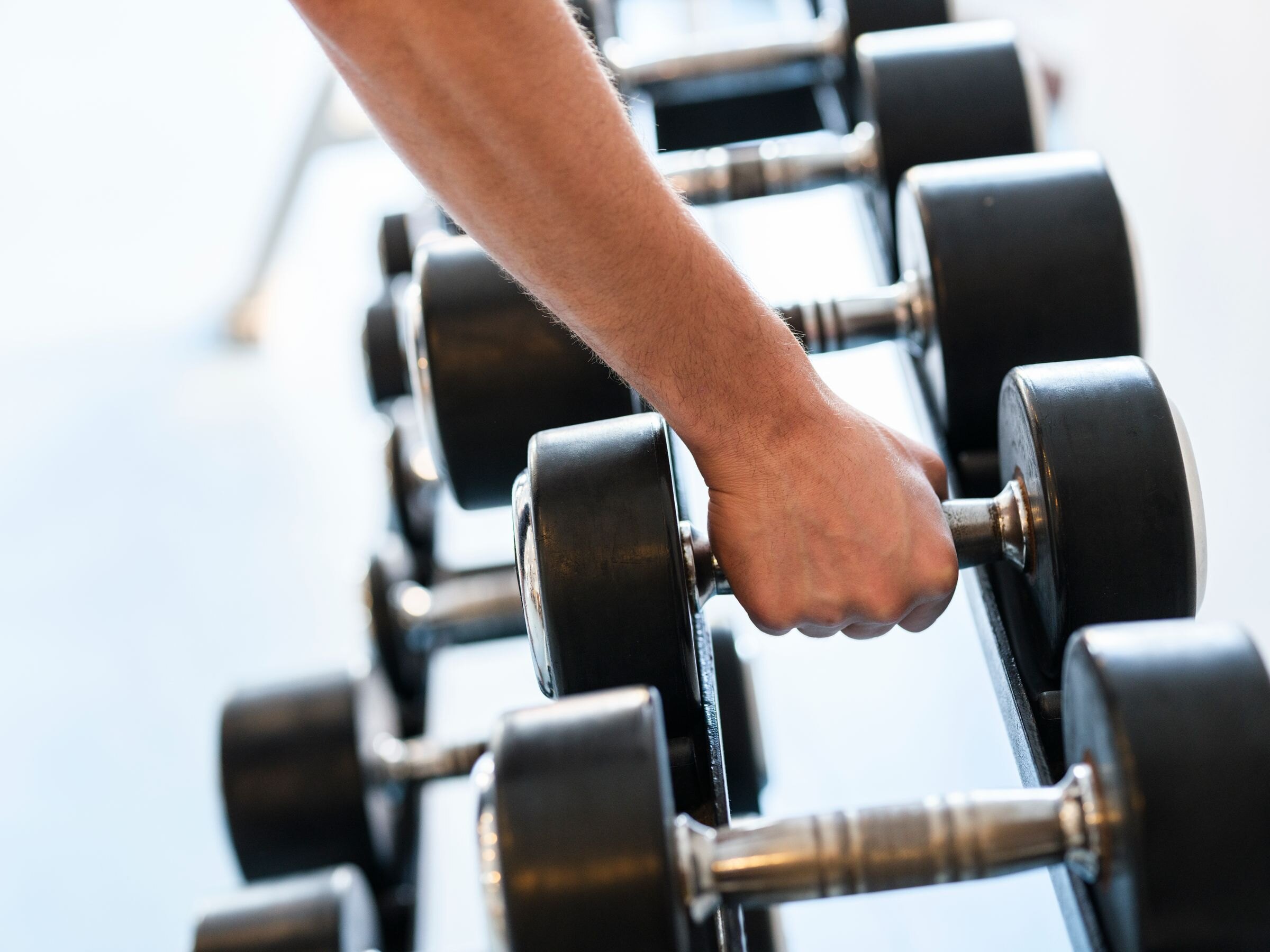
Developing elbow pain from lifting rarely means you injured the hinge of the elbow itself—in most gym-goers, that stubborn ache on the inside or outside of the joint is forearm tendinopathy triggered by wrist instability, rigid bar paths, and excessive gripping volume. Taking two weeks completely off from the gym calms the irritation temporarily, yet the pain almost always returns on your first heavy set back because complete rest never increases a tendon's load capacity. Lasting relief comes from modifying aggravating grips, stacking your wrists cleanly under the bar, and rebuilding forearm collagen with slow, progressive resistance.[1]
Almost every dedicated lifter eventually runs into a nagging elbow flare-up. Sometimes it starts as a sharp pinch on the inner bony knob of the elbow during weighted chin-ups or EZ-bar curls; other times it shows up as a burning ache along the outer forearm whenever you unrack a dumbbell or pick up a coffee mug the morning after back day. Because your biceps, triceps, and chest feel strong enough to handle heavier plates each month, it is easy to push through early warning signs until even warm-up sets hurt.
Fortunately, you rarely have to abandon upper-body training to heal an irritated elbow. Once you identify which tendon anchor is overloaded and understand how forces travel from your knuckles through your wrist to your humerus, you can swap joint-hostile angles for neutral-grip alternatives and run a targeted 10-minute tendon-remodeling protocol right alongside your normal workouts.
Why Elbow Pain From Lifting Happens: Tendinopathy vs. Tendinitis
To understand why elbow pain from lifting lingers for months when treated with ice and rest alone, you have to compare how skeletal muscle and dense connective tissue adapt to training.
Muscle bellies enjoy a rich capillary network that delivers oxygen, glucose, and amino acids rapidly. After a demanding workout, muscle protein synthesis peaks within 24 hours and largely finishes remodeling within 48 to 72 hours. Tendons—especially at the enthesis, the narrow transition zone where dense collagen fibers anchor directly into bone at the elbow—receive a fraction of that blood flow and turn over collagen at a much slower metabolic pace.
When you add pull-up volume, jump up in curl weight, or run back-to-back heavy pressing and rowing blocks, your lats, pecs, and upper arms adapt quickly. Meanwhile, the small forearm tendons transmitting every kilogram of force across your fingers and wrists accumulate microscopic matrix strain faster than tenocytes (tendon cells) can repair it.
Clinicians once labeled almost all elbow soreness "tendinitis," implying acute inflammatory swelling that needs anti-inflammatory drugs and immobilization. Modern tendon histopathology shows that pain lasting longer than two to three weeks is predominantly tendinopathy: a failed healing response marked by disorganized type-III collagen fibers, increased ground substance, and sensitive nerve ingrowth rather than classic inflammatory cells.
As we detail in our master guide to joint durability and functional conditioning, collagen fibers only align and stiffen when exposed to controlled mechanical tension. Resting completely for three weeks lowers pain by removing stress, but it also further reduces tendon stiffness—setting a trap as soon as you touch your previous working weights.
Inside vs. Outside: Medial (Lifter's) vs. Lateral (Tennis) Elbow
Before picking rehab drills, pinpoint the exact bony landmark where your discomfort sits. More than twenty muscles cross the forearm and wrist, and most of them converge onto two small bony projections at the bottom of your upper arm bone (humerus): the medial epicondyle on the inside and the lateral epicondyle on the outside.
| Feature | Inner Elbow (Medial Epicondylalgia) | Outer Elbow (Lateral Epicondylalgia) | Posterior Elbow (Triceps Tendinopathy) |
|---|---|---|---|
| Common Gym Name | Golfer's elbow / Lifter's elbow | Tennis elbow | Lifter's triceps ache |
| Exact Pain Spot | Bony bump on pinky side of elbow (palm up) | Bony ridge on thumb side of elbow (palm up) | Tip of the elbow (olecranon) |
| Primary Tendon | Common flexor-pronator tendon | Extensor carpi radialis brevis (ECRB) | Distal triceps brachii insertion |
| Muscle Function | Curls wrist inward, pronates forearm, flexes fingers | Extends and stabilizes wrist under grip load | Straightens the elbow joint |
| Classic Gym Triggers | Straight-bar curls, chin-ups, low-bar squats | Heavy pronated rows, deadlifts, reverse curls | Heavy skull crushers, narrow dips |
1. Medial Epicondylalgia (Inner-Elbow Pain)
Stand tall with your arms at your sides and palms facing forward (anatomical position). The bony prominence closest to your torso is the medial epicondyle. It serves as the shared anchor for your common flexor tendon—including the flexor carpi radialis, flexor carpi ulnaris, palmaris longus, flexor digitorum superficialis, and pronator teres.
Every time you squeeze a bar tightly, curl your wrist inward, or resist forced wrist extension at the bottom of a supinated barbell curl or weighted chin-up, this shared anchor absorbs concentrated tensile pull. Low-bar back squats are another sneaky trigger: when tight shoulders force your wrists and elbows to wedge under the bar, heavy downward pressure drives valgus torque directly into the medial elbow.
2. Lateral Epicondylalgia (Outer-Elbow Pain)
On the outer aspect of the elbow sits the lateral epicondyle, home to the common extensor tendon and most notably the extensor carpi radialis brevis (ECRB). Lifters are often confused when heavy back workouts trigger "tennis elbow," assuming they only used their gripping flexors.
The Wrist-to-Shoulder Kinetic Chain: Hidden Form Mistakes
Your elbow is a stable hinge caught between two highly mobile neighbors: the multi-planar shoulder above and the wrist-radioulnar complex below. Whenever mobility or alignment breaks down at the hand or shoulder, the elbow pays the price.
1. Cocked-Back Wrists During Pressing
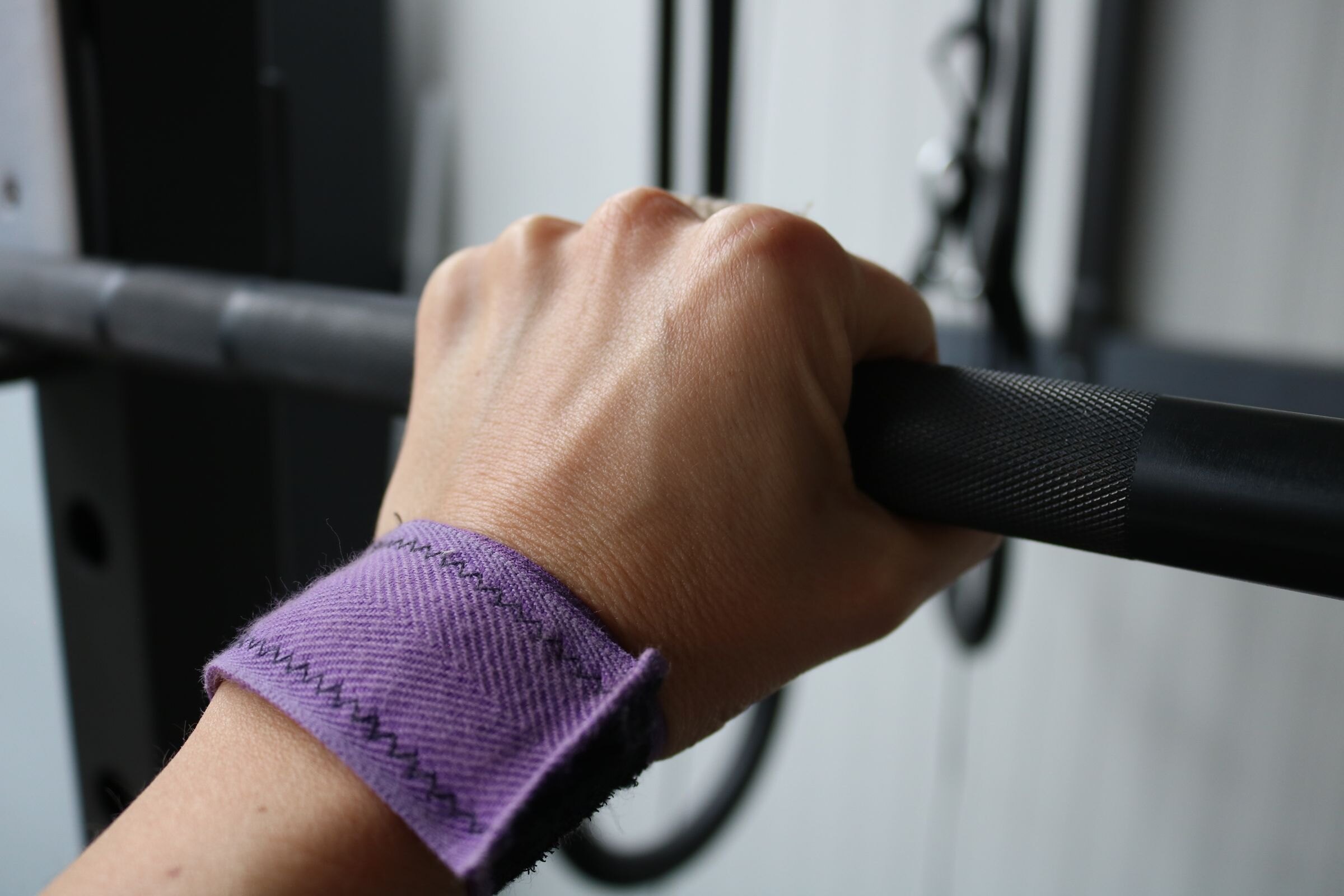
Watch lifters bench press or overhead press from the side and you will frequently see the barbell sitting high near the base of the fingers, bending the wrist backward into 60 to 80 degrees of loaded hyperextension. In that bent position, load no longer travels cleanly down the solid bony column of the radius and ulna. Instead, it creates a long lever arm that wrenches the wrist capsule and forces the forearm flexors and extensors to work overtime just to keep the bar from rolling backward.
Stacking the bar low across the meaty heel of your palm—directly above your forearm bones, as taught in our guide on how to overhead press—instantly cuts wrist and elbow shear. During heavy top sets (80%+ of your 1RM), firm fabric wrist wraps can reinforce that neutral stack without replacing forearm training on lighter sets.
2. White-Knuckle "Death Gripping"
Many lifters crush every dumbbell, cable handle, and machine grip at 100% effort from warm-up set one. Squeezing a bar harder than necessary to secure it does not recruit more chest, shoulder, or triceps fibers—it simply floods the medial and lateral epicondyles with unnecessary isometric fatigue. Grip firmly enough to control the implement safely, and relax your hands completely between sets.
3. Fixed Straight-Bar Torque
Every human skeleton has a natural carrying angle—when your arms hang straight with palms forward, your forearms angle slightly outward from your torso (typically 10 to 15 degrees). Locking both hands onto a rigid, straight steel barbell for curls, skull crushers, or wide pronated pull-ups forces your wrists and elbows to conform to the bar rather than your joint geometry. Switching to independent dumbbells, cambered EZ-bars, cables, or gymnastics rings lets your forearms rotate naturally along the path of least joint resistance.
Joint-Friendly Exercise Swaps So You Can Keep Training
When elbow pain flares up, the worst mistake is testing the painful lift every Monday to "see if it still hurts." Keep training hard by swapping provocative fixed-bar movements for joint-friendly variations for four to eight weeks while you rehabilitate the tendon.
| Aggravating Movement | Why It Irritates the Elbow | Elbow-Friendly Swap | Coaching Cue |
|---|---|---|---|
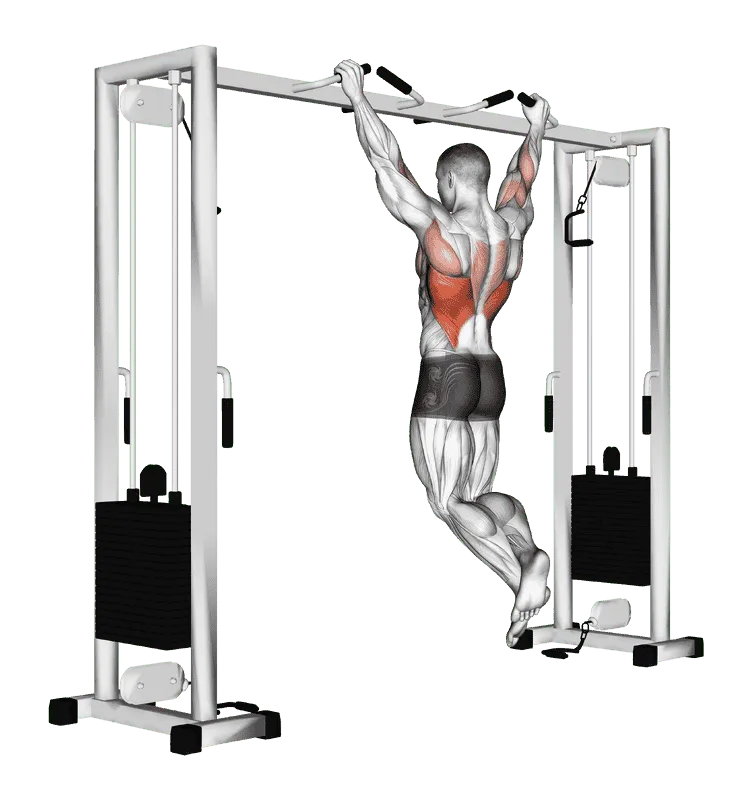
| Straight-Bar Pull-Up / Chin-Up | Forces end-range supination or pronation under full body weight | Pull-up (Neutral Grip) | Keep palms facing each other and initiate each rep by depressing the shoulder blades |
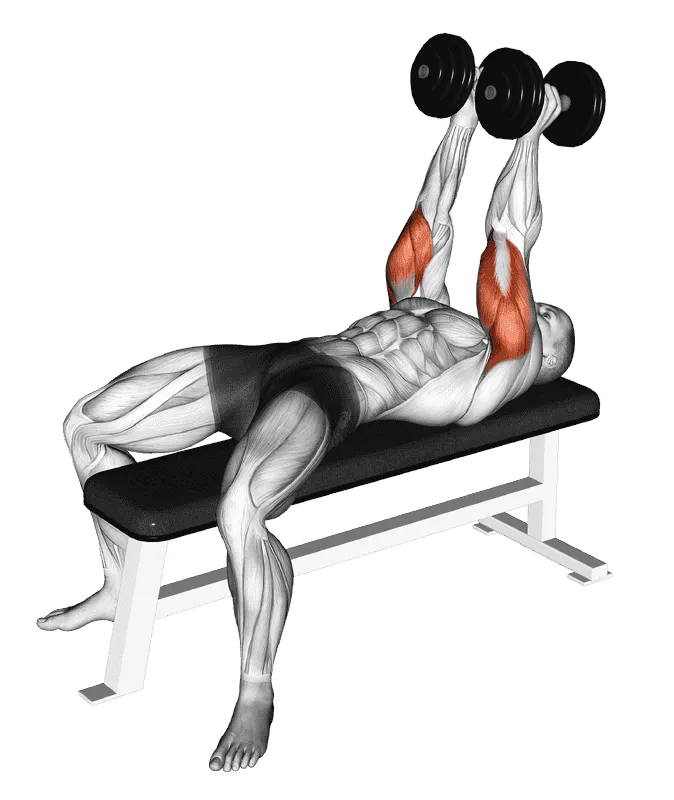
| Barbell Bench Press (Cocked Wrists) | Fixed pronation and wrist extension strain medial/lateral tendons | Dumbbell Neutral Grip Bench Press | Angle dumbbells neutral or 30 degrees; stack knuckles toward the ceiling |
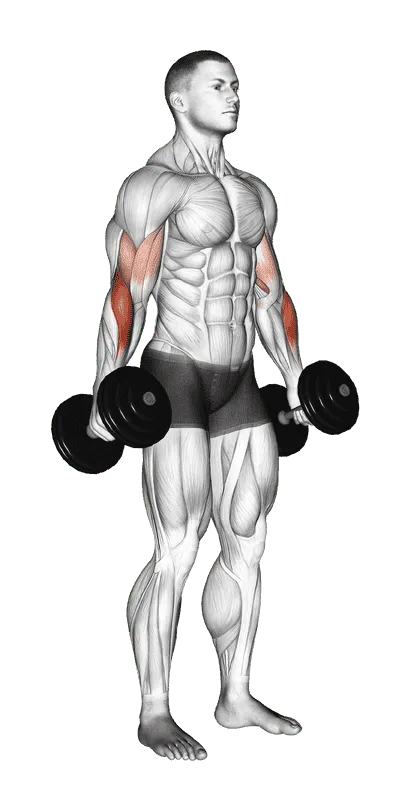
| Straight-Bar Barbell Curl | Valgus torque on the medial epicondyle at full supination | Dumbbell Hammer Curl | Maintain a thumb-up neutral grip and stop just shy of resting at the top |
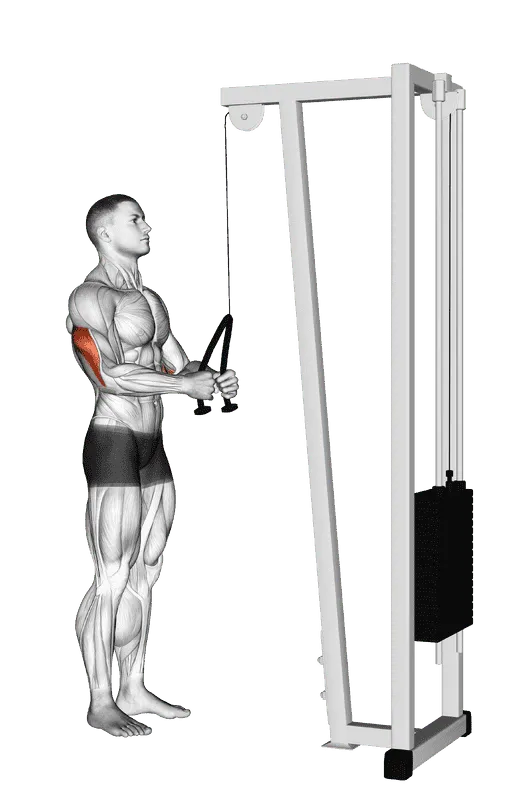
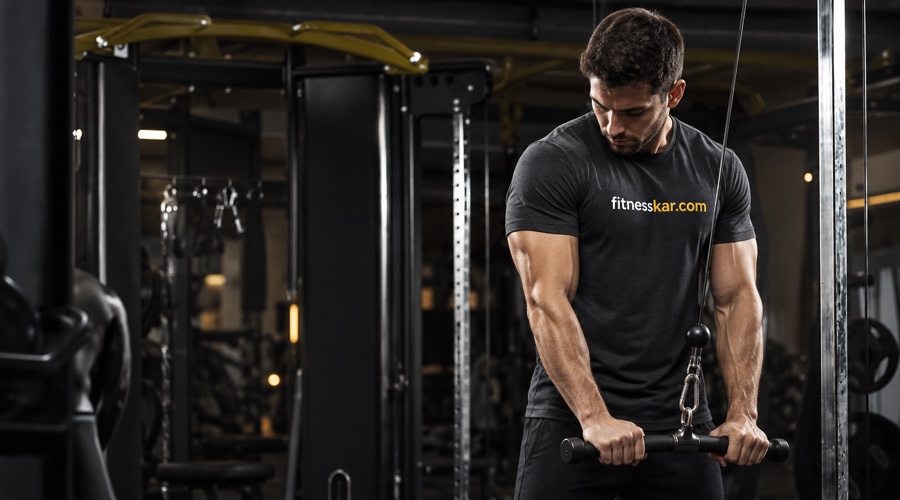
| EZ-Bar Lying Skull Crusher | High peak flexion torque directly on the olecranon and medial elbow | Cable Pushdown (with rope attachment) | Keep upper arms pinned comfortably at your sides and let wrists track naturally |
Hanging from parallel handles in the Pull-up (Neutral Grip) aligns the radius and ulna in their strongest mid-range position, taking torsional twist off both epicondyles. Furthermore, using lifting straps on heavy Romanian deadlifts, lat pulldowns, and rows during a flare-up is not "cheating"—it smartly offloads fatigued finger flexors so your back muscles still get a full hypertrophy stimulus while your forearm tendons calm down.
Likewise, when building arm size using the principles in our biceps hypertrophy guide and triceps hypertrophy guide, shifting temporarily to the Dumbbell Hammer Curl and Cable Pushdown (with rope attachment) preserves mechanical tension on the brachialis, brachioradialis, and triceps heads with a fraction of the joint irritation. On pressing days, the Dumbbell Neutral Grip Bench Press lets your shoulders tuck naturally to 45 degrees while keeping your wrists stacked straight over your elbows.
The 3-Stage Tendon Remodeling and Wrist Durability Protocol
Tendon rehabilitation works best when progressed by symptom response rather than an arbitrary calendar. Sports physical therapists use a simple 24-hour pain-monitoring rule:
- Mild dull discomfort of 0 to 3 out of 10 during a tendon loading drill is acceptable, provided it settles rapidly afterward.
- Your baseline elbow stiffness the next morning (especially when gripping an object with a straight arm) must remain stable or improve—if morning pain jumps above baseline, trim load or volume by 20% to 30% on the next session.
Stage 1: Isometric Analgesia (Weeks 1–2 for Reactive Tendons)
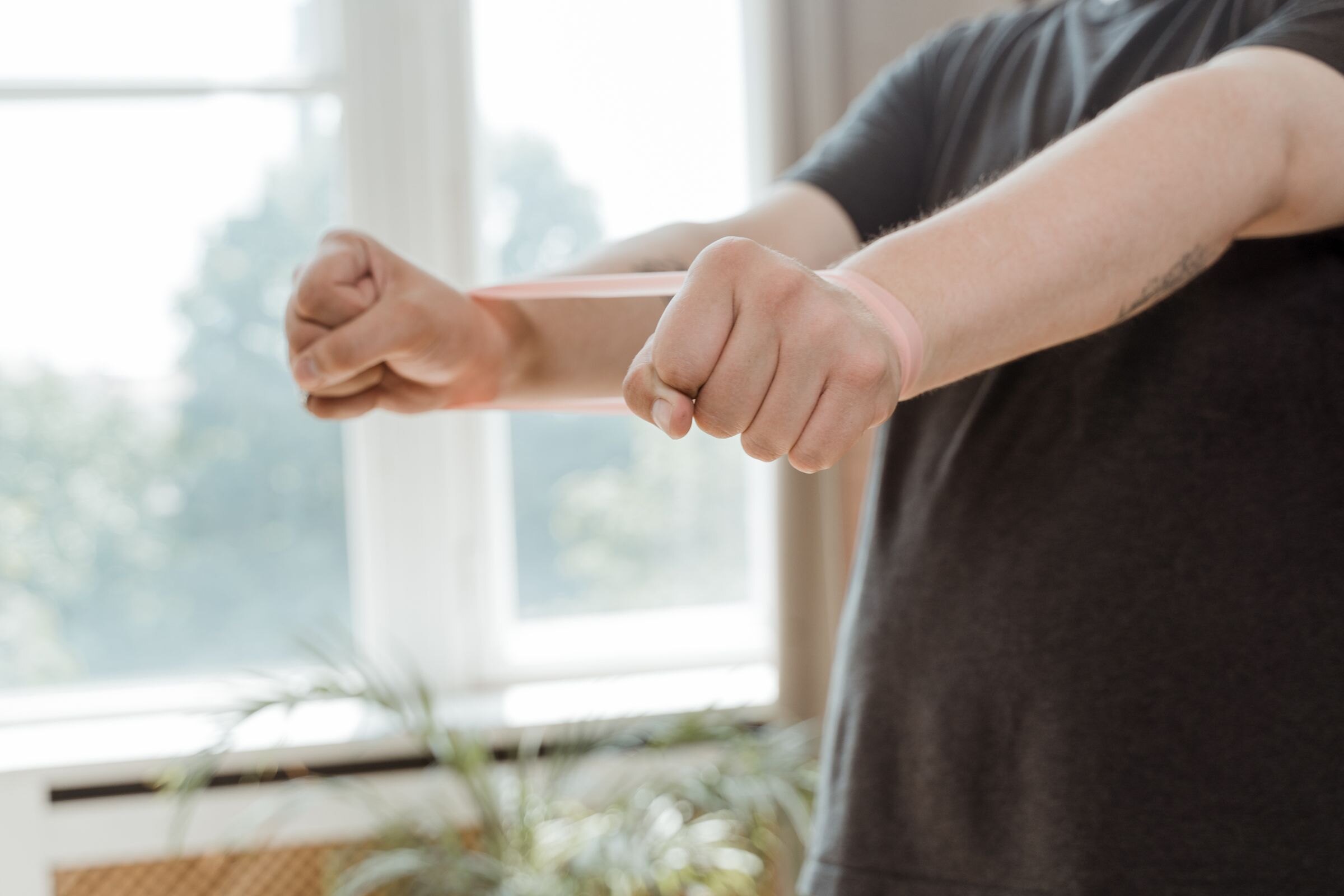
When an elbow tendon is freshly irritated and stings even with light daily tasks, high-rep dynamic pumping can aggravate insertional compression. Sustained isometric holds reduce cortical pain signaling while delivering steady, non-shearing tensile load to tenocytes.
- For outer-elbow (lateral) pain: Rest your forearm flat on a bench or thigh with your wrist hanging just past the edge, palm facing down, holding a light 2 to 5 kg (5–12 lb) dumbbell or light resistance band. Hold the wrist level—or 15 degrees extended—completely still for 30 to 45 seconds. Rest 60 seconds and complete 4 to 5 holds.
- For inner-elbow (medial) pain: Perform the exact same supported 30-to-45-second static hold with your palm facing up, keeping the wrist level rather than letting it sag into deep extension.
Stage 2: Slow Eccentric and Heavy Slow Resistance Loading (Weeks 2–8)
Once baseline pain settles and static holds feel comfortable, you must transition to dynamic loading through controlled ranges of motion to remodel disorganized collagen fibers.
In a systematic review and meta-analysis published in the Journal of Clinical Medicine, researchers Seo Yeon Yoon and colleagues pooled 6 randomized controlled trials totaling 429 participants with lateral elbow tendinopathy.[1] Adding structured eccentric strengthening significantly reduced pain scores on the visual analog scale (standardized mean difference −0.63) and boosted forearm muscle strength (SMD 1.05) compared with standard therapy alone, while also reducing pain significantly more than concentric or standard isotonic protocols (SMD −0.30).[1]
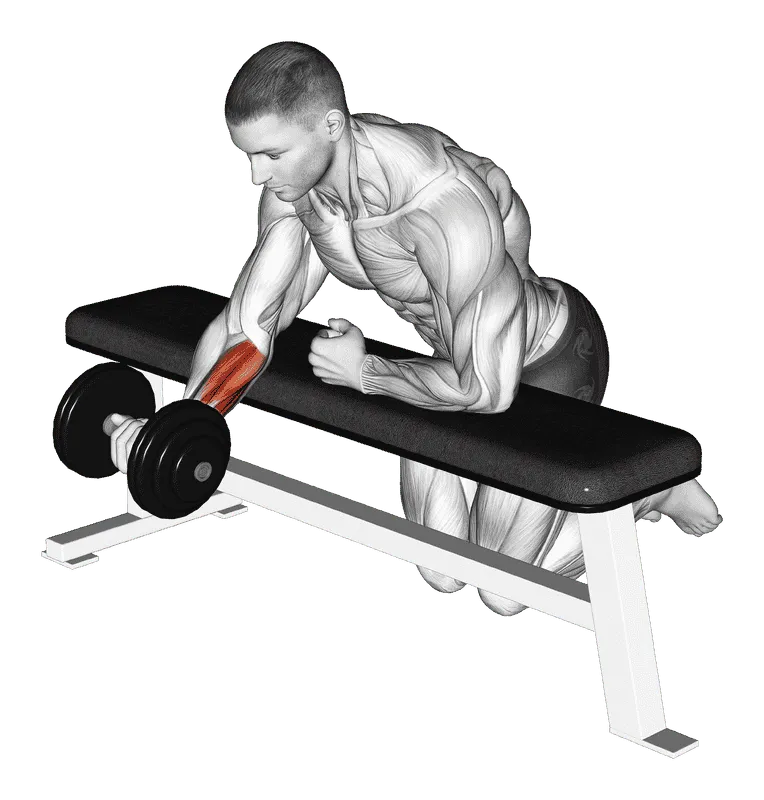
1. Outer-Elbow Builder: Single-Arm Supported Reverse Wrist Curl

- Sets
- 3
- Reps
- 12–15
- Rest
- 75 s
- Tempo
- 4–1–2
The Dumbbell Over Bench One-Arm Reverse Wrist Curl directly targets the extensor carpi radialis brevis and extensor digitorum without allowing shoulder momentum to cheat the movement. Start conservatively with 1 to 4 kg (2.5–10 lb) and prioritize a smooth, unhurried 4-second eccentric lowering phase before progressing into full bilateral concentric-eccentric reps.
2. Inner-Elbow Builder: Seated Palms-Up Wrist Curl
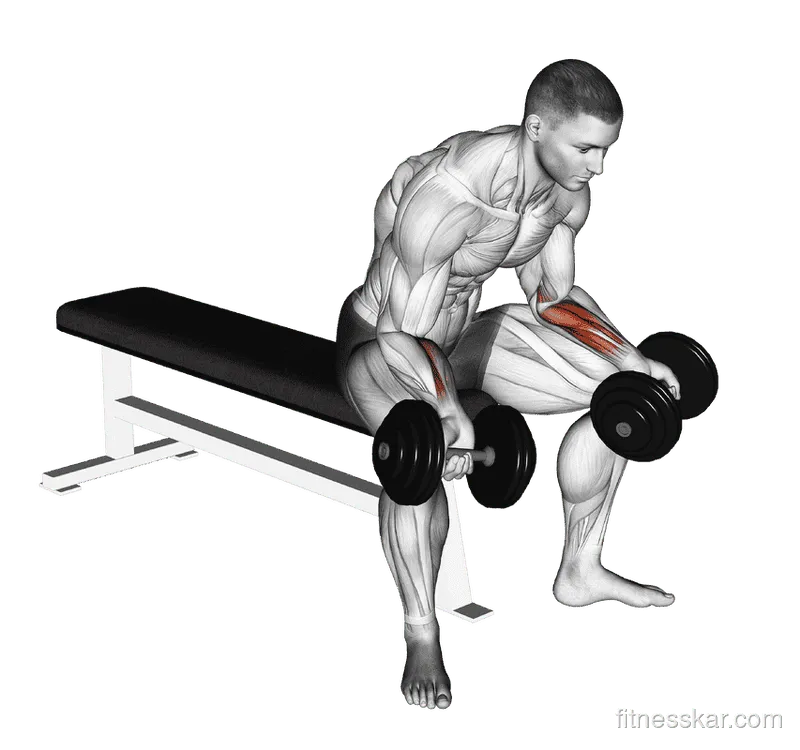
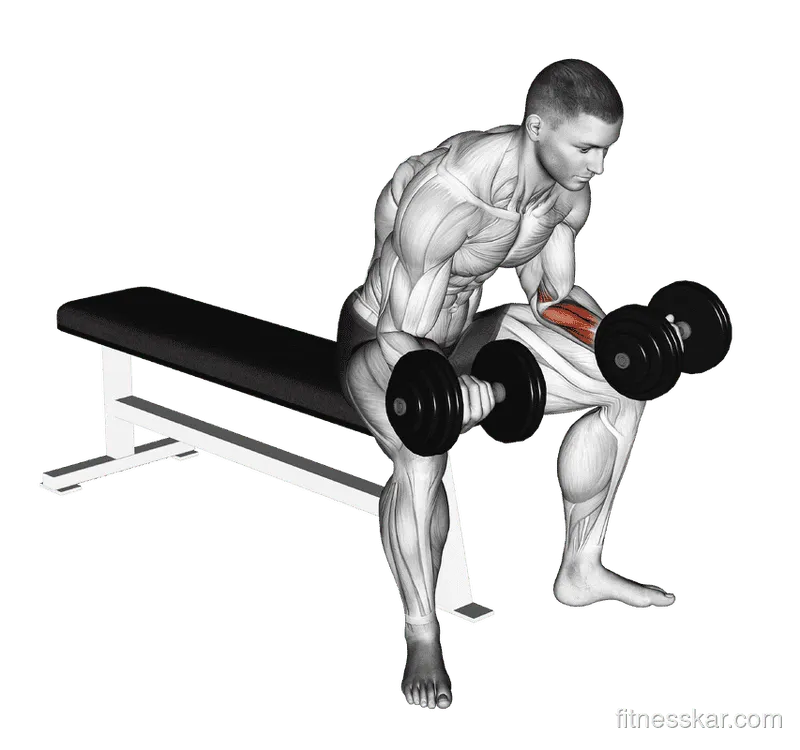
- Sets
- 3
- Reps
- 12–15
- Rest
- 75 s
- Tempo
- 3–1–2
For lifters recovering from medial epicondylalgia—or building armor before heavy pulling blocks—the Dumbbell Seated Palms-Up Wrist Curl strengthens the common flexor-pronator tendon across its functional length. Avoid bouncing out of the bottom stretch; pause briefly and curl smoothly using pure wrist flexion.
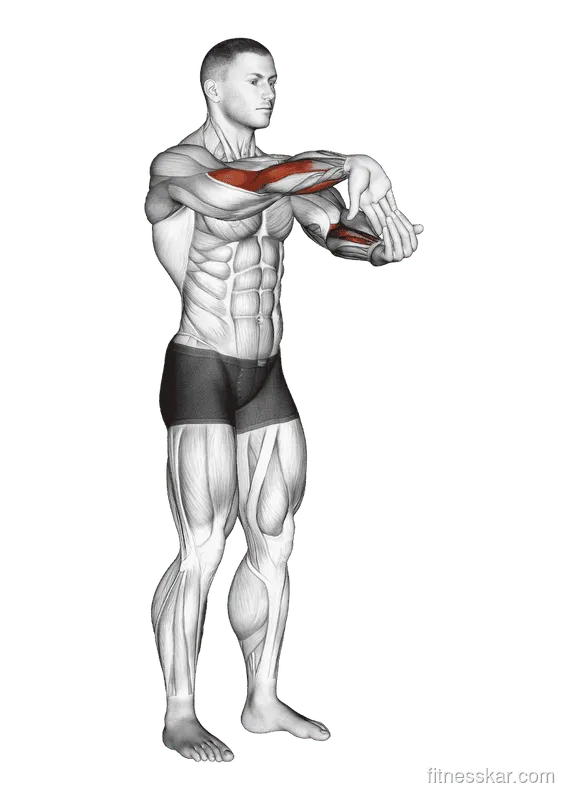
After your loading sets—or after hours of typing at a keyboard—restore resting tissue length gently with the Fingers Down Forearm Stretch for 2 sets of 25 seconds per arm, keeping the pull mild (never yanking an acutely sore tendon into sharp end-range pain).
Stage 3: Rotational Control and Heavy Carry Integration (Week 6+)
Forearm durability is incomplete if you only train flexion and extension in a straight plane, because real lifting also demands pronation and supination stability:
- Offset Dumbbell Pronation/Supination: Sit with your forearm supported at 90 degrees and grip one end of a light dumbbell vertically like a hammer (weight loaded on top). Slowly rotate the weighted end palm-up over 3 seconds until you feel a controlled stretch, then rotate palm-down over 3 seconds for 2 to 3 sets of 12 reps. This directly strengthens pronator teres and supinator—two frequent culprits in stubborn lifter's elbow.
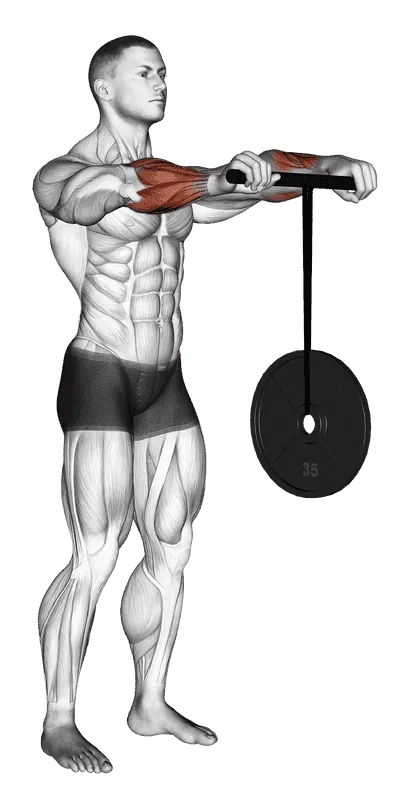
- Bi-Directional Forearm Stamina: Wind and unwind a light weight plate under strict control with the Wrist Roller for 2 to 3 slow trips, keeping your wrists neutral rather than collapsing as fatigue builds.
- Full Kinetic-Chain Integration: Finish lower-body or full-body sessions with heavy Farmer's Walk carries (2 to 3 trips of 25–35 meters). As we break down in our loaded carries guide, carrying heavy dumbbells at your sides teaches your rotator cuff, wrist flexors, and wrist extensors to co-contract as one integrated unit.
Weekly Prehab Blueprint and Program Integration
Because tendon collagen synthesis peaks roughly 24 to 36 hours after mechanical loading and requires recovery between bouts, perform your dedicated Stage 2 or Stage 3 strengthening three non-consecutive days per week (for example, Monday, Wednesday, and Friday at the end of training), while using Stage 1 isometric holds on off-days if needed for comfort.
| Step | Movement | Prescription | Target Tissue & Purpose |
|---|---|---|---|
| 1. Extensor Load | Dumbbell Over Bench One-Arm Reverse Wrist Curl | 3 × 12–15 (4-sec lower) | Lateral epicondyle / ECRB tendon remodeling |
| 2. Flexor Load | Dumbbell Seated Palms-Up Wrist Curl | 3 × 12–15 (3-sec lower) | Medial epicondyle / common flexor remodeling |
| 3. Rotation | Offset Dumbbell Hammer Pronation-Supination | 2 × 12 slow rotations | Pronator teres, supinator & radioulnar control |
| 4. Endurance / Carry | Wrist Roller or Farmer's Walk | 2 sets (30–45 s work) | Co-contraction stamina & wrist stacking |
| 5. Tissue Length | Fingers Down Forearm Stretch | 2 × 25 s gentle hold | Relieves resting forearm flexor tightness |
Pair this 10-minute forearm block with a well-balanced resistance split that avoids piling all your heavy pulling and arm isolation onto a single marathon day. Newer lifters building structural resilience can start with our 3-day Beginner Gym Starter for Every Body Type, while intermediate lifters can plug the neutral-grip swaps above directly into our 4-Day Muscle Mass Builder.
Frequently Asked Questions
Frequently asked questions
Should I completely stop lifting weights if I have elbow pain?
Rarely—unless you have red-flag symptoms like sudden popping, bruising, locking, or nerve tingling. For typical medial or lateral tendinopathy, complete rest weakens tendon load tolerance; instead, swap painful fixed-bar exercises for neutral-grip dumbbells, cables, and lifting straps while adding progressive isometric and slow eccentric forearm work.
How long does lifter's elbow or tennis elbow take to heal?
Mild flare-ups caught early often calm down within 2 to 4 weeks once you fix wrist alignment and offload aggravating grips. True structural remodeling of chronic tendinopathy takes 8 to 12 weeks of consistent eccentric and heavy slow resistance loading performed three times per week because tendon collagen turns over much slower than muscle tissue.
Do elbow sleeves or forearm straps cure elbow tendinopathy?
Neoprene elbow sleeves retain warmth and improve joint proprioception on pressing days, while counterforce forearm straps can temporarily reduce acute tug on a sore tendon insertion during daily tasks. However, neither device remodels weakened collagen—treat them as short-term comfort aids alongside active wrist strengthening, not permanent fixes.
Why do my elbows hurt during low-bar squats?
Low-bar squats can jam your wrists and medial elbows when tight shoulders or thoracic stiffness prevent you from getting comfortably under the bar, forcing your arms to support part of the load. Widen your grip slightly, use a thumbless or neutral-wrist shelf over your rear delts, and improve shoulder external rotation so your upper back—not your elbows—carries the bar.
Should I use lifting straps if I am trying to build forearm durability?
Yes, strategically. During an elbow flare-up, wearing straps on heavy deadlifts, rows, and pulldowns prevents fatigued finger flexors from overloading irritated elbow tendons, allowing you to dose exact, controlled tendon rehabilitation separately with light wrist curls and timed carries.
Sources
- Yoon SY, Kim YW, Shin IS, et al. The Beneficial Effects of Eccentric Exercise in the Management of Lateral Elbow Tendinopathy: A Systematic Review and Meta-Analysis. Journal of Clinical Medicine. 2021;10(17):3968. doi.org/10.3390/jcm10173968 ↩