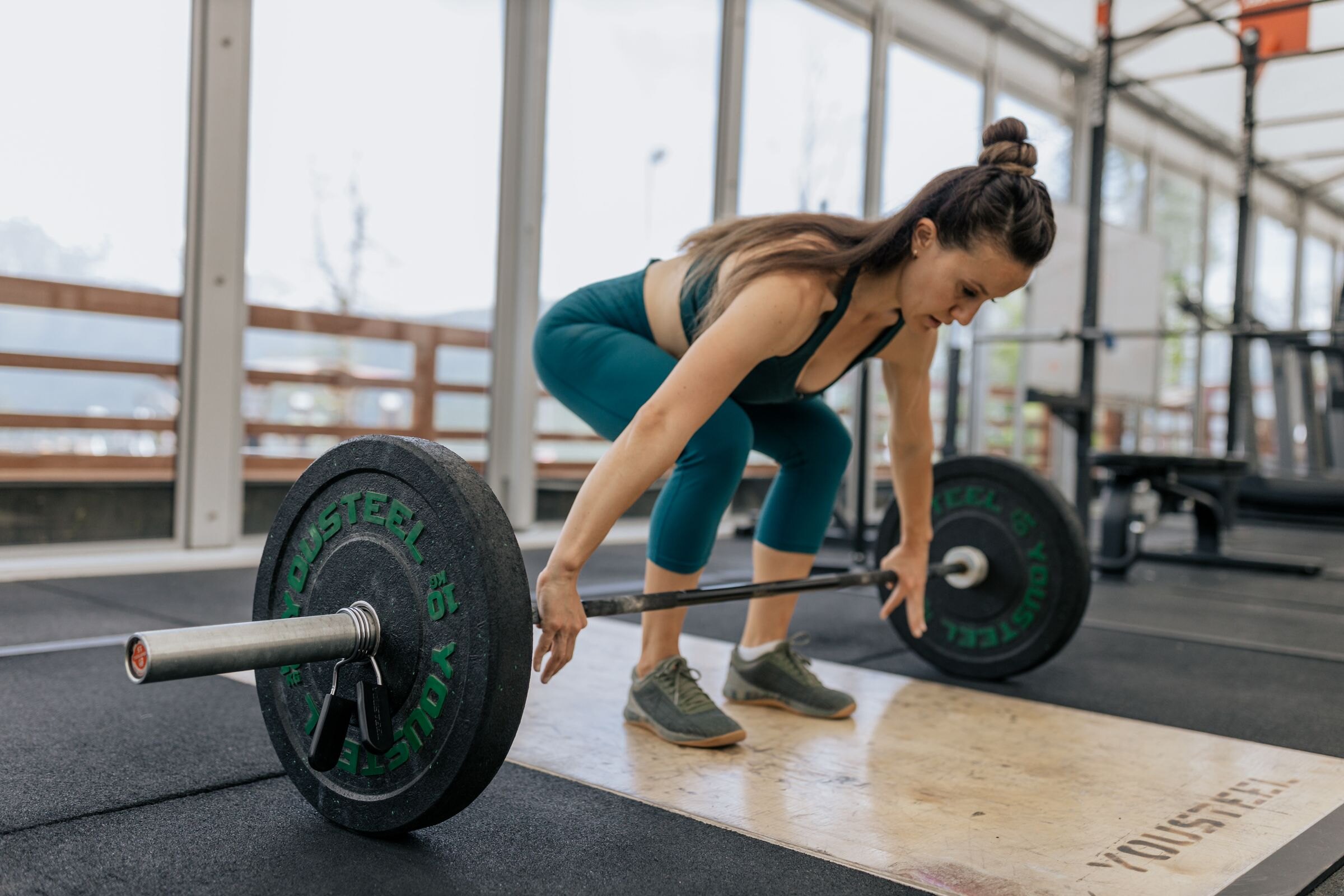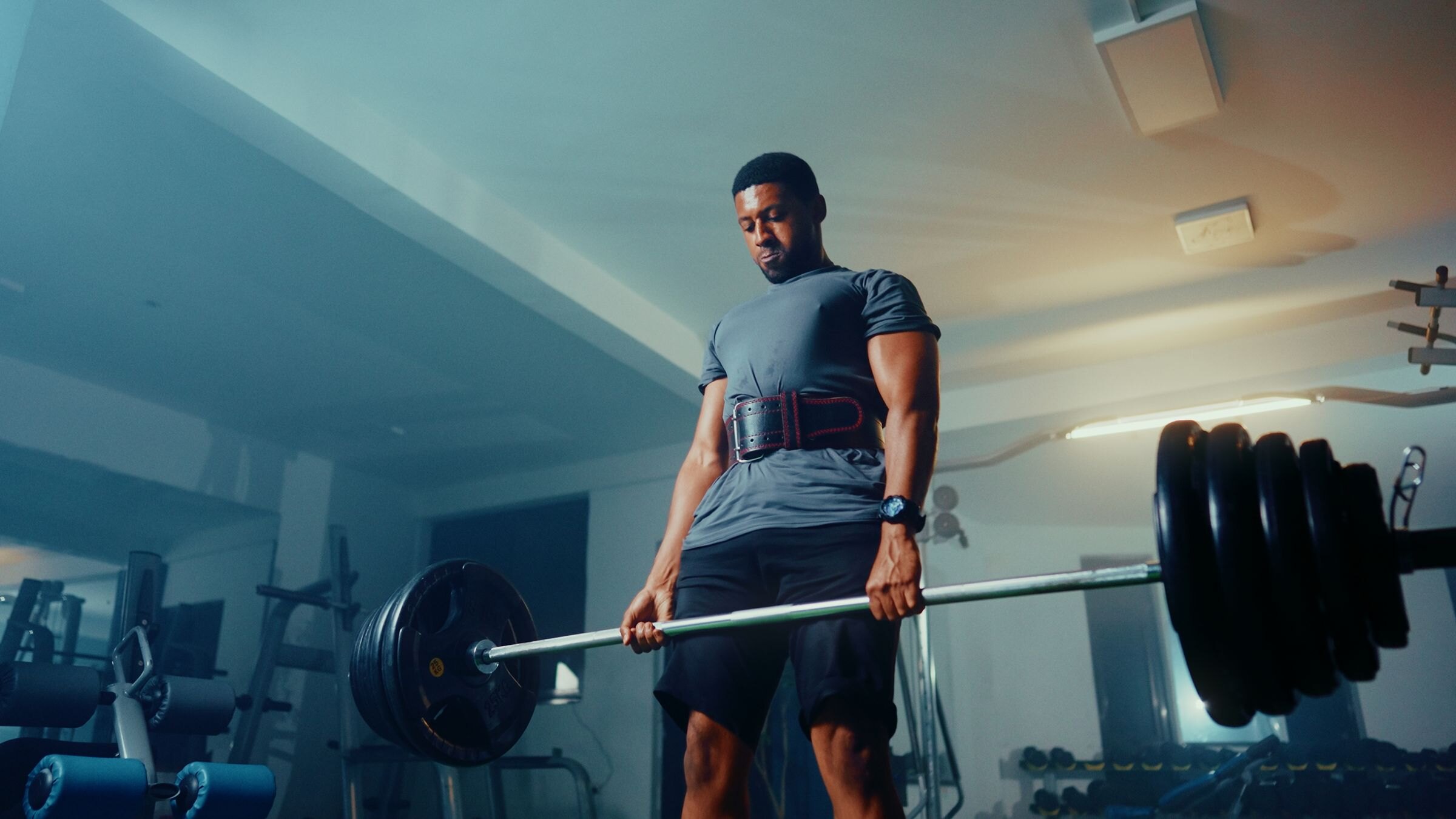
When comparing free weights vs. machines for muscle growth, clinical research gives a clear answer: both build essentially the same amount of total muscle when weekly volume, effort, and proximity to failure are matched.[1] Your muscle fibers do not recognize whether tension comes from a loaded barbell, a pair of dumbbells, or a selectorized weight stack; they respond to high mechanical tension across hard repetitions. Where free weights and machines truly diverge is in external stability, systemic fatigue, resistance profiles, and regional muscle emphasis—making a smart combination of both tools superior to relying on either one alone.
Walk into almost any gym and you will still hear two loud camps arguing past each other. Old-school purists insist that serious muscle only comes from iron barbells, squat racks, and dumbbells, dismissing machines as shortcuts for beginners. Modern physique-focused lifters often swing to the opposite extreme, avoiding free weights altogether in favor of fixed-path lever machines and cable stacks.
Neither camp sees the full biomechanical picture. In this Fitnesskar guide, you will learn what systematic meta-analyses actually prove about hypertrophy and strength specificity, the four mechanical factors that separate barbells from machines, a muscle-by-muscle comparison of our best free-weight and machine staples, and a complete 4-day hybrid blueprint that captures the best of both worlds.
What Clinical Research Proves About Free Weights vs. Machines for Muscle Growth
For decades, debates over barbells versus machines relied on surface electromyography (EMG) snapshots or gym folklore rather than direct, multi-week hypertrophy trials. That evidence gap closed substantially when Markus Haugen, Fredrik Vårvik, Stian Larsen, and colleagues published a PRISMA systematic review and meta-analysis in BMC Sports Science, Medicine and Rehabilitation, pooling 13 controlled studies across 1,016 healthy adults aged 18 to 60 (men and women) who trained for at least 6 weeks.[1]
Their analysis evaluated maximal strength (12 trials), countermovement jump height (5 trials), and muscle hypertrophy (5 trials averaging roughly 9 weeks in duration), revealing three decisive findings:
- Overall muscle hypertrophy is virtually identical: Across the hypertrophy studies, researchers found no statistically significant difference in muscle growth between free weights and machines (standardized mean difference = -0.055, p = 0.751).[1] Both groups achieved meaningful pre-to-post muscle growth (effect size 0.251 for free weights and 0.206 for machines).[1]
- Maximal strength follows strict specificity: Lifters who trained with free weights improved their free-weight one-repetition maximum significantly more than machine lifters (p = 0.023), while machine lifters tended to gain more strength on machine tests (p = 0.064).[1] Yet when researchers compared each group on its own training modality—free-weight strength gained from free weights versus machine strength gained from machines—improvements were almost indistinguishable (effect sizes 0.922 vs. 0.970, p = 0.387), and neutral isometric strength tests showed no meaningful gap either (p = 0.660).[1]
- Total mass matches, but regional growth still differs: The authors highlighted an essential caveat for physique-minded lifters: because the five hypertrophy trials used mixed assessment tools (ultrasound thickness, Bod Pod body composition, and limb circumferences), equal total lean mass does not mean every single head of a muscle grows equally from every exercise.[1]
That regional caveat matters tremendously in real programming. Take the quadriceps as a textbook example noted in the research discussion: the rectus femoris is a biarticular muscle that crosses both the hip and the knee.[1] During a standing Barbell Full Squat, your hip extends at the same moment your knee extends, keeping the rectus femoris at a relatively constant length and limiting its hypertrophic stimulus compared with the vasti muscles.[1] Lock your hips into a padded seat on a machine leg extension, however, and pure isolated knee extension loads the rectus femoris through a full, forceful contraction.
The Four Biomechanical Differences That Actually Matter
If free weights and machines tie on raw hypertrophy potential, why does exercise selection still make or break your long-term physique? Because four practical biomechanical variables dictate how much productive, joint-friendly volume you can accumulate week after week.
1. External Stability and High-Threshold Motor Unit Recruitment
To trigger hypertrophy, your central nervous system must recruit your largest, most growth-prone Type II fast-twitch motor units and force them to contract slowly under high load—the physiological core of progressive overload.
When an exercise requires your body to balance an unsteady load in three-dimensional space, your motor cortex splits its neural drive between generating prime-mover force and preventing joint wobble. Adding external stability—a padded backrest, a chest pad, a seat belt, or fixed guide rails—reduces degrees of freedom so your nervous system can direct maximal voluntary activation straight into the target muscle. That does not make unstable free weights inferior; it simply means stable machines often make it easier to feel and exhaust a stubborn target muscle without coordination getting in the way.
2. Stimulus-to-Fatigue Ratio (SFR) and Axial Loading
Every hard set carries two numbers: the hypertrophic stimulus it delivers to your target muscle and the systemic fatigue it imposes on your central nervous system, spine, connective tissues, and grip. Coaches refer to this balance as the stimulus-to-fatigue ratio (SFR).
Free-weight compounds that load your spine vertically or horizontally—such as heavy back squats, deadlifts, and bent-over rows—create tremendous multi-muscle stimulus in minimal gym time. They also generate heavy axial spinal fatigue and cardiorespiratory debt. If you already run high weekly volume using our guide to sets per muscle per week, adding four more sets of barbell squats when your lower back is already fried can stall recovery across your entire week. Swapping those extra sets to a braced leg press or hack squat lets your quads keep growing while your spine recovers.
3. Resistance Profiles and Lengthened Tension
Free weights obey one immutable physical law: gravity pulls straight down. Because the external resistance vector is always vertical, torque on a joint depends entirely on the horizontal distance between the weight and the working joint (the moment arm).
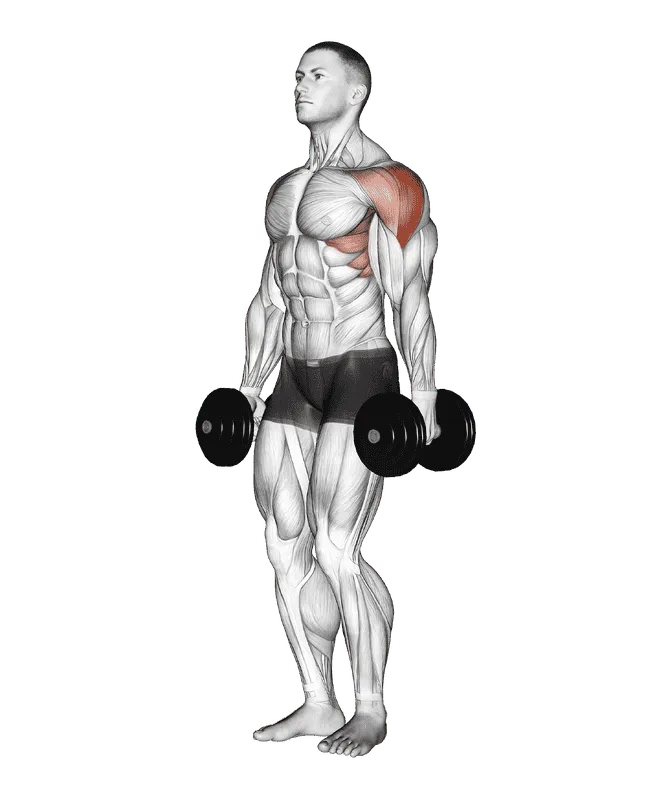
This creates glaring dead zones on certain free-weight isolations. On a standing Dumbbell Lateral Raise, the dumbbells hang straight beside your thighs at the bottom of the rep—zero horizontal moment arm, zero tension on your side delts—while peak difficulty only arrives at the top when your arms reach parallel. Similarly, a flat dumbbell chest fly drops almost all tension at the top once your hands stack directly above your shoulders.
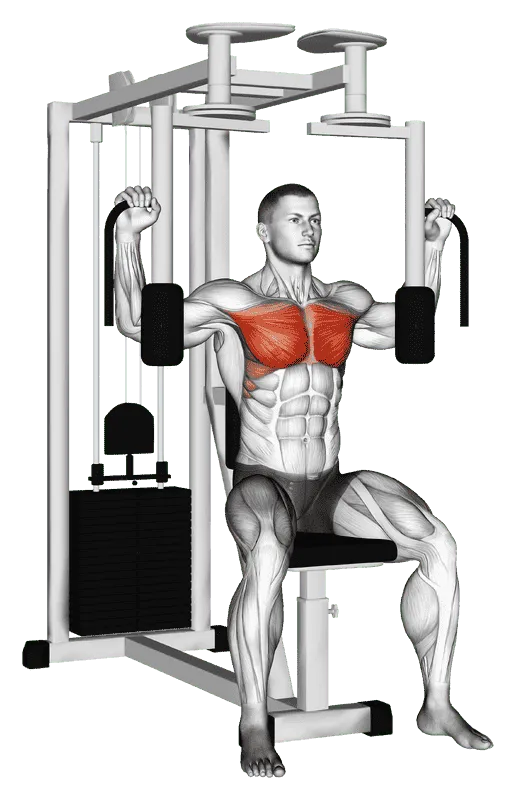
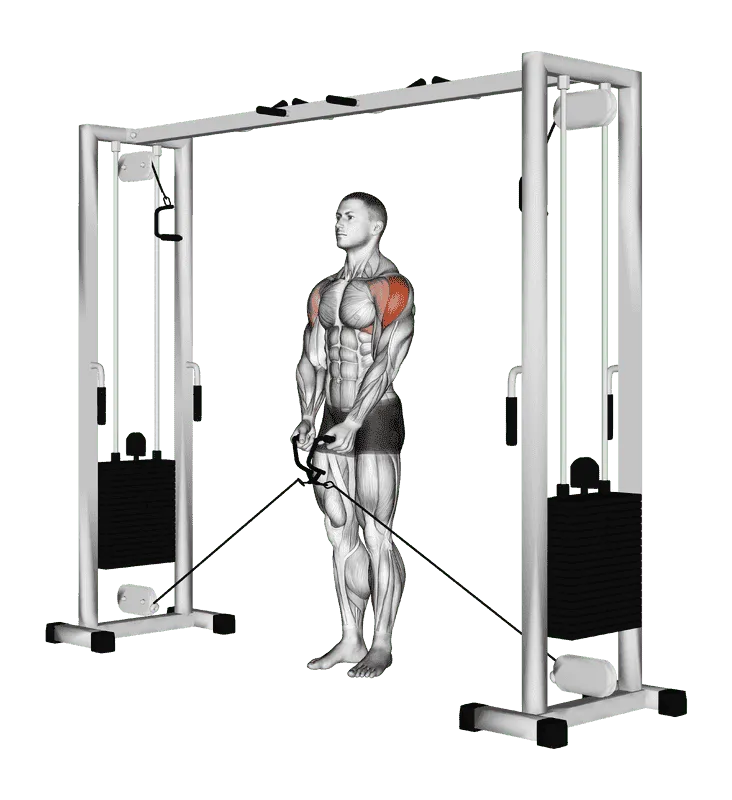
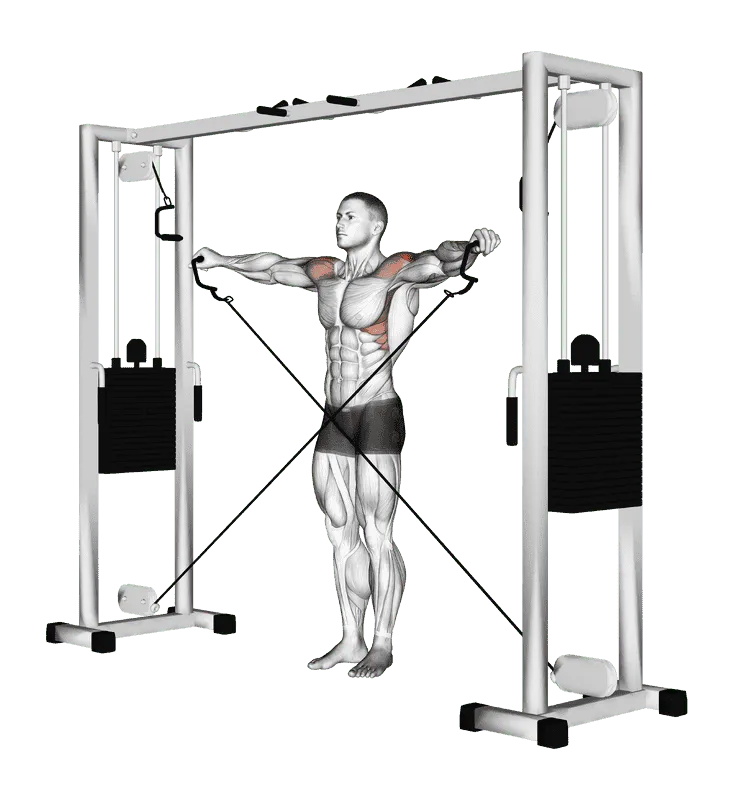
Cables and well-engineered cam machines redirect force at any angle. A cross-body Cable Lateral Raise pulls diagonally away from your midline right from the bottom stretched position, bathing your lateral deltoid in heavy tension where mechanical stretch contributes heavily to stretch-mediated hypertrophy. Likewise, a Lever Pec Deck Fly maintains smooth, uninterrupted chest tension across the entire horizontal adduction arc.
4. Joint Fit, Anthropometry, and Safety Near Failure
Here is where free weights strike back. Every commercial machine locks you into an engineer's assumed arc of motion. If you have very long femurs, broad shoulders, or narrow hips, a poorly designed machine press or hack squat can force your shoulders into painful impingement or jam your knees awkwardly. Barbells and especially dumbbells let your wrists, elbows, and hips track along the exact natural groove your skeleton prefers.
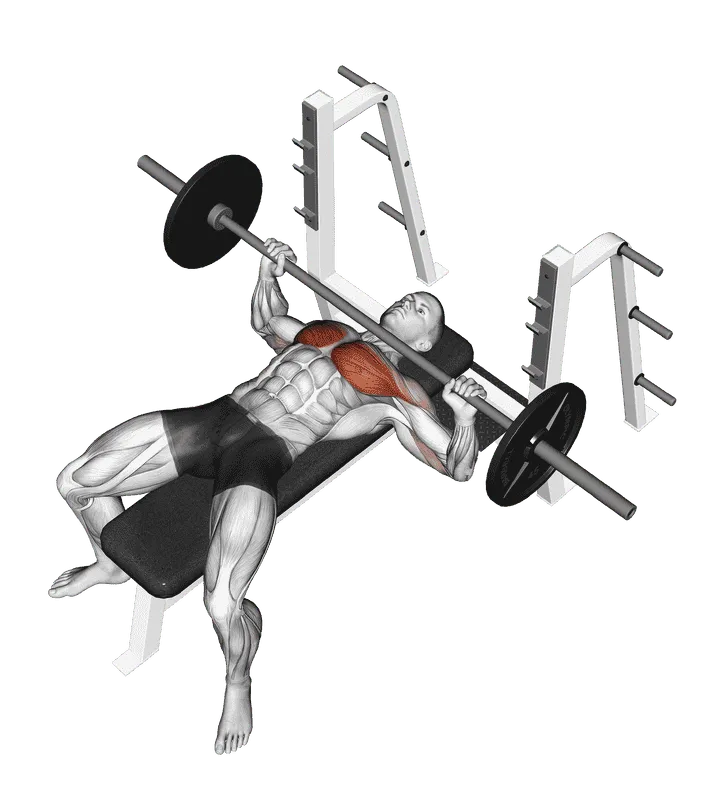
Conversely, when you want to push working sets to 0 to 1 repetitions in reserve (RIR)—the high-effort zone explored in our guide to training to failure—machines offer a decisive safety advantage. Failing on rep 11 of a Lever Chest Press or Sled Hack Squat simply means setting the handles down or flipping the safety catches; failing alone on a heavy Barbell Bench Press without safety spotter arms can cause a serious injury.
Head-to-Head Comparison: Free Weights vs. Machines by Muscle Group
Rather than asking whether free weights or machines are "better" in the abstract, look at how each modality performs across the five major movement patterns of hypertrophy training:
| Movement Pattern | Free-Weight Staple | Machine / Cable Counterpart | Key Trade-Off | Best Use Case |
|---|---|---|---|---|
| Knee-Dominant Quads | Barbell Full Squat | Sled Hack Squat / 45° Leg Press | Axial spine load vs. pure deep knee flexion | Free weights for strength & total legs; machines for high-volume quads |
| Horizontal Push (Chest) | Barbell or Incline DB Press | Lever Chest Press / Pec Deck Fly | Natural joint arc vs. safe 0-RIR pressing | Start with barbell/DB; finish with machine press or pec deck |
| Horizontal Pull (Back) | Barbell Bent-Over Row | Chest-Supported Lever Row / Cable Row | Lower-back fatigue vs. isolated upper-back pull | Machine chest-supported rows dominate pure hypertrophy |
| Vertical Pull (Lats) | Pull-Up | Twin-Handle Lat Pulldown | Fixed bodyweight floor vs. exact load scaling | Pull-ups when strong; pulldowns for precise 8–15 rep volume |
| Lateral Delts & Arms | Dumbbell Lateral Raise / Barbell Curl | Cable Lateral Raise / Preacher Machine | Gravity dead zones vs. full-range tension | Cables & machines outperform on resistance curves |
Lower Body: Quads and Hamstrings
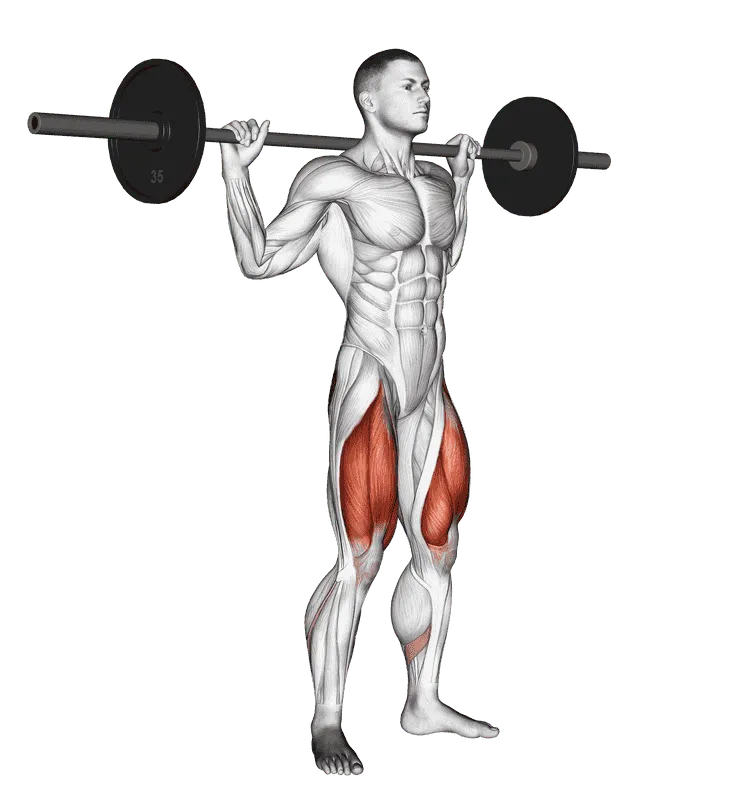
The Barbell Full Squat remains an unmatched multi-joint builder of overall leg strength, hip mobility, and trunk bracing. Yet for lifters with long femurs or tight ankles, leaning forward turns the squat into a lower-back and glute limiter long before the quadriceps reach muscular failure.
Sliding into a Sled Hack Squat or Sled 45° Leg Press pins your torso securely against the back pad, removing spinal shear and balance limits so you can push your knees deep over your toes and take your quads safely to 1 RIR. Pair your main squat compound with a Lever One Leg Extension to directly hit the biarticular rectus femoris that squats under-stimulate.
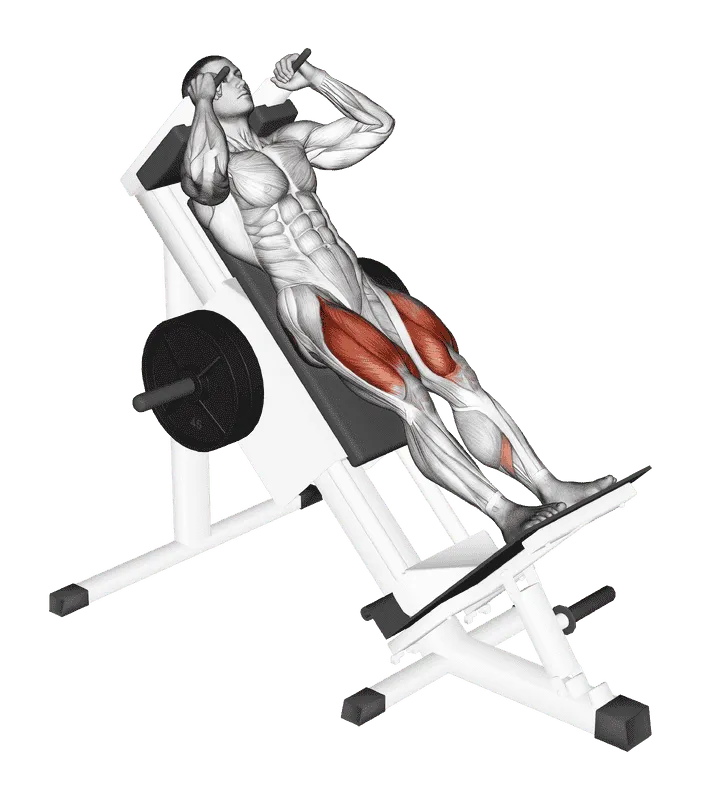
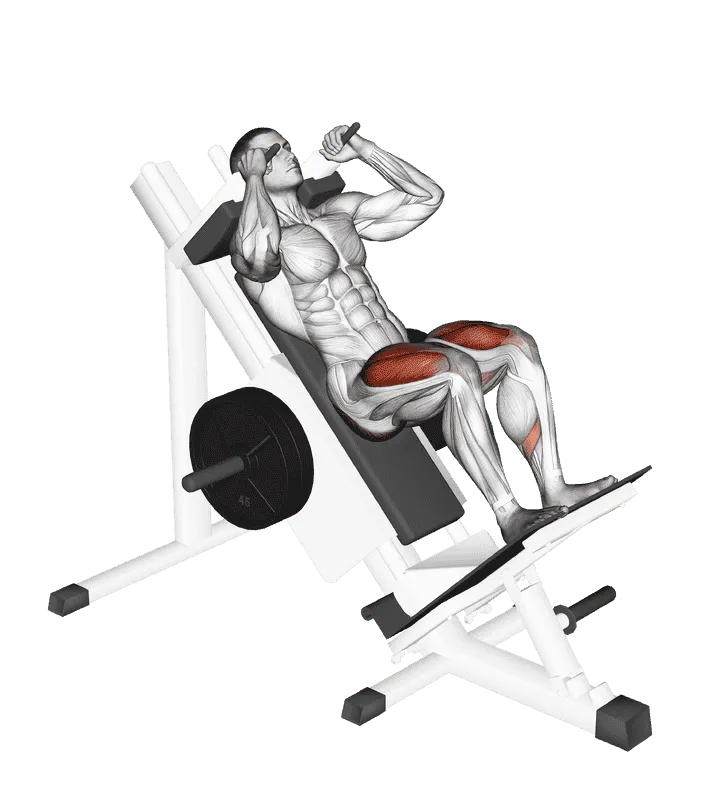
- Sets
- 3–4
- Reps
- 8–12
- Rest
- 150 s
- Tempo
- 3–1–1
For the posterior chain, free weights and cables form an ideal two-part punch. The Barbell Romanian Deadlift loads the hamstrings and glutes heavily in a stretched hip-hinge position, while a knee-flexion cable movement such as the Cable Standing Leg Curl trains the short head of the biceps femoris and completes full-length hamstring hypertrophy without adding a single kilogram of lower-back fatigue.
Chest and Horizontal Pressing
Few movements rival the Barbell Bench Press for heavy pressing progression or the Dumbbell Incline Bench Press for letting your shoulder blades glide freely along an individualized pressing arc. However, heavy dumbbells become awkward to kick into position once you handle 35 to 45 kg (77 to 100 lb) per hand, and pushing a barbell bench press to true failure solo is risky.
A converging Lever Chest Press solves both problems at once: your back stays braced, the handles track smoothly inward to align with your pectoral fibers, and you can push every final rep safely to near failure. Follow your primary presses with the Lever Pec Deck Fly to isolate horizontal adduction without triceps fatigue cutting the set short.
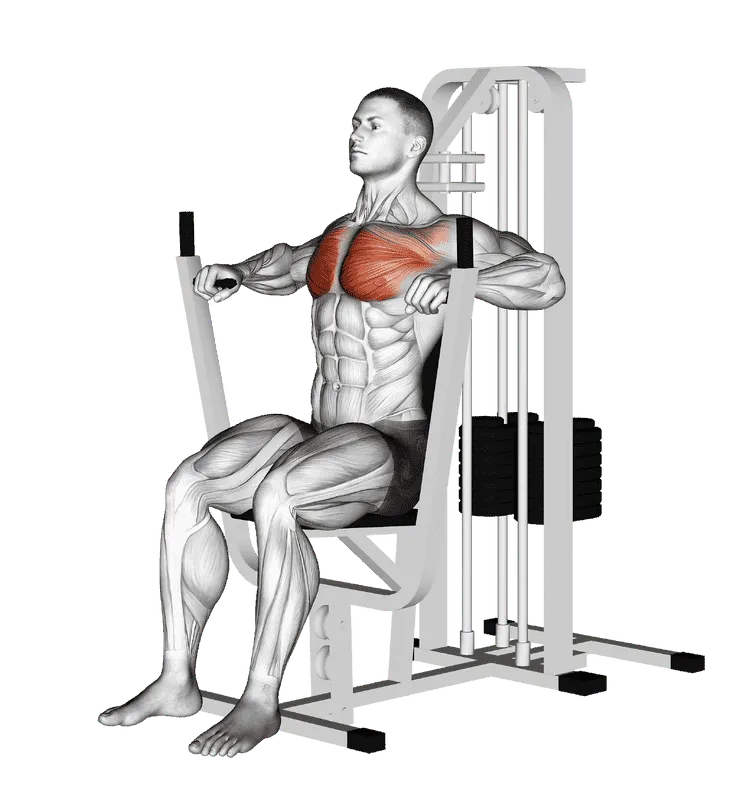
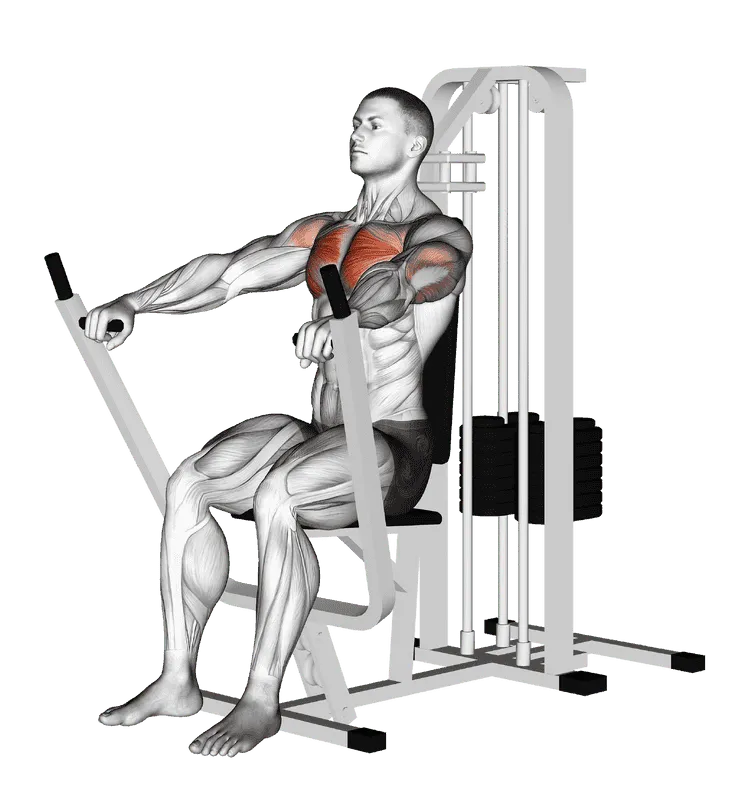
- Sets
- 3
- Reps
- 8–12
- Rest
- 120 s
- Tempo
- 3–1–1
Back: Horizontal and Vertical Pulling
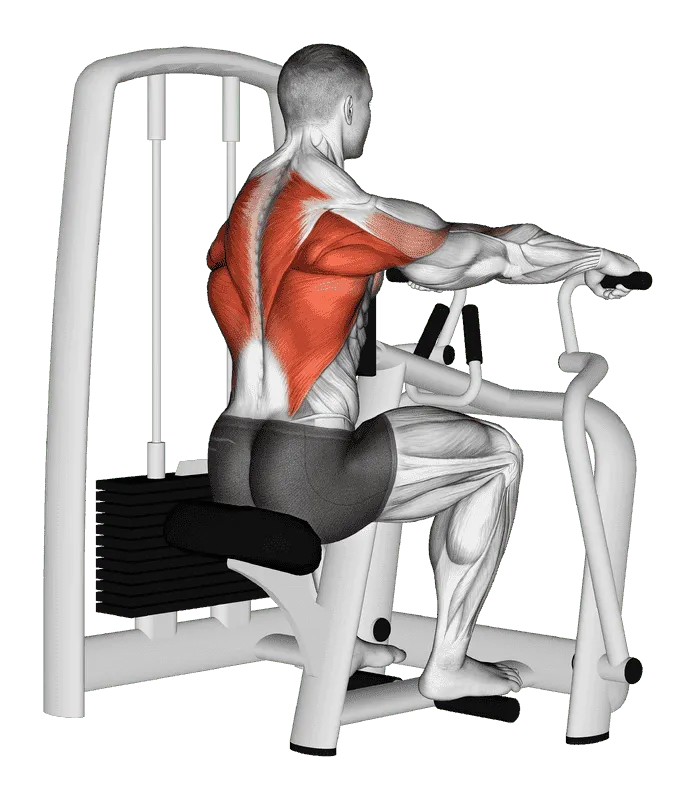
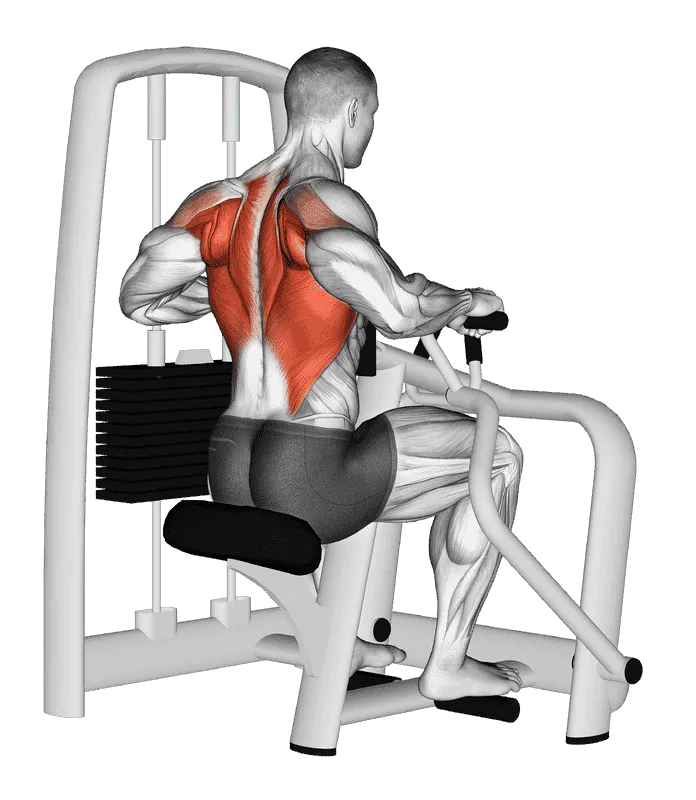
If there is one body part where machines frequently outshine classic free weights for pure hypertrophy, it is the upper and middle back. On a heavy Barbell Bent-Over Row, your spinal erectors and hamstrings must work isometrically for the entire set just to keep your torso hinged at 45 degrees. By rep 8, many lifters start heaving with their hips because their lower back fatigues before their rhomboids, mid-traps, and lats do.
Pressing your sternum against a chest-supported Lever Seated Row eliminates lower-back fatigue immediately, turning 100% of your energy into forceful scapular retraction and humeral extension. You can pair it with the Cable Seated Row for constant horizontal cable tension. For vertical pulling, weighted or bodyweight Pull-Up sets build tremendous lat strength, while the Twin Handle Parallel Grip Lat Pulldown lets lifters of every bodyweight dial in exact 8-to-15-rep hypertrophy loads with independent, shoulder-friendly handles.
- Sets
- 3–4
- Reps
- 8–12
- Rest
- 120 s
- Tempo
- 2–1–2
Shoulders and Arms: Where Cables and Machines Dominate
Small, single-joint muscles reward smooth resistance curves far more than raw barbell stabilization. Comparing the classic Dumbbell Lateral Raise against the cross-body Cable Lateral Raise illustrates this immediately: with cables anchored low across your torso, your lateral deltoids experience immediate tension from the very first centimeter of abduction instead of hanging slack beside your legs.
- Sets
- 3–4
- Reps
- 12–15
- Rest
- 90 s
- Tempo
- 2–0–2
The same principle upgrades arm training. Standing Barbell Curl sets remain a reliable mass builder, yet torso sway often steals tension once fatigue climbs. Bracing your upper arms on a Lever Preacher Curl locks your elbows stationary and loads the biceps cleanly at long muscle lengths, while a Cable Triceps Pushdown (V-bar attachment) keeps uninterrupted cable tension through full elbow extension without elbow joint irritation.
When to Prioritize Free Weights vs. When to Lean on Machines
Because both tools deliver equal baseline hypertrophy, your optimal split between free weights and machines should flex with your training phase, schedule, and recovery capacity.
When to Prioritize Free Weights (60%–70%)
- You train in a home or garage gym with limited space—a barbell, rack, bench, and adjustable dumbbells cover every major muscle group.
- You are building foundational movement skill, athletic coordination, or specific barbell strength, which we break down further in strength vs. hypertrophy.
- You have only 35 minutes to train and need high-return multi-joint lifts that recruit legs, hips, back, and core simultaneously.
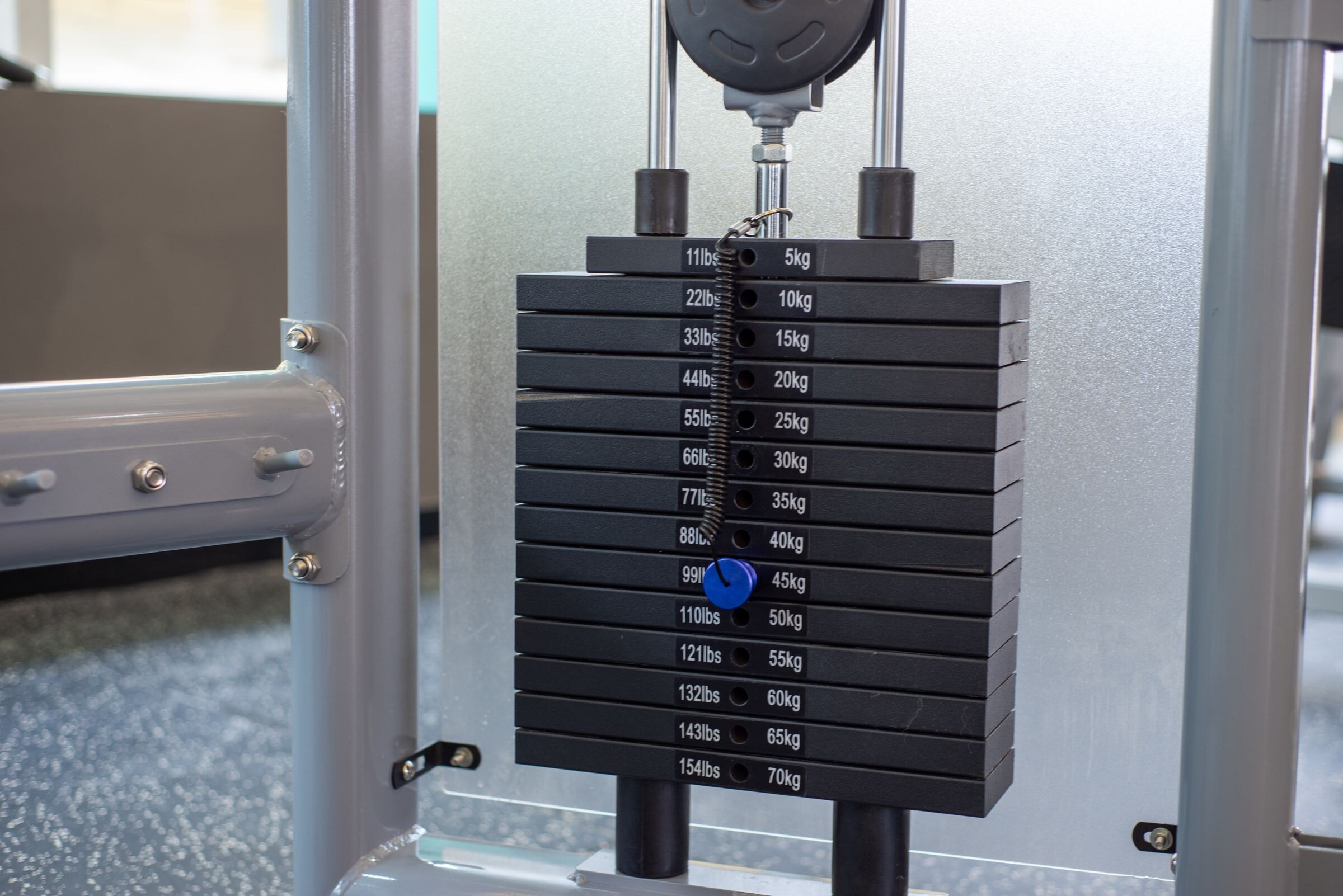
When to Prioritize Machines and Cables (60%–70%)
- You are deep in a calorie deficit for fat loss, when sleep and glycogen drop and lower-SFR spinal loading helps preserve lean mass without burning out your joints.
- You are running high weekly volume (14 to 20 sets per muscle) and need extra sets for a lagging muscle group like quads, lats, or side delts without crushing lower-back recovery.
- You train alone without a spotter and want to take sets safely to 0–1 RIR, or use drop sets by shifting a selector pin in two seconds.
- You are returning from a lower-back, wrist, or shoulder flare-up and need predictable joint support while rebuilding load tolerance.
The Hybrid Blueprint: Combining Free Weights and Machines for Maximum Growth
For most gym-goers chasing maximal muscle growth, the smartest strategy is neither 100% barbells nor 100% machines—it is a structured hybrid hierarchy inside every workout:
- Slot 1 (Primary Compound — Free Weight or Heavy Bilateral Machine): Place your highest-skill, highest-coordination lift first while your central nervous system and core stabilizers are completely fresh. Rest 2 to 3 minutes between hard sets as outlined in our guide on rest between sets for muscle growth.
- Slot 2 (Secondary Compound — Opposite Modality): Pair a free-weight opener with a braced machine second, or vice versa. For example, open leg day with Barbell Full Squat and follow with Sled 45° Leg Press, or open chest/upper day with Dumbbell Incline Bench Press and follow with Lever Chest Press.
- Slot 3 & 4 (Targeted Hypertrophy & Isolations — Machines & Cables): Finish your session when systemic focus dips by locking into machines and cables—Lever Pec Deck Fly, Lever One Leg Extension, Cable Lateral Raise, Lever Preacher Curl, and Cable Triceps Pushdown (V-bar attachment)—so every final set reaches high local mechanical tension safely.
Here is how that hybrid balance looks across a 4-day upper-lower split:
| Training Day | Primary Free-Weight Lift | High-SFR Machine / Cable Compound | Targeted Machine / Cable Finishers |
|---|---|---|---|
| Day 1: Upper A | Barbell Bench Press (3 × 6–8) | Lever Seated Row (3 × 8–12) | Cable Lateral Raise (3 × 12–15), Lever Preacher Curl (3 × 10–12) |
| Day 2: Lower A | Barbell Full Squat (3 × 6–8) | Cable Standing Leg Curl (3 × 10–12) | Lever One Leg Extension (3 × 10–15) |
| Day 3: Upper B | Dumbbell Incline Bench Press (3 × 8–10) | Twin-Handle Lat Pulldown (3 × 8–12) | Lever Pec Deck Fly (3 × 10–15), Cable Triceps Pushdown (3 × 10–12) |
| Day 4: Lower B | Barbell Romanian Deadlift (3 × 8–10) | Sled Hack Squat (3 × 8–12) | Lever One Leg Extension (3 × 10–15), Cable Standing Leg Curl (3 × 10–12) |
Below is a ready-to-run hybrid upper-body session combining free-weight pressing stability with chest-supported machine rowing and constant-tension cable isolation:
Sample Hybrid Upper-Body Hypertrophy Session
-
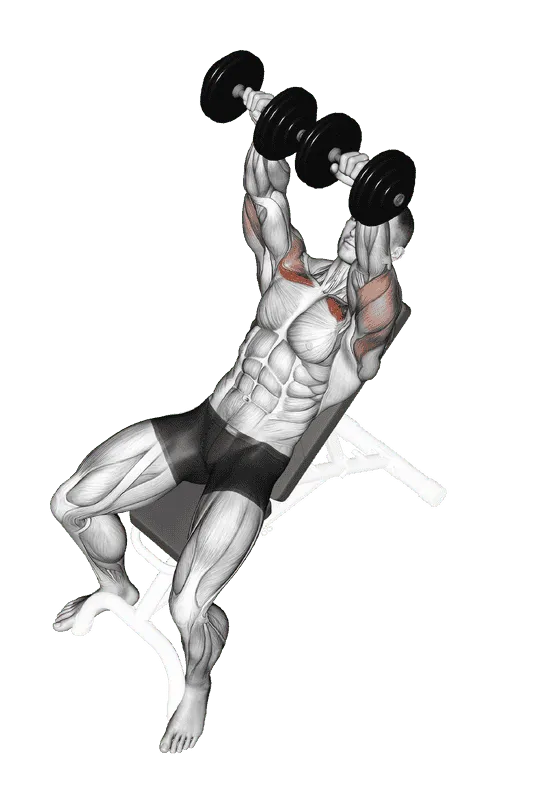
1 Dumbbell Incline Bench Press - Sets
- 3
- Reps
- 8–10
- Rest
- 150 s
-
2 Lever Seated Row - Sets
- 3
- Reps
- 8–12
- Rest
- 120 s
-
3 Lever Chest Press - Sets
- 3
- Reps
- 10–12
- Rest
- 120 s
-
4 Cable Lateral Raise - Sets
- 3
- Reps
- 12–15
- Rest
- 90 s

Want a complete structured week that already weaves compound barbell work, dumbbell lifts, and gym machines into a coherent progression? Start with our 4-Day Muscle & Strength Builder or save the balanced four-day hypertrophy plan below right into your Fitnesskar workout log:
Frequently Asked Questions
Frequently asked questions
Do free weights build more muscle than machines?
No. Systematic reviews pooling direct randomized trials show no statistically significant difference in overall muscle hypertrophy between free weights and machines when total volume and effort near failure are matched.[1]
Are machines better than free weights for beginners?
Machines make learning basic pushing and pulling patterns safer during your first few weeks, while light free weights build coordination and body awareness. Most beginners progress fastest by pairing simple dumbbell or goblet movements with stable gym machines from week one.
Can I build a complete physique using only gym machines?
Yes. Provided your gym has well-fitting machines covering horizontal and vertical pushes, pulls, squat patterns, hip hinges, and isolations—and you apply consistent progressive overload—machines alone can build an impressive, balanced physique.
Why do I lift less weight with free weights than on machines?
Machines use pulleys, counterbalances, and fixed lever angles that reduce stabilization demands and change mechanical leverage, making raw numbers impossible to compare directly. Track progression independently on each exercise rather than comparing a leg press number to a barbell squat.
Should I do free weights before machines in a workout?
In most sessions, yes. Performing demanding free-weight compounds first while your nervous system, grip, and trunk stabilizers are fresh maximizes safety and load progression, leaving machines and cables to safely push target muscles close to failure later in the workout.
Sources
- Haugen ME, Vårvik FT, Larsen S, et al. Effect of free-weight vs. machine-based strength training on maximal strength, hypertrophy and jump performance - a systematic review and meta-analysis. BMC Sports Science, Medicine and Rehabilitation. 2023. doi.org/10.1186/s13102-023-00713-4 ↩