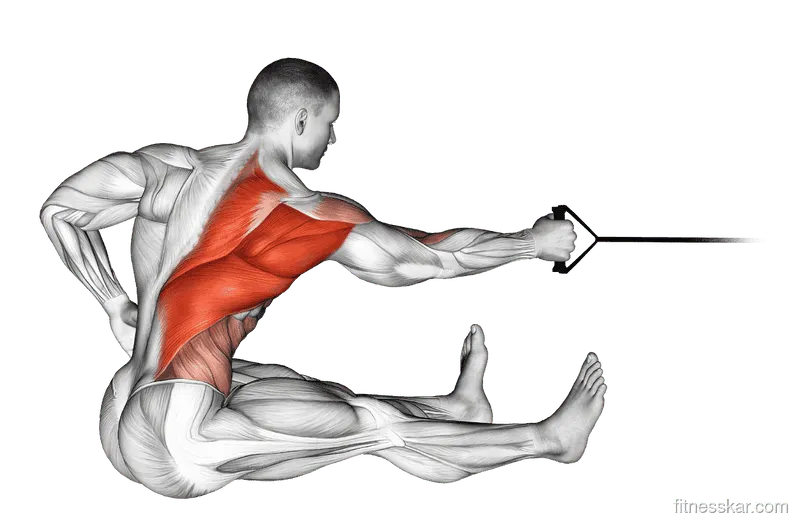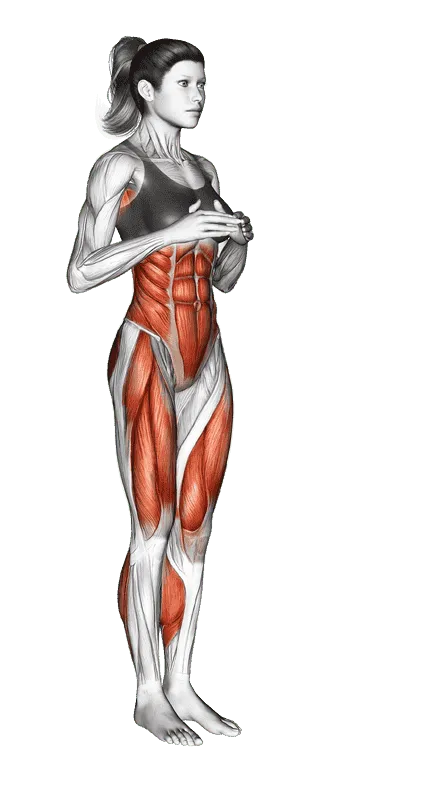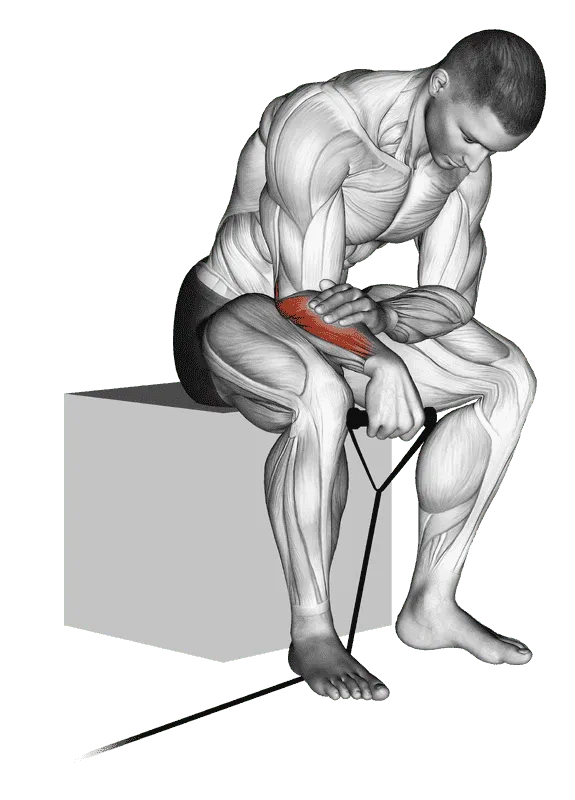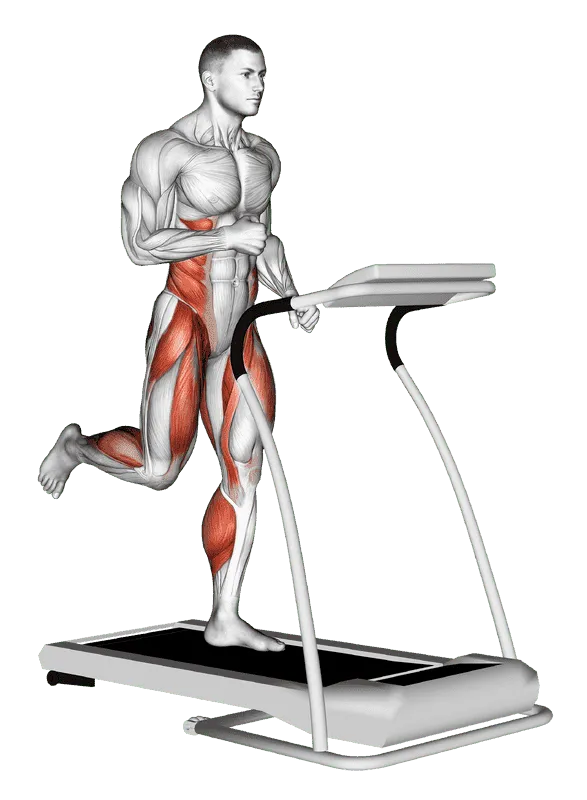
Building sculpted, powerful glutes requires far more than standard squats and hip hinges. While the gluteus maximus forms the bulk of the buttocks, your "side glutes"—specifically the gluteus medius and gluteus minimus—dictate the visual curvature of your upper hip shelf and govern the structural stability of your entire lower body. If you want to build visual fullness across the lateral hips, prevent inward knee collapse (valgus) during heavy lifts, and eliminate lower back or sacroiliac discomfort, developing the gluteus medius must become an intentional cornerstone of your training program.
Many lifters attempt to target this region with endless high-rep mini-band lateral walks or bodyweight fire hydrants. However, meaningful muscle growth requires genuine mechanical tension, progressive overload, and an understanding of joint moment arms across multiple planes of motion. By combining targeted coronal-plane abduction exercises like the Thigh Abductor with heavy unilateral movements like the Dumbbell Bench One Leg Squat, you create the stimulus necessary to build real muscle tissue while fortifying your pelvic alignment.
Anatomy and biomechanics of the lateral glutes
To stimulate maximum muscle growth, you must align your training with the exact anatomical fiber orientation of the target musculature. The lateral hip complex consists of two primary skeletal muscles that work in synergy with the upper division of the gluteus maximus and the tensor fasciae latae (TFL).
The primary action of the middle fibers of the gluteus medius is pure hip abduction—moving the thigh outward away from the body's midline in the frontal (coronal) plane. The anterior fibers assist in hip flexion and internal rotation, while the posterior fibers contribute to hip extension and external rotation.
Beyond moving the leg through space, the gluteus medius serves a non-negotiable stabilizing role. Whenever you walk, run, or support yourself on one leg—such as during a Dumbbell Rear Lunge or a Barbell Squat—the gluteus medius of the stance leg contracts isometrically. This contraction counteracts the downward gravitational pull on your unsupported pelvis, preventing the opposite hip from sagging. In clinical orthopedics, a failure of this mechanism is known as a positive Trendelenburg sign. A strong gluteus medius keeps the pelvis level, ensuring that compressive forces are distributed evenly across the lumbar spine, sacroiliac joints, and knees.
The truth about "hip dips"
One of the most frequent motivations for seeking out side glute training is the desire to "fill in" hip dips. Also known anatomically as the trochanteric depression, a hip dip is the inward curve located between the high edge of the iliac crest (pelvic bone) and the greater trochanter (the top of the femur bone).
It is vital to understand that hip dips are predominantly dictated by skeletal genetics:
- Pelvic Width and Height: A high, wide ilium creates a larger vertical gap before the femur attaches, creating a more pronounced natural hollow.
- Femoral Neck Angle: The angle at which your thigh bone inserts into the hip socket determines how prominently the greater trochanter protrudes outward.
- Subcutaneous Fat Distribution: Natural genetics dictate where your body stores adipose tissue; fat rarely accumulates directly over the lateral trochanter.
No exercise, diet, or massage tool can change the shape or positioning of your pelvic bones. However, targeted gluteus medius hypertrophy builds dense muscle mass across the upper-lateral quadrant of your hips. This muscular development fills out the upper shelf, creates a tighter waist-to-hip transition, and produces an athletic, round silhouette while establishing exceptional functional strength.
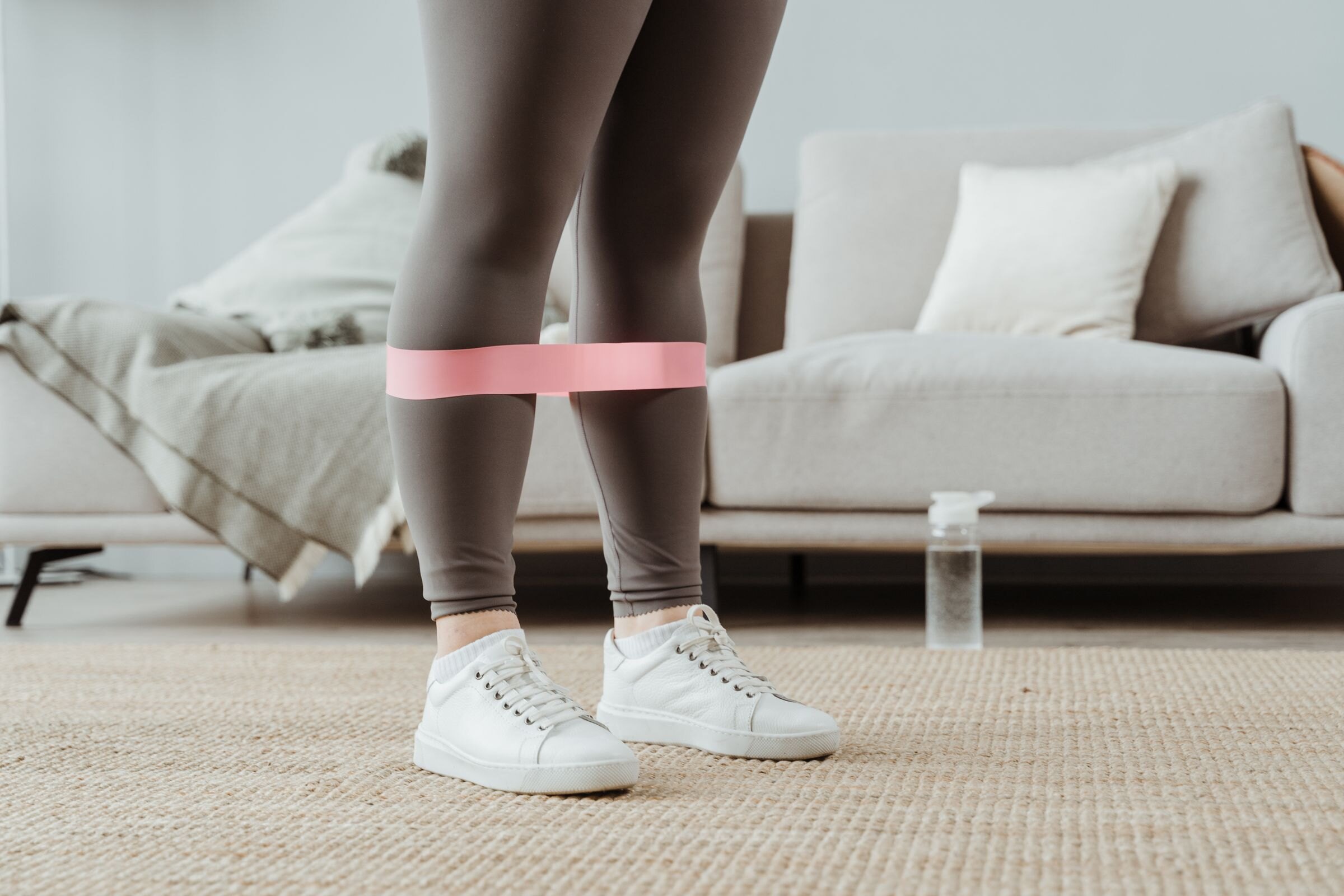
Why endless mini-band walks fail to build side glutes
Walk into almost any commercial gym, and you will see trainees shuffling laterally across the turf with a light elastic mini-band wrapped around their knees or ankles. While banded monster walks and clam shells serve a legitimate purpose as neurological warm-up drills to cue mind-muscle connection, relying on them as your primary hypertrophy stimulus is a critical mistake.
Muscle hypertrophy is governed by mechanical tension: the physical force experienced by individual muscle fibers as they generate force against high external resistance close to muscular failure. Light elastic bands present two major biomechanical shortcomings:
- Flawed Resistance Curve: Elastic bands provide almost zero tension in the stretched position and peak only at the absolute end-range of motion. Once you reach maximum abduction, the band exerts maximum force, encouraging you to bounce or use momentum rather than controlling the eccentric phase.
- Insufficient Absolute Load: A lightweight band simply does not produce the high-threshold motor unit recruitment needed to stimulate structural hypertrophy. You may feel a burning sensation, but that burn is merely metabolic stress and intracellular acid accumulation, not evidence of an optimal muscle-building stimulus.
To force the gluteus medius to adapt and grow, you must apply the laws of progressive overload. This means challenging the muscle through a full active range of motion with measurable resistance—using weight stacks, cables, or dumbbells—where you can systematically increase load, sets, or reps over time.
The best side glute exercises: Biomechanics and setup
Complete development of the lateral glutes requires a strategic combination of open-kinetic-chain isolation movements (where the foot moves freely against resistance) and closed-kinetic-chain compound lifts (where the foot is planted and the hip abductors stabilize the pelvis under heavy loading). Systematic review data examining electromyographic (EMG) activation confirms that targeted hip abduction and single-leg loaded variations produce the highest recruitment in both the gluteus medius and gluteus minimus.[1]
1. Seated machine hip abduction
The seated abduction machine is the gold standard for isolating the lateral hips because it removes all balance demands, locks the pelvis into place, and delivers continuous mechanical tension throughout the entire repetition.

- Sets
- 3–4
- Reps
- 12–15
- Rest
- 90 s
- Tempo
- 2–1–2
To maximize gluteus medius stimulation on the Thigh Abductor, pay close attention to your torso angle:
- Upright Posture: Sitting fully upright with your back flush against the backrest emphasizes the middle fibers of the gluteus medius and minimus, providing pure frontal-plane abduction.
- Slight Forward Lean (20–30 Degrees): Hinging forward slightly from your hips while keeping your spine neutral increases hip flexion. This recruits the upper division of the gluteus maximus alongside the posterior gluteus medius fibers, allowing you to handle slightly heavier loads while targeting the entire upper-glute shelf.
- Execution Cue: Do not push with your feet. Focus your intention entirely on driving outward with your lateral knees and distal thighs. Control the eccentric phase for a 2-second count, resisting the machine's weight stack as it pulls your legs back together.
2. Standing cable hip abduction
Cables offer a distinct biomechanical advantage over resistance bands: they provide smooth, continuous tension across every millimeter of the repetition, including the initial stretched position.
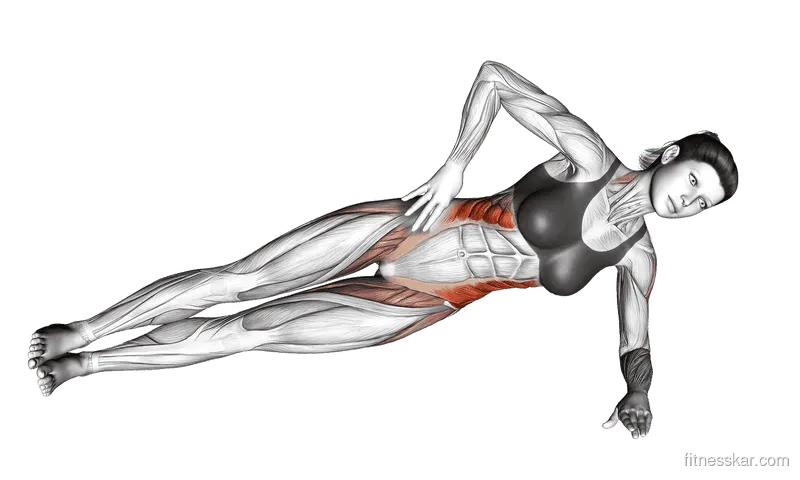
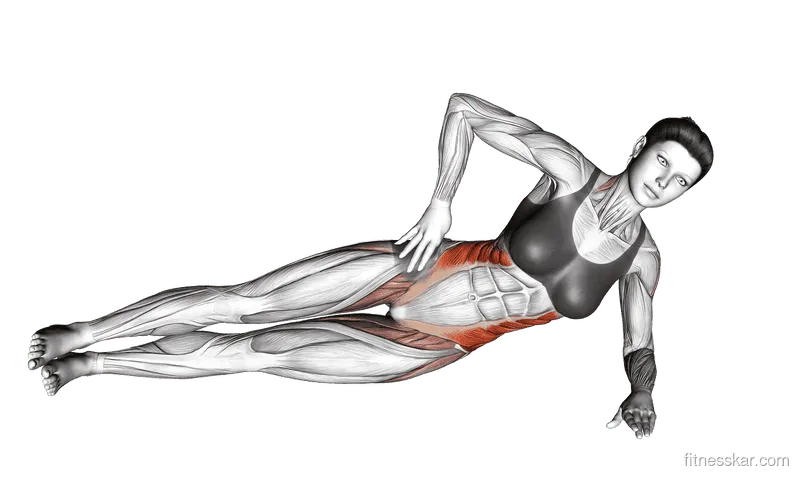
- Sets
- 3
- Reps
- 15–20
- Rest
- 75 s
- Tempo
- 2–0–1
The Straight Leg Outer Hip Abductor can be fine-tuned to isolate the gluteus medius while minimizing TFL dominance:
- Cable Height: Set the pulley roughly level with your ankle or mid-shin.
- Foot Crossover: Allow the working leg to cross slightly in front of your stance leg at the bottom of the movement. This creates a mild adduction stretch on the gluteus medius before each rep begins.
- Hip Alignment: Keep your working toe pointed straight ahead or rotated slightly inward (internal rotation of 5 degrees). Turning your toes outward rotates the femur externally, which shifts the work away from the lateral abductors and onto your hip flexors and deep rotators.
- Torso Rigidity: Hold onto the cable tower with both hands. Your upper body should remain motionless; do not lean your torso away from the cable to fling the weight up.
3. Bulgarian split squat (glute-biased)
While open-chain abductions provide pure isolation, closed-chain unilateral exercises challenge the gluteus medius to perform its primary evolutionary role: stabilizing the pelvis against immense rotational and vertical forces.
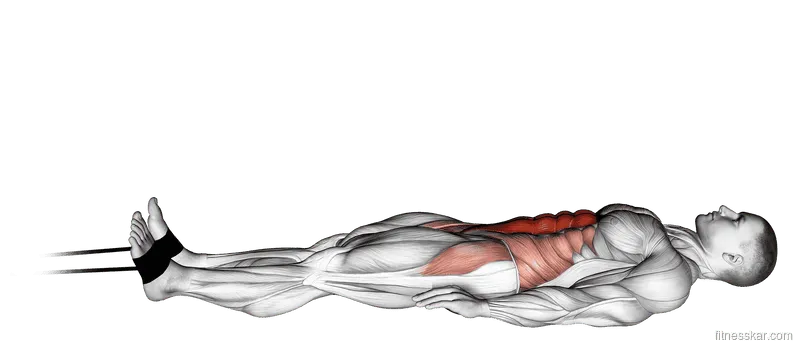
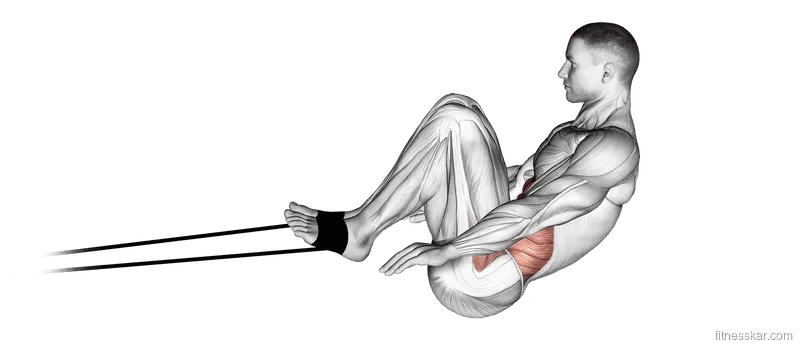
- Sets
- 3–4
- Reps
- 8–10
- Rest
- 120 s
- Tempo
- 3–1–1
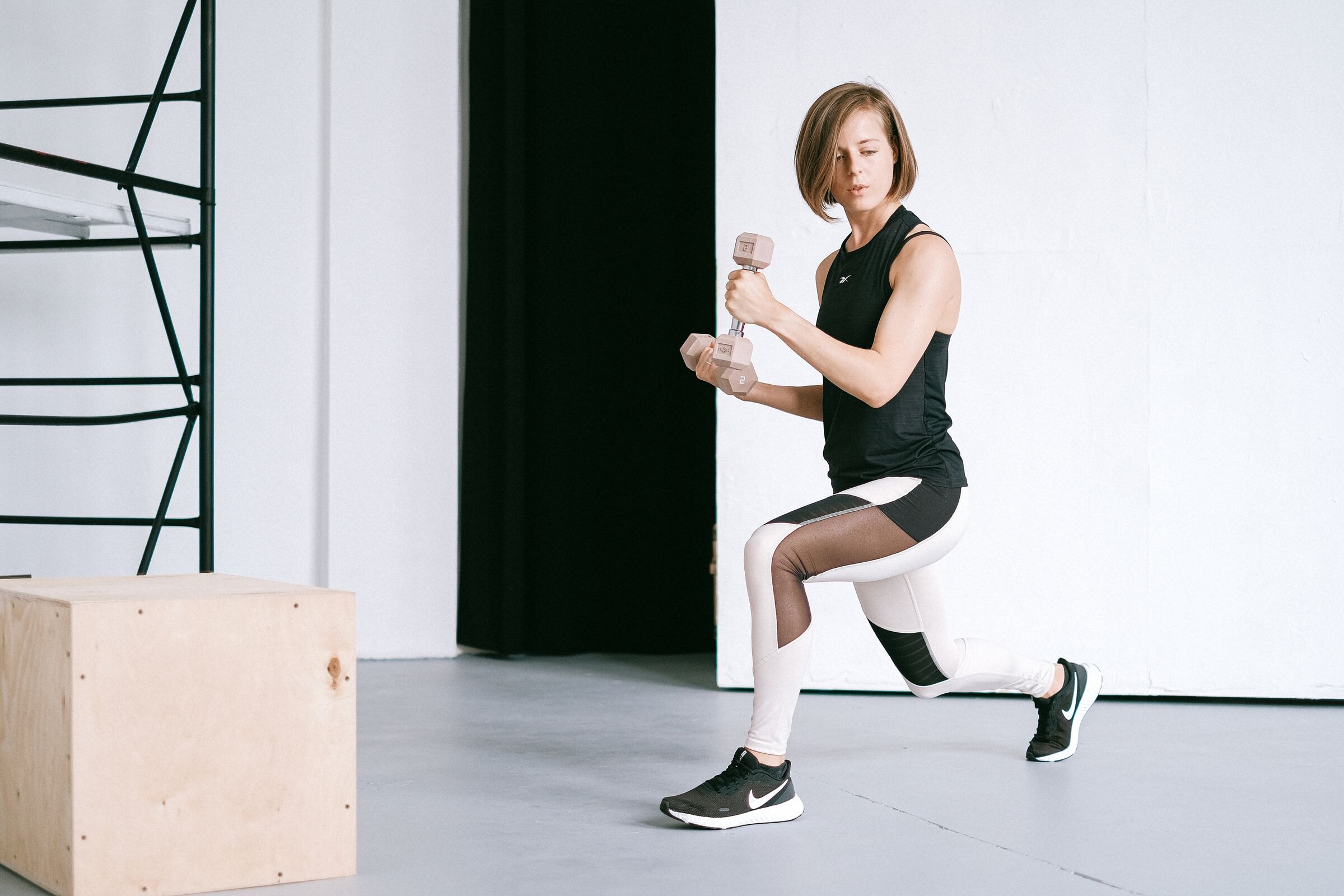
During the Dumbbell Bench One Leg Squat, the gluteus medius on your lead leg fires aggressively to prevent your knee from collapsing inward and to keep your pelvis level. By using a slight forward torso lean and taking a moderately long stride, you place the lead hip into deep flexion and adduction, delivering a massive eccentric stretch to both the gluteus maximus and the stabilizing lateral hip complex.
4. Deficit curtsy lunge
The curtsy lunge is an advanced unilateral variation that deliberately places the stance hip into adduction and internal rotation during the eccentric descent. When you step diagonally behind your lead leg, the gluteus medius is placed under a deep mechanical stretch.
As you reverse the motion and push out of the hole, the gluteus medius must contract powerfully to abduct and externally rotate the femur back to neutral. Performing this movement from a small 2-to-4-inch deficit (standing on a bumper plate) further increases the functional range of motion. Use moderate dumbbells, maintain a proud chest, and control the descent to avoid twisting your lead knee.
5. Heavy compound stabilizers
Do not overlook your primary bilateral compound lifts. Movements such as the Barbell Squat, Barbell Hip Thrust, and Dumbbell Step Ups demand substantial isometric stabilization from the lateral hips.
When squatting, actively cueing your feet to "spread the floor" creates an external rotation torque that primes the gluteus medius, locking your femurs securely into their acetabular sockets. For a complete overview of programming these compound lifts alongside isolation work, review our comprehensive glute hypertrophy guide and our breakdown of how to hip thrust.
Optimal programming for side glute hypertrophy
Because the gluteus medius contains a balanced distribution of roughly 50% slow-twitch (Type I) and 50% fast-twitch (Type II) muscle fibers, it responds exceptionally well to a dual-stimulus training approach:
- Moderate Load, High Tension (8–12 Reps): Heavy unilateral movements (split squats, deficit lunges, step-ups) that recruit high-threshold motor units and build dynamic pelvic stability.
- Lighter Load, High Metabolic Demand (12–20 Reps): Cable abductions and machine abductions that isolate the muscle through a full range of motion, taken close to muscular failure with short rest periods.
Weekly volume landmarks
- Maintenance Volume (MV): 4 to 6 direct sets per week (sufficient to preserve existing mass if prioritizing other muscle groups).
- Minimum Effective Volume (MEV): 8 to 10 direct sets per week for measurable hypertrophy.
- Maximum Recoverable Volume (MRV): 16 to 20 direct sets per week for advanced lifters with superior recovery capacity.
Distribute this volume across 2 to 3 training sessions per week. Because the gluteus medius is a relatively small muscle with excellent vascular supply, it recovers quickly—typically within 48 hours following an isolation session.
The 6-week side glute hypertrophy protocol
The following structured routine demonstrates how to integrate direct gluteus medius isolation into a comprehensive lower-body or full-body training split. Pair this protocol with a structured program like our 10‑Week Upper/Lower Muscle Builder for Women to ensure balanced full-body symmetry.
| Training Day | Exercise | Sets | Reps | Tempo | Rest | Target Intensity |
|---|---|---|---|---|---|---|
| Lower Day A (Shortened Focus) | Thigh Abductor (Forward Lean) | 4 | 12–15 | 2-1-2 | 90 s | 1–2 RIR |
| Lower Day A | Dumbbell Bench One Leg Squat | 3 | 8–10 | 3-1-1 | 120 s | 2 RIR |
| Lower Day A | Barbell Hip Thrust | 4 | 8–12 | 2-1-1 | 120 s | 1–2 RIR |
| Lower Day B (Stretched Focus) | Straight Leg Outer Hip Abductor | 3 | 15–20 | 2-0-1 | 75 s | 0–1 RIR |
| Lower Day B | Barbell Lateral Lunge | 3 | 10–12 | 2-1-1 | 90 s | 2 RIR |
| Lower Day B | Romanian deadlift | 3 | 8–10 | 3-1-1 | 120 s | 2 RIR |
Common technical mistakes and how to fix them
Even experienced lifters often fail to see side glute progress due to subtle execution errors that allow stronger muscle groups to hijack the exercise.
1. Allowing the TFL to dominate
The tensor fasciae latae (TFL) sits just in front of the gluteus medius and performs hip abduction combined with hip flexion and internal rotation. If you feel hip abduction exercises burning on the front-outside of your hip rather than the upper-back of your glute, your TFL is dominating the movement.
- The Fix: Ensure your hip is in neutral alignment or slight extension (0 to 10 degrees behind the torso) when performing cable abductions. Keep your toes pointing forward or slightly outward; never let your foot internally rotate excessively during the concentric phase.
2. Leaning the torso to generate momentum
During standing cable abductions, trainees frequently swing their upper body in the opposite direction of the kick. This turns the movement into a lateral spinal flexion exercise driven by the quadratus lumborum (lower back) rather than hip abduction driven by the glutes.
- The Fix: Hold the machine frame firmly with both hands. Keep your ribcage pinned down and your core braced. If you cannot lift the leg without leaning your torso, the weight is too heavy—reduce the pin by one or two plates.
3. Cutting the range of motion on machine abductions
Many lifters load the entire weight stack on the seated abduction machine and perform rapid, 2-inch pulses in the middle of the range. This deprives the gluteus medius of both full stretch and full peak contraction.
- The Fix: Set the machine's starting pads as close together as your hip flexibility allows. Drive your knees out until you achieve a full contraction, pause for a complete 1-second count, and control the weight back until the pads almost touch before initiating the next rep. For lifters needing to improve their baseline range, our hip mobility guide provides targeted drills.
Frequently asked questions
Frequently asked questions
Can you completely eliminate hip dips with glute medius exercises?
No. Hip dips are an anatomical feature determined by the skeletal distance between your ilium and greater trochanter. However, building the gluteus medius and minimus creates a noticeable muscular shelf in the upper-lateral quadrant, significantly enhancing hip curvature and firmness.
How many times per week should I train my side glutes for maximum growth?
Train your lateral glutes 2 to 3 times per week. Because the gluteus medius recovers relatively quickly, dividing your weekly volume (8 to 16 total sets) across multiple sessions produces superior muscle protein synthesis compared to doing all your sets in a single workout.
Why do I feel seated hip abductions in my hips instead of my glutes?
If you feel the burn on the front of your hip joint, your tensor fasciae latae (TFL) or hip flexors are overpowering the movement. Sit tall, push outward through your knees rather than your feet, and pause for a full second at peak abduction to force the gluteus medius to take over.
Should I use heavy weights or high reps for gluteus medius hypertrophy?
Both. The gluteus medius possesses a roughly equal split of slow-twitch and fast-twitch muscle fibers. Use moderate rep ranges (8 to 12 reps) with heavy loads on unilateral movements like split squats, and higher rep ranges (12 to 20 reps) taken close to failure on cables and abduction machines.
Sources
- Moore D, Semciw AI, Pizzari T. A systematic review and meta-analysis of common therapeutic exercises that generate highest muscle activity in the gluteus medius and gluteus minimus segments. International Journal of Sports Physical Therapy. 2020. doi.org/10.26603/ijspt20200856 ↩